Loading...
This comparison has not been analyzed yet.
One-time AI generation (~1 minute). Scores and timeline are already available below.
Ezana of Axum vs Pan Geng of Shang
Ezana of Axum leads by 1.6 pts · 2 figures compared
…
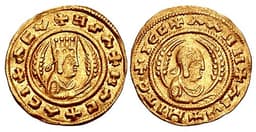
Ezana of Axum
Emperor · Ancient
57.0Total
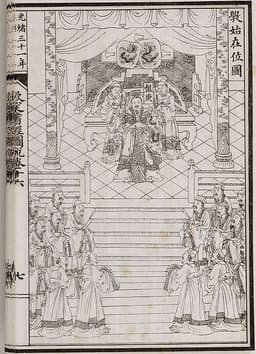
Pan Geng of Shang
Emperor · Ancient
55.4Total
Basic Information
Born
325
-1250
Died
356
-1200
Era
Ancient
Ancient
Nationality
Axum
Shang China
Occupation
Emperor
Emperor
Civilization
Other
Eastern
Score Comparison
Military (10%)
50.0
25.9
Political (20%)
68.0
68.0
Influence (20%)
61.0
56.4
Legacy (20%)
58.0
56.0
Leadership (15%)
40.0
72.0
Strategy (15%)
60.0
36.8
TOTAL
57.0
55.4
Ezana of Axum — Complete Timeline
330 AD
Conversion to ChristianityCultural
Ezana converted to Christianity under the influence of Frumentius, a Syrian Christian who became bishop of Axum. Ezana declared Christianity the state religion of Axum, making it one of the earliest Christian kingdoms.
ChristianizationState ReligionFrumentius
Impact: globalconstructive
Issuance of CoinageCultural◆ Major
Ezana introduced gold, silver, and bronze coins bearing Christian symbols, such as the cross. These coins facilitated trade across the Red Sea and Indian Ocean, and their inscriptions in Ge'ez and Greek reflect Axum's cultural connections.
CoinageTradeChristian Symbolism
Impact: regionalconstructive
Inscription at AxumCultural
Ezana erected a stone inscription in Ge'ez, Greek, and Sabaean at Axum, recording his military victories and his conversion to Christianity. The inscription invokes the Christian God instead of pagan deities, marking a religious shift.
InscriptionPropagandaReligious Shift
Impact: regional
340 AD
Campaign against the BejaWar
Ezana conducted a military campaign against the Beja people, who raided Axumite territory. He defeated them and imposed tribute, securing the northern borders of his kingdom and protecting trade routes to the Red Sea.
Military CampaignBejaBorder Security
Impact: regional
350 AD
Conquest of MeroëWar◆ Major
Ezana led a military campaign against the Kingdom of Kush, conquering its capital Mero
ConquestKushMeroë
Impact: regional
Pan Geng of Shang — Complete Timeline
1250 BC
Moved capital to YinPolitical Action
Pan Geng relocated the Shang capital to Yin (near modern Anyang), which became the permanent capital for the remainder of the dynasty. This move ended the pattern of frequent relocations and established a stable administrative center.
Capital MoveYinStability
Impact: nationalconstructive
1240 BC
Implemented major reformsReform
Pan Geng enacted comprehensive reforms that revitalized the Shang state, including administrative, economic, and possibly military changes. These reforms strengthened central authority, improved governance, and ushered in a period of prosperity and expansion.
ReformRevitalizationShang Dynasty
Impact: nationalconstructive
This comparison has not been analyzed yet.
One-time AI generation (~1 minute). Scores and timeline are already available below.
Rankings
🥇
Ezana of AxumLeader
Mil: 50.0Pol: 68.0Inf: 61.0
57.0
🥈
Pan Geng of Shang
Mil: 25.9Pol: 68.0Inf: 56.4
55.4
+1.6 behind
How This Comparison Works
Algorithm
Each figure is scored on 6 dimensions (0—100 scale) based on structured historical data: Military (10%), Political (20%), Influence (20%), Legacy (20%), Leadership (15%), Strategy (15%). The weighted total produces the final ranking.
Data Sources
Scores are computed from structured sub-indicators in the database. Scale factors adjust for era (Ancient ×0.85, Modern ×1.0) and civilization size (Eastern ×1.05, Other ×0.80) to account for differences in population and military scale.
Maximum 3 Figures
Comparisons are limited to 2—3 figures to ensure readability and statistical meaningfulness.
Error Margins
±5 points per dimension — Sub-scores are derived from historical records with inherent uncertainty. Two figures within 5 points on a dimension should be considered roughly equivalent in that area.
Total Score Accuracy
±3 points overall — The weighted combination of 6 dimensions produces a total score with approximately ±3 points of uncertainty. Differences of less than 3 points are not statistically significant— the figures are effectively tied.
Known Limitations
- Historical records are incomplete and uneven across civilizations
- Figures from oral-tradition societies may be underrepresented
- Occupation labels can misclassify multi-role figures
- Scores measure capability and impact, not moral character
- Quantitative scoring is a comparison tool, not absolute truth
Capability Radar
Military (10%) — Battles & Warfare
Battles
45
10
Win Rate
50
10
Expansion
55
10
Political (20%) — Governance & Reform
Reform
65
70
Diplomacy
55
50
Economy
50
60
Influence (20%) — Cultural & Global Reach
Cultural
70
60
Global
55
40
Legacy (20%) — Historical Impact
Historical
70
70
Longevity
65
70
Leadership (15%) — Power & Stability
Tenure
60
60
Stability
55
70
Strategy (15%) — Tactics & Innovation
Strategy
50
10
Tactics
40
10
Reform
30
10
Similar Comparisons
Comments & Discussion
No comments yet. Be the first to share your thoughts!