Loading...
Ezana of Axum vs Napoleon Bonaparte
Napoleon Bonaparte leads by 13.9 pts · 2 figures compared
…
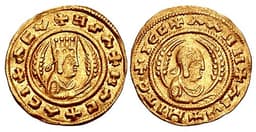
Ezana of Axum
Emperor · Ancient
57.0Total

Napoleon Bonaparte
General · Modern
70.9Total
Basic Information
Born
325
1769
Died
356
1821
Era
Ancient
Modern
Nationality
Axum
France
Occupation
Emperor
General
Civilization
Other
Western
Score Comparison
Military (10%)
50.0
94.0
Political (20%)
68.0
72.0
Influence (20%)
61.0
40.0
Legacy (20%)
58.0
80.0
Leadership (15%)
40.0
78.0
Strategy (15%)
60.0
90.0
TOTAL
57.0
70.9
Ezana of Axum — Complete Timeline
330 AD
Conversion to ChristianityCultural
Ezana converted to Christianity under the influence of Frumentius, a Syrian Christian who became bishop of Axum. Ezana declared Christianity the state religion of Axum, making it one of the earliest Christian kingdoms.
ChristianizationState ReligionFrumentius
Impact: globalconstructive
Issuance of CoinageCultural◆ Major
Ezana introduced gold, silver, and bronze coins bearing Christian symbols, such as the cross. These coins facilitated trade across the Red Sea and Indian Ocean, and their inscriptions in Ge'ez and Greek reflect Axum's cultural connections.
CoinageTradeChristian Symbolism
Impact: regionalconstructive
Inscription at AxumCultural
Ezana erected a stone inscription in Ge'ez, Greek, and Sabaean at Axum, recording his military victories and his conversion to Christianity. The inscription invokes the Christian God instead of pagan deities, marking a religious shift.
InscriptionPropagandaReligious Shift
Impact: regional
340 AD
Campaign against the BejaWar
Ezana conducted a military campaign against the Beja people, who raided Axumite territory. He defeated them and imposed tribute, securing the northern borders of his kingdom and protecting trade routes to the Red Sea.
Military CampaignBejaBorder Security
Impact: regional
350 AD
Conquest of MeroëWar◆ Major
Ezana led a military campaign against the Kingdom of Kush, conquering its capital Mero
ConquestKushMeroë
Impact: regional
Napoleon Bonaparte — Complete Timeline
1799 AD
Coup of 18 BrumaireOther◆ Major
Napoleon Bonaparte, with support from his brother Lucien and key political figures, overthrew the Directory in a bloodless coup. He established the Consulate with himself as First Consul, effectively becoming the ruler of France. This event ended the French Revolution's most unstable period.
French RevolutionCoupRise to Power
Impact: regional
1804 AD
Promulgation of the Napoleonic CodeOther◆ Major
Napoleon enacted the Civil Code of the French, known as the Napoleonic Code, a comprehensive set of laws that replaced the fragmented feudal legal systems. The code established legal equality, protected property rights, and secularized law. It became the basis for legal systems in many European and world countries.
Legal ReformNapoleonic CodeCivil Law
Impact: globalconstructive
1805 AD
Battle of AusterlitzWar◆ Major
Napoleon's Grande Arm
Napoleonic WarsBattleDecisive Victory
Impact: global
1812 AD
Invasion of RussiaWar◆ Major
Napoleon led the Grande Arm
Napoleonic WarsInvasionDisaster
Impact: globaldestructive
1815 AD
Battle of WaterlooWar◆ Major
Napoleon's French army was defeated by the combined forces of the Duke of Wellington's Anglo-Allied army and Gebhard Leberecht von Bl
Napoleonic WarsBattleFinal Defeat
Impact: globaldestructive
Expert Analysis
ezana-of-axum-vs-napoleon-bonaparte
# The Emperor and the King: Two Paths to Immortality
In the spring of 1815, Napoleon Bonaparte stood before his assembled troops at Grenoble, a man who had already conquered half of Europe and lost it all, now gambling on one final return. Fifteen centuries earlier, in the highlands of East Africa, King Ezana of Axum ordered his scribes to carve a new inscription in stone—not in the ancient script of his ancestors, but in Ge’ez, Greek, and Sabaean, announcing that he had become a Christian. Both men were transforming their worlds, but their methods and legacies could not have been more different. One sought to remake the map of Europe through fire and steel; the other sought to remake the soul of a kingdom through faith and coin. Why did one end in exile on a remote Atlantic island while the other still stands as a founding father of an entire civilization?
Origins
Napoleon was born in 1769 on the island of Corsica, a place that had just become French after centuries of Italian rule. His family was minor nobility, but poor enough that young Napoleon attended military school on scholarship. He was short, awkward, and spoke French with a thick Italian accent—an outsider among the aristocratic cadets who mocked him. This outsider’s hunger drove him. He devoured history and military tactics, and by age sixteen he was a second lieutenant. The French Revolution, which erupted when he was twenty, shattered the old order and opened doors that birth alone could never have unlocked.
Ezana came from a very different world. He was born around 325 into the royal house of Axum, a kingdom that had grown rich controlling trade routes between the Roman Empire, Arabia, and India. Axum was already a major power when Ezana inherited the throne as a boy, but its religion was a patchwork of local gods, South Arabian deities, and the Jewish-influenced monotheism that had spread through the Red Sea region. The young king was raised in a palace where merchants from Alexandria, merchants from Persia, and priests from Syria all jostled for influence. One of those priests was Frumentius, a Syrian Christian who had been shipwrecked on the Axumite coast as a boy, risen to become a trusted court official, and would later become the first bishop of Axum.
Rise to Power
Napoleon’s rise was a masterpiece of opportunism and genius. In 1793, at the age of twenty-four, he drove British forces out of the port of Toulon and was promoted to brigadier general. Two years later, he saved the revolutionary government from a royalist uprising in Paris by ordering a “whiff of grapeshot”—cannon fire that scattered the mob in minutes. Then came the Italian campaign of 1796, where he led a ragged, unpaid army across the Alps and defeated the Austrians in a series of lightning victories that stunned Europe. By 1799, he was First Consul, the effective ruler of France. By 1804, he crowned himself Emperor in Notre Dame Cathedral, taking the crown from the Pope’s hands and placing it on his own head—a gesture that said everything about his ambition.
Ezana’s path was quieter but no less decisive. He inherited a stable kingdom and chose to transform it from within. Around 330, he converted to Christianity under Frumentius’s influence—a decision that was both personal and political. To make the change irreversible, he did something unprecedented: he issued gold, silver, and bronze coins stamped with the cross. These coins traveled along trade routes from the Red Sea to India, announcing to every merchant and foreign court that Axum was now a Christian kingdom. He also ordered inscriptions carved in three languages—Ge’ez, Greek, and Sabaean—so that his own people, the Greeks of Alexandria, and the Sabaeans of Yemen could all read his declaration of faith.
Leadership & Governance
Napoleon governed as he fought: with speed, brilliance, and an iron will. He centralized the French state, created the Bank of France, and most famously, codified French law into the Napoleonic Code—a system that abolished feudal privileges, protected property rights, and established secular legal principles that spread across Europe. His military genius was staggering: he won sixty battles, from Austerlitz in 1805 to Borodino in 1812, by combining rapid marches, concentrated artillery, and devastating flank attacks. But his political wisdom was limited by his ambition. He placed his brothers on thrones across Europe, alienated potential allies, and never learned when to stop.
Ezana’s governance was built on permanence rather than conquest. He campaigned successfully against the Beja people around 340, who had been raiding Axumite territory, and around 350, he conquered the ancient Kingdom of Kush, destroying its capital Meroë—a victory that ended a rival civilization that had lasted for a thousand years. But unlike Napoleon, Ezana did not try to impose his will on distant lands. He used his victories to secure Axum’s borders and trade routes, not to build an empire of vassal states. His reforms were cultural, not administrative: he made Christianity the state religion, introduced Christian symbols into the economy through coinage, and created a written record of his reign that would survive for centuries.
Triumph & Tragedy
Napoleon’s greatest moment was Austerlitz in 1805, where he lured the combined Russian and Austrian armies into a trap and shattered them, ending the Holy Roman Empire. His greatest failure was the invasion of Russia in 1812, where he marched 600,000 men into the vastness of the steppe, only to lose them to winter, hunger, and guerilla attacks. He returned to Paris with fewer than 30,000. Exiled to Elba in 1814, he escaped in 1815 and raised another army, only to be defeated at Waterloo by the Duke of Wellington and the Prussian marshal Blücher. He died in 1821 on the remote island of Saint Helena, a prisoner of the British.
Ezana’s triumphs were quieter but more lasting. He ended the Kingdom of Kush, but his true achievement was transforming Axum into a Christian state that would survive for centuries. There is no record of a catastrophic defeat—no Waterloo, no Russian winter. His tragedy was that Axum itself would eventually decline, overshadowed by the rise of Islam in the seventh century, but Ezana did not live to see it. He died around 356, his kingdom still strong, his faith still young.
Character & Destiny
Napoleon’s character was a storm: restless, brilliant, and incapable of contentment. “Ambition is never content, even on the summit of greatness,” he once said, and he proved it by repeatedly risking everything he had gained. His decisions were driven by a hunger for glory that could not be satisfied, a need to prove himself to a world that had once mocked him. That hunger made him a conqueror, but it also made him blind to the limits of power. He could win battles, but he could not win peace.
Ezana’s character was shaped by a different kind of ambition—not for personal glory, but for the transformation of his kingdom. He converted to Christianity, issued coins, and carved inscriptions not to exalt himself, but to create a legacy that would outlast him. His decisions were driven by the belief that a king’s duty was to leave his people better than he found them. Where Napoleon saw the world as a chessboard to be dominated, Ezana saw it as a garden to be cultivated.
Legacy
Napoleon’s legacy is written in law codes, battle maps, and the borders of modern Europe. The Napoleonic Code influenced legal systems from Louisiana to Japan. His military innovations shaped warfare for a century. But his empire collapsed within a decade of his death, and he is remembered as often for his failures as for his successes—a cautionary tale of genius undone by hubris.
Ezana’s legacy is written in the stone churches of Ethiopia, the liturgy of the Ethiopian Orthodox Church, and the identity of a civilization that has survived for seventeen centuries. He made Christianity the state religion of Axum, and that decision echoed through the ages: when the rest of Africa was converted by European missionaries in the nineteenth century, Ethiopia already had a Christian tradition that traced back to Ezana. He is remembered not as a conqueror, but as a founder.
Conclusion
Napoleon and Ezana both stood at the crossroads of history, both made choices that reshaped their worlds, both left marks that have not been erased. But their stories reveal something profound about the nature of power. Napoleon’s power was like a wildfire—brilliant, consuming, and ultimately short-lived. Ezana’s power was like a slow-burning ember—quiet, persistent, and enduring. One conquered an empire; the other founded a faith. One died in exile, the other in his own bed. And perhaps the difference lies in what they sought: Napoleon wanted to be remembered as the greatest man of his age; Ezana wanted his people to remember God. In the end, both are remembered, but only one is still worshipped.
Rankings
🥇
Napoleon BonaparteLeader
Mil: 94.0Pol: 72.0Inf: 40.0
70.9
🥈
Ezana of Axum
Mil: 50.0Pol: 68.0Inf: 61.0
57.0
+13.9 behind
How This Comparison Works
Algorithm
Each figure is scored on 6 dimensions (0—100 scale) based on structured historical data: Military (10%), Political (20%), Influence (20%), Legacy (20%), Leadership (15%), Strategy (15%). The weighted total produces the final ranking.
Data Sources
Scores are computed from structured sub-indicators in the database. Scale factors adjust for era (Ancient ×0.85, Modern ×1.0) and civilization size (Eastern ×1.05, Other ×0.80) to account for differences in population and military scale.
Maximum 3 Figures
Comparisons are limited to 2—3 figures to ensure readability and statistical meaningfulness.
Error Margins
±5 points per dimension — Sub-scores are derived from historical records with inherent uncertainty. Two figures within 5 points on a dimension should be considered roughly equivalent in that area.
Total Score Accuracy
±3 points overall — The weighted combination of 6 dimensions produces a total score with approximately ±3 points of uncertainty. Differences of less than 3 points are not statistically significant— the figures are effectively tied.
Known Limitations
- Historical records are incomplete and uneven across civilizations
- Figures from oral-tradition societies may be underrepresented
- Occupation labels can misclassify multi-role figures
- Scores measure capability and impact, not moral character
- Quantitative scoring is a comparison tool, not absolute truth
Capability Radar
Military (10%) — Battles & Warfare
Battles
45
95
Win Rate
50
90
Expansion
55
95
Political (20%) — Governance & Reform
Reform
65
95
Diplomacy
55
80
Economy
50
85
Influence (20%) — Cultural & Global Reach
Cultural
70
85
Global
55
90
Legacy (20%) — Historical Impact
Historical
70
95
Longevity
65
90
Leadership (15%) — Power & Stability
Tenure
60
85
Stability
55
70
Strategy (15%) — Tactics & Innovation
Strategy
50
95
Tactics
40
98
Reform
30
92
Similar Comparisons
Comments & Discussion
THE AXUM ACCOUNTANT6/17/2026
Napoleon conquered Europe with 600,000 men and lost it all in one Russian winter. Ezana minted coins with a cross and Axum lasted for centuries. That’s the difference between building an empire on bayonets vs. building one on belief and trade. Ezana’s gold coinage was the first in sub-Saharan Africa to bear Christian symbols—he wasn’t just converting; he was branding Axum as a player in the Mediterranean economy while Napoleon was still burning Moscow.
硬币征服者6/17/2026
拿破仑靠大炮征服欧洲,埃扎纳用货币改变文明。埃扎纳发行的金币上刻着十字架和希腊铭文,让阿克苏姆成为第一个被波斯人承认的基督教王国。拿破仑只留下滑铁卢的尸骨,埃扎纳却用一枚小小的金币把非洲文明镶进了世界史。