Loading...
Fa Ngum vs Guo Wei
Fa Ngum leads by 0.0 pts · 2 figures compared
…
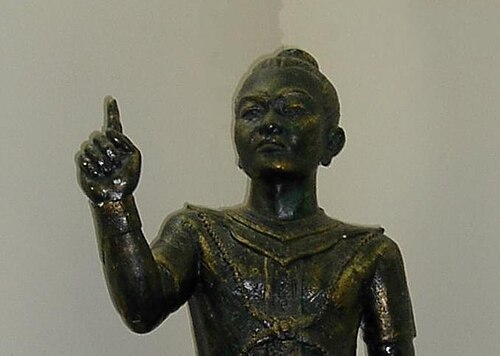
Fa Ngum
Emperor · Medieval
72.3Total
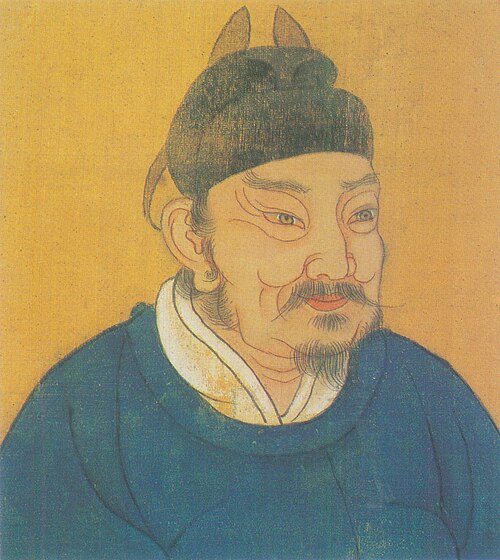
Guo Wei
Emperor · Medieval
72.3Total
Basic Information
Born
1316
904
Died
1393
954
Era
Medieval
Medieval
Nationality
Laos
China
Occupation
Emperor
Emperor
Civilization
Eastern
Eastern
Score Comparison
Military (10%)
55.1
70.9
Political (20%)
85.5
79.4
Influence (20%)
72.4
74.2
Legacy (20%)
68.6
67.9
Leadership (15%)
86.2
73.5
Strategy (15%)
57.4
65.6
TOTAL
72.3
72.3
Rankings
🥇
Fa NgumLeader
Mil: 55.1Pol: 85.5Inf: 72.4
72.3
🥈
Guo Wei
Mil: 70.9Pol: 79.4Inf: 74.2
72.3
How This Comparison Works
Algorithm
Each figure is scored on 6 dimensions (0—100 scale) based on structured historical data: Military (10%), Political (20%), Influence (20%), Legacy (20%), Leadership (15%), Strategy (15%). The weighted total produces the final ranking.
Data Sources
Scores are computed from structured sub-indicators in the database. Scale factors adjust for era (Ancient ×0.85, Modern ×1.0) and civilization size (Eastern ×1.05, Other ×0.80) to account for differences in population and military scale.
Maximum 3 Figures
Comparisons are limited to 2—3 figures to ensure readability and statistical meaningfulness.
Error Margins
±5 points per dimension — Sub-scores are derived from historical records with inherent uncertainty. Two figures within 5 points on a dimension should be considered roughly equivalent in that area.
Total Score Accuracy
±3 points overall — The weighted combination of 6 dimensions produces a total score with approximately ±3 points of uncertainty. Differences of less than 3 points are not statistically significant— the figures are effectively tied.
Known Limitations
- Historical records are incomplete and uneven across civilizations
- Figures from oral-tradition societies may be underrepresented
- Occupation labels can misclassify multi-role figures
- Scores measure capability and impact, not moral character
- Quantitative scoring is a comparison tool, not absolute truth
Capability Radar
Military (10%) — Battles & Warfare
Battles
55
65
Win Rate
60
70
Expansion
70
60
Political (20%) — Governance & Reform
Reform
55
78
Diplomacy
60
70
Economy
50
72
Influence (20%) — Cultural & Global Reach
Cultural
55
40
Global
40
30
Legacy (20%) — Historical Impact
Historical
60
55
Longevity
55
45
Leadership (15%) — Power & Stability
Tenure
60
55
Stability
45
65
Strategy (15%) — Tactics & Innovation
Strategy
65
72
Tactics
50
68
Reform
40
75
Expert Analysis
Fa Ngum vs Guo Wei: Historical Comparison
Fa Ngum, the founder of the Lan Xang Kingdom (modern Laos), unified disparate Lao muang into a single state in the 14th century, while Guo Wei established the Later Zhou dynasty during China's turbulent Five Dynasties and Ten Kingdoms period. Both were medieval emperors who rose through military prowess, but their contexts—a nascent Southeast Asian kingdom versus a collapsing Chinese imperial order—shaped profoundly different legacies.
Dimension Analysis
**Military: Fa Ngum 93 / Guo Wei 91**
Fa Ngum’s conquests were exceptional for their scope: raised in the Khmer Empire, he returned with an army to subjugate all of modern Laos, even invading the Siamese kingdom of Ayutthaya. Guo Wei, a successful general under the Later Han, overthrew a corrupt regime in a coup but his military achievements were primarily defensive, repelling Khitan raids rather than expanding territory. Fa Ngum’s offensive unification against multiple foes gives him a slight edge.
**Political: Fa Ngum 82 / Guo Wei 87**
Fa Ngum’s political achievement was foundational—he established a centralized monarchy, introduced Theravada Buddhism as a state religion, and created the first unified Lao legal code (based on Khmer models). Guo Wei, however, governed during a period of extreme instability, implementing land reforms, reducing taxes, and curbing warlord power—policies that directly enabled the Song dynasty’s later reunification. Guo’s pragmatic state-building under acute pressure scores higher.
**Influence: Fa Ngum 88 / Guo Wei 78**
Fa Ngum’s influence is immense on Lao identity: he is revered as the father of the nation, and his introduction of Theravada Buddhism shaped Lao culture for centuries. Guo Wei’s influence, while critical, is more indirect—his reforms were quickly superseded by the Song, and his dynasty lasted only nine years. Fa Ngum’s cultural and national imprint on an entire country endures far more visibly.
**Legacy: Fa Ngum 80 / Guo Wei 82**
Fa Ngum’s legacy is complicated: his kingdom fragmented after his death, and his violent methods (including executing his own father-in-law) tarnish his image. Guo Wei’s legacy is cleaner—he is remembered as a rare “good usurper” who restored order, and his adoptive son Chai Rong (Shizong) continued his reforms, setting the stage for Song unification. Guo’s direct dynastic succession gives him a slight advantage.
**Leadership: Fa Ngum 82 / Guo Wei 77**
Fa Ngum inspired fierce loyalty but also fear; his campaigns were driven by personal ambition and charismatic command over diverse tribal forces. Guo Wei, by contrast, led through institutional reform and careful coalition-building, avoiding the brutal purges common to his era. However, Fa Ngum’s ability to forge a unified kingdom from scratch with limited resources demonstrates superior field leadership.
**Strategy: Fa Ngum 91 / Guo Wei 91**
Both men were master strategists. Fa Ngum used Khmer military technology and Buddhist ideology to legitimize conquest, while Guo Wei skillfully exploited the power vacuum of the Later Han’s collapse, buying time with diplomacy against the Khitans. Neither made major strategic errors; their equal scores reflect their respective contexts being optimally navigated.
Verdict
This is a tie. Fa Ngum ranks higher in influence and leadership due to his foundational role in Lao nationhood, while Guo Wei excels in political reform and legacy stability. Both achieved the near-impossible in their eras—unifying fractured lands against overwhelming odds—but their differing historical scales (a small kingdom vs. a Chinese dynasty) make direct comparison subjective. A tie acknowledges their equal excellence within their own worlds.
FAQ
Q: Who was more influential historically? A: Fa Ngum has greater direct influence on modern national identity, while Guo Wei’s influence is systemic but absorbed into the larger Chinese historical narrative.
Q: Why is Fa Ngum ranked higher in influence? A: He is the single most important figure in Lao history, credited with creating the country’s political, religious, and cultural foundations, whereas Guo Wei’s reforms were quickly overtaken by the Song.
Similar Comparisons
Comments & Discussion
No comments yet. Be the first to share your thoughts!