Loading...
This comparison has not been analyzed yet.
One-time AI generation (~1 minute). Scores and timeline are already available below.
Fang Xiaoru vs Prince Shotoku
Prince Shotoku leads by 10.8 pts · 2 figures compared
…
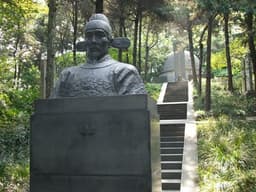
Fang Xiaoru
Politician · Medieval
49.0Total

Prince Shotoku
Politician · Medieval
59.8Total
Basic Information
Born
1357
574
Died
1402
622
Era
Medieval
Medieval
Nationality
China
Japan
Occupation
Politician
Politician
Civilization
Eastern
Eastern
Score Comparison
Military (10%)
45.7
38.9
Political (20%)
33.6
72.0
Influence (20%)
59.0
82.0
Legacy (20%)
58.0
40.0
Leadership (15%)
43.8
72.0
Strategy (15%)
35.9
38.5
TOTAL
49.0
59.8
Fang Xiaoru — Complete Timeline
1402 AD
Refused to Draft Edict for Yongle EmperorPolitical Action
After the Yongle Emperor usurped the throne, he ordered Fang Xiaoru to draft the accession edict. Fang refused, calling the usurper a traitor. This act of defiance led to his execution and the massacre of his entire clan.
Ming DynastyConfucian ScholarDefiance
Impact: nationaltragic
Executed with Ten ClansPolitical Action◆ Major
Fang Xiaoru was executed by dismemberment, and his family, students, and associates
Ming DynastyMassacreConfucian Resistance
Impact: nationaldestructive
Prince Shotoku — Complete Timeline
603 AD
Adoption of the Chinese Calendar and Rank SystemReform◆ Major
Prince Shotoku introduced the Twelve Level Cap and Rank System, based on Chinese models, to organize the court hierarchy. He also adopted the Chinese calendar, replacing earlier Japanese timekeeping methods, to align Japan with East Asian diplomatic and cultural norms.
Rank SystemChinese InfluenceCalendar
Impact: nationalconstructive
604 AD
Promulgation of the Seventeen-Article ConstitutionReform
Prince Shotoku issued the Seventeen-Article Constitution, a set of moral and political principles for governing Japan. The articles emphasized Confucian values such as harmony, meritocracy, and obedience to the emperor, and laid the groundwork for a centralized bureaucratic state.
ConstitutionConfucianismCentralization
Impact: nationalconstructive
607 AD
Dispatch of Missions to Sui ChinaPolitical Action◆ Major
Prince Shotoku dispatched official missions to the Sui court in China, led by Ono no Imoko. The missions sought to learn Chinese governance, Buddhism, and culture, and established formal diplomatic relations between Japan and China, enhancing Japan's international standing.
DiplomacySui DynastyCultural Exchange
Impact: regionalconstructive
Construction of Hōryū-ji TempleCultural◆ Major
Prince Shotoku ordered the construction of H
BuddhismArchitectureHōryū-ji
Impact: nationalconstructive
620 AD
Compilation of the Tennōki and KokkiCultural
Prince Shotoku commissioned the compilation of the Tenn
HistoriographyImperial LineageNihon Shoki
Impact: nationalconstructive
This comparison has not been analyzed yet.
One-time AI generation (~1 minute). Scores and timeline are already available below.
Rankings
🥇
Prince ShotokuLeader
Mil: 38.9Pol: 72.0Inf: 82.0
59.8
🥈
Fang Xiaoru
Mil: 45.7Pol: 33.6Inf: 59.0
49.0
+10.8 behind
How This Comparison Works
Algorithm
Each figure is scored on 6 dimensions (0—100 scale) based on structured historical data: Military (10%), Political (20%), Influence (20%), Legacy (20%), Leadership (15%), Strategy (15%). The weighted total produces the final ranking.
Data Sources
Scores are computed from structured sub-indicators in the database. Scale factors adjust for era (Ancient ×0.85, Modern ×1.0) and civilization size (Eastern ×1.05, Other ×0.80) to account for differences in population and military scale.
Maximum 3 Figures
Comparisons are limited to 2—3 figures to ensure readability and statistical meaningfulness.
Error Margins
±5 points per dimension — Sub-scores are derived from historical records with inherent uncertainty. Two figures within 5 points on a dimension should be considered roughly equivalent in that area.
Total Score Accuracy
±3 points overall — The weighted combination of 6 dimensions produces a total score with approximately ±3 points of uncertainty. Differences of less than 3 points are not statistically significant— the figures are effectively tied.
Known Limitations
- Historical records are incomplete and uneven across civilizations
- Figures from oral-tradition societies may be underrepresented
- Occupation labels can misclassify multi-role figures
- Scores measure capability and impact, not moral character
- Quantitative scoring is a comparison tool, not absolute truth
Capability Radar
Military (10%) — Battles & Warfare
Battles
38
37
Win Rate
41
41
Expansion
45
45
Political (20%) — Governance & Reform
Reform
20
75
Diplomacy
10
65
Economy
10
50
Influence (20%) — Cultural & Global Reach
Cultural
55
75
Global
40
55
Legacy (20%) — Historical Impact
Historical
60
80
Longevity
65
75
Leadership (15%) — Power & Stability
Tenure
15
60
Stability
5
60
Strategy (15%) — Tactics & Innovation
Strategy
45
46
Tactics
53
49
Reform
54
55
Similar Comparisons
Comments & Discussion
No comments yet. Be the first to share your thoughts!