Loading...
This comparison has not been analyzed yet.
One-time AI generation (~1 minute). Scores and timeline are already available below.
Felix Tshisekedi vs Joschka Fischer
Joschka Fischer leads by 16.3 pts · 2 figures compared
…
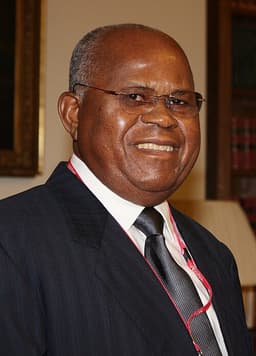
Felix Tshisekedi
Politician · Modern
42.1Total
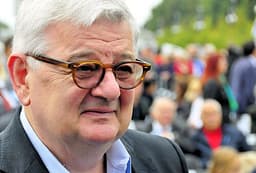
Joschka Fischer
Politician · Modern
58.4Total
Basic Information
Born
1963
1948
Died
—
—
Era
Modern
Modern
Nationality
DR Congo
Germany
Occupation
Politician
Politician
Civilization
Other
Western
Score Comparison
Military (10%)
29.3
50.0
Political (20%)
35.1
72.0
Influence (20%)
48.6
62.0
Legacy (20%)
37.5
48.3
Leadership (15%)
55.3
72.0
Strategy (15%)
40.6
42.7
TOTAL
42.1
58.4
Felix Tshisekedi — Complete Timeline
2019 AD
Launched Free Primary Education PolicyReform◆ Major
Tshisekedi's government implemented a policy of free primary education, abolishing school fees for public primary schools. The policy led to a surge in enrollment but faced challenges including overcrowding, teacher shortages, and delayed salary payments.
Education reformSocial policyImplementation challenges
Impact: nationalprogressive
Elected President of the Democratic Republic of the CongoPolitical Action
Felix Tshisekedi was declared winner of the 2018 presidential election, succeeding Joseph Kabila. The election was widely disputed, with allegations of a backroom deal with Kabila, but Tshisekedi became the first peaceful transfer of power in the DRC's history.
ElectionPresidencyDemocratic transition
Impact: national
Formed Coalition Government with Joseph KabilaPolitical Action◆ Major
Tshisekedi formed a coalition government with Joseph Kabila's Common Front for Congo (FCC) party, giving Kabila's allies control over key ministries and parliament. This power-sharing arrangement limited Tshisekedi's ability to govern independently.
CoalitionPower-sharingKabila
Impact: national
2020 AD
Broke Coalition and Formed New MajorityPolitical Action◆ Major
Tshisekedi ended the coalition with Kabila's FCC, forming a new parliamentary majority called the Union for the Nation. This move consolidated his power, allowing him to appoint his own prime minister and cabinet, and reduce Kabila's influence.
Political realignmentConsolidation of powerKabila
Impact: nationalconstructive
2021 AD
Declared State of Siege in Eastern ProvincesPolitical Action◆ Major
Tshisekedi declared a state of siege in North Kivu and Ituri provinces, replacing civilian authorities with military and police officers to combat armed groups. The measure was controversial, with critics arguing it failed to improve security and led to human rights abuses.
State of siegeSecurityEastern DRC
Impact: regional
2023 AD
Re-elected PresidentPolitical Action◆ Major
Tshisekedi won re-election in the 2023 presidential election with over 73% of the vote, according to official results. The election was marred by logistical problems, opposition allegations of fraud, and violent protests, but Tshisekedi secured a second term.
ElectionRe-electionControversy
Impact: national
Joschka Fischer — Complete Timeline
1998 AD
Appointed German Foreign MinisterPolitical Action◆ Major
Joschka Fischer was appointed as German Foreign Minister and Vice Chancellor in the coalition government of Chancellor Gerhard Schr
Foreign MinisterCoalitionGerman Politics
Impact: globalconstructive
1999 AD
Advocated for German Participation in Kosovo WarWar◆ Major
Fischer argued for and secured German participation in the NATO bombing of Yugoslavia during the Kosovo War. This marked the first time since WWII that German forces were involved in a combat mission, sparking intense debate within the Green Party.
Kosovo WarNATOMilitary Intervention
Impact: global
2003 AD
Opposed the Iraq WarPolitical Action◆ Major
Fischer strongly opposed the US-led invasion of Iraq, delivering a famous speech at the Munich Security Conference. He argued against the war's legality and wisdom, helping to keep Germany out of the conflict and straining US-German relations.
Iraq WarForeign PolicyDiplomacy
Impact: globalconstructive
2005 AD
Resigned as Foreign Minister after 2005 ElectionPolitical Action
Following the 2005 federal election, Fischer resigned as Foreign Minister after the SPD-Green coalition lost power. He left active politics and later worked as a consultant and author.
ResignationElectionPolitical Career
Impact: national
This comparison has not been analyzed yet.
One-time AI generation (~1 minute). Scores and timeline are already available below.
Rankings
🥇
Joschka FischerLeader
Mil: 50.0Pol: 72.0Inf: 62.0
58.4
🥈
Felix Tshisekedi
Mil: 29.3Pol: 35.1Inf: 48.6
42.1
+16.3 behind
How This Comparison Works
Algorithm
Each figure is scored on 6 dimensions (0—100 scale) based on structured historical data: Military (10%), Political (20%), Influence (20%), Legacy (20%), Leadership (15%), Strategy (15%). The weighted total produces the final ranking.
Data Sources
Scores are computed from structured sub-indicators in the database. Scale factors adjust for era (Ancient ×0.85, Modern ×1.0) and civilization size (Eastern ×1.05, Other ×0.80) to account for differences in population and military scale.
Maximum 3 Figures
Comparisons are limited to 2—3 figures to ensure readability and statistical meaningfulness.
Error Margins
±5 points per dimension — Sub-scores are derived from historical records with inherent uncertainty. Two figures within 5 points on a dimension should be considered roughly equivalent in that area.
Total Score Accuracy
±3 points overall — The weighted combination of 6 dimensions produces a total score with approximately ±3 points of uncertainty. Differences of less than 3 points are not statistically significant— the figures are effectively tied.
Known Limitations
- Historical records are incomplete and uneven across civilizations
- Figures from oral-tradition societies may be underrepresented
- Occupation labels can misclassify multi-role figures
- Scores measure capability and impact, not moral character
- Quantitative scoring is a comparison tool, not absolute truth
Capability Radar
Military (10%) — Battles & Warfare
Battles
20
28
Win Rate
24
30
Expansion
26
36
Political (20%) — Governance & Reform
Reform
25
60
Diplomacy
30
70
Economy
20
55
Influence (20%) — Cultural & Global Reach
Cultural
10
45
Global
20
55
Legacy (20%) — Historical Impact
Historical
15
50
Longevity
10
40
Leadership (15%) — Power & Stability
Tenure
35
65
Stability
15
60
Strategy (15%) — Tactics & Innovation
Strategy
29
40
Tactics
36
40
Reform
38
43
Similar Comparisons
Comments & Discussion
No comments yet. Be the first to share your thoughts!