Loading...
Feng Yuxiang vs William Tecumseh Sherman
William Tecumseh Sherman leads by 4.8 pts · 2 figures compared
…
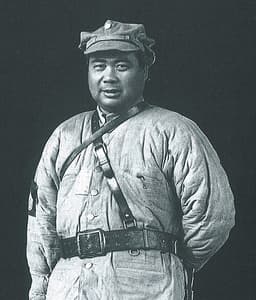
Feng Yuxiang
General · Modern
56.8Total

William Tecumseh Sherman
General · Modern
61.6Total
Basic Information
Born
1882
1820
Died
1948
1891
Era
Modern
Modern
Nationality
China
United States
Occupation
General
General
Civilization
Eastern
Western
Score Comparison
Military (10%)
50.0
72.0
Political (20%)
62.7
42.2
Influence (20%)
58.0
65.0
Legacy (20%)
50.0
68.0
Leadership (15%)
62.0
50.7
Strategy (15%)
60.7
72.0
TOTAL
56.8
61.6
Feng Yuxiang — Complete Timeline
1914 AD
Conversion to ChristianityCultural
Feng Yuxiang converted to Christianity, earning him the nickname 'The Christian General'. He required his soldiers to attend Christian services and promoted Christian ethics within his army. This conversion was unusual among Chinese warlords and influenced his governance style.
ReligionChristianityWarlord
Impact: regionalconstructive
1924 AD
Beijing Coup of 1924Political Action◆ Major
Feng Yuxiang staged the Beijing Coup, overthrowing the Zhili clique government and capturing Beijing. He invited Sun Yat-sen to discuss national unification. The coup led to the establishment of a provisional government under Duan Qirui and temporarily shifted the balance of power among warlords.
CoupWarlord EraBeijing
Impact: national
1927 AD
Defection to the Nationalist GovernmentPolitical Action◆ Major
Feng Yuxiang defected from the Fengtian clique and allied with the Nationalist government under Chiang Kai-shek. He participated in the Northern Expedition, helping to defeat other warlords. This alliance strengthened the Nationalist cause but also led to conflicts with other warlords.
AllianceNationalistNorthern Expedition
Impact: nationalconstructive
1930 AD
Defeat in the Central Plains WarWar◆ Major
Feng Yuxiang joined the anti-Chiang Kai-shek coalition in the Central Plains War. His forces were defeated by Chiang's National Revolutionary Army. The defeat ended Feng's military power and forced him into retirement. He later fled to the Soviet Union.
WarDefeatWarlord
Impact: nationaldestructive
William Tecumseh Sherman — Complete Timeline
1862 AD
Battle of ShilohWar◆ Major
Sherman commanded a division at Shiloh, where his initial failure to entrench led to a surprise Confederate attack. Despite heavy losses, he rallied his troops and contributed to the Union victory, though the battle was criticized for poor preparation.
American Civil WarWestern TheaterBloody Battle
Impact: nationaltragic
1863 AD
Battle of VicksburgWar
Sherman played a key role in Grant's Vicksburg Campaign, leading assaults and siege operations. The capture of Vicksburg gave the Union control of the Mississippi River, splitting the Confederacy in two.
American Civil WarSiegeMississippi River
Impact: national
1864 AD
March to the SeaWar
Sherman led 60,000 Union troops from Atlanta to Savannah, destroying railroads, factories, and civilian property in a 300-mile swath. The campaign aimed to break Confederate morale and economic capacity, and resulted in the capture of Savannah.
American Civil WarTotal WarScorched Earth
Impact: nationaldestructive
1865 AD
Carolinas CampaignWar◆ Major
Sherman led his army through the Carolinas, destroying infrastructure and supplies. The campaign culminated in the capture of Columbia, South Carolina, and the surrender of Confederate forces under Joseph Johnston, effectively ending the war in the East.
American Civil WarTotal WarConfederate Surrender
Impact: nationaldestructive
Expert Analysis
Origins
Feng Yuxiang was born in 1882 in Baoding, Hebei, China, into a poor military family. His father served as a low-ranking officer in the Qing army. Feng received little formal education but joined the army at age 15, where he rose through the ranks due to his physical strength and strict discipline. He converted to Christianity in the 1910s, earning the nickname "The Christian General," and required his soldiers to attend services and memorize biblical verses.
William Tecumseh Sherman was born in 1820 in Lancaster, Ohio, to a prominent lawyer family. After his father's death, he was raised by a neighbor, Thomas Ewing, a U.S. Senator. Sherman graduated from West Point in 1840, sixth in his class. He served in the Second Seminole War and later resigned from the army to work as a banker and lawyer, but struggled financially. He returned to military service in 1861 at the outbreak of the Civil War.
Rise to Power
Feng Yuxiang's rise began during the warlord era of Republican China. In 1924, he staged the Beijing Coup, overthrowing the Zhili clique government and capturing Beijing. He invited Sun Yat-sen to discuss national unification, but Sun died soon after. Feng then allied with the Fengtian clique but later defected to the Nationalist government under Chiang Kai-shek in 1926, participating in the Northern Expedition against other warlords. By 1928, he controlled a large army and territory in northern China.
Sherman's rise came through the Civil War. After initial command at the First Battle of Bull Run in 1861, he was criticized for his pessimistic reports. However, he gained Grant's trust and served under him at the Battle of Shiloh (April 1862), where his division was surprised but rallied. Sherman's key turning point was the Vicksburg Campaign (1863), where he led assaults and siege operations, earning promotion. In 1864, he was given command of the Western Theater, leading the Atlanta Campaign and then the March to the Sea.
Leadership & Governance
Feng Yuxiang's leadership was characterized by strict moral discipline and Christian piety. He banned gambling, smoking, and drinking in his army, and required soldiers to study the Bible. He also implemented land reforms and education programs in areas he controlled. However, his governance was inconsistent; he frequently switched allegiances, first supporting the Republic, then the Nationalists, then opposing Chiang. His political score of 62.7 reflects his ability to navigate warlord politics but also his ultimate failure to build lasting institutions.
Sherman's leadership was pragmatic and ruthless. He believed in total war to break the Confederacy's will, as seen in his March to the Sea (November-December 1864), where 60,000 troops destroyed railroads, factories, and civilian property across 300 miles. His military score of 72.0 reflects his strategic effectiveness, but his political score of 42.2 shows his disdain for politics. He famously said, "War is hell," and refused to run for president, unlike Grant.
Triumph & Tragedy
Feng Yuxiang's greatest triumph was the Beijing Coup of 1924, which brought him national prominence and allowed him to influence Chinese politics. He also successfully integrated into the Nationalist coalition and contributed to the Northern Expedition. However, his greatest failure was the Central Plains War of 1930, where he joined a coalition against Chiang Kai-shek and was decisively defeated, losing his army and political influence. His total score of 56.8 reflects his mixed record.
Sherman's greatest triumph was the March to the Sea, which crippled the Confederate economy and hastened the end of the Civil War. His Carolinas Campaign further destroyed infrastructure. However, his failure at the Battle of Shiloh, where he neglected to entrench, caused unnecessary casualties and nearly lost the battle. His leadership score of 50.7 indicates his weaknesses in tactical defense.
Character & Destiny
Feng Yuxiang was known as the "Christian General" for his religious zeal, but also as a political opportunist. He switched sides multiple times, which ultimately led to his downfall. His character was a mix of idealism and pragmatism, but he lacked a consistent strategic vision. Historical assessments note his genuine concern for soldiers' welfare but also his inability to build a stable power base.
Sherman was known for his strategic brilliance and harsh methods. He was deeply loyal to Grant and to the Union cause. His famous quote, "War is cruelty, and you cannot refine it," reflects his belief in total war. His character was resolute and strategic, but he was also prone to depression and pessimism early in the war. He refused political ambition, which limited his influence beyond the military.
Legacy
Feng Yuxiang's legacy is mixed. He is remembered in China as a warlord who promoted Christianity and modern reforms, but also as a failed politician. His reforms in his territories were short-lived, and his military achievements were overshadowed by his defeats. His influence score of 58.0 reflects his limited lasting impact.
Sherman's legacy is profound. His concept of total war influenced military strategy into the 20th century. He is remembered in the North as a hero who ended the war quickly, but in the South as a villain who waged war on civilians. His legacy score of 68.0 reflects his enduring place in American history. The March to the Sea remains a touchstone for discussions of wartime ethics.
Conclusion
While Feng Yuxiang was a significant figure in China's warlord era, his impact was ultimately limited by his political failures and inconsistent leadership. Sherman, with a total score of 61.6 compared to Feng's 56.8, had a greater impact on military strategy and the outcome of the American Civil War. Sherman's concept of total war not only ended the Confederacy but also set a precedent for modern warfare. Feng's legacy is more regional and ephemeral. Therefore, William Tecumseh Sherman had a greater historical impact.
Rankings
🥇
William Tecumseh ShermanLeader
Mil: 72.0Pol: 42.2Inf: 65.0
61.6
🥈
Feng Yuxiang
Mil: 50.0Pol: 62.7Inf: 58.0
56.8
+4.8 behind
How This Comparison Works
Algorithm
Each figure is scored on 6 dimensions (0—100 scale) based on structured historical data: Military (10%), Political (20%), Influence (20%), Legacy (20%), Leadership (15%), Strategy (15%). The weighted total produces the final ranking.
Data Sources
Scores are computed from structured sub-indicators in the database. Scale factors adjust for era (Ancient ×0.85, Modern ×1.0) and civilization size (Eastern ×1.05, Other ×0.80) to account for differences in population and military scale.
Maximum 3 Figures
Comparisons are limited to 2—3 figures to ensure readability and statistical meaningfulness.
Error Margins
±5 points per dimension — Sub-scores are derived from historical records with inherent uncertainty. Two figures within 5 points on a dimension should be considered roughly equivalent in that area.
Total Score Accuracy
±3 points overall — The weighted combination of 6 dimensions produces a total score with approximately ±3 points of uncertainty. Differences of less than 3 points are not statistically significant— the figures are effectively tied.
Known Limitations
- Historical records are incomplete and uneven across civilizations
- Figures from oral-tradition societies may be underrepresented
- Occupation labels can misclassify multi-role figures
- Scores measure capability and impact, not moral character
- Quantitative scoring is a comparison tool, not absolute truth
Capability Radar
Military (10%) — Battles & Warfare
Battles
55
85
Win Rate
50
80
Expansion
45
75
Political (20%) — Governance & Reform
Reform
60
20
Diplomacy
55
40
Economy
40
25
Influence (20%) — Cultural & Global Reach
Cultural
45
75
Global
35
65
Legacy (20%) — Historical Impact
Historical
50
80
Longevity
40
70
Leadership (15%) — Power & Stability
Tenure
50
30
Stability
35
20
Strategy (15%) — Tactics & Innovation
Strategy
55
95
Tactics
60
90
Reform
65
70
Similar Comparisons
Comments & Discussion
No comments yet. Be the first to share your thoughts!