Loading...
Ferdinand I of Aragon vs Mircea the Elder
Mircea the Elder leads by 7.5 pts · 2 figures compared
…
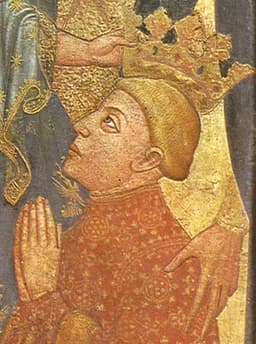
Ferdinand I of Aragon
Emperor · Medieval
54.8Total
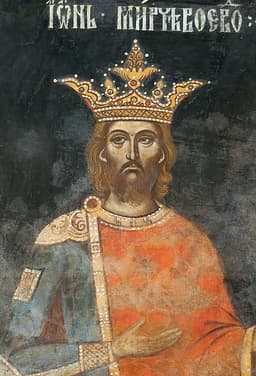
Mircea the Elder
Emperor · Medieval
62.3Total
Basic Information
Born
1380
1355
Died
1416
1418
Era
Medieval
Medieval
Nationality
Aragon
Wallachia
Occupation
Emperor
Emperor
Civilization
Western
Western
Score Comparison
Military (10%)
40.0
70.0
Political (20%)
68.0
72.0
Influence (20%)
55.7
55.0
Legacy (20%)
45.0
58.0
Leadership (15%)
74.0
72.0
Strategy (15%)
43.3
55.0
TOTAL
54.8
62.3
Ferdinand I of Aragon — Complete Timeline
1412 AD
Compromise of CaspePolitical Action
Ferdinand I was elected King of Aragon by the Compromise of Caspe, a commission of nine representatives from Aragon, Catalonia, and Valencia. This resolved the succession crisis following the death of Martin I without a direct heir, bringing the Trastamara dynasty to the Aragonese throne.
Succession crisisTrastamara dynasty
Impact: regionalconstructive
1414 AD
Conquest of SardiniaWar◆ Major
Ferdinand I launched a military campaign to subdue the rebellious Sardinian nobles who had resisted Aragonese rule. The campaign successfully reasserted Aragonese control over the island, consolidating the Crown of Aragon's Mediterranean possessions.
Mediterranean expansionSardinia
Impact: regional
1415 AD
Reform of the Aragonese administrationReform
Ferdinand I implemented administrative reforms in the Crown of Aragon, including the reorganization of the royal council and the standardization of tax collection. These reforms strengthened royal authority and improved the efficiency of governance across the diverse territories of Aragon.
Administrative reformRoyal authority
Impact: nationalconstructive
Mircea the Elder — Complete Timeline
1395 AD
Battle of RovineWar◆ Major
Mircea the Elder led Wallachian forces to victory against the Ottoman army of Bayezid I at Rovine. The battle halted Ottoman expansion into Wallachia for a period and secured Mircea's rule.
Ottoman-Wallachian WarsDefenseVictory
Impact: regional
Treaty with Poland and HungaryPolitical Action◆ Major
Mircea signed an alliance with King Sigismund of Hungary and W
AllianceAnti-Ottoman Coalition
Impact: regionalconstructive
1396 AD
Battle of NicopolisWar◆ Major
Mircea contributed Wallachian troops to the Crusader army that was decisively defeated by the Ottomans at Nicopolis. The defeat weakened the anti-Ottoman coalition and left Wallachia vulnerable.
CrusadeDefeatOttoman Victory
Impact: regionaltragic
1417 AD
Ottoman Invasion of WallachiaWar◆ Major
Ottoman forces under Mehmed I invaded Wallachia, forcing Mircea to accept vassalage and pay tribute. This event marked the beginning of Wallachia's subordination to the Ottoman Empire.
Ottoman ExpansionVassalageDefeat
Impact: regionaltragic
Expert Analysis
Origins
Ferdinand I of Aragon was born in 1380 as Ferdinand of Trastamara, the son of John I of Castile and Eleanor of Aragon. He grew up in the Castilian court, receiving education in governance and military affairs. His family background placed him in the line of succession for both Castile and Aragon, but his rise was not automatic—he had to navigate the complex politics of the Iberian kingdoms.
Mircea the Elder was born around 1355 into the Basarab dynasty, rulers of Wallachia. His father, Radu I, and grandfather, Nicholas Alexander, had consolidated Wallachian autonomy. Mircea received training in warfare and diplomacy from a young age, preparing him to defend his realm against the expanding Ottoman Empire.
Rise to Power
Ferdinand I's rise came through the Compromise of Caspe in 1412. After the death of Martin of Aragon without direct heirs, nine representatives from Aragon, Catalonia, and Valencia elected Ferdinand as king over other claimants, including James II of Urgell. This political decision, influenced by Ferdinand's promise to uphold the privileges of the realms, secured his throne. He scored 68.0 in political acumen, reflecting his ability to navigate this succession crisis.
Mircea the Elder ascended to the throne of Wallachia in 1386, following the death of his father, Radu I. He quickly asserted his authority by consolidating control over key boyar factions and strengthening the military. His early reign focused on securing Wallachia's borders against Hungarian and Ottoman pressures. The turning point was his victory at the Battle of Rovine in 1394, which established him as a formidable opponent to the Ottomans.
Leadership & Governance
Ferdinand I governed the Crown of Aragon through administrative reforms. He reorganized the royal council, standardizing tax collection and judicial procedures. His leadership style was bureaucratic and consensus-oriented, working through the Cortes (parliaments) of each realm. He scored 74.0 in leadership, but his military score of 40.0 indicates a preference for diplomacy over warfare. For example, instead of full-scale war, he negotiated the return of Sardinia after a rebellion.
Mircea the Elder led Wallachia with a hands-on military approach. He personally commanded armies at Rovine and Nicopolis. His governance combined feudal traditions with the need for centralized resistance against the Ottomans. He formed alliances with Hungary and Poland, but his leadership was tested by the need to balance independence with pragmatic vassalage. His political score of 72.0 reflects his diplomatic skill, but his strategic score of 55.0 shows limitations in long-term planning.
Triumph & Tragedy
Ferdinand I's greatest success was the Compromise of Caspe, which secured his kingship and avoided civil war. He also successfully subdued the Sardinian rebellion, reasserting Aragonese control. However, his reign was marked by limited territorial expansion; he failed to capitalize on the weakness of Castile or to check the rise of the Ottoman threat in the Mediterranean. His legacy score of 45.0 reflects his modest impact.
Mircea the Elder's triumph was the Battle of Rovine, where he defeated Bayezid I's army, temporarily halting Ottoman expansion. He also formed the Christian coalition with Hungary and Poland. His tragedy was the Battle of Nicopolis in 1396, where the Crusader army was crushed, and Wallachia suffered heavy losses. Later, Ottoman invasions forced him to accept vassalage and pay tribute, a blow to his independence. His overall score of 62.3 outweighs Ferdinand's 54.8.
Character & Destiny
Ferdinand I was a cautious, legalistic ruler. His character shaped a destiny of consolidation rather than conquest. He preferred negotiation to war, which preserved the Crown of Aragon's stability but limited its expansion. Historians view him as a competent administrator but not a transformative leader.
Mircea the Elder was a warrior and diplomat, fiercely independent but pragmatic. His character led him to fight when necessary but also to accept vassalage when survival demanded it. This duality defined his destiny: he saved Wallachia from immediate destruction but could not prevent eventual Ottoman domination.
Legacy
Ferdinand I's legacy is the consolidation of the Trastamara dynasty in Aragon and the administrative reforms that strengthened the Crown. His reign set the stage for his son, Alfonso V, to pursue Mediterranean expansion. However, his influence score of 55.7 is moderate.
Mircea the Elder is remembered as a national hero in Romania, a symbol of resistance against the Ottomans. His military victory at Rovine is celebrated, and his diplomatic efforts laid groundwork for future anti-Ottoman coalitions. His legacy score of 58.0 reflects his enduring symbolic importance.
Conclusion
While Ferdinand I of Aragon scored 54.8 overall and Mircea the Elder scored 62.3, the gap of 7.5 points is significant. Mircea had greater impact due to his military achievements and his role in shaping Wallachian identity against a major empire. Ferdinand's administrative work was important but less transformative. Therefore, Mircea the Elder emerges as the more consequential figure.
Rankings
🥇
Mircea the ElderLeader
Mil: 70.0Pol: 72.0Inf: 55.0
62.3
🥈
Ferdinand I of Aragon
Mil: 40.0Pol: 68.0Inf: 55.7
54.8
+7.5 behind
How This Comparison Works
Algorithm
Each figure is scored on 6 dimensions (0—100 scale) based on structured historical data: Military (10%), Political (20%), Influence (20%), Legacy (20%), Leadership (15%), Strategy (15%). The weighted total produces the final ranking.
Data Sources
Scores are computed from structured sub-indicators in the database. Scale factors adjust for era (Ancient ×0.85, Modern ×1.0) and civilization size (Eastern ×1.05, Other ×0.80) to account for differences in population and military scale.
Maximum 3 Figures
Comparisons are limited to 2—3 figures to ensure readability and statistical meaningfulness.
Error Margins
±5 points per dimension — Sub-scores are derived from historical records with inherent uncertainty. Two figures within 5 points on a dimension should be considered roughly equivalent in that area.
Total Score Accuracy
±3 points overall — The weighted combination of 6 dimensions produces a total score with approximately ±3 points of uncertainty. Differences of less than 3 points are not statistically significant— the figures are effectively tied.
Known Limitations
- Historical records are incomplete and uneven across civilizations
- Figures from oral-tradition societies may be underrepresented
- Occupation labels can misclassify multi-role figures
- Scores measure capability and impact, not moral character
- Quantitative scoring is a comparison tool, not absolute truth
Capability Radar
Military (10%) — Battles & Warfare
Battles
40
65
Win Rate
45
60
Expansion
50
60
Political (20%) — Governance & Reform
Reform
45
60
Diplomacy
60
75
Economy
50
65
Influence (20%) — Cultural & Global Reach
Cultural
35
55
Global
30
50
Legacy (20%) — Historical Impact
Historical
40
65
Longevity
30
60
Leadership (15%) — Power & Stability
Tenure
55
70
Stability
50
60
Strategy (15%) — Tactics & Innovation
Strategy
40
75
Tactics
35
70
Reform
30
55
Similar Comparisons
Comments & Discussion
No comments yet. Be the first to share your thoughts!