Loading...
This comparison has not been analyzed yet.
One-time AI generation (~1 minute). Scores and timeline are already available below.
Ferruccio Parri vs Ranil Wickremesinghe
Ranil Wickremesinghe leads by 1.4 pts · 2 figures compared
…

Ferruccio Parri
Politician · Modern
49.3Total
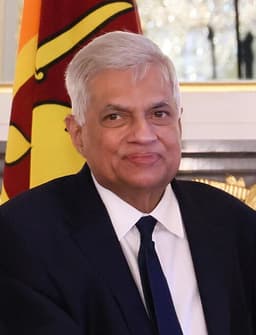
Ranil Wickremesinghe
Politician · Modern
50.7Total
Basic Information
Born
1890
1949
Died
1981
—
Era
Modern
Modern
Nationality
Italy
Sri Lanka
Occupation
Politician
Politician
Civilization
Western
Indian
Score Comparison
Military (10%)
49.3
25.9
Political (20%)
48.0
45.0
Influence (20%)
54.9
54.9
Legacy (20%)
46.7
45.8
Leadership (15%)
48.4
68.0
Strategy (15%)
44.7
60.0
TOTAL
49.3
50.7
Ferruccio Parri — Complete Timeline
1945 AD
Appointed Prime Minister of ItalyPolitical Action◆ Major
Parri was appointed Prime Minister of Italy after World War II, leading a coalition government of anti-fascist parties (the National Liberation Committee). He implemented purges of fascist officials and economic reforms, but his government lasted only five months.
Post-WarPoliticsItaly
Impact: nationalconstructive
Resignation as Prime MinisterPolitical Action◆ Major
Parri resigned as Prime Minister in November 1945 after losing a vote of confidence. His government's inability to stabilize the economy and internal divisions among coalition partners led to his replacement by Alcide De Gasperi.
PoliticsResignationItaly
Impact: national
Ranil Wickremesinghe — Complete Timeline
1987 AD
Signed the Indo-Sri Lanka Peace AccordPolitical Action◆ Major
As a key negotiator, Wickremesinghe helped finalize the Indo-Sri Lanka Peace Accord, which aimed to end the Sri Lankan Civil War by devolving power to provinces and deploying Indian peacekeeping forces. The accord ultimately failed to bring lasting peace.
Peace accordIndiaCivil war
Impact: regional
1993 AD
Appointed Prime Minister for the first timePolitical Action◆ Major
Ranil Wickremesinghe was appointed Prime Minister of Sri Lanka by President D.B. Wijetunga, following the assassination of President Ranasinghe Premadasa. He led the United National Party government, beginning a long political career marked by multiple terms.
Prime MinisterUNPSri Lanka
Impact: national
2005 AD
Lost the 2005 presidential electionPolitical Action◆ Major
Wickremesinghe, as the UNP candidate, lost the presidential election to Mahinda Rajapaksa. The defeat was partly attributed to a boycott by the Tamil Tiger rebels, which suppressed voter turnout in the north and east. This loss kept him out of power for several years.
Election lossRajapaksaUNP
Impact: national
2022 AD
Became Prime Minister for a sixth timePolitical Action◆ Major
After the resignation of Mahinda Rajapaksa amid economic crisis, Wickremesinghe was appointed Prime Minister. He later became acting president and then president after Gotabaya Rajapaksa fled the country. His leadership focused on stabilizing the economy and securing an IMF bailout.
Prime MinisterEconomic crisisIMF
Impact: national
This comparison has not been analyzed yet.
One-time AI generation (~1 minute). Scores and timeline are already available below.
Rankings
🥇
Ranil WickremesingheLeader
Mil: 25.9Pol: 45.0Inf: 54.9
50.7
🥈
Ferruccio Parri
Mil: 49.3Pol: 48.0Inf: 54.9
49.3
+1.4 behind
How This Comparison Works
Algorithm
Each figure is scored on 6 dimensions (0—100 scale) based on structured historical data: Military (10%), Political (20%), Influence (20%), Legacy (20%), Leadership (15%), Strategy (15%). The weighted total produces the final ranking.
Data Sources
Scores are computed from structured sub-indicators in the database. Scale factors adjust for era (Ancient ×0.85, Modern ×1.0) and civilization size (Eastern ×1.05, Other ×0.80) to account for differences in population and military scale.
Maximum 3 Figures
Comparisons are limited to 2—3 figures to ensure readability and statistical meaningfulness.
Error Margins
±5 points per dimension — Sub-scores are derived from historical records with inherent uncertainty. Two figures within 5 points on a dimension should be considered roughly equivalent in that area.
Total Score Accuracy
±3 points overall — The weighted combination of 6 dimensions produces a total score with approximately ±3 points of uncertainty. Differences of less than 3 points are not statistically significant— the figures are effectively tied.
Known Limitations
- Historical records are incomplete and uneven across civilizations
- Figures from oral-tradition societies may be underrepresented
- Occupation labels can misclassify multi-role figures
- Scores measure capability and impact, not moral character
- Quantitative scoring is a comparison tool, not absolute truth
Capability Radar
Military (10%) — Battles & Warfare
Battles
31
46
Win Rate
33
48
Expansion
32
50
Political (20%) — Governance & Reform
Reform
40
55
Diplomacy
50
60
Economy
30
50
Influence (20%) — Cultural & Global Reach
Cultural
30
30
Global
30
40
Legacy (20%) — Historical Impact
Historical
40
40
Longevity
30
35
Leadership (15%) — Power & Stability
Tenure
20
65
Stability
20
40
Strategy (15%) — Tactics & Innovation
Strategy
40
53
Tactics
43
54
Reform
46
58
Similar Comparisons
Comments & Discussion
No comments yet. Be the first to share your thoughts!