Loading...
Francis II Rakoczi vs Li Zicheng
Francis II Rakoczi leads by 10.7 pts · 2 figures compared
…
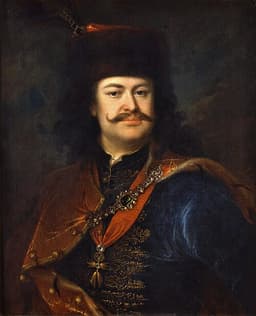
Francis II Rakoczi
Revolutionary · Modern
54.2Total
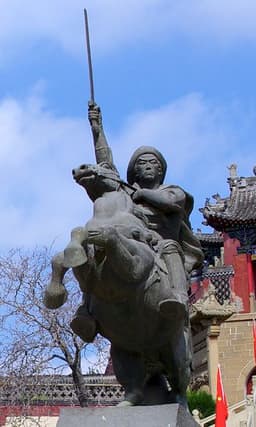
Li Zicheng
Revolutionary · Modern
43.5Total
Basic Information
Born
1676
1606
Died
1735
1645
Era
Modern
Modern
Nationality
Hungary
China
Occupation
Revolutionary
Revolutionary
Civilization
Western
Eastern
Score Comparison
Military (10%)
55.0
50.0
Political (20%)
46.6
27.9
Influence (20%)
57.2
52.5
Legacy (20%)
52.0
44.2
Leadership (15%)
57.6
39.0
Strategy (15%)
57.5
43.3
TOTAL
54.2
43.5
Francis II Rakoczi — Complete Timeline
1703 AD
Rákóczi's War of IndependenceWar◆ Major
Francis II Rakoczi led a major uprising against Habsburg rule in Hungary, known as R
War of IndependenceHabsburgRebellion
Impact: regional
1704 AD
Election as Prince of TransylvaniaPolitical Action◆ Major
Francis II Rakoczi was elected Prince of Transylvania by the Hungarian estates, leading the anti-Habsburg rebellion. His election marked the formal leadership of the uprising.
ElectionRebellion
Impact: regional
1708 AD
Battle of TrencinWar◆ Major
Francis II Rakoczi's forces were decisively defeated by the Habsburg army at the Battle of Trencin. The defeat marked a turning point, leading to the decline of the rebellion.
BattleDefeatTurning Point
Impact: regionaltragic
1711 AD
Exile in the Ottoman EmpirePolitical Action◆ Major
After the failure of the rebellion, Francis II Rakoczi went into exile in the Ottoman Empire. He refused to accept Habsburg amnesty and lived in Ottoman territory until his death.
ExileOttoman
Impact: regionaltragic
Li Zicheng — Complete Timeline
1644 AD
Captured Beijing and Ended the Ming DynastyWar
Li Zicheng led his rebel army to capture Beijing. The Chongzhen Emperor committed suicide, ending the Ming dynasty. Li Zicheng proclaimed the Shun dynasty and briefly ruled from the Forbidden City before being defeated by Qing forces.
Ming-Qing TransitionRebellionBeijing
Impact: globaldestructive
Defeated at the Battle of Shanhai PassWar◆ Major
Li Zicheng's army was defeated by the combined forces of Wu Sangui and the Manchus at the Battle of Shanhai Pass. The defeat forced him to abandon Beijing and retreat westward, effectively ending his control over northern China.
Ming-Qing TransitionBattleDefeat
Impact: globaltragic
Proclaimed the Shun DynastyPolitical Action◆ Major
After capturing Beijing, Li Zicheng formally proclaimed the establishment of the Shun dynasty in Xi'an. He adopted the title of emperor and began implementing his own administrative policies, though his rule was short-lived.
Shun DynastyProclamationRebellion
Impact: nationalconstructive
1645 AD
Killed in Jiugong MountainWar◆ Major
Li Zicheng was killed by a local militia while fleeing through Jiugong Mountain in Hubei province. His death marked the end of the Shun dynasty and the collapse of his rebellion, though some accounts claim he survived and became a monk.
Shun DynastyDeathRebellion
Impact: nationaltragic
Expert Analysis
Li Zicheng vs Francis II Rakoczi
# The Rebel’s Two Fates
In the spring of 1644, a peasant army stormed through the gates of Beijing, and the last Ming emperor hanged himself on Coal Hill. In the autumn of 1703, a Hungarian nobleman raised the banner of revolt in the Carpathian Basin, vowing to break the Habsburg grip on his homeland. Both men sought to topple empires. One would hold a capital for forty-two days; the other would fight for eight years before riding into eternal exile. Why did Li Zicheng, the peasant who conquered a dynasty, vanish into a footnote, while Francis II Rákóczi, the prince who lost his war, became a national legend? The answer lies not in their victories, but in what they built—or failed to build—upon the ruins.
Origins
Li Zicheng was born in 1606 into a world collapsing under its own weight. The Ming dynasty was hemorrhaging tax revenue, suffering from a "Little Ice Age" that withered crops, and plagued by bureaucratic rot. Li grew up a shepherd and later a post-station courier—a man of the soil, unlettered, hardened by famine. When the government abolished his courier post to save money, he joined the swelling ranks of the starving and desperate. His was a rebellion born of hunger, not ideology.
Francis II Rákóczi, born in 1676, came from the opposite pole of society. He was a Hungarian magnate, one of the richest landowners in the Kingdom of Hungary, and a descendant of Transylvanian princes. His childhood was shaped by the Habsburgs’ brutal suppression of Hungarian liberties after the failed Wesselényi conspiracy—his stepfather was executed, his mother exiled. Rákóczi grew up in a castle, educated in Latin and law, acutely aware that his class had once ruled a sovereign kingdom. His rebellion was not a cry from the belly, but from the constitution.
Rise to Power
Li Zicheng rose through the ranks of a peasant movement that had no clear structure. He emerged as a leader by force of personality and tactical cunning, promising land and tax relief to the poor. By 1644, his army had swelled to hundreds of thousands, a flood of humanity that swept across northern China. His capture of Beijing was swift and dramatic—the Chongzhen Emperor’s suicide on April 25, 1644, handed Li the prize. But he had no plan for what came next. He had conquered a city, not a state.
Rákóczi’s path was slower and more deliberate. In 1703, he issued the *Recrudescunt vulnera* proclamation, calling on the Hungarian nobility and peasantry alike to rise against Habsburg rule. He was elected Prince of Transylvania in 1704, a title that gave him legal legitimacy in the eyes of the Hungarian estates. His rebellion was a war of independence, not a social revolution. He minted coins, issued decrees, and tried to build a functioning government even as his armies marched.
Leadership & Governance
Here the gulf between the two men becomes clearest. Li Zicheng was a brilliant military improviser—his strategy of mobile warfare and mass recruitment overwhelmed Ming defenses. But his political score of 40.3 reflects a catastrophic failure of governance. Once inside Beijing, he failed to secure the loyalty of the Ming bureaucracy or the border generals. His soldiers looted and tortured former officials for hidden wealth, alienating the very class that could have stabilized his rule. He had no administrative apparatus, no tax system, no plan for legitimacy. He ruled like a warlord, not an emperor.
Rákóczi, with a political score of 72.0, understood that a rebellion needed institutions. He convened the Hungarian Diet, negotiated with foreign powers (including Louis XIV of France and Peter the Great of Russia), and offered a promise of religious tolerance to Protestant subjects. His military leadership was competent but not brilliant—his score of 55.0 is nearly identical to Li’s 55.5—and the decisive defeat at the Battle of Trenčín in 1708 broke his army. Yet even in defeat, he refused to surrender unconditionally, choosing exile over submission.
Triumph & Tragedy
Li Zicheng’s greatest moment was also the seed of his destruction. The capture of Beijing in 1644 was a triumph of speed and audacity. But within weeks, the Ming general Wu Sangui, who controlled the strategic Shanhai Pass, defected to the Manchus rather than submit to Li. At the Battle of Shanhai Pass in May 1644, the combined Manchu-Wu forces routed Li’s army. He fled Beijing, pursued relentlessly, and was killed by a local militia in Jiugong Mountain in 1645—a ragged end for a man who had held the Dragon Throne.
Rákóczi’s tragedy was slower and more dignified. The defeat at Trenčín in 1708 bled his rebellion dry, but he fought on for three more years. In 1711, facing overwhelming Habsburg forces and abandoned by his French allies, he chose exile in the Ottoman Empire rather than accept the Habsburgs’ amnesty. He died in 1735 in Tekirdağ, on the shores of the Sea of Marmara, still calling himself Prince of Transylvania. His body was later returned to Hungary, where he is buried in the St. Elisabeth Cathedral in Košice.
Character & Destiny
Li Zicheng’s personality was shaped by scarcity and survival. He was ruthless, pragmatic, and short-sighted—traits that served him in the chaos of rebellion but doomed him in the task of rule. He never imagined himself as a builder, only as a destroyer. His leadership score of 33.8 reflects a man who could inspire a mob but not command a court.
Rákóczi was shaped by privilege and principle. He was a pious Catholic, a learned man who wrote memoirs in Latin, and a believer in the ancient rights of the Hungarian nobility. His stubbornness was both his strength and his weakness: he refused to compromise with the Habsburgs even when compromise might have saved his cause. His leadership score of 72.0 shows a man who could command loyalty not through fear, but through shared ideals.
Legacy
Li Zicheng’s legacy is ambiguous. In China, he is remembered as both a peasant hero and a cautionary tale—a man who overthrew a corrupt dynasty but could not replace it. His influence score of 74.3 is high, but his legacy score of 62.0 is lower, because his story is one of failure. The Ming fell because of him, but the Qing rose because of his mistakes.
Rákóczi’s legacy is far more enduring. With a legacy score of 68.8 and an influence score of 73.2, he is enshrined as a national hero in Hungary. His war of independence, though lost, kept alive the idea of Hungarian sovereignty. Streets, squares, and even a Hungarian folk song bear his name. He is the face on the 500-forint note, a symbol of resistance that outlived the Habsburgs themselves.
Conclusion
Two rebels, two fates. Li Zicheng conquered an empire and lost it in six weeks; Rákóczi led a rebellion that failed and became immortal. The difference is not in their swords, but in their visions. Li wanted to tear down the old house; Rákóczi wanted to rebuild the ancestral home. One died in a muddy ambush, the other in a dignified exile. History remembers the builder, not the arsonist—even when the builder’s house never stood.
Rankings
🥇
Francis II RakocziLeader
Mil: 55.0Pol: 46.6Inf: 57.2
54.2
🥈
Li Zicheng
Mil: 50.0Pol: 27.9Inf: 52.5
43.5
+10.7 behind
How This Comparison Works
Algorithm
Each figure is scored on 6 dimensions (0—100 scale) based on structured historical data: Military (10%), Political (20%), Influence (20%), Legacy (20%), Leadership (15%), Strategy (15%). The weighted total produces the final ranking.
Data Sources
Scores are computed from structured sub-indicators in the database. Scale factors adjust for era (Ancient ×0.85, Modern ×1.0) and civilization size (Eastern ×1.05, Other ×0.80) to account for differences in population and military scale.
Maximum 3 Figures
Comparisons are limited to 2—3 figures to ensure readability and statistical meaningfulness.
Error Margins
±5 points per dimension — Sub-scores are derived from historical records with inherent uncertainty. Two figures within 5 points on a dimension should be considered roughly equivalent in that area.
Total Score Accuracy
±3 points overall — The weighted combination of 6 dimensions produces a total score with approximately ±3 points of uncertainty. Differences of less than 3 points are not statistically significant— the figures are effectively tied.
Known Limitations
- Historical records are incomplete and uneven across civilizations
- Figures from oral-tradition societies may be underrepresented
- Occupation labels can misclassify multi-role figures
- Scores measure capability and impact, not moral character
- Quantitative scoring is a comparison tool, not absolute truth
Capability Radar
Military (10%) — Battles & Warfare
Battles
65
55
Win Rate
55
60
Expansion
45
65
Political (20%) — Governance & Reform
Reform
55
15
Diplomacy
50
20
Economy
40
10
Influence (20%) — Cultural & Global Reach
Cultural
60
40
Global
45
35
Legacy (20%) — Historical Impact
Historical
65
55
Longevity
55
30
Leadership (15%) — Power & Stability
Tenure
50
20
Stability
30
5
Strategy (15%) — Tactics & Innovation
Strategy
65
55
Tactics
60
50
Reform
50
30
Similar Comparisons
Comments & Discussion
BattlefieldTactician6/16/2026
The real difference isn’t charisma—it’s that Li Zicheng’s army had no logistics beyond looting. When he took Beijing, his troops alienated everyone by pillaging instead of building a treasury. Rakoczi, by contrast, minted his own copper coins called “Libertas” and organized supply depots across Hungary. You can win a capital with mobs, but you can’t hold it without bean counters. Li’s collapse in 42 days was baked into his rustic raiding model.
勘史寒士6/16/2026
李自成输在“得京忘野”。他进北京后竟派兵追赃拷饷,把明朝旧臣和富商全推给了满清。拉科齐在1707年召开奥诺德议会,用《瓦伊条约》明确反哈布斯堡纲领,至少收编了大部分匈牙利贵族。一个连朋友都不会拉的人,怎么可能当地主?农民的局限性在这儿暴露无遗——抢钱爽,治国亡!
ClassicsScholar6/16/2026
Both failed to secure foreign sponsorship, but Rakoczi understood the game. He negotiated with Louis XIV, accepted subsidies, and even offered Transylvania’s crown to the Elector of Bavaria. Li? He sent a half-hearted letter to the Manchus proposing a “joint fight” against the Ming remnants—so vague it reads like a tavern boast. By the time Beijing fell, the Qing had already been armed by Ming deserters. Diplomacy isn’t just quills; it’s intelligence.
东拉西扯派6/16/2026
别吹拉科齐了!他靠法国钱打了八年仗,最后不还是被哈布斯堡的克罗地亚兵和塞尔维亚民团按在地上摩擦?李自成至少把崇祯逼死煤山,拉科齐连维也纳的边都没摸到。更关键的是,匈牙利农民根本不鸟他——免税承诺从没兑现,越打越穷。要说英雄,李自成至少敢操刀子抢天下,拉科齐就是个拿着法国汇票的贵族花瓶!
RedcoatsandRust6/16/2026
What seals Li’s fate isn’t his peasant origin but his execution style—Zhuanglie Emperor died abandoned, but Chinese history records him as a tragic martyr. Rakoczi’s defeat earned him exile in Tekirdağ, writing memoirs in Turkish coffeehouses. Legends need survivors who talk. Li vanished with a supposed illness or a mob beating; no memoirs, no exile chronicles. A dead peasant rebel gets erased. A nobleman who pens his own story makes the textbooks weep.