Loading...
Francis II Rakoczi vs Shamil Basayev
Francis II Rakoczi leads by 11.1 pts · 2 figures compared
…
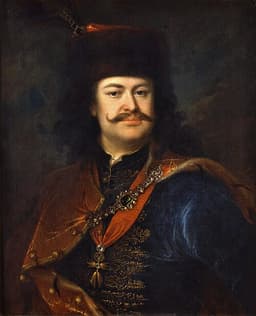
Francis II Rakoczi
Revolutionary · Modern
54.2Total
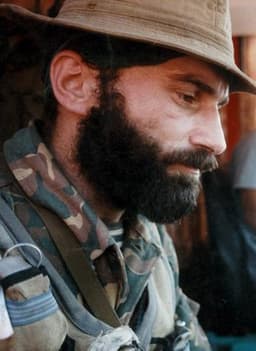
Shamil Basayev
Revolutionary · Modern
43.1Total
Basic Information
Born
1676
1965
Died
1735
—
Era
Modern
Modern
Nationality
Hungary
Chechnya
Occupation
Revolutionary
Revolutionary
Civilization
Western
Western
Score Comparison
Military (10%)
55.0
40.0
Political (20%)
46.6
35.0
Influence (20%)
57.2
45.5
Legacy (20%)
52.0
35.0
Leadership (15%)
57.6
57.1
Strategy (15%)
57.5
51.7
TOTAL
54.2
43.1
Francis II Rakoczi — Complete Timeline
1703 AD
Rákóczi's War of IndependenceWar◆ Major
Francis II Rakoczi led a major uprising against Habsburg rule in Hungary, known as R
War of IndependenceHabsburgRebellion
Impact: regional
1704 AD
Election as Prince of TransylvaniaPolitical Action◆ Major
Francis II Rakoczi was elected Prince of Transylvania by the Hungarian estates, leading the anti-Habsburg rebellion. His election marked the formal leadership of the uprising.
ElectionRebellion
Impact: regional
1708 AD
Battle of TrencinWar◆ Major
Francis II Rakoczi's forces were decisively defeated by the Habsburg army at the Battle of Trencin. The defeat marked a turning point, leading to the decline of the rebellion.
BattleDefeatTurning Point
Impact: regionaltragic
1711 AD
Exile in the Ottoman EmpirePolitical Action◆ Major
After the failure of the rebellion, Francis II Rakoczi went into exile in the Ottoman Empire. He refused to accept Habsburg amnesty and lived in Ottoman territory until his death.
ExileOttoman
Impact: regionaltragic
Shamil Basayev — Complete Timeline
1995 AD
Budyonnovsk Hospital Hostage CrisisWar◆ Major
Basayev led a raid on the Russian town of Budyonnovsk, taking over 1,000 hostages in a hospital. The crisis ended with a negotiated settlement that allowed him to return to Chechnya. This attack demonstrated Chechen reach into Russia.
Hostage CrisisTerrorismChechnya
Impact: nationaldestructive
1999 AD
Invasion of DagestanWar
Basayev led Chechen and Islamist fighters into Dagestan to support local rebels. This invasion triggered the Second Chechen War as Russia responded with a full-scale military campaign. The invasion failed to gain local support.
DagestanChechnyaInvasion
Impact: regionaldestructive
2002 AD
Moscow Theater Hostage CrisisWar◆ Major
Basayev orchestrated the Moscow theater hostage crisis, where Chechen militants took 850 people hostage. Russian forces ended the siege with gas, killing 130 hostages. The attack increased international condemnation of Chechen rebels.
Hostage CrisisTerrorismMoscow
Impact: nationaldestructive
2004 AD
Beslan School SiegeWar◆ Major
Basayev planned the Beslan school siege, where militants took over 1,100 people hostage. The siege ended in a bloody assault, resulting in 334 deaths, mostly children. This attack was widely condemned globally.
Hostage CrisisTerrorismBeslan
Impact: globaltragic
2006 AD
Killed by Russian ExplosivesWar◆ Major
Basayev was killed in Ingushetia when a truck loaded with explosives detonated. Russian intelligence claimed responsibility. His death removed the most prominent Chechen rebel commander.
AssassinationChechnyaRussia
Impact: regional
Expert Analysis
Shamil Basayev vs Francis II Rakoczi
### The Prince and the Warlord
In the winter of 1708, a Hungarian prince in a plumed hat watched his army shatter on the frozen fields of Trencin. Two centuries later, a Chechen commander in a ski mask would orchestrate a siege that turned a school into a morgue. Both men fought empires, both sought freedom for their people, and both ended their lives in exile and blood. Yet one is remembered as a national hero, the other as a terrorist. What separates a prince from a warlord? The answer lies not in their goals, but in their choices.
### Origins
Francis II Rakoczi was born in 1676 into the highest echelons of Hungarian nobility. His family had long defied the Habsburgs; his stepfather was the rebel leader Imre Thokoly. Raised in a castle by a fiercely independent mother, Rakoczi absorbed the ethos of the Hungarian aristocracy: honor, land, and the ancient rights of the kingdom. He was educated in Latin and law, trained in courtly manners and military command. His world was one of estates and diets, where rebellions were waged with manifestos and diplomatic letters as much as with swords.
Shamil Basayev was born in 1965 in the Chechen village of Dyshne-Vedeno, a place of stone houses and mountain pastures. The Soviet Union had crushed Chechen independence in 1944, deporting the entire nation to Central Asia. Basayev grew up in the aftermath of that trauma, in a land where men carried grudges as heirlooms. He studied computer science in Moscow, but the collapse of the USSR in 1991 opened a window—and a war. When Chechnya declared independence in 1991, Basayev was a young man with a Kalashnikov and a score to settle. His education was not in parliaments but in guerrilla camps, not in diplomacy but in ambushes.
### Rise to Power
Rakoczi’s path to leadership was anointed by tradition. In 1703, as Habsburg oppression tightened, Hungarian peasants and lesser nobles begged him to lead. He hesitated, then accepted. His legitimacy came from blood: he was the descendant of Transylvanian princes. His rebellion, known as Rákóczi's War of Independence, began with a declaration and a call to arms. In 1704, the Hungarian estates formally elected him Prince of Transylvania. His power was not seized; it was conferred.
Basayev’s rise was forged in fire. In 1995, he led a raid on the Russian town of Budyonnovsk, taking over 1,000 hostages in a hospital. The crisis ended with a negotiated withdrawal—a tactical victory that made him a legend among Chechens. He was not elected; he was feared and followed. By 1999, when he invaded neighboring Dagestan alongside Islamist fighters, he had become the face of Chechen resistance—and the target of Russian fury. His authority came not from a crown but from a reputation for violence.
### Leadership & Governance
Rakoczi governed like a prince. He issued coins, printed newspapers, and convened a parliament. He sought alliances with Louis XIV of France and Peter the Great of Russia. His military strategy was conventional: he raised armies, fought pitched battles, and besieged fortresses. But his political wisdom outshone his martial skill. He understood that a rebellion needed legitimacy, not just firepower. He wrote manifestos appealing to Hungarian nobles and serfs alike, promising religious tolerance and constitutional rights.
Basayev governed like a warlord. He commanded no state, only shifting bands of fighters. His strategy was asymmetric: hostage-taking, suicide bombings, and terror. In 2002, he orchestrated the Moscow theater hostage crisis, where 850 people were held for three days before Russian forces stormed the building, killing over 130. In 2004, he planned the Beslan school siege, where militants took 1,100 hostages, mostly children. The siege ended in a bloody explosion and firefight, leaving 334 dead. Basayev’s leadership was measured in body counts, not treaties.
### Triumph & Tragedy
Rakoczi’s greatest moment came early. In 1703, his rebellion swept across Hungary, liberating much of the kingdom. For five years, he held the Habsburgs at bay. But the Battle of Trencin in 1708 was his ruin. Defeated decisively, his army dissolved. He fled to Poland, then to the Ottoman Empire, where he lived in exile until his death in 1735. He refused Habsburg offers of amnesty, choosing poverty over submission. His tragedy was not personal failure but historical fate: Hungary was too weak, Europe too indifferent.
Basayev’s triumph was his survival—until it wasn’t. He evaded Russian capture for over a decade, his attacks paralyzing a superpower. But each victory came at a moral cost. The Beslan siege turned global opinion against the Chechen cause. In 2006, he was killed in Ingushetia when a truck loaded with explosives detonated. Russian intelligence claimed responsibility. His tragedy was that he won battles but lost the war for hearts and minds.
### Character & Destiny
Rakoczi was a man of principle in an age of pragmatism. He believed in honor, in the rights of the Hungarian nation, in the sanctity of his word. He could have made peace with the Habsburgs, accepted a pardon, lived comfortably. He refused. His character was shaped by the aristocratic code: better to be a prince in exile than a vassal at home. That pride made him a hero but also a failure.
Basayev was a man of rage in an age of terror. He saw no distinction between combatants and civilians, no limit to violence. His strategy was not to win hearts but to break wills. He was shaped by the trauma of his people and the brutality of the war. That rage made him effective but also doomed. He became the monster the Russians said he was.
### Legacy
Rakoczi is a national saint in Hungary. His statue stands in Budapest; his name adorns streets and squares. His war of independence failed, but it kept the idea of Hungary alive. He is remembered as the last great prince of Transylvania, a symbol of resistance against imperial tyranny. His legacy score of 68.8 reflects a man who lost militarily but won historically.
Basayev is a ghost. In Chechnya, he is a complicated figure—some remember him as a fighter for freedom, others as a butcher. In Russia, he is a demon. His legacy score of 47.7 reflects a man who achieved notoriety but not nobility. He left no state, no constitution, no lasting peace. Only graves.
### Conclusion
What drove the difference? Rakoczi fought for a kingdom; Basayev fought for a cause. One had a past to restore, the other only a future to imagine. The prince could afford honor because he had something to lose. The warlord could afford terror because he had nothing left. History judges them not by their enemies but by their methods. Rakoczi’s rebellion, though crushed, became a founding myth. Basayev’s war, though bloody, became a cautionary tale. In the end, the measure of a revolutionary is not how he fights, but what he builds—and what he leaves behind.
Rankings
🥇
Francis II RakocziLeader
Mil: 55.0Pol: 46.6Inf: 57.2
54.2
🥈
Shamil Basayev
Mil: 40.0Pol: 35.0Inf: 45.5
43.1
+11.1 behind
How This Comparison Works
Algorithm
Each figure is scored on 6 dimensions (0—100 scale) based on structured historical data: Military (10%), Political (20%), Influence (20%), Legacy (20%), Leadership (15%), Strategy (15%). The weighted total produces the final ranking.
Data Sources
Scores are computed from structured sub-indicators in the database. Scale factors adjust for era (Ancient ×0.85, Modern ×1.0) and civilization size (Eastern ×1.05, Other ×0.80) to account for differences in population and military scale.
Maximum 3 Figures
Comparisons are limited to 2—3 figures to ensure readability and statistical meaningfulness.
Error Margins
±5 points per dimension — Sub-scores are derived from historical records with inherent uncertainty. Two figures within 5 points on a dimension should be considered roughly equivalent in that area.
Total Score Accuracy
±3 points overall — The weighted combination of 6 dimensions produces a total score with approximately ±3 points of uncertainty. Differences of less than 3 points are not statistically significant— the figures are effectively tied.
Known Limitations
- Historical records are incomplete and uneven across civilizations
- Figures from oral-tradition societies may be underrepresented
- Occupation labels can misclassify multi-role figures
- Scores measure capability and impact, not moral character
- Quantitative scoring is a comparison tool, not absolute truth
Capability Radar
Military (10%) — Battles & Warfare
Battles
65
45
Win Rate
55
40
Expansion
45
15
Political (20%) — Governance & Reform
Reform
55
5
Diplomacy
50
10
Economy
40
5
Influence (20%) — Cultural & Global Reach
Cultural
60
20
Global
45
20
Legacy (20%) — Historical Impact
Historical
65
25
Longevity
55
15
Leadership (15%) — Power & Stability
Tenure
50
10
Stability
30
5
Strategy (15%) — Tactics & Innovation
Strategy
65
35
Tactics
60
55
Reform
50
20
Similar Comparisons
Comments & Discussion
VIZIER_K6/16/2026
As a military historian, the real difference isn't terrorism vs heroism—it's logistics. Rakoczi lost at Trencin because his badly-paid, poorly-supplied Kuruc army couldn't hold formation against Habsburg regulars. Basayev won his early battles because he understood asymmetrical warfare, but lost the strategic war when he couldn't supply or control the thousands of fighters. Every commander faces the same problem since Sun Tzu: money and supply lines decide your legacy, not your ideals.
风雪刀客6/16/2026
作为古典学派的拥趸,我觉得拿弗朗茨二世和沙米尔·巴萨耶夫比较根本就是“概念错位”。前者活在哈布斯堡王朝的封建契约时代,起义是为了恢复贵族特权与尊严;后者面对的是后苏联帝国的碎片化世界。巴萨耶夫选择的恐怖手段,不是因为他“更邪恶”,而是因为没有可谈判的宫廷和可诉诸的法律——帝国瓦解后,只有子弹才能换来自决权。他们本质上是在不同规则场里下棋。
DATA_WHISPERER6/16/2026
Let's talk numbers. Rakoczi's war mobilized maybe 40,000 Kuruc at peak—but Hungary had millions. Basayev's 1995 Budyonnovsk hospital attack directly led to a ceasefire and de facto Chechen independence. The first got a hero's statue in Budapest; the second got a global bounty on his head. Yet both failed: Rakoczi couldn't free Hungary, and Basayev's Chechnya was flattened by 2000. The "grand strategy" outcome is identical—zero independence—but narrative framing alone decides the tombstone.
古城旧梦6/16/2026
我更喜欢从“历史书写者”的角度看:拉科齐有普林斯顿大学博士当他的西式传记作者,一个反哈布斯堡的“自由斗士”故事被装订成教科书。巴萨耶夫没有那样的欧洲知识分子朋友,西方媒体给他贴的标签只有“恐怖分子”一个模板。实际上,两者都用了暴力、都收编了土匪、都勒索过外围列强。区别只是谁的笔杆子更强。历史根本不公平,它只属于胜利者的笔。
IRON_CURTAIN6/16/2026
Revisionist critic here: quit romanticizing. Rakoczi was a feudal lord fighting to keep Hungarian serfs tied to his land instead of Vienna's. The "national hero" myth was manufactured by 19th-century romantics who needed unifying figures for modern nation-building. Meanwhile, Basayev executed prisoners in cold blood during the 1995 hospital siege—that's not "asymmetry," that's terrorism. Let's not pretend both sides have equivalent moral claims just because they both opposed big empires. Some en