Loading...
Francisco de Miranda vs Qin Shi Huang
Qin Shi Huang leads by 37.3 pts · 2 figures compared
…

Francisco de Miranda
Revolutionary · Modern
47.9Total
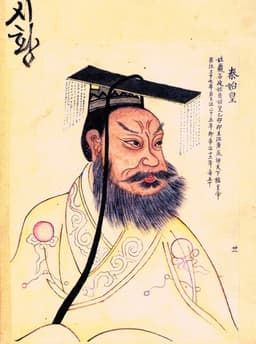
Qin Shi Huang
Emperor · Ancient
85.2Total
Basic Information
Born
1750
-259
Died
1816
-210
Era
Modern
Ancient
Nationality
Venezuela
China
Occupation
Revolutionary
Emperor
Civilization
Western
Eastern
Score Comparison
Military (10%)
45.0
80.0
Political (20%)
45.1
90.0
Influence (20%)
58.0
85.0
Legacy (20%)
50.0
90.0
Leadership (15%)
35.4
78.0
Strategy (15%)
43.3
82.0
TOTAL
47.9
85.2
Francisco de Miranda — Complete Timeline
1792 AD
Participation in the French RevolutionWar◆ Major
Miranda served as a general in the French Revolutionary Army, commanding troops in the Battle of Valmy and the Siege of Maastricht. His service gave him military experience and connections with European revolutionaries, which he later used for Latin American independence.
French RevolutionMilitary ServiceRevolutionary
Impact: global
1806 AD
Failed invasion of VenezuelaWar◆ Major
Miranda led a small expedition from Haiti to invade Venezuela, landing at La Vela de Coro. The invasion failed to spark a general uprising, and Miranda retreated. This was the first attempt to liberate Venezuela from Spanish rule.
InvasionFailureIndependence
Impact: regional
1811 AD
Venezuelan Declaration of IndependencePolitical Action
Miranda was a leading figure in the Venezuelan Congress that declared independence from Spain on July 5, 1811. He helped draft the first constitution and was appointed commander-in-chief of the patriot army, marking the start of the First Republic.
IndependenceDeclarationFirst Republic
Impact: regionalconstructive
1812 AD
Capture and death in Spanish prisonOther◆ Major
After the fall of the First Republic, Miranda attempted to negotiate a truce with the Spanish but was captured by his own officers, including Sim
CaptureImprisonmentBetrayal
Impact: regionaltragic
Qin Shi Huang — Complete Timeline
246 BC
Construction of the Mausoleum and Terracotta ArmyOther◆ Major
Qin Shi Huang commissioned a vast mausoleum complex near Xi'an, guarded by thousands of life-sized terracotta soldiers, horses, and chariots. The project employed hundreds of thousands of workers and reflected his obsession with immortality and imperial power.
Impact: global
230 BC
Conquest of the Six Warring StatesWar
From 230 to 221 BCE, Ying Zheng led the Qin state in a series of campaigns that conquered the Han, Zhao, Wei, Chu, Yan, and Qi states. This unified China under a single ruler for the first time, ending the Warring States period.
Impact: global
221 BC
Standardization of Writing, Currency, and MeasurementsReform◆ Major
Qin Shi Huang ordered the standardization of Chinese script, currency, and weights and measures across the unified empire. This facilitated administration, trade, and cultural integration, laying a foundation for future dynasties.
Impact: globalconstructive
Proclamation of the Qin DynastyPolitical Action
After conquering the last independent state, Ying Zheng declared himself Shi Huangdi (First Emperor), founding the Qin Dynasty. He adopted a new title to signify his supreme authority and initiated centralized imperial rule.
Impact: global
214 BC
Initiation of the Great Wall ConstructionOther◆ Major
Qin Shi Huang ordered the connection and extension of existing northern fortifications to create a unified defensive wall against nomadic Xiongnu raids. This project involved massive conscripted labor and became the precursor to the later Great Wall.
Impact: regional
213 BC
Burning of Books and Burying of ScholarsPolitical Action◆ Major
On the advice of Li Si, Qin Shi Huang ordered the burning of historical records and philosophical texts not aligned with Legalist doctrine. He also had 460 Confucian scholars buried alive to suppress dissent and consolidate ideological control.
Impact: nationaldestructive
Expert Analysis
francisco-de-miranda-vs-qin-shi-huang
# The First Emperor and the Precursor: Two Paths to Power
On a winter morning in 210 BC, the man who called himself Shi Huangdi—the First Emperor—lay dying on a carriage returning to his capital, surrounded by the rotting fish that his attendants had piled aboard to mask the smell of his passing. Half a world away and two millennia later, in 1816, Francisco de Miranda would die chained in a Spanish dungeon in Cádiz, his revolutionary dreams reduced to the clanking of irons. Both men sought to reshape their worlds. One succeeded beyond measure. The other failed so completely that history nearly forgot him. What separates a founder from a forerunner? The answer lies not in ambition, which both possessed in abundance, but in the raw materials of time, place, and power.
Origins
Ying Zheng was born in 259 BC into the blood-soaked chaos of the Warring States period, a world where seven kingdoms had spent centuries devouring one another. His father was a king, his mother a concubine, and his childhood a theater of poisonings, betrayals, and regicide. By the time he took the throne of Qin at thirteen, he had learned that mercy was a luxury for the dead. The boy who would become the First Emperor grew up in a culture that worshipped Legalism—a ruthless philosophy that taught that human nature was wicked and could only be controlled by strict laws and harsh punishments.
Francisco de Miranda entered the world in 1750 in Caracas, then a dusty colonial outpost of the Spanish Empire. His father was a wealthy merchant from the Canary Islands, his mother a Creole aristocrat. Unlike Ying Zheng, Miranda grew up in the Age of Enlightenment, reading Rousseau and Voltaire, absorbing the ideas of liberty and natural rights that were sweeping through Europe. He was educated, cosmopolitan, and deeply aware of his second-class status under Spanish rule. Where the First Emperor inherited a kingdom, Miranda inherited only resentment.
Rise to Power
Ying Zheng’s path was direct: he was a king, and he intended to become emperor. Between 230 and 221 BC, he unleashed the Qin war machine in a series of campaigns that historian Sima Qian would later describe as “like a scythe cutting through wheat.” The Han fell first, then Zhao, Wei, Chu, Yan, and finally Qi. Each conquest was methodical, brutal, and final. By 221 BC, at the age of thirty-eight, Ying Zheng declared himself Shi Huangdi—the First Emperor—and announced a new dynasty meant to last ten thousand generations.
Miranda’s rise was entirely different. He had no throne to inherit, only ideas to spread. He fought in the American Revolution, serving as a general under George Washington, and later joined the French Revolutionary Army, commanding troops at the Battle of Valmy in 1792. He became a man without a country, a revolutionary-for-hire who believed that the liberation of Spanish America required European support. In 1806, he attempted to invade Venezuela from Haiti with a small force. It failed. The local population, loyal to the Spanish crown, refused to rise. Miranda had the vision but not the army, the ambition but not the moment.
Leadership & Governance
Qin Shi Huang governed as he conquered: with absolute authority and systematic efficiency. In 221 BC, he ordered the standardization of writing, currency, and measurements across his new empire. He connected the northern fortifications into what would become the Great Wall, a project that consumed hundreds of thousands of lives. He imposed a single legal code, a single axle length for carts, and a single script that could be read from Beijing to Guangzhou. His rule was efficient, centralized, and utterly unforgiving. When philosophers criticized his methods, he ordered the Burning of Books in 213 BC and the Burying of Scholars, burying 460 Confucian intellectuals alive.
Miranda, by contrast, governed through persuasion. When Venezuela finally declared independence in 1811, Miranda helped draft the constitution and served as a general in the new republic’s army. But he was not a dictator; he was a committee member, a man who had to negotiate with rival factions, regional caudillos, and his own ambitious subordinates. The First Republic of Venezuela was plagued by indecision, internal division, and a catastrophic earthquake in 1812 that the Spanish clergy interpreted as divine punishment. Miranda had no secret police, no standardized coinage, no terracotta army. He had only words and a fragile coalition.
Triumph & Tragedy
The First Emperor’s greatest triumph was the unification itself. For the first time in history, the lands between the Yellow River and the Yangtze were ruled by a single hand. His greatest tragedy was the fragility of his achievement. He died in 210 BC, and within three years, his dynasty collapsed into rebellion and civil war. The Qin Dynasty lasted only fifteen years, a flicker in Chinese history. Yet the First Emperor had laid the foundations—the bureaucratic structure, the standardized script, the administrative divisions—that would sustain every dynasty that followed.
Miranda’s tragedy was more personal. After the fall of the First Republic in 1812, he attempted to negotiate a truce with the Spanish. His own officers, including the young Simón Bolívar, considered this a betrayal. They arrested him and handed him over to the Spanish authorities. He spent his final four years in a prison cell in Cádiz, dying in 1816 at the age of sixty-five. His greatest triumph—the Declaration of Independence of 1811—was hollowed out by his greatest failure: the inability to hold what he had won.
Character & Destiny
Qin Shi Huang believed that history began with him. He ordered the burning of all records that did not glorify his reign, and he spent the last decades of his life searching for an elixir of immortality. He was paranoid, megalomaniacal, and convinced that his will alone could shape the universe. And in a sense, he was right. His personality—driven, ruthless, visionary—allowed him to achieve what no one before him had attempted. But it also doomed his dynasty. He left no successor capable of holding the empire together.
Miranda believed that history would vindicate him. He was a man of the Enlightenment, convinced that reason and liberty would inevitably triumph over tyranny. But he was also a man caught between worlds—too European for the Americans, too American for the Europeans. His personality was that of a diplomat, a networker, a man who believed in the power of ideas. But ideas do not conquer kingdoms. Armies do. And Miranda never commanded an army that was truly his own.
Legacy
Qin Shi Huang is remembered as both a founder and a tyrant. The Terracotta Army, commissioned in 246 BC and discovered in 1974, has become one of the most famous archaeological sites in the world. His standardization of writing and currency shaped Chinese civilization for two thousand years. But he is also the villain of Chinese history, the man who burned books and buried scholars, whose paranoia and cruelty were legendary. The Chinese character for “tyrant” (暴君) might have been invented for him.
Francisco de Miranda is remembered as a precursor, a man who lit a torch that others carried. His face appears on Venezuelan banknotes, and he is honored as a hero of three revolutions: American, French, and Latin American. But his failure is also remembered. Simón Bolívar, who betrayed him, would go on to liberate half a continent. Miranda, the first to try, ended his life in chains. He was the prophet without an army, the dreamer without a kingdom.
Conclusion
The difference between these two men is not simply success and failure. It is the difference between inheriting a throne and having to invent one. Qin Shi Huang was born into a system of power that he simply had to expand. Miranda was born into a system of subjugation that he had to destroy. One had an army, a bureaucracy, and a tradition of conquest. The other had only ideas and a pistol. The First Emperor changed the world because he had the tools to do so. Miranda tried to change the world, but the world was not yet ready to change for him.
In the end, the First Emperor’s empire lasted fifteen years. Miranda’s First Republic lasted barely one. But the Qin Dynasty’s administrative structure endured for two millennia, while Miranda’s dream of a united Latin America—Gran Colombia—fell apart within a decade of Bolívar’s death. Perhaps the true measure of a historical figure is not how long their creation survives, but whether anyone remembers the shape of what they tried to build. By that measure, both men succeeded. One built a wall. The other built a door.
Rankings
🥇
Qin Shi HuangLeader
Mil: 80.0Pol: 90.0Inf: 85.0
85.2
🥈
Francisco de Miranda
Mil: 45.0Pol: 45.1Inf: 58.0
47.9
+37.3 behind
How This Comparison Works
Algorithm
Each figure is scored on 6 dimensions (0—100 scale) based on structured historical data: Military (10%), Political (20%), Influence (20%), Legacy (20%), Leadership (15%), Strategy (15%). The weighted total produces the final ranking.
Data Sources
Scores are computed from structured sub-indicators in the database. Scale factors adjust for era (Ancient ×0.85, Modern ×1.0) and civilization size (Eastern ×1.05, Other ×0.80) to account for differences in population and military scale.
Maximum 3 Figures
Comparisons are limited to 2—3 figures to ensure readability and statistical meaningfulness.
Error Margins
±5 points per dimension — Sub-scores are derived from historical records with inherent uncertainty. Two figures within 5 points on a dimension should be considered roughly equivalent in that area.
Total Score Accuracy
±3 points overall — The weighted combination of 6 dimensions produces a total score with approximately ±3 points of uncertainty. Differences of less than 3 points are not statistically significant— the figures are effectively tied.
Known Limitations
- Historical records are incomplete and uneven across civilizations
- Figures from oral-tradition societies may be underrepresented
- Occupation labels can misclassify multi-role figures
- Scores measure capability and impact, not moral character
- Quantitative scoring is a comparison tool, not absolute truth
Capability Radar
Military (10%) — Battles & Warfare
Battles
35
85
Win Rate
30
90
Expansion
40
90
Political (20%) — Governance & Reform
Reform
55
95
Diplomacy
60
75
Economy
25
90
Influence (20%) — Cultural & Global Reach
Cultural
55
95
Global
55
85
Legacy (20%) — Historical Impact
Historical
65
95
Longevity
60
95
Leadership (15%) — Power & Stability
Tenure
20
70
Stability
15
65
Strategy (15%) — Tactics & Innovation
Strategy
45
85
Tactics
40
80
Reform
50
95
Similar Comparisons
Comments & Discussion
QinConqueror6/17/2026
Comparing Miranda to Qin Shi Huang is like comparing a matchstick to a supernova. The First Emperor unified China through actual conquest, standardized writing and measures, and built the Great Wall—real, tangible achievements. Miranda? He was a fantasist who spent decades failing to inspire revolutions, dying in chains because he couldn't execute a single plan. Ambition without execution is just daydreaming. History remembers builders, not dreamers.
鱼腥始皇6/17/2026
说真的,把米兰达和秦始皇放一起比简直是侮辱始皇帝。一个在西班牙地牢里烂掉的空想家,配跟万里长城的主人相提并论?别忘了,始皇帝活着的时候就统一了文字度量衡,死了还用陶俑军队守护自己;米兰达呢?他那些革命计划连个像样的石碑都没留下。历史是用结果说话的,不是靠吹牛。
LegalismLad6/17/2026
The real issue here is context: Miranda tried to spark revolution in a world already moving toward nationalism, yet failed because he had no power base. Qin Shi Huang succeeded because he inherited a war machine, not because he was some genius. His Legalist ministers wrote the playbook; he just followed it. Give Miranda the Qin army and a century of brutal state-building, and maybe he'd have a chance. But he didn't. Context is everything—and Miranda's context was a colonial backwater with no arm
RevolutionGhost6/17/2026
有趣的是,这两位都是某种程度上的"失败者"——只不过秦始皇帝把失败变成了胜利。米兰达死前还在幻想着解放整个西属美洲,而始皇帝一死,秦朝就崩了,连他留下的江山都在几年内被刘邦抢走。区别在于,始皇帝至少有个功业可以失去;米兰达连失去的资格都没有,因为他从未真正拥有过什么。历史对失败者的记忆,取决于他们死时手里握的是权杖还是铁链。