Loading...
Francisco I. Madero vs Sun Yat-sen
Sun Yat-sen leads by 2.2 pts · 2 figures compared
…
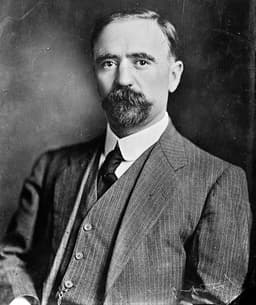
Francisco I. Madero
Revolutionary · Modern
50.3Total
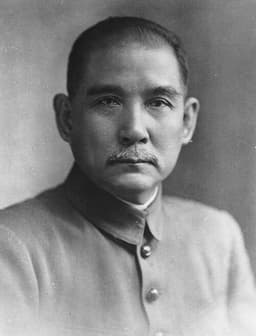
Sun Yat-sen
Revolutionary · Modern
52.5Total
Basic Information
Born
1873
1866
Died
1913
1925
Era
Modern
Modern
Nationality
Mexico
China
Occupation
Revolutionary
Revolutionary
Civilization
Western
Eastern
Score Comparison
Military (10%)
50.0
45.0
Political (20%)
54.7
68.0
Influence (20%)
52.5
61.0
Legacy (20%)
47.5
58.0
Leadership (15%)
54.2
33.5
Strategy (15%)
39.6
30.3
TOTAL
50.3
52.5
Francisco I. Madero — Complete Timeline
1908 AD
Madero publishes 'The Presidential Succession in 1910'Cultural◆ Major
Francisco I. Madero published a book criticizing the long dictatorship of Porfirio D
Mexican RevolutionPolitical WritingDemocracy
Impact: nationalprogressive
1910 AD
Madero launches the Mexican RevolutionPolitical Action
After being fraudulently defeated in the 1910 presidential election, Madero issued the Plan of San Luis Potos
Mexican RevolutionArmed RebellionPlan of San Luis
Impact: national
1911 AD
Madero becomes President of MexicoPolitical Action◆ Major
Following the resignation of Porfirio D
PresidencyDemocracyReform
Impact: nationalconstructive
1913 AD
Madero's assassination during the Decena TrágicaPolitical Action
During a coup known as the Decena Tr
AssassinationCoupDecena Trágica
Impact: nationaltragic
Sun Yat-sen — Complete Timeline
1894 AD
Founded the Revive China SocietyPolitical Action◆ Major
Sun Yat-sen founded the Revive China Society (Xingzhonghui) in Honolulu, the first modern revolutionary organization among overseas Chinese. The society aimed to overthrow the Qing dynasty and establish a republic, marking the beginning of organized revolutionary activity.
RevolutionOverseas ChineseRepublic
Impact: nationalconstructive
1911 AD
Led the Xinhai RevolutionPolitical Action
Sun Yat-sen's revolutionary activities culminated in the Wuchang Uprising of October 1911, which sparked the Xinhai Revolution. The uprising spread across China, leading to the abdication of the Qing emperor in 1912 and the end of 2,000 years of imperial rule.
RevolutionQing DynastyRepublic
Impact: globalconstructive
1912 AD
Proclaimed the Republic of ChinaPolitical Action
On January 1, 1912, Sun Yat-sen was inaugurated as the provisional president of the Republic of China in Nanjing. He proclaimed the establishment of the first republic in Asia, based on his Three Principles of the People: nationalism, democracy, and livelihood.
RepublicPresidencyThree Principles
Impact: globalconstructive
Resigned Presidency in Favor of Yuan ShikaiPolitical Action◆ Major
To secure the abdication of the Qing emperor and avoid civil war, Sun Yat-sen resigned the provisional presidency in February 1912 in favor of Yuan Shikai. This decision, while pragmatic, allowed Yuan to consolidate power and later attempt to restore the monarchy.
Power TransferYuan ShikaiCompromise
Impact: national
1919 AD
Reorganized the KuomintangPolitical Action◆ Major
Sun Yat-sen reorganized the Chinese Revolutionary Party into the Kuomintang (KMT) in 1919, with a more centralized structure. He later accepted Soviet aid and CCP members into the party under the policy of 'alliance with Russia and the Communists,' reshaping the revolutionary movement.
KuomintangSoviet AllianceCCP
Impact: nationalconstructive
Expert Analysis
Sun Yat-sen vs Francisco I. Madero
# The Apostle and the Father
On a January morning in 1912, Sun Yat-sen stood before the provisional assembly in Nanjing and declared the birth of the Republic of China, ending two thousand years of imperial rule. Just a year earlier, across the Pacific, Francisco I. Madero had crossed from Texas into Mexico, a slender man with a dark beard and a book of political philosophy under his arm, igniting a revolution that would topple a thirty-four-year dictatorship. Both men were idealists who dreamed of democracy. Both would see their revolutions succeed—and both would be betrayed by the very forces they unleashed. Yet one is remembered as the founding father of a nation, while the other is a tragic footnote in a bloody saga. Why?
Origins
Sun Yat-sen was born in 1866 in a peasant village in Guangdong, a province that had long been a crucible of rebellion against the Qing dynasty. His family scraped by on rice and sweet potatoes, but his elder brother had struck gold in Hawaii, and young Sun was sent there to study. In Honolulu, he encountered Western education, Christianity, and the revolutionary ideas of Thomas Jefferson and Abraham Lincoln. He became a doctor in Hong Kong, but he never practiced medicine for long. The humiliations of a decaying China—defeats in wars, unequal treaties, foreign spheres of influence—burned in him. He was a man shaped by the collision of two worlds, and he believed that China could be reborn only by breaking utterly with its imperial past.
Francisco I. Madero, born in 1873, came from an opposite world. His family was one of the richest in Mexico, owners of vast cotton plantations and vineyards in Coahuila. He studied in France and at the University of California, Berkeley, absorbing the same liberal democratic ideals that inspired Sun. But where Sun’s poverty gave him a visceral hatred of the old order, Madero’s wealth gave him a naive faith in the power of ballots. He saw injustice in Porfirio Díaz’s Mexico—the landless peasants, the rigged elections, the iron fist of the *porfiriato*—and he believed that a good election could fix it all.
Rise to Power
Sun’s rise was a long, desperate slog. In 1894, he founded the Revive China Society in Honolulu, the first modern revolutionary organization among overseas Chinese. He plotted uprisings that failed again and again—ten of them, by one count—each time fleeing into exile, his head priced by the Qing court. He was kidnapped by Qing agents in London in 1896 and nearly smuggled back to China for execution, saved only by the intervention of a British teacher who alerted the press. For two decades, Sun was a ghost, a wandering revolutionary raising money from Chinese diaspora communities, building secret societies, and waiting for a crack in the empire.
Madero’s rise was faster and more public. In 1908, he published *The Presidential Succession in 1910*, a book that was less a revolutionary manifesto than a polite request for democracy. To his astonishment, it became a bestseller. Díaz, then eighty years old, had told an American journalist that Mexico was ready for democracy, and Madero took him at his word. When Díaz rigged the 1910 election, Madero fled to Texas and issued the Plan of San Luis Potosí, calling for an armed uprising on November 20. He expected a few hundred followers. Instead, thousands rose—peasants, miners, disaffected soldiers—and within six months, Díaz was gone. Madero entered Mexico City in triumph in June 1911, and in November, he was elected president by a landslide.
Leadership & Governance
Here the two paths diverge sharply. Sun Yat-sen, after the Xinhai Revolution succeeded in 1911, was inaugurated as provisional president in Nanjing on January 1, 1912. But his hold on power was fragile. The real military muscle belonged to Yuan Shikai, a former Qing general who commanded the new Beiyang Army. Sun, desperate to avoid a civil war and to secure the abdication of the child emperor Puyi, made a fateful decision: he resigned the presidency in February 1912, handing power to Yuan Shikai on the condition that Yuan would establish a republic. “I yield to you,” Sun said, “for the sake of the nation.” It was a noble gesture, but a catastrophic one. Yuan Shikai soon dissolved parliament, banned political parties, and declared himself emperor.
Madero, by contrast, had won the presidency with a mandate. But his governance was a study in paralysis. He tried to govern as a democrat, respecting Congress, the courts, and the press. He refused to confiscate the haciendas of his own family’s class. He demobilized the revolutionary armies that had put him in power, including the peasant forces of Emiliano Zapata, who had fought for land reform. When Zapata demanded *tierra y libertad*—land and liberty—Madero asked him to wait for elections. Zapata replied with the Plan of Ayala, denouncing Madero as a traitor. Madero’s military score of 34.0 reflects his utter lack of ruthlessness; he was a man who believed in the power of words against men who believed in the power of bullets.
Triumph & Tragedy
Sun’s greatest moment was the proclamation of the Republic of China on January 1, 1912. It was the culmination of seventeen years of exile, failure, and near-death. But his greatest tragedy was the resignation that followed—a decision that handed the republic to a warlord. Sun spent the rest of his life trying to reclaim his revolution, reorganizing the Kuomintang in 1919, forging an alliance with the Soviet Union, and building a party-army that would eventually conquer China—but not under his leadership. He died in 1925, a broken man in a divided country.
Madero’s triumph was the fall of Díaz, a revolution won with astonishing speed. His tragedy was the Decena Trágica—the Ten Tragic Days of February 1913, when a military coup erupted in Mexico City. Madero, surrounded by traitors in his own government, refused to arm the workers or call on the peasant armies. He was arrested, forced to resign, and then shot on the way to prison. He was thirty-nine years old. His death plunged Mexico into a decade of civil war that would cost a million lives.
Character & Destiny
Sun Yat-sen was a man of iron will and flexible ideology. He adapted constantly—from secret societies to political parties, from Western liberalism to Leninist vanguardism. His Three Principles of the People—nationalism, democracy, and livelihood—were vague enough to inspire everyone and specific enough to mean something. He was a visionary who understood that revolution required organization, and he spent his life building the machine that would eventually carry his name.
Madero was a man of rigid principle and fragile nerve. He believed in democracy so deeply that he could not imagine anyone else not believing in it. He trusted his enemies—General Victoriano Huerta, who led the coup against him, and the American ambassador Henry Lane Wilson, who conspired with the plotters—because he could not conceive of their treachery. His political score of 53.1, low for a revolutionary, reflects this fatal innocence. He was, as the historian John Womack put it, “a man who wanted to change Mexico without changing it too much.”
Legacy
Sun Yat-sen is venerated by both the People’s Republic of China and the Republic of Taiwan. His legacy score of 72.2 reflects a rare achievement: he is the founding father of two nations that now hate each other. Mao Zedong called him “the pioneer of revolution,” and Chiang Kai-shek claimed his mantle. His Three Principles are still taught in Chinese textbooks, and his image stares out from every Chinese banknote. He failed to build a stable republic in his lifetime, but he created the idea of a modern China that outlived him.
Madero’s legacy is more ambiguous. He is remembered as the “Apostle of Democracy,” a martyr who lit the fuse of the Mexican Revolution. But that revolution soon consumed him, and his name is overshadowed by the giants who followed: Zapata, Villa, Carranza, Obregón. His legacy score of 65.3 is respectable but haunted by the question: what if he had been stronger? Or more ruthless? Or less trusting?
Conclusion
Standing at the end of their stories, one sees two men who shared a dream but diverged in destiny. Sun Yat-sen had the luck to die before his revolution devoured him, leaving a myth that could be shaped by successors. Madero had the misfortune to live just long enough to be destroyed by his. Both were idealists in an age of iron, but Sun understood that ideals need armies, while Madero believed that ideals were enough. The difference between them is the difference between a founding father and a martyr—and it is measured, in the end, not in years but in blood.
Rankings
🥇
Sun Yat-senLeader
Mil: 45.0Pol: 68.0Inf: 61.0
52.5
🥈
Francisco I. Madero
Mil: 50.0Pol: 54.7Inf: 52.5
50.3
+2.2 behind
How This Comparison Works
Algorithm
Each figure is scored on 6 dimensions (0—100 scale) based on structured historical data: Military (10%), Political (20%), Influence (20%), Legacy (20%), Leadership (15%), Strategy (15%). The weighted total produces the final ranking.
Data Sources
Scores are computed from structured sub-indicators in the database. Scale factors adjust for era (Ancient ×0.85, Modern ×1.0) and civilization size (Eastern ×1.05, Other ×0.80) to account for differences in population and military scale.
Maximum 3 Figures
Comparisons are limited to 2—3 figures to ensure readability and statistical meaningfulness.
Error Margins
±5 points per dimension — Sub-scores are derived from historical records with inherent uncertainty. Two figures within 5 points on a dimension should be considered roughly equivalent in that area.
Total Score Accuracy
±3 points overall — The weighted combination of 6 dimensions produces a total score with approximately ±3 points of uncertainty. Differences of less than 3 points are not statistically significant— the figures are effectively tied.
Known Limitations
- Historical records are incomplete and uneven across civilizations
- Figures from oral-tradition societies may be underrepresented
- Occupation labels can misclassify multi-role figures
- Scores measure capability and impact, not moral character
- Quantitative scoring is a comparison tool, not absolute truth
Capability Radar
Military (10%) — Battles & Warfare
Battles
25
15
Win Rate
30
10
Expansion
10
5
Political (20%) — Governance & Reform
Reform
60
85
Diplomacy
35
60
Economy
30
20
Influence (20%) — Cultural & Global Reach
Cultural
45
70
Global
40
65
Legacy (20%) — Historical Impact
Historical
55
80
Longevity
50
75
Leadership (15%) — Power & Stability
Tenure
40
30
Stability
15
15
Strategy (15%) — Tactics & Innovation
Strategy
25
20
Tactics
20
10
Reform
10
40
Similar Comparisons
Comments & Discussion
Madero's Myopia6/16/2026
Madero's fatal flaw wasn't idealism—it was political blindness. He literally let Huerta switch sides and keep his army command after the Decena Trágica began brewing. Any military historian sees this: revolution means controlling the means of violence. Sun Yat-sen understood this better, constantly shifting between warlords. Madero kept constitutional niceties while Huerta's artillery zeroed in on the National Palace. That's not tragic idealism; that's suicide dressed up as principle.
历史铁三角6/16/2026
拿马德罗和孙中山比?拿孙中山跟马德罗比才对吧。孙中山起码折腾了四次起义才看到武昌起义成功,马德罗靠潘乔·比利亚打下来的华雷斯城就飘飘然了。更致命的是,马德罗竟然相信前政权军队会效忠民主——宋教仁被刺后孙中山立马办二次革命,马德罗连把韦尔塔赶出城的胆量都没有。革命不是请客吃饭,这一点马德罗到死才明白。
Classics of Failure6/16/2026
The real parallel isn't their ideals—it's how both ignored Machiavelli's core lesson: the reformer makes enemies of everyone benefiting from the old order. Madero kept the old Porfirian bureaucracy intact. Sun's provisional presidency lasted barely six weeks before yielding to Yuan Shikai. Both men wrote beautiful constitutions while their enemies sharpened knives. Madero died in a coup, Sun in a hospital bed—same failure, different exit strategy.
经济底牌6/16/2026
别被"国父"光环骗了。研究下资金链就明白差别了:孙中山靠着海外华侨捐款和日本黑龙会撑着,现金流极不稳定但来源多样;马德罗呢?他是科阿韦拉的大地主家族出身,自己就是精英阶层。更讽刺的是,马德罗革命前写的《1910年总统继承》小册子,印了三千份就把波菲里奥·迪亚斯惹毛了——这哪是革命家,分明是没搞清楚火药味有多浓的富家少爷。
Redemption's Architect6/16/2026
Stop calling Madero a failure. He's the unacknowledged architect of Mexico's institutional future. His democratic instincts forced Carranza to convene the 1917 constitutional convention—a document still governing Mexico today. Sun's Three Principles of People look glorious on paper but never found lasting institutional purchase on the mainland. Madero's 15-month presidency, chaotic though it was, established a democratic precedent that Mexico—unlike China—eventually redeemed. History's judgment