Loading...
Francois Duvalier vs Luis Alberto Lacalle
Luis Alberto Lacalle leads by 5.0 pts · 2 figures compared
…

Francois Duvalier
Politician · Modern
45.7Total
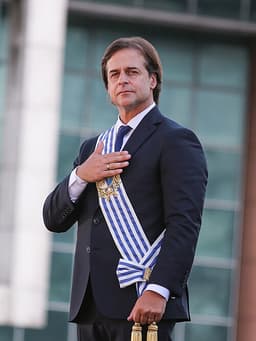
Luis Alberto Lacalle
Politician · Modern
50.7Total
Basic Information
Born
1907
1941
Died
1971
—
Era
Modern
Modern
Nationality
Haiti
Uruguay
Occupation
Politician
Politician
Civilization
Western
Western
Score Comparison
Military (10%)
49.3
50.0
Political (20%)
27.9
68.0
Influence (20%)
50.2
55.7
Legacy (20%)
40.0
45.0
Leadership (15%)
65.7
40.0
Strategy (15%)
41.7
42.9
TOTAL
45.7
50.7
Francois Duvalier — Complete Timeline
1957 AD
1957 Haitian general electionPolitical Action◆ Major
Duvalier won the presidential election amid widespread fraud and violence. He was supported by the military and used the election to legitimize his rule, beginning a 14-year dictatorship.
ElectionFraudDictatorship
Impact: nationaldestructive
1959 AD
Establishment of the Tonton MacoutePolitical Action◆ Major
Duvalier created the Tonton Macoute, a paramilitary force that served as his personal security and terror apparatus. The group operated outside the law, suppressing dissent through murder, torture, and intimidation.
ParamilitaryTerrorHuman Rights Abuses
Impact: nationaldestructive
1961 AD
Excommunication from the Catholic ChurchCultural
Duvalier expelled the Archbishop of Port-au-Prince and other foreign clergy, leading to his excommunication by the Vatican. He then promoted a cult of personality blending voodoo and Catholicism to legitimize his rule.
ReligionCult of PersonalityChurch-State Conflict
Impact: nationaldestructive
1964 AD
Declaration of Duvalier as President for LifePolitical Action◆ Major
Duvalier amended the Haitian constitution to declare himself President for Life. This move eliminated any possibility of democratic succession and solidified his absolute control over the country.
Constitutional ChangeDictatorshipPower Consolidation
Impact: nationaldestructive
Luis Alberto Lacalle — Complete Timeline
1989 AD
Elected President of UruguayPolitical Action◆ Major
Luis Alberto Lacalle was elected president of Uruguay in the 1989 general election as the National Party candidate, defeating the Colorado Party. His victory ended 122 years of Colorado Party dominance in the presidency.
ElectionNational PartyEnd of Colorado Dominance
Impact: nationalconstructive
1990 AD
Implemented Neoliberal Economic ReformsReform◆ Major
Lacalle implemented a series of neoliberal reforms, including trade liberalization, deregulation, and privatization of state-owned enterprises. The reforms aimed to modernize the economy but faced opposition from labor unions and led to increased unemployment.
Economic ReformNeoliberalismPrivatization
Impact: nationalconstructive
1991 AD
Signed the Treaty of AsunciónPolitical Action◆ Major
Lacalle signed the Treaty of Asunci
Regional IntegrationTrade BlocMercosur
Impact: regionalconstructive
1992 AD
Faced Referendum on State ReformsPolitical Action
Lacalle's government faced a referendum in December 1992 on several state reform laws, including privatization of state enterprises. Voters rejected the reforms, dealing a political setback to Lacalle's agenda.
ReferendumPrivatizationPolitical Setback
Impact: nationaldestructive
Expert Analysis
Origins
Francois Duvalier was born on April 14, 1907, in Port-au-Prince, Haiti, to a middle-class family. He studied medicine at the University of Haiti and worked as a physician, focusing on rural healthcare and folklore. His background as a doctor gave him grassroots connections, but his ambition for power soon overshadowed his medical career.
Luis Alberto Lacalle was born on July 13, 1941, in Montevideo, Uruguay, into a prominent political family. His grandfather was president of Uruguay, and his father was a politician. Lacalle studied law at the University of the Republic and became a lawyer. His early involvement in the National Party shaped his conservative, pro-market views.
Rise to Power
Duvalier rose to power in the 1957 Haitian general election, which was marked by fraud and violence. He was supported by the military and used populist rhetoric appealing to the black majority against the mulatto elite. Once in office, he consolidated power by purging opponents and creating the Tonton Macoute, a paramilitary force that terrorized the population. By 1964, he amended the constitution to declare himself President for Life, eliminating any chance of democratic succession.
Lacalle was elected president of Uruguay in the 1989 general election, defeating the Colorado Party. His rise was peaceful and democratic, representing a return to civilian rule after the country's military dictatorship (1973-1985). He campaigned on a platform of neoliberal reforms, promising to modernize Uruguay's economy.
Leadership & Governance
Duvalier's leadership was authoritarian and brutal. He ruled through fear, using the Tonton Macoute to suppress dissent. He expelled foreign clergy and promoted a cult of personality, styling himself as "Papa Doc" and a voodoo priest. His governance focused on maintaining power rather than development, leading to economic stagnation and international isolation. His political score of 27.9 reflects his inability to build sustainable institutions.
Lacalle, by contrast, led democratically. He implemented neoliberal reforms, including trade liberalization, deregulation, and privatization of state-owned enterprises. He signed the Treaty of Asunción in 1991, establishing Mercosur, a regional trade bloc. His leadership score of 40.0 indicates moderate effectiveness, but his reforms faced public backlash, leading to a referendum in 1992 that rejected key privatization laws.
Triumph & Tragedy
Duvalier's triumph was his absolute control over Haiti for 14 years until his death in 1971. He successfully eliminated rivals and created a regime that outlasted him. His tragedy was the devastation he wrought: economic collapse, mass emigration of intellectuals, and a legacy of instability. His military score of 49.3 and strategy score of 41.7 reflect his focus on internal repression rather than national defense or long-term planning.
Lacalle's triumph was his role in founding Mercosur, which boosted regional trade and integration. He also stabilized Uruguay's economy after the dictatorship. His tragedy was the failure of his neoliberal agenda: the 1992 referendum overturned his reforms, and his popularity declined. His influence score of 55.7 shows his impact on regional politics, but his legacy score of 45.0 indicates mixed long-term results.
Character & Destiny
Duvalier was paranoid and ruthless. He used voodoo and superstition to control the populace, believing himself to be a divine figure. His character led to isolation and brutality, sealing his fate as a dictator reviled by history. His total score of 45.7 reflects a narrow, destructive path.
Lacalle was pragmatic and reform-minded, but his technocratic approach alienated voters. He believed in free markets but underestimated public resistance. His character led to democratic but partial success; he is remembered as a competent but unpopular president. His total score of 50.7 is slightly higher, indicating a more balanced but less impactful legacy.
Legacy
Duvalier's legacy is one of terror and failure. Haiti remains one of the poorest countries, with a weak state and a history of authoritarianism. He is a symbol of tyranny, and his regime's effects linger. His influence score of 50.2 reflects his notoriety, but his legacy score of 40.0 shows the negative impact.
Lacalle's legacy is more positive but limited. Mercosur remains a key trade bloc, and Uruguay's democratic stability owes partly to his reforms. However, his neoliberal policies were partially reversed, and he is not a transformative figure. His legacy score of 45.0 indicates moderate remembrance.
Conclusion
Luis Alberto Lacalle had a greater overall impact than Francois Duvalier, as reflected in his higher total score of 50.7 vs. 45.7. While Duvalier's rule was more dramatic and long-lasting in its terror, Lacalle's contributions to regional integration and democratic governance are more constructive. Duvalier's negative legacy is powerful but destructive; Lacalle's positive but modest achievements ultimately outweigh the former's tyranny. In the balance of history, a flawed democrat is superior to a brutal dictator.
Rankings
🥇
Luis Alberto LacalleLeader
Mil: 50.0Pol: 68.0Inf: 55.7
50.7
🥈
Francois Duvalier
Mil: 49.3Pol: 27.9Inf: 50.2
45.7
+5.0 behind
How This Comparison Works
Algorithm
Each figure is scored on 6 dimensions (0—100 scale) based on structured historical data: Military (10%), Political (20%), Influence (20%), Legacy (20%), Leadership (15%), Strategy (15%). The weighted total produces the final ranking.
Data Sources
Scores are computed from structured sub-indicators in the database. Scale factors adjust for era (Ancient ×0.85, Modern ×1.0) and civilization size (Eastern ×1.05, Other ×0.80) to account for differences in population and military scale.
Maximum 3 Figures
Comparisons are limited to 2—3 figures to ensure readability and statistical meaningfulness.
Error Margins
±5 points per dimension — Sub-scores are derived from historical records with inherent uncertainty. Two figures within 5 points on a dimension should be considered roughly equivalent in that area.
Total Score Accuracy
±3 points overall — The weighted combination of 6 dimensions produces a total score with approximately ±3 points of uncertainty. Differences of less than 3 points are not statistically significant— the figures are effectively tied.
Known Limitations
- Historical records are incomplete and uneven across civilizations
- Figures from oral-tradition societies may be underrepresented
- Occupation labels can misclassify multi-role figures
- Scores measure capability and impact, not moral character
- Quantitative scoring is a comparison tool, not absolute truth
Capability Radar
Military (10%) — Battles & Warfare
Battles
28
26
Win Rate
32
32
Expansion
36
34
Political (20%) — Governance & Reform
Reform
10
45
Diplomacy
15
60
Economy
5
50
Influence (20%) — Cultural & Global Reach
Cultural
20
30
Global
20
45
Legacy (20%) — Historical Impact
Historical
25
40
Longevity
15
30
Leadership (15%) — Power & Stability
Tenure
60
55
Stability
5
40
Strategy (15%) — Tactics & Innovation
Strategy
38
40
Tactics
41
40
Reform
42
43
Similar Comparisons
Comments & Discussion
No comments yet. Be the first to share your thoughts!