Loading...
Francois-Michel Le Tellier de Louvois vs Qin Shi Huang
Qin Shi Huang leads by 24.7 pts · 2 figures compared
…
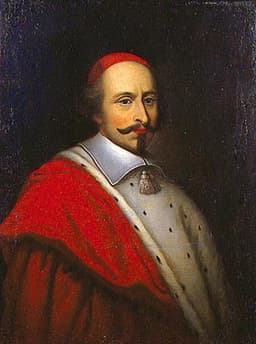
Francois-Michel Le Tellier de Louvois
Politician · Modern
60.5Total
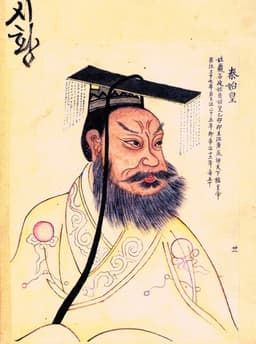
Qin Shi Huang
Emperor · Ancient
85.2Total
Basic Information
Born
1641
-259
Died
1691
-210
Era
Modern
Ancient
Nationality
France
China
Occupation
Politician
Emperor
Civilization
Western
Eastern
Score Comparison
Military (10%)
47.5
80.0
Political (20%)
65.0
90.0
Influence (20%)
55.0
85.0
Legacy (20%)
55.0
90.0
Leadership (15%)
80.0
78.0
Strategy (15%)
65.4
82.0
TOTAL
60.5
85.2
Francois-Michel Le Tellier de Louvois — Complete Timeline
1666 AD
Appointed Secretary of State for WarPolitical Action◆ Major
Louvois was appointed Secretary of State for War under Louis XIV. He became the king's principal military administrator, overseeing the army's organization, logistics, and discipline for over two decades.
French ArmyLouis XIVMilitary Administration
Impact: national
1668 AD
Reformed the French ArmyReform◆ Major
Louvois implemented major army reforms, including standardizing uniforms, improving supply systems, and establishing military hospitals. He also introduced a system of military intendants to ensure discipline and loyalty.
Military ReformFrench ArmyLouis XIV
Impact: nationalconstructive
1670 AD
Established the Hôtel des InvalidesReform
Louvois oversaw the creation of the H
Military WelfareSocial ReformFrench Army
Impact: nationalconstructive
1689 AD
Organized the Devastation of the PalatinateWar◆ Major
Louvois ordered the systematic destruction of the Palatinate region in Germany during the Nine Years' War. French troops burned towns, villages, and crops to deny resources to enemy forces, causing widespread suffering.
Nine Years' WarScorched EarthWar Crimes
Impact: regionaldestructive
Qin Shi Huang — Complete Timeline
246 BC
Construction of the Mausoleum and Terracotta ArmyOther◆ Major
Qin Shi Huang commissioned a vast mausoleum complex near Xi'an, guarded by thousands of life-sized terracotta soldiers, horses, and chariots. The project employed hundreds of thousands of workers and reflected his obsession with immortality and imperial power.
Impact: global
230 BC
Conquest of the Six Warring StatesWar
From 230 to 221 BCE, Ying Zheng led the Qin state in a series of campaigns that conquered the Han, Zhao, Wei, Chu, Yan, and Qi states. This unified China under a single ruler for the first time, ending the Warring States period.
Impact: global
221 BC
Standardization of Writing, Currency, and MeasurementsReform◆ Major
Qin Shi Huang ordered the standardization of Chinese script, currency, and weights and measures across the unified empire. This facilitated administration, trade, and cultural integration, laying a foundation for future dynasties.
Impact: globalconstructive
Proclamation of the Qin DynastyPolitical Action
After conquering the last independent state, Ying Zheng declared himself Shi Huangdi (First Emperor), founding the Qin Dynasty. He adopted a new title to signify his supreme authority and initiated centralized imperial rule.
Impact: global
214 BC
Initiation of the Great Wall ConstructionOther◆ Major
Qin Shi Huang ordered the connection and extension of existing northern fortifications to create a unified defensive wall against nomadic Xiongnu raids. This project involved massive conscripted labor and became the precursor to the later Great Wall.
Impact: regional
213 BC
Burning of Books and Burying of ScholarsPolitical Action◆ Major
On the advice of Li Si, Qin Shi Huang ordered the burning of historical records and philosophical texts not aligned with Legalist doctrine. He also had 460 Confucian scholars buried alive to suppress dissent and consolidate ideological control.
Impact: nationaldestructive
Expert Analysis
francois-michel-le-tellier-de-louvois-vs-qin-shi-huang
# The Emperor and the Minister: Two Visions of Absolute Power
In the winter of 213 BC, Qin Shi Huang’s soldiers dragged scholars through the streets of Xianyang, their books piled high for burning. A thousand miles away and nineteen centuries later, in the winter of 1689, François-Michel Le Tellier de Louvois sat in his Paris study and signed orders that would turn the German Palatinate into a smoking wasteland. Both men believed that unity demanded destruction, that order required terror. Yet one founded an empire that would echo through millennia, while the other built a war machine that collapsed within a generation. What made the difference?
Origins
Qin Shi Huang was born Ying Zheng in 259 BC, the son of a king and a concubine, into a world of endless war. The Warring States period had torn China apart for two centuries—seven kingdoms fighting for survival, each devouring the other. He grew up in a court where betrayal was routine and assassination a constant threat. His father died when he was thirteen, leaving him to rule under the shadow of powerful regents. The boy learned early that trust was weakness.
Louvois, born in 1641, entered a different world. His father was Michel Le Tellier, Louis XIV’s war minister, a man who had already begun reshaping France’s military. Young François-Michel grew up in the corridors of Versailles, not on battlefields. He learned administration, not combat; patronage, not command. Where Qin Shi Huang was forged in chaos, Louvois was molded in bureaucracy. The first emperor saw power as something to be seized; the French minister saw it as something to be managed.
Rise to Power
Qin Shi Huang’s path was direct. At twenty-two, he crushed a rebellion by his own regent, then turned his armies outward. Between 230 and 221 BC, he conquered the six remaining kingdoms—Han, Zhao, Wei, Chu, Yan, and Qi—in a campaign of breathtaking speed. Each victory was a lesson in ruthlessness: when the Zhao capital fell, he ordered the execution of all who had opposed him. By 221 BC, at age thirty-eight, he stood alone, the first man to rule all of China.
Louvois rose differently. Appointed Secretary of State for War in 1666 at age twenty-five, he inherited his father’s network and his king’s ambition. His rise was not through conquest but through competence. He standardized uniforms, improved supply chains, and created the Hôtel des Invalides in 1670—a home for wounded soldiers that still stands today. His weapon was paperwork; his battlefield was the budget. Where Qin Shi Huang conquered kingdoms, Louvois conquered logistics.
Leadership & Governance
Their ruling styles could not have been more different. Qin Shi Huang governed through terror and unity. He standardized writing, currency, and measurements across his empire, binding a fractured land into one. He connected northern fortifications into what would become the Great Wall, a symbol of the unified defense he demanded. But he also burned books and buried scholars alive, believing that history itself must serve the state. His Legalist philosophy held that law, not morality, kept order.
Louvois governed through systems. He reformed the French army into a professional force with standardized training, promotion by merit, and a reliable supply chain. His soldiers wore uniforms for the first time, carried standardized weapons, and marched to standardized drills. He was an administrator who understood that war was won by the quartermaster as much as the general. But his methods had a dark side: in 1689, during the Nine Years’ War, he ordered the systematic destruction of the Palatinate, burning towns, destroying crops, and driving thousands into exile. He called it strategy; history calls it atrocity.
Triumph & Tragedy
Qin Shi Huang’s triumph was absolute: the unification of China, a feat that had eluded every ruler before him. His tragedy was equally absolute. Obsessed with immortality, he consumed mercury pills prescribed by alchemists. When he died in 210 BC at age forty-nine, his empire collapsed within three years. His mausoleum, guarded by the Terracotta Army—thousands of life-sized soldiers built to protect him in the afterlife—stands as both monument and warning: the price of absolute control is absolute fragility.
Louvois’ triumph was more modest but more lasting. He made the French army the most formidable in Europe, a force that would dominate the continent for decades. His tragedy was personal: he died suddenly in 1691 at age fifty, possibly poisoned, possibly of natural causes, just as his king’s wars began to drain France’s strength. His reforms outlasted him, but the system he built would eventually bankrupt the monarchy he served.
Character & Destiny
Qin Shi Huang was paranoid, brilliant, and ruthless. He believed that history began with him—hence his title, Shi Huangdi, the First Emperor. He erased the past to control the future. Louvois was efficient, ambitious, and cold. He believed that systems, not men, created power. He organized destruction with the same precision he organized supply lines.
Their fates reflected their characters. The First Emperor’s paranoia drove him to build a tomb that would survive two thousand years, while his empire crumbled. Louvois’ efficiency built an army that would serve France long after his death, but his moral blindness made him a symbol of state cruelty.
Legacy
Qin Shi Huang’s legacy is immense. Every Chinese emperor who followed ruled in his shadow. The Great Wall, the standardized script, the unified currency—all began with him. He is remembered as both founder and tyrant, the man who made China one. The Terracotta Army, discovered in 1974, has made him a global icon.
Louvois is remembered, if at all, as a bureaucrat of war. His Hôtel des Invalides still houses wounded soldiers. His reforms shaped modern military organization. But his name is not carved into history as the First Emperor’s is. He served a king; Qin Shi Huang was a king. That difference, perhaps, explains everything.
Conclusion
Both men sought to impose order on chaos. Both succeeded, and both failed. Qin Shi Huang’s empire died with him, but his idea of China survived. Louvois’ army fought on, but his king’s ambitions bankrupted the nation. The difference was not in their methods—both were ruthless—but in their scope. The First Emperor thought in millennia; Louvois thought in campaigns. One built a civilization; the other built a machine. In the end, civilizations outlast machines, and the men who dream of eternity, even when they fail, cast longer shadows than those who only dream of victory.
Rankings
🥇
Qin Shi HuangLeader
Mil: 80.0Pol: 90.0Inf: 85.0
85.2
🥈
Francois-Michel Le Tellier de Louvois
Mil: 47.5Pol: 65.0Inf: 55.0
60.5
+24.7 behind
How This Comparison Works
Algorithm
Each figure is scored on 6 dimensions (0—100 scale) based on structured historical data: Military (10%), Political (20%), Influence (20%), Legacy (20%), Leadership (15%), Strategy (15%). The weighted total produces the final ranking.
Data Sources
Scores are computed from structured sub-indicators in the database. Scale factors adjust for era (Ancient ×0.85, Modern ×1.0) and civilization size (Eastern ×1.05, Other ×0.80) to account for differences in population and military scale.
Maximum 3 Figures
Comparisons are limited to 2—3 figures to ensure readability and statistical meaningfulness.
Error Margins
±5 points per dimension — Sub-scores are derived from historical records with inherent uncertainty. Two figures within 5 points on a dimension should be considered roughly equivalent in that area.
Total Score Accuracy
±3 points overall — The weighted combination of 6 dimensions produces a total score with approximately ±3 points of uncertainty. Differences of less than 3 points are not statistically significant— the figures are effectively tied.
Known Limitations
- Historical records are incomplete and uneven across civilizations
- Figures from oral-tradition societies may be underrepresented
- Occupation labels can misclassify multi-role figures
- Scores measure capability and impact, not moral character
- Quantitative scoring is a comparison tool, not absolute truth
Capability Radar
Military (10%) — Battles & Warfare
Battles
40
85
Win Rate
45
90
Expansion
70
90
Political (20%) — Governance & Reform
Reform
90
95
Diplomacy
60
75
Economy
55
90
Influence (20%) — Cultural & Global Reach
Cultural
55
95
Global
60
85
Legacy (20%) — Historical Impact
Historical
75
95
Longevity
70
95
Leadership (15%) — Power & Stability
Tenure
85
70
Stability
70
65
Strategy (15%) — Tactics & Innovation
Strategy
60
85
Tactics
55
80
Reform
95
95
Similar Comparisons
Comments & Discussion
LouvoisLament6/17/2026
Calling Qin Shi Huang and Louvois “two visions of absolute power” is historian copium. Qin won by conquering six kingdoms with real armies, while Louvois burned the Palatinate from a desk, never smelling smoke. One built the Great Wall; the other bankrupted France. Louvois was just a paper-pusher with a genocide hobby—stop romanticizing the bureaucrat. Qin was a warlord who earned his terror.
红墙铁书6/17/2026
把书同文车同轨的始皇帝和烧杀德意志的路瓦混为一谈?开什么玩笑。始皇帝焚书坑儒是为了禁私学、定法度,这政策延续了汉唐两千年。路瓦烧普法尔茨呢?纯粹烧钱制造仇恨,不到十年法国就被打得满地找牙。一个建的是统一帝国的秩序遗产,一个烧的是自己老板的国库和脸面。
DataDrill6/17/2026
The summary claims Louvois’s war machine “collapsed within a generation,” but France under Louis XIV remained Europe’s dominant power for decades after Louvois’s death in 1691. His military reforms—standardized uniforms, logistics depots, the first real military hospital network—actually modernized European armies. Meanwhile, the Qin dynasty collapsed fourteen years after Shi Huang’s death. So who really collapsed first?
凿石记史6/17/2026
分析里有个根本性错误:始皇帝的大秦确实是二世而亡,但他那套郡县制、大一统思想却被所有后世王朝继承。路瓦的战争机器呢?他死后法国军事体系迅速僵化,到十八世纪连腓特烈大帝都嘲笑法军只会摆阵型。一个创立了文明模板,一个只是国王的工具人——别拿工具和建筑师比长短。