Loading...
Franklin D. Roosevelt vs Lord Dalhousie
Franklin D. Roosevelt leads by 12.6 pts · 2 figures compared
…
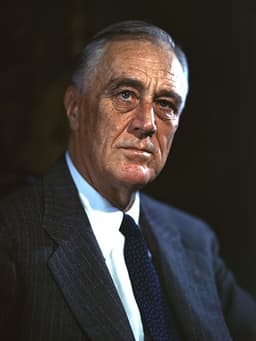
Franklin D. Roosevelt
Politician · Modern
71.0Total
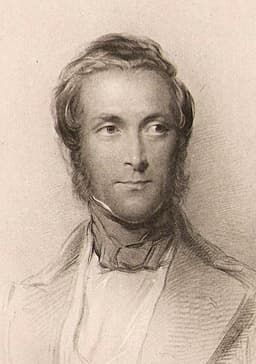
Lord Dalhousie
Politician · Modern
58.4Total
Basic Information
Born
1882
1812
Died
1945
1860
Era
Modern
Modern
Nationality
United States
United Kingdom
Occupation
Politician
Politician
Civilization
Western
Western
Score Comparison
Military (10%)
45.0
40.0
Political (20%)
85.0
60.0
Influence (20%)
75.0
58.3
Legacy (20%)
65.0
55.0
Leadership (15%)
85.0
74.0
Strategy (15%)
60.0
60.0
TOTAL
71.0
58.4
Franklin D. Roosevelt — Complete Timeline
1933 AD
Inaugurated as 32nd PresidentOther◆ Major
Franklin D. Roosevelt was inaugurated as President of the United States on March 4, 1933, during the Great Depression. His inaugural address declared 'the only thing we have to fear is fear itself,' and he immediately called Congress into special session to address the banking crisis.
Great DepressionPresidencyInauguration
Impact: national
Enacted the New DealOther◆ Major
Roosevelt launched the New Deal in 1933, a series of federal programs including the Civilian Conservation Corps, the Agricultural Adjustment Act, and the Tennessee Valley Authority. These measures aimed to provide relief, recovery, and reform during the Great Depression, fundamentally expanding the role of the federal government.
Great DepressionEconomic PolicySocial Reform
Impact: nationalconstructive
1935 AD
Signed the Social Security ActOther◆ Major
Roosevelt signed the Social Security Act into law on August 14, 1935, establishing a federal system of old-age pensions, unemployment insurance, and aid for dependent children. This created the modern American welfare state and provided a safety net for millions of citizens.
Social WelfareLegislationNew Deal
Impact: nationalconstructive
1941 AD
Lend-Lease ActOther◆ Major
Roosevelt signed the Lend-Lease Act on March 11, 1941, authorizing the transfer of military equipment and supplies to Allied nations, particularly Britain and the Soviet Union. This program provided critical material support to countries fighting the Axis powers before U.S. entry into World War II.
World War IIForeign PolicyMilitary Aid
Impact: globalconstructive
Declaration of War on JapanPolitical Action◆ Major
Following the Japanese attack on Pearl Harbor on December 7, 1941, Roosevelt delivered his 'Day of Infamy' speech to Congress the next day, requesting a declaration of war. Congress approved the declaration, bringing the United States into World War II.
World War IIPearl HarborDeclaration of War
Impact: globaldestructive
1942 AD
Executive Order 9066Other◆ Major
Roosevelt signed Executive Order 9066 on February 19, 1942, authorizing the forced relocation and internment of Japanese Americans living on the West Coast. Over 110,000 people, mostly U.S. citizens, were incarcerated in camps for the duration of the war, a decision later widely condemned as a violation of civil rights.
World War IICivil RightsInternment
Impact: nationaldestructive
1944 AD
Elected to Fourth TermOther◆ Major
Roosevelt was elected to an unprecedented fourth term as president in November 1944, defeating Republican Thomas E. Dewey. This election occurred during the final stages of World War II, and Roosevelt's continued leadership ensured stability in the war effort and post-war planning.
PresidencyElectionWorld War II
Impact: national
1945 AD
Yalta ConferenceOther◆ Major
Roosevelt met with Winston Churchill and Joseph Stalin at the Yalta Conference in February 1945 to discuss post-war Europe. Agreements included the division of Germany, Soviet entry into the war against Japan, and the creation of the United Nations, shaping the post-war world order.
World War IIDiplomacyPost-War Planning
Impact: global
Lord Dalhousie — Complete Timeline
1848 AD
Second Anglo-Sikh WarWar◆ Major
Dalhousie oversaw the Second Anglo-Sikh War in 1848-1849, which resulted in the British annexation of the Punjab. The Sikh army was defeated at the Battle of Gujrat, and the Treaty of Lahore in 1849 formally annexed the region, ending Sikh sovereignty and extending British rule to the northwest frontier.
Anglo-Sikh WarAnnexationPunjab
Impact: regional
Doctrine of LapsePolitical Action
Lord Dalhousie, as Governor-General of India, implemented the Doctrine of Lapse, a policy that allowed the British to annex any princely state where the ruler died without a natural heir. This policy led to the annexation of states like Satara, Jhansi, and Nagpur, causing widespread resentment among Indian rulers and contributing to the 1857 Rebellion.
AnnexationPolicy1857 Rebellion
Impact: regionaldestructive
1853 AD
Railway and Telegraph ExpansionInvention◆ Major
Dalhousie championed the development of railways and telegraphs in India. The first railway line from Bombay to Thane opened in 1853, and a telegraph network was established connecting major cities. These projects aimed to improve communication, trade, and military control, laying the foundation for India's modern infrastructure.
InfrastructureRailwayTelegraph
Impact: regionalconstructive
1856 AD
Annexation of AwadhPolitical Action◆ Major
Dalhousie annexed the Kingdom of Awadh in 1856 under the pretext of misgovernment. The annexation was highly controversial and deeply resented by the local population and nobility. It became a major cause of the 1857 Indian Rebellion, as Awadh's soldiers and landlords joined the uprising against British rule.
AnnexationAwadh1857 Rebellion
Impact: regionaldestructive
Expert Analysis
Franklin D. Roosevelt vs Lord Dalhousie
# The Architect and the Anvil
On a bitter January morning in 1933, Franklin Delano Roosevelt stood hatless in the freezing rain, his leg braces hidden beneath his overcoat, and told a nation gripped by fear that the only thing they had to fear was fear itself. Half a world away and nearly a century earlier, another man in a different kind of uniform—James Andrew Broun-Ramsay, the 1st Marquess of Dalhousie—sat in Calcutta drafting a memorandum that would, with the stroke of a pen, extinguish the sovereignty of an ancient kingdom. One man rebuilt a broken nation; the other broke a civilization. Both were architects of vast change. But why did one become a beacon of democratic hope while the other became a symbol of imperial overreach? The answer lies not in their shared ambition, but in the radically different worlds they inhabited and the choices those worlds forced upon them.
Origins
Roosevelt was born into the Hudson River aristocracy in 1882, a child of privilege who grew up riding horses across his family’s sprawling estate. His father was a genteel investor, his mother a protective force who shaped his unshakeable confidence. Polio struck him at thirty-nine, but rather than retreating into bitterness, he forged a public persona of radiant optimism. The disease taught him something Dalhousie never learned: that power is not about physical strength but about the ability to inspire others to endure pain.
Dalhousie, born in 1812 to a Scottish peer, was raised in the shadow of empire. His father had served as Governor-General of Canada, and young James absorbed the conviction that British rule was both a duty and a destiny. Educated at Harrow and Oxford, he was a man of prodigious energy and icy intellect—but not of empathy. Where Roosevelt’s paralysis bred humility, Dalhousie’s breeding bred certitude. He arrived in India in 1848 convinced that the subcontinent was a chaos to be ordered, not a civilization to be understood.
Rise to Power
Roosevelt’s path to the presidency was a study in patience and coalition-building. He served as Assistant Secretary of the Navy, ran for Vice President in 1920, and then, after polio, staged a remarkable political comeback as Governor of New York. He understood that power in a democracy must be earned, not seized. His 1932 election was a mandate born of desperation: the Great Depression had shattered America, and Roosevelt promised a “New Deal.”
Dalhousie’s rise was swifter and more absolute. Appointed Governor-General of India at thirty-six, he arrived with a mandate from London to consolidate British control. He did not need to win votes; he needed only to win wars and write policies. His first major act was the Second Anglo-Sikh War (1848–1849), which ended with the annexation of the Punjab. For Dalhousie, this was efficiency. For the Sikhs, it was conquest.
Leadership & Governance
Roosevelt governed through persuasion and experimentation. His New Deal was not a single program but a sprawling, often contradictory set of reforms—banking regulations, public works, Social Security, labor rights. He treated policy like a laboratory, discarding what failed and doubling down on what worked. His fireside chats made Americans feel he was speaking directly to them, a revolutionary intimacy in an age of mass media. He also understood the limits of power: he could not abolish poverty, but he could build a safety net.
Dalhousie governed through doctrine and decree. His most infamous innovation was the Doctrine of Lapse, which declared that any princely state whose ruler died without a direct male heir would be absorbed by the British East India Company. It was legally tidy but politically catastrophic—it stripped Indian rulers of their dignity and their subjects of their loyalties. He also championed railways and telegraphs, connecting India as never before, but these were tools of control, not liberation. The first train from Bombay to Thane in 1853 was an engineering marvel; it was also a chain binding India to British commerce.
Triumph & Tragedy
Roosevelt’s greatest triumph was leading the United States through the Great Depression and World War II. He forged the Grand Alliance with Churchill and Stalin, mobilized the American economy into an “arsenal of democracy,” and laid the foundations for the post-war world order. His tragedy came at the end: he died in April 1945, weeks before Hitler’s suicide and months before the atomic bomb. He never saw the peace he had fought for.
Dalhousie’s triumph was the expansion of British India to its greatest territorial extent. By 1856, the Company ruled from the Khyber Pass to the Bay of Bengal. His tragedy was that his very success sowed the seeds of rebellion. The annexation of Awadh in 1856, justified on grounds of “misgovernment,” was the final straw for a population already seething under land taxes, cultural humiliation, and the Doctrine of Lapse. Within a year, the Indian Rebellion of 1857 exploded—a cataclysm that Dalhousie, having left India in 1856, never had to face. He died in 1860, his reputation intact but his legacy forever stained.
Character & Destiny
Roosevelt’s character was defined by flexibility. He was a master of indirection, often telling advisors contradictory things to keep his options open. He could charm a Republican senator one day and a Soviet ambassador the next. This adaptability was born of his physical struggle: a man who could not walk learned to navigate by other means.
Dalhousie’s character was defined by rigidity. He believed in order, efficiency, and the moral superiority of British civilization. He could not imagine that the Indians he governed might have their own vision of justice. His policies were logical on paper but disastrous in practice. He was, in the words of one historian, “a great administrator who lacked the imagination to see the consequences of his own efficiency.”
Legacy
Roosevelt is remembered as a titan of the American century. His face adorns the dime, his words echo in every State of the Union address, and his New Deal remains the baseline of American social policy. His four terms broke a tradition but also cemented the idea that in times of crisis, a strong leader can be a democracy’s salvation.
Dalhousie is remembered as a catalyst of catastrophe. The 1857 Rebellion led directly to the abolition of the East India Company and the imposition of direct British Crown rule. His railways and telegraphs endured, but they became symbols of colonial exploitation. In modern India, his name is invoked as a warning: that efficiency without empathy, progress without justice, is not progress at all.
Conclusion
Roosevelt and Dalhousie both wielded immense power in times of transformation. One used it to lift a nation from despair; the other used it to tighten a grip until it broke. The difference was not in their abilities—both were brilliant—but in their vision. Roosevelt saw democracy as a living conversation, a constant negotiation between the people and their leaders. Dalhousie saw governance as a machine, and the people as its parts. In the end, the machine broke, and the conversation endured. That is the deepest lesson of their lives: that power, however great, must be accountable to those it serves—or it will be consumed by those it crushes.
Rankings
🥇
Franklin D. RooseveltLeader
Mil: 45.0Pol: 85.0Inf: 75.0
71.0
🥈
Lord Dalhousie
Mil: 40.0Pol: 60.0Inf: 58.3
58.4
+12.6 behind
How This Comparison Works
Algorithm
Each figure is scored on 6 dimensions (0—100 scale) based on structured historical data: Military (10%), Political (20%), Influence (20%), Legacy (20%), Leadership (15%), Strategy (15%). The weighted total produces the final ranking.
Data Sources
Scores are computed from structured sub-indicators in the database. Scale factors adjust for era (Ancient ×0.85, Modern ×1.0) and civilization size (Eastern ×1.05, Other ×0.80) to account for differences in population and military scale.
Maximum 3 Figures
Comparisons are limited to 2—3 figures to ensure readability and statistical meaningfulness.
Error Margins
±5 points per dimension — Sub-scores are derived from historical records with inherent uncertainty. Two figures within 5 points on a dimension should be considered roughly equivalent in that area.
Total Score Accuracy
±3 points overall — The weighted combination of 6 dimensions produces a total score with approximately ±3 points of uncertainty. Differences of less than 3 points are not statistically significant— the figures are effectively tied.
Known Limitations
- Historical records are incomplete and uneven across civilizations
- Figures from oral-tradition societies may be underrepresented
- Occupation labels can misclassify multi-role figures
- Scores measure capability and impact, not moral character
- Quantitative scoring is a comparison tool, not absolute truth
Capability Radar
Military (10%) — Battles & Warfare
Battles
10
20
Win Rate
10
30
Expansion
10
85
Political (20%) — Governance & Reform
Reform
95
75
Diplomacy
90
55
Economy
95
65
Influence (20%) — Cultural & Global Reach
Cultural
80
40
Global
90
70
Legacy (20%) — Historical Impact
Historical
90
75
Longevity
85
60
Leadership (15%) — Power & Stability
Tenure
90
70
Stability
75
20
Strategy (15%) — Tactics & Innovation
Strategy
65
60
Tactics
10
15
Reform
70
40
Similar Comparisons
Comments & Discussion
No comments yet. Be the first to share your thoughts!