Loading...
Alexander the Great vs Franklin D. Roosevelt
Alexander the Great leads by 14.2 pts · 2 figures compared
…
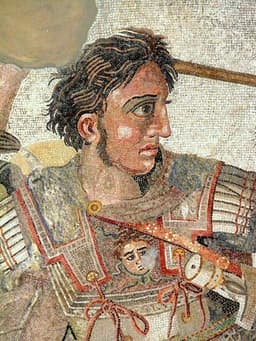
Alexander the Great
General · Ancient
85.2Total
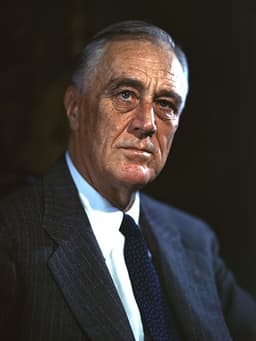
Franklin D. Roosevelt
Politician · Modern
71.0Total
Basic Information
Born
-356
1882
Died
-323
1945
Era
Ancient
Modern
Nationality
Macedon
United States
Occupation
General
Politician
Civilization
Western
Western
Score Comparison
Military (10%)
95.0
45.0
Political (20%)
60.0
85.0
Influence (20%)
92.0
75.0
Legacy (20%)
90.0
65.0
Leadership (15%)
80.0
85.0
Strategy (15%)
92.0
60.0
TOTAL
85.2
71.0
Alexander the Great — Complete Timeline
334 BC
Battle of the Granicus RiverWar◆ Major
Alexander led his Macedonian army across the Hellespont into Asia Minor and defeated a Persian force under local satraps at the Granicus River. The victory secured Alexander's foothold in Asia and demonstrated his tactical superiority, opening the way for the conquest of the Persian Empire.
Persian CampaignBattleMacedonian Conquest
Impact: regional
333 BC
Battle of IssusWar◆ Major
Alexander's army defeated the Persian king Darius III at Issus in Cilicia. Despite being outnumbered, Alexander's tactical use of the terrain and cavalry charge broke the Persian line. Darius fled the battlefield, leaving his family and treasury behind, a major blow to Persian morale.
Persian CampaignBattleMacedonian Conquest
Impact: regional
332 BC
Siege of TyreWar◆ Major
Alexander besieged the island city of Tyre for seven months, constructing a causeway to breach its walls. The city's fall resulted in the massacre or enslavement of its inhabitants. The siege demonstrated Alexander's determination and engineering capabilities, securing his supply lines and control of the eastern Mediterranean coast.
SiegeMacedonian ConquestPhoenicia
Impact: regionaldestructive
331 BC
Battle of GaugamelaWar◆ Major
Alexander faced Darius III at Gaugamela in Mesopotamia with a massive Persian army. Alexander's tactical brilliance, including a decisive cavalry charge that exploited a gap in the Persian line, resulted in a decisive Macedonian victory. Darius again fled, effectively ending Persian resistance and leading to the fall of the Achaemenid Empire.
Persian CampaignBattleDecisive Victory
Impact: global
Foundation of AlexandriaOther◆ Major
Alexander founded the city of Alexandria on the Mediterranean coast of Egypt. He personally selected the site and oversaw the initial planning. Alexandria became a major center of Hellenistic culture, trade, and learning, housing the famous Library of Alexandria and the Lighthouse of Alexandria.
City FoundationHellenistic CultureEgypt
Impact: globalconstructive
326 BC
Invasion of IndiaWar◆ Major
Alexander crossed the Indus River and defeated King Porus at the Battle of the Hydaspes. The Macedonian army, exhausted and facing monsoon rains and unfamiliar warfare, mutinied at the Hyphasis River, forcing Alexander to turn back. This campaign marked the easternmost extent of his conquests.
Indian CampaignBattleMutiny
Impact: regional
Franklin D. Roosevelt — Complete Timeline
1933 AD
Inaugurated as 32nd PresidentOther◆ Major
Franklin D. Roosevelt was inaugurated as President of the United States on March 4, 1933, during the Great Depression. His inaugural address declared 'the only thing we have to fear is fear itself,' and he immediately called Congress into special session to address the banking crisis.
Great DepressionPresidencyInauguration
Impact: national
Enacted the New DealOther◆ Major
Roosevelt launched the New Deal in 1933, a series of federal programs including the Civilian Conservation Corps, the Agricultural Adjustment Act, and the Tennessee Valley Authority. These measures aimed to provide relief, recovery, and reform during the Great Depression, fundamentally expanding the role of the federal government.
Great DepressionEconomic PolicySocial Reform
Impact: nationalconstructive
1935 AD
Signed the Social Security ActOther◆ Major
Roosevelt signed the Social Security Act into law on August 14, 1935, establishing a federal system of old-age pensions, unemployment insurance, and aid for dependent children. This created the modern American welfare state and provided a safety net for millions of citizens.
Social WelfareLegislationNew Deal
Impact: nationalconstructive
1941 AD
Lend-Lease ActOther◆ Major
Roosevelt signed the Lend-Lease Act on March 11, 1941, authorizing the transfer of military equipment and supplies to Allied nations, particularly Britain and the Soviet Union. This program provided critical material support to countries fighting the Axis powers before U.S. entry into World War II.
World War IIForeign PolicyMilitary Aid
Impact: globalconstructive
Declaration of War on JapanPolitical Action◆ Major
Following the Japanese attack on Pearl Harbor on December 7, 1941, Roosevelt delivered his 'Day of Infamy' speech to Congress the next day, requesting a declaration of war. Congress approved the declaration, bringing the United States into World War II.
World War IIPearl HarborDeclaration of War
Impact: globaldestructive
1942 AD
Executive Order 9066Other◆ Major
Roosevelt signed Executive Order 9066 on February 19, 1942, authorizing the forced relocation and internment of Japanese Americans living on the West Coast. Over 110,000 people, mostly U.S. citizens, were incarcerated in camps for the duration of the war, a decision later widely condemned as a violation of civil rights.
World War IICivil RightsInternment
Impact: nationaldestructive
1944 AD
Elected to Fourth TermOther◆ Major
Roosevelt was elected to an unprecedented fourth term as president in November 1944, defeating Republican Thomas E. Dewey. This election occurred during the final stages of World War II, and Roosevelt's continued leadership ensured stability in the war effort and post-war planning.
PresidencyElectionWorld War II
Impact: national
1945 AD
Yalta ConferenceOther◆ Major
Roosevelt met with Winston Churchill and Joseph Stalin at the Yalta Conference in February 1945 to discuss post-war Europe. Agreements included the division of Germany, Soviet entry into the war against Japan, and the creation of the United Nations, shaping the post-war world order.
World War IIDiplomacyPost-War Planning
Impact: global
Expert Analysis
Alexander the Great vs Franklin D. Roosevelt: Historical Comparison
Few figures embody such contrasting domains of power: Alexander the Great, the ancient Macedonian conqueror who reshaped the world by the sword, and Franklin D. Roosevelt, the modern American politician who navigated depression and global war through democratic governance. Their scores (85 vs 76) reflect a narrow victory for Alexander, driven by sheer military and influence metrics.
Dimension Analysis
**Military: Alexander the Great 96 / Franklin D. Roosevelt 60**
Alexander never lost a battle, forging an empire from Greece to India with tactical genius; Roosevelt, as Commander-in-Chief, directed WWII strategy but relied on generals and industrial capacity rather than personal combat leadership.
**Political: Alexander the Great 65 / Franklin D. Roosevelt 85**
Alexander ruled through conquest and imposed Hellenism, often violently suppressing dissent; Roosevelt mastered coalition-building, the New Deal, and wartime diplomacy, reshaping American government and the Allied alliance.
**Influence: Alexander the Great 90 / Franklin D. Roosevelt 72**
Alexander’s conquests spread Greek culture across three continents, creating the Hellenistic world; Roosevelt’s influence, while profound, was more temporally and geographically bounded—centered on the U.S. and the post-war order.
**Legacy: Alexander the Great 90 / Franklin D. Roosevelt 75**
Alexander’s legacy endures in language, art, and the very concept of empire; Roosevelt’s legacy—the New Deal, Social Security, and the UN—is institutional but more vulnerable to political revision.
**Leadership: Alexander the Great 82 / Franklin D. Roosevelt 85**
Alexander led from the front, inspiring fanatical loyalty at the cost of high personal risk; Roosevelt led from a wheelchair, using radio and rhetoric to galvanize a nation through crisis, arguably demonstrating greater adaptive resilience.
Verdict
Alexander the Great leads due to his unmatched military conquests and far-reaching civilizational influence, though Roosevelt’s political mastery and crisis leadership narrow the gap.
FAQ
Q: Who ranks higher? A: Alexander the Great ranks higher overall, primarily due to his superior military record and the enduring scale of his cultural and territorial impact.
Rankings
🥇
Alexander the GreatLeader
Mil: 95.0Pol: 60.0Inf: 92.0
85.2
🥈
Franklin D. Roosevelt
Mil: 45.0Pol: 85.0Inf: 75.0
71.0
+14.2 behind
How This Comparison Works
Algorithm
Each figure is scored on 6 dimensions (0—100 scale) based on structured historical data: Military (10%), Political (20%), Influence (20%), Legacy (20%), Leadership (15%), Strategy (15%). The weighted total produces the final ranking.
Data Sources
Scores are computed from structured sub-indicators in the database. Scale factors adjust for era (Ancient ×0.85, Modern ×1.0) and civilization size (Eastern ×1.05, Other ×0.80) to account for differences in population and military scale.
Maximum 3 Figures
Comparisons are limited to 2—3 figures to ensure readability and statistical meaningfulness.
Error Margins
±5 points per dimension — Sub-scores are derived from historical records with inherent uncertainty. Two figures within 5 points on a dimension should be considered roughly equivalent in that area.
Total Score Accuracy
±3 points overall — The weighted combination of 6 dimensions produces a total score with approximately ±3 points of uncertainty. Differences of less than 3 points are not statistically significant— the figures are effectively tied.
Known Limitations
- Historical records are incomplete and uneven across civilizations
- Figures from oral-tradition societies may be underrepresented
- Occupation labels can misclassify multi-role figures
- Scores measure capability and impact, not moral character
- Quantitative scoring is a comparison tool, not absolute truth
Capability Radar
Military (10%) — Battles & Warfare
Battles
98
10
Win Rate
99
10
Expansion
99
10
Political (20%) — Governance & Reform
Reform
75
95
Diplomacy
80
90
Economy
70
95
Influence (20%) — Cultural & Global Reach
Cultural
95
80
Global
95
90
Legacy (20%) — Historical Impact
Historical
98
90
Longevity
95
85
Leadership (15%) — Power & Stability
Tenure
60
90
Stability
55
75
Strategy (15%) — Tactics & Innovation
Strategy
98
65
Tactics
99
10
Reform
85
70
Similar Comparisons
Comments & Discussion
HellenistEirene6/16/2026
This comparison is fundamentally anachronistic but still illuminating. Alexander's military score is deservedly high — Arrian describes him leading the charge at Granicus, personally at risk, and never losing a pitched battle. But we must remember that our sources, like Plutarch and Curtius Rufus, were writing centuries later and had their own agendas. The 'political' score of 65 for Alexander is actually generous given how his empire fractured immediately after his death. Roosevelt's 85 in political skill is more defensible: his 'Four Freedoms' speech and the creation of the UN show he understood how to institutionalize power in a way Alexander never did. The comparison ultimately reveals how much our metrics privilege conquest over governance.
ConquestOrBust6/16/2026
Are you kidding me? Alexander got a 96 in military and people still want to argue that Roosevelt was better? Alexander conquered the entire known world in like 10 years — from Greece to India, no defeats, while fighting through deserts and mountains and monsoon rains. Roosevelt couldn't even walk without help, let alone lead a cavalry charge. Yeah, he gave some nice radio speeches, but Alexander literally inspired his men to follow him to the edge of the earth. The Hellenistic age shaped everything from art to science to religion for centuries. FDR's New Deal got partially gutted by Republicans. Give me Alexander any day — this score is actually too generous to Roosevelt.
ColdScroll646/16/2026
这个打分体系有问题。亚历山大军事96分,但政治只有65分——可中国帝王如汉武帝,同样靠战争扩张,政治分通常在80以上,因为古代战争本身就是政治延续。而且亚历山大的影响力90分,我觉得被高估了:他死后帝国20年内就分裂,希腊化文化在中亚被帕提亚快速取代。反观罗斯福,新政奠定了美国现代福利国家基础,联合国至今还在运作。我重新算了加权分:按中国史观,政治权重应提高到40%,军事降到30%,这样罗斯福总分=60*0.3+85*0.4+72*0.3=74.8,亚历山大=96*0.3+65*0.4+90*0.3=82.8,差距缩小到8分。如果再加治国延续性指标,罗斯福可能反超。西方评分太偏重战场奇迹了。
MasterScribe696/16/2026
亚历山大和罗斯福放在一起比,本身就很有趣。西方评分体系总爱把军事胜利捧上天,但中国史学更看重治国安民。亚历山大的96分军事分看似无敌,可他死后帝国瞬间分裂,连个像样的继承体系都没有——比秦始皇差远了,始皇帝至少书同文车同轨,统一度量衡。罗斯福的85分政治分我觉得还低了,他面对大萧条和二战双重危机,用新政和炉边谈话稳住了美国,这比仅仅会打仗难得多。如果按中国标准,治国安邦才是真本事,罗斯福总分应该反超。