Loading...
Franklin D. Roosevelt vs Mahatma Gandhi
Franklin D. Roosevelt leads by 2.3 pts · 2 figures compared
…
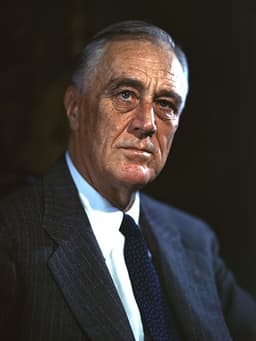
Franklin D. Roosevelt
Politician · Modern
71.0Total
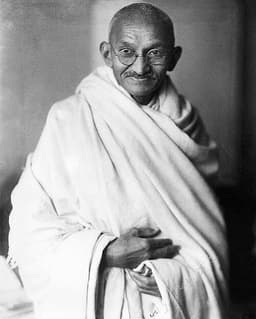
Mahatma Gandhi
Politician · Modern
68.7Total
Basic Information
Born
1882
1869
Died
1945
1948
Era
Modern
Modern
Nationality
United States
India
Occupation
Politician
Politician
Civilization
Western
Indian
Score Comparison
Military (10%)
45.0
42.3
Political (20%)
85.0
65.0
Influence (20%)
75.0
80.0
Legacy (20%)
65.0
75.0
Leadership (15%)
85.0
70.0
Strategy (15%)
60.0
55.0
TOTAL
71.0
68.7
Franklin D. Roosevelt — Complete Timeline
1933 AD
Inaugurated as 32nd PresidentOther◆ Major
Franklin D. Roosevelt was inaugurated as President of the United States on March 4, 1933, during the Great Depression. His inaugural address declared 'the only thing we have to fear is fear itself,' and he immediately called Congress into special session to address the banking crisis.
Great DepressionPresidencyInauguration
Impact: national
Enacted the New DealOther◆ Major
Roosevelt launched the New Deal in 1933, a series of federal programs including the Civilian Conservation Corps, the Agricultural Adjustment Act, and the Tennessee Valley Authority. These measures aimed to provide relief, recovery, and reform during the Great Depression, fundamentally expanding the role of the federal government.
Great DepressionEconomic PolicySocial Reform
Impact: nationalconstructive
1935 AD
Signed the Social Security ActOther◆ Major
Roosevelt signed the Social Security Act into law on August 14, 1935, establishing a federal system of old-age pensions, unemployment insurance, and aid for dependent children. This created the modern American welfare state and provided a safety net for millions of citizens.
Social WelfareLegislationNew Deal
Impact: nationalconstructive
1941 AD
Lend-Lease ActOther◆ Major
Roosevelt signed the Lend-Lease Act on March 11, 1941, authorizing the transfer of military equipment and supplies to Allied nations, particularly Britain and the Soviet Union. This program provided critical material support to countries fighting the Axis powers before U.S. entry into World War II.
World War IIForeign PolicyMilitary Aid
Impact: globalconstructive
Declaration of War on JapanPolitical Action◆ Major
Following the Japanese attack on Pearl Harbor on December 7, 1941, Roosevelt delivered his 'Day of Infamy' speech to Congress the next day, requesting a declaration of war. Congress approved the declaration, bringing the United States into World War II.
World War IIPearl HarborDeclaration of War
Impact: globaldestructive
1942 AD
Executive Order 9066Other◆ Major
Roosevelt signed Executive Order 9066 on February 19, 1942, authorizing the forced relocation and internment of Japanese Americans living on the West Coast. Over 110,000 people, mostly U.S. citizens, were incarcerated in camps for the duration of the war, a decision later widely condemned as a violation of civil rights.
World War IICivil RightsInternment
Impact: nationaldestructive
1944 AD
Elected to Fourth TermOther◆ Major
Roosevelt was elected to an unprecedented fourth term as president in November 1944, defeating Republican Thomas E. Dewey. This election occurred during the final stages of World War II, and Roosevelt's continued leadership ensured stability in the war effort and post-war planning.
PresidencyElectionWorld War II
Impact: national
1945 AD
Yalta ConferenceOther◆ Major
Roosevelt met with Winston Churchill and Joseph Stalin at the Yalta Conference in February 1945 to discuss post-war Europe. Agreements included the division of Germany, Soviet entry into the war against Japan, and the creation of the United Nations, shaping the post-war world order.
World War IIDiplomacyPost-War Planning
Impact: global
Mahatma Gandhi — Complete Timeline
1917 AD
Champaran SatyagrahaPolitical Action
Gandhi led his first nonviolent protest in India, supporting indigo farmers in Champaran, Bihar, against exploitative British planters. He organized a campaign of civil disobedience and negotiations, resulting in the abolition of the oppressive tinkathia system.
Civil disobedienceFarmers' rightsBritish Raj
Impact: nationalprogressive
1919 AD
Jallianwala Bagh massacre aftermathPolitical Action◆ Major
After British troops killed hundreds of unarmed civilians in Amritsar, Gandhi organized a nationwide hartal (strike) and nonviolent protests. He returned his medals and launched the Rowlatt Satyagraha, marking a shift from cooperation to non-cooperation with British rule.
ProtestBritish RajMassacre
Impact: nationaltragic
1930 AD
Salt MarchPolitical Action
Gandhi led a 240-mile march from Sabarmati to Dandi, Gujarat, to defy the British salt monopoly. Thousands joined him, making salt from seawater. This act of civil disobedience sparked mass protests across India and drew global attention to the independence movement.
Civil disobedienceSalt taxIndependence movement
Impact: globalprogressive
1942 AD
Quit India Movement launchPolitical Action◆ Major
Gandhi launched the Quit India Movement, calling for an end to British rule with the slogan 'Do or Die'. The British arrested him and other leaders, but the movement led to widespread protests and repression, accelerating the end of colonial rule.
IndependenceCivil disobedienceBritish Raj
Impact: nationalprogressive
1948 AD
AssassinationPolitical Action
Gandhi was shot and killed by Nathuram Godse, a Hindu nationalist, during a prayer meeting in New Delhi. His assassination shocked the world and led to a wave of grief and violence, but also reinforced his legacy as a martyr for nonviolence.
AssassinationMartyrdomNonviolence
Impact: globaltragic
Expert Analysis
Franklin D. Roosevelt vs Mahatma Gandhi
# The Saint and the Politician: Gandhi and Roosevelt's Parallel Revolutions
On a sweltering March morning in 1930, a frail man in a loincloth bent down to pick up a lump of salt on a Gujarat beach. Half a world away, in a wheelchair hidden from public view, another man prepared to sign the Social Security Act into law. One led a march of thousands; the other commanded the mightiest industrial nation on earth. Both were fighting the same enemy—not each other, but the despair of human beings crushed by forces beyond their control. Yet their methods, their temperaments, and their ultimate legacies could not have been more different. What drove two men of the same generation, both born into privilege, to become the architects of two radically different visions of freedom?
Origins
Franklin Delano Roosevelt entered the world in 1882, the only child of a wealthy Hudson Valley family. His childhood was a cocoon of comfort—private tutors, summers in Europe, and a mother who worshipped him. He absorbed the unshakeable confidence of the American aristocracy, a belief that the world could be managed and improved through action. At Groton and Harvard, he learned not to question the system but to lead it.
Mohandas Karamchand Gandhi, born thirteen years earlier in 1869 in coastal Gujarat, came from a more modest but still respectable merchant caste family. His father was a local official; his mother was deeply religious. Unlike Roosevelt, Gandhi’s early life was marked by shyness, failure, and humiliation. He was a mediocre student, a terrified young lawyer who could barely speak in court. In South Africa, where he spent twenty-one years, he was thrown off a train for being brown. That moment—the cold shock of injustice—forged him. Where Roosevelt’s confidence came from never having been truly knocked down, Gandhi’s came from having been knocked down and choosing to rise without fighting back.
Rise to Power
Roosevelt entered politics through the well-worn path of the American elite: state senate, Assistant Secretary of the Navy, and a failed vice-presidential bid. Then, in 1921, polio struck. He never walked again. But the paralysis, paradoxically, freed him. A man who had skimmed through life on charm now had to dig into something deeper. His wife Eleanor became his eyes and ears; his illness taught him the patience and cunning that would define his presidency. When he took office in 1933, with a third of Americans unemployed, he was ready.
Gandhi’s rise was slower, more organic. He returned to India in 1915 at age forty-six, a stranger to his own country. He spent a year traveling third-class on trains, listening. His first major intervention came in 1917, when he took up the cause of indigo farmers in Champaran, Bihar, who were being exploited by British planters. He did not give speeches from a platform; he sat with the farmers, learned their names, and refused to leave until the system changed. This was the pattern: not seizing power, but building it from below.
Leadership & Governance
Roosevelt governed through the state. He created the New Deal—a blizzard of agencies, laws, and programs that fundamentally rewrote the relationship between the American government and its citizens. Social Security, minimum wage, bank deposit insurance, rural electrification—these were not gifts; they were rights. He was a master of political theater, using radio fireside chats to speak directly to millions. His military strategy during World War II was global and industrial: he understood that victory would come not from battlefield heroics but from American factories outproducing the Axis.
Gandhi governed through the soul. He never held a single government office, yet he commanded a loyalty that no prime minister could match. His strategy was Satyagraha—truth-force, nonviolent resistance. The 1930 Salt March was a masterpiece of symbolic warfare: a 240-mile walk to the sea to make salt in defiance of British law. It was absurd, and it worked. Thousands joined him; the world watched. When the British arrested him, they only made him more powerful. His political wisdom lay in understanding that the British Empire could not shoot its way out of a moral crisis.
Triumph & Tragedy
Roosevelt’s greatest moment came in the depths of the Depression, when he told Americans that “the only thing we have to fear is fear itself.” He restored hope to a nation that had lost it. His greatest failure was the internment of Japanese Americans during World War II—a decision born of wartime panic that violated every principle he claimed to defend. He died in April 1945, just weeks before victory in Europe, never seeing the peace he had helped build.
Gandhi’s triumph was India’s independence in August 1947. But it was a hollow victory, poisoned by partition. As Hindus and Muslims slaughtered each other, Gandhi walked through the killing fields of Bengal, fasting until the violence stopped. His tragedy was that his own people killed him. On January 30, 1948, a Hindu nationalist named Nathuram Godse shot him three times at a prayer meeting. Gandhi fell with his hands folded in a gesture of forgiveness.
Character & Destiny
Roosevelt was a pragmatist, a man who believed in the possible. He once said, “It is common sense to take a method and try it. If it fails, admit it frankly and try another.” He was playful, secretive, and endlessly charming. His disability taught him to hide his true self, and he became a master of indirection. He did not try to change human nature; he tried to change the rules.
Gandhi was an absolutist, a man who believed that means and ends were inseparable. “Be the change you wish to see in the world,” he said. He lived in poverty, spun his own cloth, and fasted for days. His stubbornness drove his colleagues mad—Jawaharlal Nehru called him “a magician who has hypnotized the masses.” But his inflexibility was also his strength. He could not be bribed, threatened, or compromised.
Legacy
Roosevelt left behind the modern American state. Every Social Security check, every bank deposit insured by the FDIC, every minimum wage law bears his fingerprints. His four-term presidency changed the office forever, for better and worse. He is remembered as the man who saved capitalism from itself.
Gandhi left behind a method. Martin Luther King Jr. borrowed his philosophy for the American civil rights movement; Nelson Mandela applied it in South Africa. His India, however, often betrayed his vision—turning to nuclear weapons, religious violence, and corruption. Yet his image remains on every rupee note, a quiet reproach. He is remembered as the man who proved that the powerless could defeat an empire without firing a shot.
Conclusion
Standing side by side, Roosevelt and Gandhi seem like inhabitants of different planets. One loved power; the other renounced it. One built institutions; the other built consciences. One died in the arms of his mistress; the other died with God’s name on his lips. Yet they were both responding to the same crisis of the twentieth century: the failure of old systems to provide dignity to ordinary people. Roosevelt’s answer was the state; Gandhi’s was the soul. Perhaps the truth is that we need both—the politician who writes the laws and the saint who holds up a mirror. The world they made is still unfinished, and we are still choosing between their paths.
Rankings
🥇
Franklin D. RooseveltLeader
Mil: 45.0Pol: 85.0Inf: 75.0
71.0
🥈
Mahatma Gandhi
Mil: 42.3Pol: 65.0Inf: 80.0
68.7
+2.3 behind
How This Comparison Works
Algorithm
Each figure is scored on 6 dimensions (0—100 scale) based on structured historical data: Military (10%), Political (20%), Influence (20%), Legacy (20%), Leadership (15%), Strategy (15%). The weighted total produces the final ranking.
Data Sources
Scores are computed from structured sub-indicators in the database. Scale factors adjust for era (Ancient ×0.85, Modern ×1.0) and civilization size (Eastern ×1.05, Other ×0.80) to account for differences in population and military scale.
Maximum 3 Figures
Comparisons are limited to 2—3 figures to ensure readability and statistical meaningfulness.
Error Margins
±5 points per dimension — Sub-scores are derived from historical records with inherent uncertainty. Two figures within 5 points on a dimension should be considered roughly equivalent in that area.
Total Score Accuracy
±3 points overall — The weighted combination of 6 dimensions produces a total score with approximately ±3 points of uncertainty. Differences of less than 3 points are not statistically significant— the figures are effectively tied.
Known Limitations
- Historical records are incomplete and uneven across civilizations
- Figures from oral-tradition societies may be underrepresented
- Occupation labels can misclassify multi-role figures
- Scores measure capability and impact, not moral character
- Quantitative scoring is a comparison tool, not absolute truth
Capability Radar
Military (10%) — Battles & Warfare
Battles
10
45
Win Rate
10
46
Expansion
10
51
Political (20%) — Governance & Reform
Reform
95
85
Diplomacy
90
80
Economy
95
40
Influence (20%) — Cultural & Global Reach
Cultural
80
85
Global
90
90
Legacy (20%) — Historical Impact
Historical
90
90
Longevity
85
85
Leadership (15%) — Power & Stability
Tenure
90
60
Stability
75
55
Strategy (15%) — Tactics & Innovation
Strategy
65
52
Tactics
10
56
Reform
70
55
Similar Comparisons
Comments & Discussion
SaltMarchStrategist6/16/2026
Roosevelt’s Social Security Act was a masterstroke of co-opting dissent—he gave workers just enough to keep them from revolting. Gandhi’s salt march, by contrast, was a decentralized insurrection that broke the British Raj’s tax monopoly without a single law passed. FDR played chess, Gandhi played go. One reinforced the state, the other empowered the individual. Call it the difference between a politician and a saint—the saint’s revolution outlives the signature.
数据侦探张三6/16/2026
说罗斯福比甘地“更实际”的人,最好看看经济数据。1937年罗斯福削减开支导致失业率反弹到19%,新政其实是个修补匠工程。而甘地领导的独立运动让英国在印度殖民统治的行政成本飙升300%以上,1947年退出时经济已拖垮。谁更有效?一个靠赤字活着,一个靠战略瘫痪对手。别把凯恩斯主义包装成神圣使命。
ClassicsQuibbler6/16/2026
Both men were masters of symbolic language, but here’s the rub: Gandhi spoke in myths that needed no verification, Roosevelt in forms that could be amended. When Gandhi broke the salt law, he invoked ancient Hindu duty and Thoreau—timeless, unquantifiable. When FDR signed the Social Security Act, he created a bureaucracy with quarterly reports. The former’s legacy is a creed, the latter’s a ledger. I’d rather trust a storyteller who doesn’t lie about numbers than a manager who does.
历史控老刘6/16/2026
两人都生于特权阶层,但选择分裂了。罗斯福在格罗顿学会“如何管理世界”,甘地在南非学会“如何被世界践踏”。一个把轮椅藏起来保持权威幻觉,一个用缠腰布暴露脆弱作为力量。结果呢?美国至今还在吵社保是不是社会主义,而印度村村都挂甘地像。真正的革命不是立法,是重塑日常。
RevisionistSkeptic6/16/2026
Let’s stop pretending these were parallel revolutions. Roosevelt’s “freedom” meant more federal power in Washington; Gandhi’s meant dismantling centralized authority. One nationalized possibility, the other localized resistance. Read Gandhi’s *Hind Swaraj*—he wanted a village republic, not a welfare state. FDR would have called him a Luddite. Today, both are sanitized into dinner-party quotes. The real fight between them was never about poverty; it was about whether power should be concentrated