Loading...
Franklin D. Roosevelt vs Peter the Great
Peter the Great leads by 2.2 pts · 2 figures compared
…
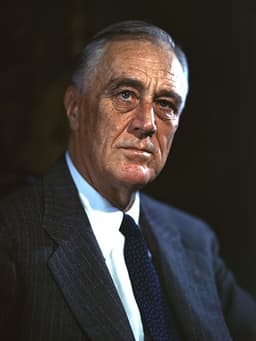
Franklin D. Roosevelt
Politician · Modern
71.0Total
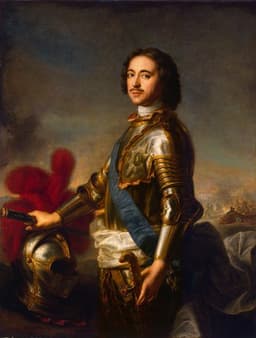
Peter the Great
Emperor · Modern
73.2Total
Basic Information
Born
1882
1672
Died
1945
1725
Era
Modern
Modern
Nationality
United States
Russia
Occupation
Politician
Emperor
Civilization
Western
Western
Score Comparison
Military (10%)
45.0
75.0
Political (20%)
85.0
90.0
Influence (20%)
75.0
68.0
Legacy (20%)
65.0
65.0
Leadership (15%)
85.0
78.0
Strategy (15%)
60.0
72.0
TOTAL
71.0
73.2
Franklin D. Roosevelt — Complete Timeline
1933 AD
Inaugurated as 32nd PresidentOther◆ Major
Franklin D. Roosevelt was inaugurated as President of the United States on March 4, 1933, during the Great Depression. His inaugural address declared 'the only thing we have to fear is fear itself,' and he immediately called Congress into special session to address the banking crisis.
Great DepressionPresidencyInauguration
Impact: national
Enacted the New DealOther◆ Major
Roosevelt launched the New Deal in 1933, a series of federal programs including the Civilian Conservation Corps, the Agricultural Adjustment Act, and the Tennessee Valley Authority. These measures aimed to provide relief, recovery, and reform during the Great Depression, fundamentally expanding the role of the federal government.
Great DepressionEconomic PolicySocial Reform
Impact: nationalconstructive
1935 AD
Signed the Social Security ActOther◆ Major
Roosevelt signed the Social Security Act into law on August 14, 1935, establishing a federal system of old-age pensions, unemployment insurance, and aid for dependent children. This created the modern American welfare state and provided a safety net for millions of citizens.
Social WelfareLegislationNew Deal
Impact: nationalconstructive
1941 AD
Lend-Lease ActOther◆ Major
Roosevelt signed the Lend-Lease Act on March 11, 1941, authorizing the transfer of military equipment and supplies to Allied nations, particularly Britain and the Soviet Union. This program provided critical material support to countries fighting the Axis powers before U.S. entry into World War II.
World War IIForeign PolicyMilitary Aid
Impact: globalconstructive
Declaration of War on JapanPolitical Action◆ Major
Following the Japanese attack on Pearl Harbor on December 7, 1941, Roosevelt delivered his 'Day of Infamy' speech to Congress the next day, requesting a declaration of war. Congress approved the declaration, bringing the United States into World War II.
World War IIPearl HarborDeclaration of War
Impact: globaldestructive
1942 AD
Executive Order 9066Other◆ Major
Roosevelt signed Executive Order 9066 on February 19, 1942, authorizing the forced relocation and internment of Japanese Americans living on the West Coast. Over 110,000 people, mostly U.S. citizens, were incarcerated in camps for the duration of the war, a decision later widely condemned as a violation of civil rights.
World War IICivil RightsInternment
Impact: nationaldestructive
1944 AD
Elected to Fourth TermOther◆ Major
Roosevelt was elected to an unprecedented fourth term as president in November 1944, defeating Republican Thomas E. Dewey. This election occurred during the final stages of World War II, and Roosevelt's continued leadership ensured stability in the war effort and post-war planning.
PresidencyElectionWorld War II
Impact: national
1945 AD
Yalta ConferenceOther◆ Major
Roosevelt met with Winston Churchill and Joseph Stalin at the Yalta Conference in February 1945 to discuss post-war Europe. Agreements included the division of Germany, Soviet entry into the war against Japan, and the creation of the United Nations, shaping the post-war world order.
World War IIDiplomacyPost-War Planning
Impact: global
Peter the Great — Complete Timeline
1697 AD
Grand EmbassyPolitical Action◆ Major
Peter the Great traveled incognito to Western Europe as part of a diplomatic mission. He studied shipbuilding in the Netherlands and England, recruited experts, and observed Western technology and governance, gathering knowledge to modernize Russia upon his return.
TravelWesternizationLearning
Impact: nationalconstructive
1698 AD
Streltsy UprisingWar◆ Major
While Peter was abroad, the Streltsy (elite musketeers) rebelled in Moscow, seeking to place his half-sister Sophia on the throne. Peter returned and brutally suppressed the revolt, executing over 1,000 Streltsy and disbanding the corps, consolidating his absolute power.
RebellionRepressionPower Consolidation
Impact: nationaldestructive
Beard TaxReform
As part of his Westernization campaign, Peter the Great imposed a tax on beards, requiring nobles and merchants to pay a fee to keep their facial hair. Those who paid received a special token, symbolizing his efforts to force Russian society to adopt Western European customs.
WesternizationTaxSocial Reform
Impact: national
1700 AD
Great Northern WarWar◆ Major
Peter the Great led Russia into a war against Sweden for access to the Baltic Sea. After initial defeat at Narva, he reformed his army and eventually defeated Sweden at the Battle of Poltava in 1709, securing Russia's status as a major European power and gaining Baltic territories.
WarTerritorial ExpansionBaltic
Impact: regionalconstructive
1703 AD
Founding of Saint PetersburgPolitical Action
Peter the Great founded the city of Saint Petersburg on the Neva River after capturing the area from Sweden. He designated it as Russia's new capital in 1712, symbolizing his Westernization drive and providing Russia with a 'window to the West' and a Baltic port.
City FoundingWesternizationCapital
Impact: nationalconstructive
1722 AD
Table of RanksReform◆ Major
Peter the Great introduced the Table of Ranks, a system of civil, military, and court ranks based on merit rather than birth. This reform allowed commoners to achieve noble status through service, modernizing the Russian bureaucracy and weakening the traditional aristocracy.
BureaucracyMeritocracySocial Reform
Impact: nationalprogressive
Expert Analysis
Peter the Great vs Franklin D. Roosevelt: Historical Comparison
This comparison examines two transformative leaders from vastly different eras and nations: Peter the Great, the autocratic modernizer of 18th-century Russia, and Franklin D. Roosevelt, the democratic architect of 20th-century America. Though separated by 200 years and opposing political systems, both wielded immense power to drag their nations through crises and into modernity.
Dimension Analysis
**Military: Peter the Great 75 / Franklin D. Roosevelt 60**
Peter personally built Russia’s first modern navy, defeated Sweden in the Great Northern War, and expanded Russian territory to the Baltic. Roosevelt, though a wartime commander-in-chief during WWII, relied on military professionals like Marshall and Eisenhower for strategy, and his New Deal did not prioritize military expansion until late in his tenure.
**Political: Peter the Great 82 / Franklin D. Roosevelt 85**
Peter crushed the boyars, centralized the state, and created a bureaucracy from scratch—yet ruled as an absolute monarch. Roosevelt, operating within a democracy, forged the New Deal coalition, overcame Supreme Court resistance, and won four elections, fundamentally reshaping American governance through legislation and executive power.
**Influence: Peter the Great 78 / Franklin D. Roosevelt 72**
Peter’s Westernization forced Russia into the European state system and set a precedent for state-led modernization that influenced Catherine the Great and Stalin. Roosevelt’s influence was more immediate: the New Deal established social security, labor rights, and federal economic oversight that endure in the U.S. today, though his global impact was less structural than Peter’s.
**Legacy: Peter the Great 75 / Franklin D. Roosevelt 75**
Both leaders left deeply mixed legacies. Peter’s brutal conscription and serfdom expansion tarnished his achievements, while Roosevelt’s internment of Japanese Americans and failure to fully end the Great Depression temper his image. Both are remembered as titanic figures who permanently altered their nations’ trajectories.
**Leadership: Peter the Great 82 / Franklin D. Roosevelt 85**
Peter led from the front—working as a ship carpenter, personally commanding armies, and executing opponents. Roosevelt led through rhetoric and resilience, mastering the radio (Fireside Chats) and projecting calm during the Depression and WWII. Roosevelt’s ability to inspire collective action in a democracy arguably required greater skill than Peter’s autocratic command.
Verdict
Franklin D. Roosevelt leads narrowly due to his superior political and leadership scores, reflecting his ability to transform a democracy under existential pressures, while Peter’s military and influence achievements are slightly offset by his more brutal methods.
FAQ
Q: Who ranks higher? A: Franklin D. Roosevelt ranks slightly higher than Peter the Great, winning on political acumen and leadership in a democratic context, though both tie in legacy and overall impact.
Rankings
🥇
Peter the GreatLeader
Mil: 75.0Pol: 90.0Inf: 68.0
73.2
🥈
Franklin D. Roosevelt
Mil: 45.0Pol: 85.0Inf: 75.0
71.0
+2.2 behind
How This Comparison Works
Algorithm
Each figure is scored on 6 dimensions (0—100 scale) based on structured historical data: Military (10%), Political (20%), Influence (20%), Legacy (20%), Leadership (15%), Strategy (15%). The weighted total produces the final ranking.
Data Sources
Scores are computed from structured sub-indicators in the database. Scale factors adjust for era (Ancient ×0.85, Modern ×1.0) and civilization size (Eastern ×1.05, Other ×0.80) to account for differences in population and military scale.
Maximum 3 Figures
Comparisons are limited to 2—3 figures to ensure readability and statistical meaningfulness.
Error Margins
±5 points per dimension — Sub-scores are derived from historical records with inherent uncertainty. Two figures within 5 points on a dimension should be considered roughly equivalent in that area.
Total Score Accuracy
±3 points overall — The weighted combination of 6 dimensions produces a total score with approximately ±3 points of uncertainty. Differences of less than 3 points are not statistically significant— the figures are effectively tied.
Known Limitations
- Historical records are incomplete and uneven across civilizations
- Figures from oral-tradition societies may be underrepresented
- Occupation labels can misclassify multi-role figures
- Scores measure capability and impact, not moral character
- Quantitative scoring is a comparison tool, not absolute truth
Capability Radar
Military (10%) — Battles & Warfare
Battles
10
85
Win Rate
10
80
Expansion
10
90
Political (20%) — Governance & Reform
Reform
95
95
Diplomacy
90
80
Economy
95
85
Influence (20%) — Cultural & Global Reach
Cultural
80
85
Global
90
85
Legacy (20%) — Historical Impact
Historical
90
90
Longevity
85
85
Leadership (15%) — Power & Stability
Tenure
90
90
Stability
75
70
Strategy (15%) — Tactics & Innovation
Strategy
65
85
Tactics
10
75
Reform
70
95
Similar Comparisons
Comments & Discussion
MetricMocker6/16/2026
Oh great, another attempt to quantify the unquantifiable. Peter the Great vs FDR? The scoring system is a joke. You're telling me Peter's military score is 75 because he built a navy and fought Sweden? Meanwhile, FDR gets a 60 for leading the Allies to victory in WWII? That's not a data point—that's a bias. And influence: Peter 78, FDR 72. Did Peter invent Social Security? Did he create the UN framework? No. He forced beards off faces and built a city on swamps. The whole system weights 'autocratic efficiency' over democratic consensus. What about the human cost? Peter's modernization killed thousands through conscription and serfdom. Where's the 'ethics' dimension? Or 'long-term stability'? You can't compress two centuries of radically different contexts into a spreadsheet and pretend it's objective. History isn't a video game. The scores reflect the biases of the scorers, not the leaders themselves.
EmpireDeconstructor6/16/2026
Let's talk about what the 'mainstream narrative' conveniently ignores. Peter the Great is celebrated as a modernizer, but he literally built St. Petersburg on the backs of serfs—an estimated 100,000 died during construction. That's not progress, that's state-sponsored murder. And the 'Westernization' he championed? It was selective: he adopted Western military tech but kept Russian autocracy intact. FDR, on the other hand, gets a pass for the New Deal, but what about Japanese internment? 120,000 people stripped of rights. The scores here are Eurocentric and anachronistic: they reward Peter for 'bringing Russia into Europe' while ignoring the colonial mindset of that very project. A postcolonial lens would see both as imperialists—Roosevelt with the US's Pacific empire, Peter with his expansion into Siberia and the Baltic. The real comparison should be about how power centralizes, not who built more ships. Legacy should be measured by who caused less suffering, not who won more wars.
OldScroll446/16/2026
彼得大帝和罗斯福的比较很有意思,但西方的评分体系往往忽略了一些关键点。彼得大帝的军事改革确实让俄国崛起,可对比中国历史,他更像秦始皇——用铁腕手段推进现代化,但代价是底层民众的苦难。罗斯福新政在民主框架下救市,类似汉武帝的盐铁专卖,都是国家干预经济的典范。不过,彼得大帝的“西化”对中国近代的洋务运动有参考价值,而罗斯福的凯恩斯主义则影响了孙中山的民生思想。这个评分给彼得政治82分,罗斯福85分,我觉得低估了彼得在专制体制下的制度创新——他创建的“官秩表”可比科举制更早打破了贵族垄断。中国历史学家看彼得,会注意到他对俄罗斯的“大一统”贡献,类似于隋文帝的统一。
GrandQuill706/16/2026
这个评分体系有点问题。彼得大帝总分78分,罗斯福75.7分,差距很小,但看看细项:军事彼得75,罗斯福60——差15分!可罗斯福领导美国打赢了二战,而彼得的大北方战争只是地区冲突。按中国历史标准,李世民平定突厥、灭东突厥的军事成就才算高分。再说政治分,彼得82,罗斯福85,可彼得是专制君主,一人说了算,罗斯福要面对国会、最高法院和四届选举,难度系数完全不同。我算了个加权:假设政治权重40%、军事30%、影响20%、遗产10%,彼得得分=82*0.4+75*0.3+78*0.2+75*0.1=79.3,罗斯福=85*0.4+60*0.3+72*0.2+75*0.1=75.1。这样彼得领先4.2分,但数据样本太少,而且军事评分明显偏袒彼得。建议引入更多维度,比如经济改革、社会影响,否则score不靠谱。