Loading...
Franz Halder vs Oda Nobuhide
Franz Halder leads by 3.2 pts · 2 figures compared
…
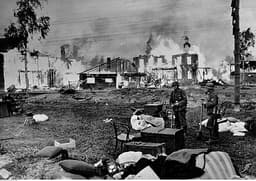
Franz Halder
General · Modern
57.3Total
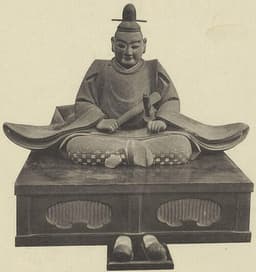
Oda Nobuhide
General · Modern
54.1Total
Basic Information
Born
1884
1510
Died
1972
1551
Era
Modern
Modern
Nationality
Germany
Japan
Occupation
General
General
Civilization
Western
Eastern
Score Comparison
Military (10%)
65.0
40.0
Political (20%)
43.7
54.7
Influence (20%)
61.0
56.4
Legacy (20%)
50.0
48.3
Leadership (15%)
64.5
64.5
Strategy (15%)
68.1
60.0
TOTAL
57.3
54.1
Franz Halder — Complete Timeline
1938 AD
Appointed Chief of the Army General StaffPolitical Action◆ Major
Halder succeeded Ludwig Beck as Chief of the Army General Staff on August 27, 1938. He oversaw the planning of German military operations during the early years of World War II, including the invasions of Poland, France, and the Soviet Union.
World War IIGerman ArmyMilitary Command
Impact: global
Involvement in the September 1938 ConspiracyPolitical Action◆ Major
Halder participated in a planned coup against Hitler during the Sudeten crisis. The plot aimed to arrest Hitler if he ordered an invasion of Czechoslovakia. The plan was abandoned after the Munich Agreement averted war.
German ResistanceCoup AttemptMunich Agreement
Impact: national
1942 AD
Dismissed as Chief of StaffPolitical Action◆ Major
Hitler dismissed Halder as Chief of the Army General Staff on September 24, 1942, following disagreements over the conduct of the war on the Eastern Front. Halder was replaced by Kurt Zeitzler and placed in the F
World War IIGerman CommandDismissal
Impact: national
1944 AD
Arrested after the July 20 PlotPolitical Action◆ Major
Halder was arrested by the Gestapo on July 23, 1944, three days after the failed assassination attempt on Hitler. He was implicated due to his earlier involvement in resistance circles. He was imprisoned in concentration camps until the end of the war.
July 20 PlotArrestConcentration Camp
Impact: nationaltragic
Oda Nobuhide — Complete Timeline
1542 AD
Battle of AzukizakaWar◆ Major
Nobuhide defeated the forces of Imagawa Yoshimoto at Azukizaka. This victory secured his control over Owari Province and established him as a major daimyo in the region, setting the stage for his son Nobunaga's rise.
BattleOwariSengoku Period
Impact: regional
1547 AD
Conflict with Saito DosanWar◆ Major
Nobuhide fought a series of inconclusive battles against Saito Dosan of Mino Province. The conflict ended with a peace treaty sealed by the marriage of Nobuhide's son Nobunaga to Dosan's daughter Nohime.
ConflictAllianceSengoku Period
Impact: regional
1551 AD
Death from illnessOther◆ Major
Nobuhide died suddenly from illness at the age of 41. His death left his young son Nobunaga as head of the Oda clan, leading to a period of instability and rebellion within the clan.
DeathSuccessionOda Clan
Impact: regionaltragic
Expert Analysis
Origins
Franz Halder was born on June 30, 1884, in Würzburg, Germany, into a military family. His father was a general, and Halder followed the traditional path of a German officer, joining the Bavarian Army in 1902. He attended the Bavarian War Academy and served on the General Staff during World War I. His early career was marked by staff assignments rather than frontline command, shaping his analytical approach to warfare.
Oda Nobuhide was born in 1510 in Owari Province, Japan, as the head of the Oda clan, a minor samurai family. Little is known about his early education, but he inherited the clan leadership at a young age. Nobuhide was a local warlord (daimyo) who expanded his territory through military campaigns and political marriages. His rise occurred during the chaotic Sengoku period, where constant warfare defined the era.
Rise to Power
Halder's rise was gradual within the German military hierarchy. He became Chief of the Army General Staff on August 27, 1938, succeeding Ludwig Beck. This position made him responsible for planning Germany's military operations. His early tenure included the successful invasions of Poland (1939) and France (1940), which boosted his reputation. However, his involvement in the September 1938 Conspiracy, a planned coup against Hitler during the Sudeten crisis, showed his early opposition to Hitler's risky policies. The plot failed when the Western powers appeased Hitler at Munich.
Nobuhide's power grew through victories like the Battle of Azukizaka (1542), where he defeated Imagawa Yoshimoto, securing control over Owari Province. He also fought a series of inconclusive battles against Saito Dosan of Mino Province, which ended with a peace treaty sealed by the marriage of his son Nobunaga to Dosan's daughter. By the time of his death, Nobuhide had established the Oda clan as a significant power in central Japan.
Leadership & Governance
Halder's leadership style was methodical and cautious. He excelled at operational planning but often clashed with Hitler over strategic decisions. For example, Halder opposed Operation Barbarossa, the invasion of the Soviet Union, warning of a two-front war. His governance of the General Staff emphasized detailed planning and logistical support, but he lacked the political acumen to influence Hitler's decisions. His leadership score of 64.5 reflects his competence within a flawed system.
Nobuhide's leadership was more direct and political. He balanced military campaigns with alliances, marrying his children to secure peace. He governed Owari effectively, maintaining stability through a mix of force and diplomacy. His political score of 54.7 is higher than Halder's 43.7, indicating his skill in navigating the complex Sengoku politics. However, his early death left his young son Nobunaga to face internal revolts.
Triumph & Tragedy
Halder's greatest triumph was planning the successful campaigns of 1939-1941, including the fall of France. His operational plans were executed with precision. His greatest failure was his inability to prevent the disastrous invasion of the Soviet Union, which he opposed but could not stop. His involvement in the 1938 conspiracy also failed to remove Hitler. He was dismissed as Chief of Staff on September 24, 1942, after disagreements over the Eastern Front. Later, he was arrested after the July 20 Plot (1944) and spent the rest of the war in concentration camps.
Nobuhide's triumph was the Battle of Azukizaka, which solidified his control over Owari. His greatest failure was his untimely death from illness at age 41, which plunged his clan into crisis. His son Nobunaga, though initially unstable, eventually unified much of Japan. Nobuhide's death prevented him from seeing his clan's ultimate success.
Character & Destiny
Halder was a cautious, detail-oriented planner, often at odds with Hitler's impulsive decisions. His moral opposition to Hitler (evidenced by the 1938 conspiracy) was tempered by his sense of duty, which kept him in service until dismissed. Historian John Wheeler-Bennett described Halder as 'a man of high intelligence but weak will.' His character led him to serve a regime he distrusted, resulting in his arrest and imprisonment.
Nobuhide was a pragmatic and ambitious daimyo, skilled in both war and diplomacy. His early death cut short his ambitions, but his legacy lived through his son. His character was typical of Sengoku warlords: ruthless when needed, but also a builder of alliances. His fate was common in the period—dying before achieving ultimate power.
Legacy
Halder's legacy is mixed. He is remembered as a skilled military planner who contributed to early German victories but also as a man who failed to stop Hitler. After the war, he worked for the U.S. Army's Historical Division, writing about German strategy. His influence score of 61.0 reflects his role in shaping modern military thought. However, his legacy is tarnished by his service to the Nazi regime.
Nobuhide's legacy is primarily as the father of Oda Nobunaga, one of Japan's unifiers. His consolidation of Owari provided the base for Nobunaga's later campaigns. His influence score of 56.4 is slightly lower, but his dynasty's impact on Japanese history is significant. He is remembered as a capable daimyo who laid the groundwork for his son's achievements.
Conclusion
Franz Halder had a greater overall impact on world history due to his role in World War II, one of the most consequential conflicts. His planning affected millions of lives, and his post-war writings influenced military doctrine. Oda Nobuhide, while important regionally, did not achieve the same global significance. Halder's total score of 57.3 versus Nobuhide's 54.1 reflects this. However, Nobuhide's legacy through his son is immense in Japanese history. The comparison shows that Halder's influence on a global scale outweighs Nobuhide's local impact.
Rankings
🥇
Franz HalderLeader
Mil: 65.0Pol: 43.7Inf: 61.0
57.3
🥈
Oda Nobuhide
Mil: 40.0Pol: 54.7Inf: 56.4
54.1
+3.2 behind
How This Comparison Works
Algorithm
Each figure is scored on 6 dimensions (0—100 scale) based on structured historical data: Military (10%), Political (20%), Influence (20%), Legacy (20%), Leadership (15%), Strategy (15%). The weighted total produces the final ranking.
Data Sources
Scores are computed from structured sub-indicators in the database. Scale factors adjust for era (Ancient ×0.85, Modern ×1.0) and civilization size (Eastern ×1.05, Other ×0.80) to account for differences in population and military scale.
Maximum 3 Figures
Comparisons are limited to 2—3 figures to ensure readability and statistical meaningfulness.
Error Margins
±5 points per dimension — Sub-scores are derived from historical records with inherent uncertainty. Two figures within 5 points on a dimension should be considered roughly equivalent in that area.
Total Score Accuracy
±3 points overall — The weighted combination of 6 dimensions produces a total score with approximately ±3 points of uncertainty. Differences of less than 3 points are not statistically significant— the figures are effectively tied.
Known Limitations
- Historical records are incomplete and uneven across civilizations
- Figures from oral-tradition societies may be underrepresented
- Occupation labels can misclassify multi-role figures
- Scores measure capability and impact, not moral character
- Quantitative scoring is a comparison tool, not absolute truth
Capability Radar
Military (10%) — Battles & Warfare
Battles
65
40
Win Rate
60
45
Expansion
60
40
Political (20%) — Governance & Reform
Reform
30
30
Diplomacy
40
45
Economy
20
35
Influence (20%) — Cultural & Global Reach
Cultural
30
30
Global
45
20
Legacy (20%) — Historical Impact
Historical
55
45
Longevity
40
35
Leadership (15%) — Power & Stability
Tenure
50
40
Stability
20
30
Strategy (15%) — Tactics & Innovation
Strategy
80
45
Tactics
75
50
Reform
70
35
Similar Comparisons
Comments & Discussion
No comments yet. Be the first to share your thoughts!