Loading...
James I of England vs Reza Shah Pahlavi
Reza Shah Pahlavi leads by 6.4 pts · 2 figures compared
…

James I of England
Emperor · Modern
57.2Total
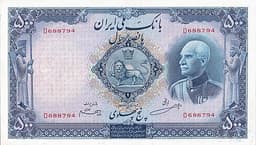
Reza Shah Pahlavi
Emperor · Modern
63.6Total
Basic Information
Born
1566
1878
Died
1625
1944
Era
Modern
Modern
Nationality
England
Iran
Occupation
Emperor
Emperor
Civilization
Western
Middle Eastern
Score Comparison
Military (10%)
20.0
50.0
Political (20%)
45.0
72.0
Influence (20%)
68.0
72.0
Legacy (20%)
72.0
52.0
Leadership (15%)
53.2
72.0
Strategy (15%)
54.6
60.0
TOTAL
57.2
63.6
James I of England — Complete Timeline
1603 AD
Accession of James IPolitical Action
James VI of Scotland succeeded Elizabeth I as James I of England, uniting the crowns of England and Scotland. This union created the Kingdom of Great Britain under a single monarch, though the parliaments remained separate.
UnionSuccessionStuart
Impact: regionalconstructive
1605 AD
Gunpowder PlotPolitical Action◆ Major
A group of Catholic conspirators, including Guy Fawkes, attempted to blow up the House of Lords during the State Opening of Parliament. The plot was foiled, leading to harsh anti-Catholic laws and increased persecution.
ConspiracyCatholicTerrorism
Impact: nationaldestructive
1611 AD
Publication of the King James BibleCultural
James I authorized a new translation of the Bible, which became known as the King James Version. This translation had a profound impact on English literature and religion, becoming the standard Bible for English-speaking Protestants.
BibleTranslationReligion
Impact: globalconstructive
1614 AD
Addled ParliamentPolitical Action
James I's second parliament was dissolved after only two months without passing any legislation. This failure highlighted the growing conflict between the crown and Parliament over finances and royal prerogative.
ParliamentConflictStalemate
Impact: national
1623 AD
Spanish Match ControversyPolitical Action◆ Major
James I pursued a marriage alliance between his son Charles and the Spanish Infanta, which was deeply unpopular in Protestant England. The negotiations failed, leading to a shift toward war with Spain and a stronger alliance with France.
DiplomacySpainMarriage
Impact: regional
Reza Shah Pahlavi — Complete Timeline
1921 AD
1921 Persian coup d'étatPolitical Action◆ Major
Reza Khan, a Cossack Brigade officer, led a coup that overthrew the Qajar government. He became Minister of War and later Prime Minister, using the military to consolidate power and suppress regional rebellions.
CoupQajarMilitary
Impact: national
1926 AD
Coronation as Reza Shah PahlaviPolitical Action◆ Major
Reza Khan crowned himself Reza Shah Pahlavi, founding the Pahlavi dynasty. He replaced the Qajar dynasty and began a program of rapid modernization, centralization, and secularization of Iran.
CoronationDynastyModernization
Impact: national
1938 AD
Trans-Iranian Railway completionOther◆ Major
Reza Shah oversaw the completion of the Trans-Iranian Railway, connecting the Caspian Sea to the Persian Gulf. The project was a major infrastructure achievement, facilitating trade and military transport, but was built with forced labor.
InfrastructureModernizationRailway
Impact: nationalconstructive
1941 AD
Forced abdication by Allied powersPolitical Action
Britain and the Soviet Union invaded Iran to secure oil fields and supply routes. Reza Shah refused to expel German nationals, leading to his forced abdication in favor of his son Mohammad Reza Pahlavi. He was exiled to South Africa.
World War IIInvasionExile
Impact: nationaltragic
Expert Analysis
Origins
James I of England was born in 1566 to Mary, Queen of Scots, and Henry Stuart, Lord Darnley. He became James VI of Scotland as an infant after his mother's forced abdication. Raised by Protestant regents, he was educated by George Buchanan, who instilled in him a belief in the divine right of kings. His early life was marked by political instability and a series of regents.
Reza Shah Pahlavi was born in 1878 in Alasht, Mazandaran, to a military family. His father died when he was young, and his mother raised him in poverty. He enlisted in the Persian Cossack Brigade at age 16, rising through the ranks due to his discipline and ambition. His formative years were shaped by the weakness of the Qajar dynasty and foreign interference.
Rise to Power
James I's rise was through inheritance: he became James VI of Scotland in 1567 and, after Elizabeth I's death in 1603, he acceded to the English throne as James I, uniting the crowns of England and Scotland. His accession was peaceful, but he faced immediate challenges from English Puritans and Catholics.
Reza Shah's rise was through military force. In 1921, as a Cossack officer, he led a coup that overthrew the Qajar government. He became Minister of War and later Prime Minister, consolidating power by suppressing rebellions and centralizing the military. In 1925, he crowned himself Reza Shah Pahlavi, founding a new dynasty.
Leadership & Governance
James I believed in the divine right of kings, which led to frequent conflicts with Parliament. He dissolved the Addled Parliament in 1614 after it refused to grant him funds. His governance was marked by a focus on religious unity, but his leniency toward Catholics and pursuit of the Spanish Match alienated Protestants. He scored 53.2 in leadership and 45.0 in political, reflecting his struggles with governance.
Reza Shah was an authoritarian modernizer. He implemented rapid Westernization: building the Trans-Iranian Railway (completed 1938), establishing a secular education system, and requiring Western dress. He suppressed tribal autonomy and religious influence, using the military to enforce reforms. His leadership score of 72.0 reflects his decisive but autocratic style.
Triumph & Tragedy
James I's greatest triumph was the King James Bible (1611), which standardized English and influenced literature for centuries. His tragedy was the Gunpowder Plot (1605), a failed assassination attempt that deepened anti-Catholic sentiment. His inability to manage Parliament sowed seeds for the English Civil War.
Reza Shah's triumph was modernizing Iran's infrastructure and centralizing the state. The Trans-Iranian Railway connected the Caspian Sea to the Persian Gulf, boosting trade. His tragedy was his forced abdication in 1941 after the Anglo-Soviet invasion, stemming from his refusal to expel German nationals. This led to the collapse of his dynasty in 1979.
Character & Destiny
James I was intellectually curious but politically inept. His belief in divine right blinded him to the rising power of Parliament. He was described as 'the wisest fool in Christendom' by Henry IV of France. His character led to a legacy of constitutional conflict.
Reza Shah was ruthless and determined. He saw modernization as necessary for Iran's sovereignty, but his authoritarian methods created resentment. His decision to stay neutral in WWII and his refusal to cooperate with the Allies led to his downfall. His character shaped Iran's path but also sowed seeds for the Islamic Revolution.
Legacy
James I's legacy is the King James Bible, which remains a seminal text in English literature. He also established the union of crowns, though a full political union came only in 1707. His reign highlighted the tensions between monarchy and Parliament that would erupt in civil war. His influence score of 68.0 reflects his cultural impact.
Reza Shah's legacy is the modernization of Iran. The Pahlavi dynasty's infrastructure, legal reforms, and secular institutions persisted after his abdication. However, his authoritarianism and forced Westernization contributed to the backlash that led to the 1979 revolution. His legacy is mixed: he modernized Iran but weakened traditional structures. His legacy score of 52.0 is lower due to the ultimate failure of his dynasty.
Conclusion
Reza Shah Pahlavi had a greater impact on his nation's trajectory, with a total score of 63.6 compared to James I's 57.2. Reza Shah's reforms reshaped Iran's infrastructure, education, and military, laying the foundation for a modern state, even if his methods were authoritarian. James I's influence is more cultural and constitutional, but his reign did not fundamentally transform England. While James I's King James Bible is a lasting cultural monument, Reza Shah's actions directly propelled Iran into the 20th century, for better or worse. Therefore, Reza Shah is the more impactful figure.
Rankings
🥇
Reza Shah PahlaviLeader
Mil: 50.0Pol: 72.0Inf: 72.0
63.6
🥈
James I of England
Mil: 20.0Pol: 45.0Inf: 68.0
57.2
+6.4 behind
How This Comparison Works
Algorithm
Each figure is scored on 6 dimensions (0—100 scale) based on structured historical data: Military (10%), Political (20%), Influence (20%), Legacy (20%), Leadership (15%), Strategy (15%). The weighted total produces the final ranking.
Data Sources
Scores are computed from structured sub-indicators in the database. Scale factors adjust for era (Ancient ×0.85, Modern ×1.0) and civilization size (Eastern ×1.05, Other ×0.80) to account for differences in population and military scale.
Maximum 3 Figures
Comparisons are limited to 2—3 figures to ensure readability and statistical meaningfulness.
Error Margins
±5 points per dimension — Sub-scores are derived from historical records with inherent uncertainty. Two figures within 5 points on a dimension should be considered roughly equivalent in that area.
Total Score Accuracy
±3 points overall — The weighted combination of 6 dimensions produces a total score with approximately ±3 points of uncertainty. Differences of less than 3 points are not statistically significant— the figures are effectively tied.
Known Limitations
- Historical records are incomplete and uneven across civilizations
- Figures from oral-tradition societies may be underrepresented
- Occupation labels can misclassify multi-role figures
- Scores measure capability and impact, not moral character
- Quantitative scoring is a comparison tool, not absolute truth
Capability Radar
Military (10%) — Battles & Warfare
Battles
5
20
Win Rate
5
30
Expansion
5
15
Political (20%) — Governance & Reform
Reform
55
85
Diplomacy
60
55
Economy
50
70
Influence (20%) — Cultural & Global Reach
Cultural
75
60
Global
70
55
Legacy (20%) — Historical Impact
Historical
80
65
Longevity
80
55
Leadership (15%) — Power & Stability
Tenure
60
60
Stability
40
50
Strategy (15%) — Tactics & Innovation
Strategy
5
40
Tactics
5
25
Reform
10
75
Similar Comparisons
Comments & Discussion
No comments yet. Be the first to share your thoughts!