Loading...
Alfonso VI of Leon vs Henry Bolingbroke
Alfonso VI of Leon leads by 7.6 pts · 2 figures compared
…
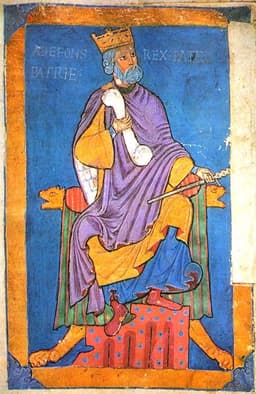
Alfonso VI of Leon
Emperor · Medieval
60.2Total
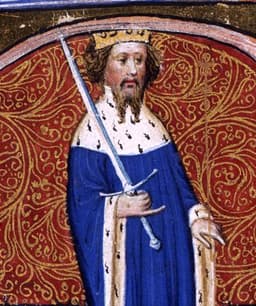
Henry Bolingbroke
Emperor · Medieval
52.6Total
Basic Information
Born
1040
1367
Died
1109
1413
Era
Medieval
Medieval
Nationality
Leon
England
Occupation
Emperor
Emperor
Civilization
Western
Western
Score Comparison
Military (10%)
65.0
25.0
Political (20%)
45.0
48.0
Influence (20%)
62.0
58.0
Legacy (20%)
56.0
50.0
Leadership (15%)
72.0
65.7
Strategy (15%)
66.3
60.0
TOTAL
60.2
52.6
Alfonso VI of Leon — Complete Timeline
1077 AD
Title of 'Emperor of Spain'Political Action◆ Major
Alfonso VI claimed the title 'Imperator totius Hispaniae' (Emperor of all Spain) in 1077, asserting his supremacy over other Christian rulers. This title was used in diplomatic correspondence and reflected his ambition to unify Iberia.
Medieval IberiaImperial TitleHegemony
Impact: regional
1085 AD
Capture of ToledoWar◆ Major
Alfonso VI captured the city of Toledo from the Taifa of Toledo in May 1085. This was a major victory in the Reconquista, as Toledo was a historic capital of the Visigothic kingdom and a cultural center of Islamic Iberia.
ReconquistaToledoConquest
Impact: regionalconstructive
1086 AD
Battle of SagrajasWar◆ Major
Alfonso VI was defeated by the Almoravid army under Yusuf ibn Tashfin at the Battle of Sagrajas (Zallaqa). This defeat halted Christian expansion and forced Alfonso to seek help from other Christian kingdoms, marking a turning point in the Reconquista.
ReconquistaBattleAlmoravid
Impact: regionaltragic
1091 AD
Marriage to ZaidaPolitical Action
Alfonso VI married Zaida, a Muslim princess from Seville, who converted to Christianity and took the name Isabel. This marriage was a political alliance to secure peace with the Taifa of Seville and strengthen his position against the Almoravids.
Medieval IberiaMarriage AllianceDiplomacy
Impact: regional
Henry Bolingbroke — Complete Timeline
1398 AD
Exiled by Richard IIPolitical Action◆ Major
Henry Bolingbroke was exiled from England by King Richard II following a dispute with Thomas de Mowbray. The exile was initially for ten years, later commuted to life, stripping Henry of his inheritance and prompting his return to claim the throne.
ExilePower StruggleLancaster
Impact: nationaldestructive
1399 AD
Returned from Exile and Deposed Richard IIPolitical Action
Henry landed at Ravenspur in Yorkshire with a small force while Richard II was in Ireland. He gathered support from nobles, captured Richard, and forced his abdication. Parliament then accepted Henry as King Henry IV, establishing the Lancastrian dynasty.
CoupDepositionLancastrian Dynasty
Impact: national
1403 AD
Battle of ShrewsburyWar◆ Major
Henry IV's forces defeated a rebellion led by Henry Percy (Hotspur) and the Earl of Worcester. The battle was the first major engagement between English armies using longbows. Hotspur was killed, ending the Percy rebellion and securing Henry's throne.
RebellionBattlePercy
Impact: nationaldestructive
1409 AD
Suppressed the Welsh RebellionWar◆ Major
Henry IV's forces captured Harlech Castle, the headquarters of Owain Glynd
Welsh RebellionMilitary Campaign
Impact: regionaldestructive
1412 AD
Suffered from Illness and Political InstabilityOther
Henry IV suffered from a debilitating illness, possibly leprosy or epilepsy, which weakened his ability to govern. Factional struggles between his son Prince Henry and Archbishop Arundel intensified. The king's health declined further, leading to his death in 1413.
IllnessSuccession Crisis
Impact: nationaltragic
Expert Analysis
Origins
Alfonso VI of León was born in 1040, the second son of King Ferdinand I of León and Castile. His early life was shaped by the division of his father's kingdom among his sons, leading to a civil war after Ferdinand's death in 1065. Alfonso was raised in the Christian courts of northern Iberia, learning the arts of war and governance. After defeating his brother Sancho II, he became king of León in 1072 and later unified León and Castile under his rule.
Henry Bolingbroke was born in 1366, the son of John of Gaunt, Duke of Lancaster, and Blanche of Lancaster. As a member of the English royal family, he was educated in chivalry and politics. His early career included participation in crusades against the Teutonic Knights and in Lithuania. He was a skilled diplomat and military commander, but his life took a dramatic turn when he was exiled by his cousin, King Richard II, in 1398.
Rise to Power
Alfonso VI rose to power through military conquest and political maneuvering. After defeating his brother Sancho at the Battle of Golpejera in 1072, he claimed the throne of León. He then expanded his influence by capturing the ancient Visigothic capital of Toledo on May 6, 1085, a major victory in the Reconquista. This victory gave him control over a strategically vital city and boosted his prestige, leading him to claim the title 'Emperor of all Spain' in 1077. His rise was marked by a combination of warfare and diplomacy, including alliances with Muslim taifa kingdoms.
Henry Bolingbroke's rise was precipitated by his exile. In 1398, Richard II exiled him for ten years after a dispute with Thomas de Mowbray. When John of Gaunt died in 1399, Richard seized the Lancastrian estates, prompting Henry to return to England while Richard was in Ireland. Landing at Ravenspur in July 1399 with a small force, he gathered support from disaffected nobles. By September, he captured Richard and forced his abdication, claiming the throne as Henry IV on October 13, 1399. His rise was a direct usurpation, relying on political alliances rather than conquest.
Leadership & Governance
Alfonso VI governed as a medieval monarch, asserting supremacy over other Christian rulers. He styled himself 'Emperor of Spain' and imposed tribute (parias) on Muslim taifas. His governance included promoting repopulation of conquered lands and fostering Christian-Muslim coexistence, as seen in his marriage to the Muslim princess Zaida. However, his leadership was challenged by the Almoravid invasion, which reversed some of his gains. His military score of 65.0 reflects his successes in the Reconquista, but his political score of 45.0 indicates difficulties in maintaining unity among Christian states.
Henry IV faced constant domestic strife. His reign was plagued by rebellions, including the Percy rebellion crushed at the Battle of Shrewsbury in 1403, and the Welsh uprising led by Owain Glyndŵr, which he suppressed by capturing Harlech Castle in 1409. His political score of 48.0 reflects his struggle to legitimize his rule. He suffered from poor health, possibly leprosy or epilepsy, which weakened his authority. His leadership score of 65.7 is high for his era, but his legacy was overshadowed by his son Henry V's successes.
Triumph & Tragedy
Alfonso VI's greatest triumph was the capture of Toledo in 1085, a symbolic and strategic victory that expanded Christian territory. His greatest tragedy was the Battle of Sagrajas in 1086, where he was decisively defeated by the Almoravids under Yusuf ibn Tashfin. This loss halted his expansion and exposed the vulnerability of his kingdom. His claim to the imperial title was also contested, and his later years saw internal strife among his children.
Henry IV's triumph was his successful usurpation of the throne and his ability to hold power despite numerous challenges. His defeat of the Percy rebellion at Shrewsbury was a critical victory. His tragedy was the constant instability of his reign, marked by ill health and political factionalism. He died in 1413, leaving a legacy of civil strife that his son had to overcome. His military score of 25.0 reflects his limited battlefield successes.
Character & Destiny
Alfonso VI was a determined and ambitious ruler, driven to reclaim the Visigothic heritage. His character combined pragmatism with a sense of imperial destiny. He was willing to form alliances with Muslims and even marry a Muslim princess, showing flexibility. However, his overconfidence after Toledo led to the disaster at Sagrajas. Historians note his role in advancing the Reconquista, but also his inability to consolidate gains against the Almoravids.
Henry Bolingbroke was a capable but cautious leader. He was more a politician than a warrior, relying on alliances rather than personal valor. His decision to usurp the throne set a precedent for future depositions. His character was marked by a sense of grievance and ambition, but his reign was consumed by the consequences of his actions. His legacy is tied to the Lancastrian dynasty's rise and fall.
Legacy
Alfonso VI's legacy is significant in Spanish history. The capture of Toledo provided a base for further Reconquista, and his imperial title influenced later Spanish monarchs. His marriage to Zaida symbolized a brief period of coexistence. However, the Almoravid counterattack limited his long-term impact. His overall score of 60.2 reflects a mixed but notable legacy.
Henry IV's legacy is less celebrated. He established the Lancastrian dynasty, but his reign was a prelude to the Wars of the Roses. His usurpation weakened the monarchy and set a dangerous precedent. His son Henry V's victories in the Hundred Years' War overshadowed his own achievements. His total score of 52.6 reflects a less impactful reign.
Conclusion
Alfonso VI had greater impact than Henry Bolingbroke. His capture of Toledo was a turning point in the Reconquista, advancing Christian control in Iberia. Henry IV's reign, while politically significant, was characterized by instability and limited territorial expansion. Alfonso's military and strategic scores (65.0 and 66.3) exceed Henry's (25.0 and 60.0), and his legacy score of 56.0 versus 50.0 confirms his greater historical influence. Although both faced challenges, Alfonso's achievements shaped Spanish history, whereas Henry's reign was a turbulent chapter in English dynastic struggles.
Rankings
🥇
Alfonso VI of LeonLeader
Mil: 65.0Pol: 45.0Inf: 62.0
60.2
🥈
Henry Bolingbroke
Mil: 25.0Pol: 48.0Inf: 58.0
52.6
+7.6 behind
How This Comparison Works
Algorithm
Each figure is scored on 6 dimensions (0—100 scale) based on structured historical data: Military (10%), Political (20%), Influence (20%), Legacy (20%), Leadership (15%), Strategy (15%). The weighted total produces the final ranking.
Data Sources
Scores are computed from structured sub-indicators in the database. Scale factors adjust for era (Ancient ×0.85, Modern ×1.0) and civilization size (Eastern ×1.05, Other ×0.80) to account for differences in population and military scale.
Maximum 3 Figures
Comparisons are limited to 2—3 figures to ensure readability and statistical meaningfulness.
Error Margins
±5 points per dimension — Sub-scores are derived from historical records with inherent uncertainty. Two figures within 5 points on a dimension should be considered roughly equivalent in that area.
Total Score Accuracy
±3 points overall — The weighted combination of 6 dimensions produces a total score with approximately ±3 points of uncertainty. Differences of less than 3 points are not statistically significant— the figures are effectively tied.
Known Limitations
- Historical records are incomplete and uneven across civilizations
- Figures from oral-tradition societies may be underrepresented
- Occupation labels can misclassify multi-role figures
- Scores measure capability and impact, not moral character
- Quantitative scoring is a comparison tool, not absolute truth
Capability Radar
Military (10%) — Battles & Warfare
Battles
65
45
Win Rate
60
50
Expansion
70
20
Political (20%) — Governance & Reform
Reform
65
40
Diplomacy
70
50
Economy
60
45
Influence (20%) — Cultural & Global Reach
Cultural
60
40
Global
50
40
Legacy (20%) — Historical Impact
Historical
65
55
Longevity
55
50
Leadership (15%) — Power & Stability
Tenure
75
55
Stability
55
30
Strategy (15%) — Tactics & Innovation
Strategy
70
45
Tactics
55
40
Reform
50
30
Similar Comparisons
Comments & Discussion
No comments yet. Be the first to share your thoughts!