Loading...
Frederick II vs King Seongdeok
Frederick II leads by 2.8 pts · 2 figures compared
…
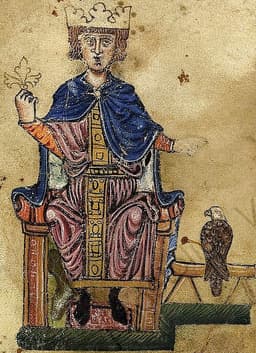
Frederick II
Emperor · Medieval
61.7Total
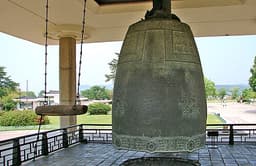
King Seongdeok
Emperor · Medieval
58.9Total
Basic Information
Born
1194
691
Died
1250
737
Era
Medieval
Medieval
Nationality
Holy Roman Empire
Korea
Occupation
Emperor
Emperor
Civilization
Western
Eastern
Score Comparison
Military (10%)
72.5
50.0
Political (20%)
70.3
68.0
Influence (20%)
40.0
62.0
Legacy (20%)
65.0
52.0
Leadership (15%)
72.0
72.0
Strategy (15%)
68.1
43.7
TOTAL
61.7
58.9
Frederick II — Complete Timeline
1224 AD
Foundation of the University of NaplesCultural◆ Major
Frederick II founded the University of Naples, the first state-run university in Europe. It was established to train administrators and lawyers for the kingdom, independent of papal control. The university became a center for legal and scientific studies.
EducationUniversitySicily
Impact: regionalconstructive
1228 AD
Sixth CrusadeWar◆ Major
Frederick II led the Sixth Crusade while excommunicated. Through diplomacy with Sultan al-Kamil, he secured the return of Jerusalem, Bethlehem, and Nazareth to Christian control without major battle. He crowned himself King of Jerusalem in the Church of the Holy Sepulchre.
CrusadeDiplomacyJerusalem
Impact: globalconstructive
1231 AD
Promulgation of the Constitutions of MelfiReform◆ Major
Frederick II issued the Constitutions of Melfi, a comprehensive legal code for the Kingdom of Sicily. The code centralized royal authority, reformed administration, and established a uniform legal system. It was one of the most advanced legal codes of the medieval period.
Legal ReformSicilyAdministration
Impact: regionalconstructive
1237 AD
Battle of CortenuovaWar◆ Major
Frederick II defeated the Lombard League at Cortenuova in northern Italy. He captured the League's carroccio and sent it to Rome as a trophy. The victory strengthened imperial control over northern Italy but did not end the League's resistance.
Lombard LeagueBattleItaly
Impact: regional
King Seongdeok — Complete Timeline
702 AD
Ascended to the Throne of SillaPolitical Action◆ Major
Seongdeok became king of Unified Silla. His reign is considered a golden age of Silla culture and Buddhism.
AccessionSillaKorea
Impact: regional
720 AD
Promoted Astronomy and ScienceCultural
Seongdeok supported scientific advancements, including the construction of the Cheomseongdae astronomical observatory. This reflected the kingdom's interest in science and calendar-making.
ScienceAstronomySilla
Impact: regionalconstructive
Expert Analysis
Origins
Frederick II was born in 1194 in Jesi, Italy, to Holy Roman Emperor Henry VI and Constance of Sicily. Orphaned by age four, he was raised by Pope Innocent III, who sought to control the Hohenstaufen heir. His upbringing in Sicily exposed him to a multicultural environment blending Norman, Byzantine, Arab, and Latin influences. He learned six languages and studied philosophy, science, and law.
King Seongdeok was born around 690 in the Silla kingdom of Korea. He was the second son of King Sinmun, and his mother was Queen Sinmok. Details of his early life are scarce, but as a member of the royal Kim clan, he received a Confucian education and training in statecraft. He ascended the throne in 702 after the death of his older brother, King Hyoso.
Rise to Power
Frederick II was crowned King of Sicily in 1198 at age four, but his real rise began when he came of age. In 1212, he traveled to Germany, securing election as King of the Romans with Pope Innocent III's support. He was crowned Holy Roman Emperor in 1220 by Pope Honorius III. His power base was the Kingdom of Sicily, which he used to challenge the papal authority and the Lombard League in northern Italy.
Seongdeok became king of Unified Silla in 702, inheriting a stable kingdom. His reign marked a consolidation of power after the earlier unification of the Korean peninsula by Silla. He focused on strengthening central authority, promoting Buddhism as a state religion, and patronizing the arts and sciences. His rise was not contested, allowing him to focus on cultural and religious projects.
Leadership & Governance
Frederick II's leadership was autocratic and innovative. In 1231, he promulgated the Constitutions of Melfi, a legal code for Sicily that centralized royal authority, streamlined administration, and incorporated Roman law and Byzantine influences. He founded the University of Naples in 1224 as a state-run institution to train bureaucrats, bypassing papal control over education. His governance was pragmatic, using Muslim soldiers in his army and employing Jewish scholars. However, his conflict with the Papacy led to his excommunication multiple times.
Seongdeok's leadership emphasized cultural and religious patronage. He commissioned Bulguksa Temple and Seokguram Grotto, which remain masterpieces of Korean Buddhist art. He supported the construction of Cheomseongdae, an astronomical observatory, reflecting a commitment to science. His governance was less militaristic; his military score of 50.0 reflects a reign of peace and stability. He promoted Confucian ideals in court and maintained diplomatic relations with Tang China.
Triumph & Tragedy
Frederick II's greatest triumph was the Sixth Crusade (1228-1229). Despite being excommunicated, he negotiated with Sultan al-Kamil of Egypt to regain Jerusalem, Bethlehem, and Nazareth without battle. This diplomatic victory enhanced his prestige but angered the Pope. His victory at the Battle of Cortenuova in 1237 against the Lombard League seemed to solidify his power in Italy. However, his overreach led to a coalition of cities and the Papacy. His failure to subdue the Lombard League and his death in 1250 left his heirs vulnerable, leading to the end of the Hohenstaufen dynasty.
Seongdeok's reign saw the construction of Bulguksa Temple (completed 774) and Seokguram Grotto (completed 774), which are now UNESCO World Heritage sites. These projects showcased Silla's artistic and engineering prowess. However, his reign lacked major military conquests; his military score of 50.0 indicates a focus on internal development rather than expansion. The cost of these grand projects may have strained state resources, but Silla remained stable during his rule.
Character & Destiny
Frederick II was known as "Stupor Mundi" (Wonder of the World) for his intellectual curiosity and tolerance. He authored a book on falconry, corresponded with Islamic scholars, and challenged papal authority. His character combined enlightened rationalism with ruthless pragmatism. This led to both cultural flourishing and political isolation. His conflict with the Papacy ultimately doomed his dynasty, as his sons Manfred and Conradin were defeated and executed.
Seongdeok is remembered as a pious Buddhist king and patron of the arts. His character reflected Confucian virtues of benevolence and cultural cultivation. He prioritized religious harmony and scientific advancement over military expansion. His destiny was a peaceful reign that left a lasting cultural legacy, though Silla's later decline began after his death due to internal strife.
Legacy
Frederick II's legal reforms influenced later European governance. The Constitutions of Melfi served as a model for centralized administration. The University of Naples set a precedent for state-controlled education. His diplomatic approach to the Crusades presaged later peaceful negotiations. However, his political score of 70.3 and influence score of 40.0 reflect limited lasting impact due to the collapse of his dynasty.
Seongdeok's legacy is most visible in the enduring cultural treasures of Bulguksa Temple and Seokguram Grotto, which remain symbols of Korean Buddhism and architecture. Cheomseongdae stands as a testament to early Korean astronomy. His influence score of 62.0 reflects the continued significance of these monuments, though his political reforms were less transformative. His legacy is more cultural than political.
Conclusion
Frederick II scored higher overall (61.7 vs 58.9), with advantages in military (72.5 vs 50.0), political (70.3 vs 68.0), and strategy (68.1 vs 43.7). His leadership and governance had a broader impact on European state-building and intellectual life. Seongdeok's cultural achievements are significant, but they did not fundamentally alter the course of Korean history. Frederick II's legal and educational reforms shaped the development of modern states, making him the more impactful figure.
Rankings
🥇
Frederick IILeader
Mil: 72.5Pol: 70.3Inf: 40.0
61.7
🥈
King Seongdeok
Mil: 50.0Pol: 68.0Inf: 62.0
58.9
+2.8 behind
How This Comparison Works
Algorithm
Each figure is scored on 6 dimensions (0—100 scale) based on structured historical data: Military (10%), Political (20%), Influence (20%), Legacy (20%), Leadership (15%), Strategy (15%). The weighted total produces the final ranking.
Data Sources
Scores are computed from structured sub-indicators in the database. Scale factors adjust for era (Ancient ×0.85, Modern ×1.0) and civilization size (Eastern ×1.05, Other ×0.80) to account for differences in population and military scale.
Maximum 3 Figures
Comparisons are limited to 2—3 figures to ensure readability and statistical meaningfulness.
Error Margins
±5 points per dimension — Sub-scores are derived from historical records with inherent uncertainty. Two figures within 5 points on a dimension should be considered roughly equivalent in that area.
Total Score Accuracy
±3 points overall — The weighted combination of 6 dimensions produces a total score with approximately ±3 points of uncertainty. Differences of less than 3 points are not statistically significant— the figures are effectively tied.
Known Limitations
- Historical records are incomplete and uneven across civilizations
- Figures from oral-tradition societies may be underrepresented
- Occupation labels can misclassify multi-role figures
- Scores measure capability and impact, not moral character
- Quantitative scoring is a comparison tool, not absolute truth
Capability Radar
Military (10%) — Battles & Warfare
Battles
65
20
Win Rate
60
25
Expansion
55
15
Political (20%) — Governance & Reform
Reform
90
55
Diplomacy
85
60
Economy
80
60
Influence (20%) — Cultural & Global Reach
Cultural
85
70
Global
70
40
Legacy (20%) — Historical Impact
Historical
80
65
Longevity
75
70
Leadership (15%) — Power & Stability
Tenure
85
65
Stability
60
65
Strategy (15%) — Tactics & Innovation
Strategy
70
20
Tactics
75
20
Reform
80
15
Similar Comparisons
Comments & Discussion
No comments yet. Be the first to share your thoughts!