Loading...
Frederick II vs Hojo Soun
Frederick II leads by 3.6 pts · 2 figures compared
…
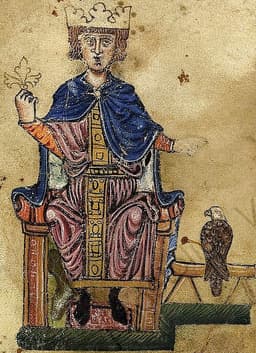
Frederick II
Emperor · Medieval
61.7Total
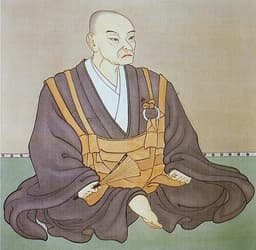
Hojo Soun
Emperor · Medieval
58.1Total
Basic Information
Born
1194
1432
Died
1250
1519
Era
Medieval
Medieval
Nationality
Holy Roman Empire
Japan
Occupation
Emperor
Emperor
Civilization
Western
Eastern
Score Comparison
Military (10%)
72.5
50.0
Political (20%)
70.3
68.0
Influence (20%)
40.0
53.3
Legacy (20%)
65.0
50.0
Leadership (15%)
72.0
74.0
Strategy (15%)
68.1
60.0
TOTAL
61.7
58.1
Frederick II — Complete Timeline
1224 AD
Foundation of the University of NaplesCultural◆ Major
Frederick II founded the University of Naples, the first state-run university in Europe. It was established to train administrators and lawyers for the kingdom, independent of papal control. The university became a center for legal and scientific studies.
EducationUniversitySicily
Impact: regionalconstructive
1228 AD
Sixth CrusadeWar◆ Major
Frederick II led the Sixth Crusade while excommunicated. Through diplomacy with Sultan al-Kamil, he secured the return of Jerusalem, Bethlehem, and Nazareth to Christian control without major battle. He crowned himself King of Jerusalem in the Church of the Holy Sepulchre.
CrusadeDiplomacyJerusalem
Impact: globalconstructive
1231 AD
Promulgation of the Constitutions of MelfiReform◆ Major
Frederick II issued the Constitutions of Melfi, a comprehensive legal code for the Kingdom of Sicily. The code centralized royal authority, reformed administration, and established a uniform legal system. It was one of the most advanced legal codes of the medieval period.
Legal ReformSicilyAdministration
Impact: regionalconstructive
1237 AD
Battle of CortenuovaWar◆ Major
Frederick II defeated the Lombard League at Cortenuova in northern Italy. He captured the League's carroccio and sent it to Rome as a trophy. The victory strengthened imperial control over northern Italy but did not end the League's resistance.
Lombard LeagueBattleItaly
Impact: regional
Hojo Soun — Complete Timeline
1491 AD
Became a Ronin and Founded the Later Hojo ClanPolitical Action
Hojo Soun, originally a samurai of the Imagawa clan, became a ronin after his lord's death. He seized control of Izu Province in 1491, establishing the Later Hojo clan and beginning his rise to power.
RoninLater HojoIzu
Impact: regional
1495 AD
Captured Odawara CastleWar◆ Major
Hojo Soun captured Odawara Castle from the Omori clan through a combination of military force and deception. Odawara became the Later Hojo clan's stronghold and a symbol of their power in the Kanto region.
CastleKantoMilitary
Impact: regional
1512 AD
Expanded Hojo Control Over Sagami ProvinceWar◆ Major
Hojo Soun expanded his territory by conquering Sagami Province, defeating local lords and the Uesugi clan. This established the Later Hojo as a major power in the Kanto region, controlling key trade routes.
ExpansionSagamiKanto
Impact: regional
Expert Analysis
Origins
Frederick II was born in 1194 in Jesi, Italy, to Holy Roman Emperor Henry VI and Constance of Sicily. Orphaned by age four, he grew up under the guardianship of Pope Innocent III, who controlled his upbringing. Frederick was raised in Palermo, a multicultural city blending Norman, Byzantine, Arab, and Jewish influences. He received an education in law, languages (Latin, Greek, Arabic), and natural sciences, shaping his cosmopolitan worldview.
Hojo Soun was born in 1432 as Ise Shinkuro, a minor samurai in the Imagawa clan of Japan. After his lord's death in 1476, he became a ronin (masterless samurai). Unlike Frederick, Soun had no noble lineage to rely on; he built his power from nothing. He began as a low-ranking official and slowly accumulated territory through strategic marriages and military exploits. His early life was marked by the chaos of the Onin War (1467–1477), which shattered central authority and created opportunities for ambitious men.
Rise to Power
Frederick II was elected King of Germany in 1212 at age 18, with papal support. He was crowned Holy Roman Emperor in 1220 by Pope Honorius III, promising to go on crusade. However, he delayed repeatedly, leading to conflict with the papacy. His rise was secured by his inheritance of the Kingdom of Sicily, which he used as a power base. The key turning point came in 1228 when he launched the Sixth Crusade while excommunicated, negotiating the return of Jerusalem without battle. This act demonstrated his diplomatic skill but deepened papal hostility.
Hojo Soun's rise began in 1491 when he seized Izu Province from the Imagawa clan through a coup. He captured Odawara Castle in 1495 from the Omori clan using a ruse: he pretended to be a friendly visitor and then took the castle by surprise. Over the next decades, he expanded into Sagami Province, defeating the Uesugi clan and local lords. By 1518, he controlled much of the Kanto region. His rise was gradual, based on military cunning and political marriages, not hereditary right. He founded the Later Hojo clan, which would dominate eastern Japan for a century.
Leadership & Governance
Frederick II ruled Sicily as an absolute monarch. He promulgated the Constitutions of Melfi in 1231, a comprehensive legal code that centralized justice, reformed taxation, and suppressed feudal privileges. He established a bureaucracy staffed by trained officials from the University of Naples, which he founded in 1224. In Germany, however, he made concessions to princes, granting them sovereignty in the Confoederatio cum principibus ecclesiasticis (1220) and Statutum in favorem principum (1232). This dual approach – strong central rule in Sicily, feudal devolution in Germany – reflected his pragmatic need to secure support. He scored 72.0 in Leadership and 70.3 in Political.
Hojo Soun governed through alliances and family ties. He adopted the surname Hojo to claim lineage from the earlier Hojo regents, legitimizing his rule. He implemented a system of land surveys and tax collection that increased revenue. Unlike Frederick, Soun relied on consensus among his vassals, often holding councils. He appointed loyal retainers as castle lords and maintained a network of spies. His leadership score of 74.0 reflects his ability to build a stable regime from scratch. He was less innovative than Frederick in law or education but effective in consolidating power.
Triumph & Tragedy
Frederick II's greatest triumph was the Sixth Crusade (1228–1229), where he recovered Jerusalem, Bethlehem, and Nazareth through diplomacy with Sultan al-Kamil. This was the only crusade to succeed without major bloodshed. His Constitutions of Melfi were a model of medieval governance. However, his conflict with the papacy was a tragedy: he was excommunicated twice, and after his death in 1250, his sons were overthrown, and the Hohenstaufen dynasty was exterminated. His empire collapsed due to papal opposition and his own overreach. He scored 72.5 in Military and 68.1 in Strategy.
Hojo Soun's triumph was founding the Later Hojo clan, which became the most powerful force in eastern Japan. He captured Odawara Castle, which served as their stronghold for generations. His tragedy was his limited lifespan – he died in 1519, before seeing his clan's peak. He also failed to secure peaceful succession: his son Hojo Ujitsuna had to fight to maintain control. Soun's military score of 50.0 is modest, reflecting his reliance on deception rather than large-scale battles.
Character & Destiny
Frederick II was intellectual, curious, and autocratic. He wrote a book on falconry, corresponded with Muslim scholars, and was accused of heresy for his religious skepticism. His arrogance alienated allies; his excommunication made him a target. His character – brilliant but uncompromising – led to his downfall. He scored 40.0 in Influence, reflecting his limited long-term impact due to the destruction of his dynasty.
Hojo Soun was patient, pragmatic, and ruthless. He started as a ronin and rose through cunning, not birth. He was known for his generosity to followers, which secured loyalty. His destiny was to be the founder of a dynasty that ruled for five generations. His character – adaptable and cautious – enabled him to survive in a violent era. He scored 53.3 in Influence and 60.0 in Strategy.
Legacy
Frederick II's legacy is mixed. His Constitutions of Melfi influenced later legal codes, and the University of Naples became a model for state universities. However, his empire vanished. He is remembered as "Stupor Mundi" (Wonder of the World) for his intellect but also as a failed emperor who weakened the Holy Roman Empire. He scored 65.0 in Legacy.
Hojo Soun's legacy is the Later Hojo clan, which controlled the Kanto region until 1590 when Toyotomi Hideyoshi destroyed them. His administrative reforms influenced later daimyo. He is remembered as a self-made man and a model of strategic patience. His legacy score of 50.0 reflects his regional, not global, impact.
Conclusion
Frederick II had greater impact than Hojo Soun, as measured by his total score of 61.7 vs. 58.1. Frederick's reforms in law and education had lasting effects in Europe, while Soun's influence was confined to Japan. Frederick's military and political achievements, though flawed, were on a larger scale. Soun's rise from nothing is impressive, but his achievements were more limited. Frederick II, despite his failures, changed the course of European history; Hojo Soun was a regional power-builder. The data supports Frederick as the more significant figure.
Rankings
🥇
Frederick IILeader
Mil: 72.5Pol: 70.3Inf: 40.0
61.7
🥈
Hojo Soun
Mil: 50.0Pol: 68.0Inf: 53.3
58.1
+3.6 behind
How This Comparison Works
Algorithm
Each figure is scored on 6 dimensions (0—100 scale) based on structured historical data: Military (10%), Political (20%), Influence (20%), Legacy (20%), Leadership (15%), Strategy (15%). The weighted total produces the final ranking.
Data Sources
Scores are computed from structured sub-indicators in the database. Scale factors adjust for era (Ancient ×0.85, Modern ×1.0) and civilization size (Eastern ×1.05, Other ×0.80) to account for differences in population and military scale.
Maximum 3 Figures
Comparisons are limited to 2—3 figures to ensure readability and statistical meaningfulness.
Error Margins
±5 points per dimension — Sub-scores are derived from historical records with inherent uncertainty. Two figures within 5 points on a dimension should be considered roughly equivalent in that area.
Total Score Accuracy
±3 points overall — The weighted combination of 6 dimensions produces a total score with approximately ±3 points of uncertainty. Differences of less than 3 points are not statistically significant— the figures are effectively tied.
Known Limitations
- Historical records are incomplete and uneven across civilizations
- Figures from oral-tradition societies may be underrepresented
- Occupation labels can misclassify multi-role figures
- Scores measure capability and impact, not moral character
- Quantitative scoring is a comparison tool, not absolute truth
Capability Radar
Military (10%) — Battles & Warfare
Battles
65
40
Win Rate
60
45
Expansion
55
55
Political (20%) — Governance & Reform
Reform
90
50
Diplomacy
85
55
Economy
80
50
Influence (20%) — Cultural & Global Reach
Cultural
85
40
Global
70
20
Legacy (20%) — Historical Impact
Historical
80
55
Longevity
75
50
Leadership (15%) — Power & Stability
Tenure
85
60
Stability
60
45
Strategy (15%) — Tactics & Innovation
Strategy
70
55
Tactics
75
50
Reform
80
30
Similar Comparisons
Comments & Discussion
No comments yet. Be the first to share your thoughts!