Loading...
Frederick IV of Denmark vs Gia Long
Gia Long leads by 14.2 pts · 2 figures compared
…

Frederick IV of Denmark
Emperor · Modern
51.2Total
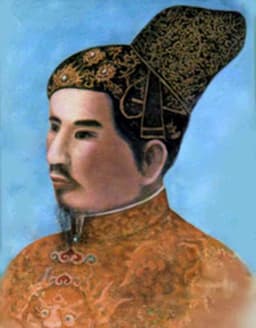
Gia Long
Emperor · Modern
65.4Total
Basic Information
Born
1671
1762
Died
1730
1820
Era
Modern
Modern
Nationality
Denmark
Vietnam
Occupation
Emperor
Emperor
Civilization
Western
Eastern
Score Comparison
Military (10%)
55.0
78.0
Political (20%)
68.0
70.3
Influence (20%)
52.5
61.0
Legacy (20%)
45.0
54.0
Leadership (15%)
40.0
78.0
Strategy (15%)
51.7
66.3
TOTAL
51.2
65.4
Frederick IV of Denmark — Complete Timeline
1700 AD
Participation in the Great Northern WarWar◆ Major
Frederick IV joined the Great Northern War against Sweden, forming an alliance with Russia and Saxony. Denmark's early campaigns failed, leading to the Treaty of Travendal in 1700, which temporarily removed Denmark from the war.
Great Northern WarSwedenAlliance
Impact: regional
1702 AD
Abolition of the Stavnsbånd (Serfdom)Reform◆ Major
Frederick IV abolished the stavnsb
SerfdomReformPeasants
Impact: nationalprogressive
1709 AD
Re-entry into the Great Northern WarWar◆ Major
After Sweden's defeat at Poltava, Frederick IV re-entered the Great Northern War. Danish forces invaded Scania but were repelled at the Battle of Helsingborg in 1710, failing to regain lost territories.
Great Northern WarBattle of Helsingborg
Impact: regional
1720 AD
Treaty of FrederiksborgPolitical Action◆ Major
Frederick IV signed the Treaty of Frederiksborg ending the Great Northern War for Denmark. Denmark gained the Duchy of Schleswig but failed to recover Scania, and Sweden paid a war indemnity.
TreatyPeaceGreat Northern War
Impact: regional
Gia Long — Complete Timeline
1787 AD
Treaty of Versailles with FrancePolitical Action◆ Major
Nguyen Anh signed the Treaty of Versailles with King Louis XVI, securing French military and financial support in exchange for trade concessions and the cession of Da Nang and Poulo Condore. This treaty marked the beginning of French involvement in Vietnam.
French ColonialismTreatyNguyen Dynasty
Impact: regional
1788 AD
Capture of SaigonWar◆ Major
Nguyen Anh (later Gia Long) captured Saigon from the Tay Son forces with the help of French military advisors. This victory established his base of power in the Mekong Delta region.
Tay Son WarNguyen DynastyFrench Support
Impact: regional
1801 AD
Battle of Thien MuWar◆ Major
Nguyen Anh's forces, supported by French-built ships and artillery, defeated the Tay Son navy at Thien Mu. This naval victory allowed him to capture Hue, the Tay Son capital.
Tay Son WarNaval BattleFrench Support
Impact: national
1802 AD
Founding of the Nguyen DynastyPolitical Action
Nguyen Anh ascended the throne as Emperor Gia Long, founding the Nguyen dynasty. He unified Vietnam from the Red River Delta to the Mekong Delta, establishing the country's modern borders.
Nguyen DynastyUnificationVietnamese History
Impact: regionalconstructive
1804 AD
Construction of the Hue CitadelCultural◆ Major
Emperor Gia Long ordered the construction of the Hue Citadel, a massive fortified palace complex modeled on the Forbidden City in Beijing. The citadel served as the imperial capital of the Nguyen dynasty until 1945.
ArchitectureHueImperial Capital
Impact: nationalconstructive
Expert Analysis
Origins
Frederick IV of Denmark was born on October 11, 1671, in Copenhagen, the son of King Christian V and Charlotte Amalie of Hesse-Kassel. He received a traditional princely education focusing on military and statecraft, but his early life was overshadowed by his father's reign. Frederick ascended the throne in 1699 at age 28, inheriting a kingdom with ambitions to reclaim territories lost to Sweden in previous wars.
Gia Long, born Nguyễn Phúc Ánh on February 8, 1762, in Huế, was a member of the Nguyễn lords who ruled southern Vietnam. His early life was marked by the Tay Son rebellion that overthrew the Nguyễn dynasty in 1777. Forced into exile, he spent years in the Mekong Delta and later in Siam (Thailand), building alliances and seeking foreign support to reclaim his family's throne.
Rise to Power
Frederick IV's rise was straightforward: he inherited the throne in 1699. His ambition focused on reversing Danish losses to Sweden, particularly the Scanian provinces. In 1700, he joined the Great Northern War alongside Peter the Great of Russia and Augustus II of Saxony. However, Denmark's initial invasion of Holstein-Gottorp (allied with Sweden) was repelled by the Swedes, forcing Frederick to sign the Treaty of Travendal in 1700, temporarily withdrawing from the war.
Gia Long's rise was a long struggle. After the Tay Son captured Saigon in 1777, Nguyễn Ánh fled to the island of Pulo Panjang. He gradually built a force, capturing Saigon in 1788 with the help of French mercenaries like Pierre Pigneau de Béhaine. In 1787, he signed the Treaty of Versailles with France, trading commercial privileges for military aid. By 1802, after defeating the Tay Son, he unified Vietnam and proclaimed himself Emperor Gia Long.
Leadership & Governance
Frederick IV ruled as an absolute monarch in the Danish tradition. He implemented reforms such as the abolition of the stavnsbånd (serfdom) in 1702, which freed peasants from being tied to the land, though it was partially reversed later. He also established a militia system and modernized the navy. However, his governance was often reactive, focusing on military campaigns. His political score of 68.0 reflects some reform efforts but limited structural change.
Gia Long's governance was more systematic. He established the Nguyễn dynasty's administrative framework, dividing Vietnam into provinces and districts. He adopted Confucian bureaucracy, modeled on China's Qing dynasty, and ordered the construction of the Hue Citadel, a massive fortified complex. He also codified laws and promoted agriculture. His political score of 70.3 and leadership score of 78.0 indicate a more effective consolidator of power.
Triumph & Tragedy
Frederick IV's greatest triumph was the Treaty of Frederiksborg in 1720, which ended Denmark's participation in the Great Northern War. Denmark gained the Duchy of Schleswig from the Gottorp allies, securing its southern border. However, his failure to recover the Scanian provinces from Sweden was a major disappointment. The war drained Denmark's treasury, and the early defeat at Travendal humiliated the kingdom. His military score of 55.0 reflects these mixed outcomes.
Gia Long's triumph was the unification of Vietnam after centuries of division. He defeated the Tay Son and brought the entire territory from the Red River to the Mekong under one rule. His tragedy was the cost of foreign dependency: the Treaty of Versailles granted France commercial privileges that later facilitated French colonization. Also, his reliance on French military advisors created a precedent for European intervention. His military score of 78.0 and strategy score of 66.3 reflect his effective campaigns.
Character & Destiny
Frederick IV was known for his piety and interest in culture, but also for indecisiveness in war. His decision to re-enter the Great Northern War after Poltava (1709) was bold but poorly executed, leading to the failed invasion of Scania. His character was cautious, preferring diplomacy when possible. Historians note that his reign modernized Denmark but failed to restore its great power status.
Gia Long was determined and pragmatic. His long exile taught him patience and the value of alliances. He was a skilled military commander but also a ruthless suppressor of opposition, executing many Tay Son leaders. His Confucian ideals shaped his rule, emphasizing order and hierarchy. His destiny was to found a dynasty that lasted until 1945, but his legacy is complicated by the seeds of French colonialism.
Legacy
Frederick IV's legacy is mixed: he is remembered for abolishing serfdom and stabilizing Denmark's borders, but his military failures diminished his reputation. The stavnsbånd abolition was a significant social reform, though it was not fully implemented. His influence score of 52.5 reflects limited impact beyond Denmark.
Gia Long's legacy is profound. He unified Vietnam under the Nguyễn dynasty, which ruled for 143 years. The Hue Citadel remains a UNESCO World Heritage site. However, his concessions to France paved the way for colonization in the 1880s. His legacy score of 54.0 acknowledges his foundational role but also the negative consequences.
Conclusion
Gia Long had a greater impact than Frederick IV. His total score of 65.4 versus Frederick's 51.2 reflects this. Gia Long unified a nation and established a dynasty that shaped Vietnamese history for over a century. Frederick IV's reforms were notable but his military failures and limited territorial gains left Denmark a secondary power. While Frederick's abolition of serfdom was progressive, Gia Long's unification of Vietnam was a transformative achievement. The data supports Gia Long as the more consequential ruler.
Rankings
🥇
Gia LongLeader
Mil: 78.0Pol: 70.3Inf: 61.0
65.4
🥈
Frederick IV of Denmark
Mil: 55.0Pol: 68.0Inf: 52.5
51.2
+14.2 behind
How This Comparison Works
Algorithm
Each figure is scored on 6 dimensions (0—100 scale) based on structured historical data: Military (10%), Political (20%), Influence (20%), Legacy (20%), Leadership (15%), Strategy (15%). The weighted total produces the final ranking.
Data Sources
Scores are computed from structured sub-indicators in the database. Scale factors adjust for era (Ancient ×0.85, Modern ×1.0) and civilization size (Eastern ×1.05, Other ×0.80) to account for differences in population and military scale.
Maximum 3 Figures
Comparisons are limited to 2—3 figures to ensure readability and statistical meaningfulness.
Error Margins
±5 points per dimension — Sub-scores are derived from historical records with inherent uncertainty. Two figures within 5 points on a dimension should be considered roughly equivalent in that area.
Total Score Accuracy
±3 points overall — The weighted combination of 6 dimensions produces a total score with approximately ±3 points of uncertainty. Differences of less than 3 points are not statistically significant— the figures are effectively tied.
Known Limitations
- Historical records are incomplete and uneven across civilizations
- Figures from oral-tradition societies may be underrepresented
- Occupation labels can misclassify multi-role figures
- Scores measure capability and impact, not moral character
- Quantitative scoring is a comparison tool, not absolute truth
Capability Radar
Military (10%) — Battles & Warfare
Battles
45
75
Win Rate
35
80
Expansion
25
80
Political (20%) — Governance & Reform
Reform
50
75
Diplomacy
40
70
Economy
45
65
Influence (20%) — Cultural & Global Reach
Cultural
30
55
Global
25
40
Legacy (20%) — Historical Impact
Historical
40
60
Longevity
30
55
Leadership (15%) — Power & Stability
Tenure
60
70
Stability
35
60
Strategy (15%) — Tactics & Innovation
Strategy
40
85
Tactics
40
70
Reform
30
75
Similar Comparisons
Comments & Discussion
No comments yet. Be the first to share your thoughts!