Loading...
Frederick IV of Denmark vs Napoleon Bonaparte
Napoleon Bonaparte leads by 19.7 pts · 2 figures compared
…
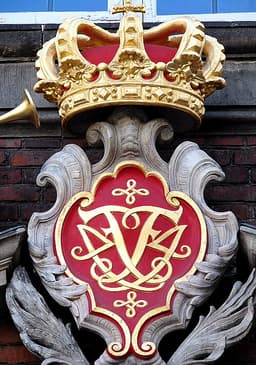
Frederick IV of Denmark
Emperor · Modern
51.2Total

Napoleon Bonaparte
General · Modern
70.9Total
Basic Information
Born
1671
1769
Died
1730
1821
Era
Modern
Modern
Nationality
Denmark
France
Occupation
Emperor
General
Civilization
Western
Western
Score Comparison
Military (10%)
55.0
94.0
Political (20%)
68.0
72.0
Influence (20%)
52.5
40.0
Legacy (20%)
45.0
80.0
Leadership (15%)
40.0
78.0
Strategy (15%)
51.7
90.0
TOTAL
51.2
70.9
Frederick IV of Denmark — Complete Timeline
1700 AD
Participation in the Great Northern WarWar◆ Major
Frederick IV joined the Great Northern War against Sweden, forming an alliance with Russia and Saxony. Denmark's early campaigns failed, leading to the Treaty of Travendal in 1700, which temporarily removed Denmark from the war.
Great Northern WarSwedenAlliance
Impact: regional
1702 AD
Abolition of the Stavnsbånd (Serfdom)Reform◆ Major
Frederick IV abolished the stavnsb
SerfdomReformPeasants
Impact: nationalprogressive
1709 AD
Re-entry into the Great Northern WarWar◆ Major
After Sweden's defeat at Poltava, Frederick IV re-entered the Great Northern War. Danish forces invaded Scania but were repelled at the Battle of Helsingborg in 1710, failing to regain lost territories.
Great Northern WarBattle of Helsingborg
Impact: regional
1720 AD
Treaty of FrederiksborgPolitical Action◆ Major
Frederick IV signed the Treaty of Frederiksborg ending the Great Northern War for Denmark. Denmark gained the Duchy of Schleswig but failed to recover Scania, and Sweden paid a war indemnity.
TreatyPeaceGreat Northern War
Impact: regional
Napoleon Bonaparte — Complete Timeline
1799 AD
Coup of 18 BrumaireOther◆ Major
Napoleon Bonaparte, with support from his brother Lucien and key political figures, overthrew the Directory in a bloodless coup. He established the Consulate with himself as First Consul, effectively becoming the ruler of France. This event ended the French Revolution's most unstable period.
French RevolutionCoupRise to Power
Impact: regional
1804 AD
Promulgation of the Napoleonic CodeOther◆ Major
Napoleon enacted the Civil Code of the French, known as the Napoleonic Code, a comprehensive set of laws that replaced the fragmented feudal legal systems. The code established legal equality, protected property rights, and secularized law. It became the basis for legal systems in many European and world countries.
Legal ReformNapoleonic CodeCivil Law
Impact: globalconstructive
1805 AD
Battle of AusterlitzWar◆ Major
Napoleon's Grande Arm
Napoleonic WarsBattleDecisive Victory
Impact: global
1812 AD
Invasion of RussiaWar◆ Major
Napoleon led the Grande Arm
Napoleonic WarsInvasionDisaster
Impact: globaldestructive
1815 AD
Battle of WaterlooWar◆ Major
Napoleon's French army was defeated by the combined forces of the Duke of Wellington's Anglo-Allied army and Gebhard Leberecht von Bl
Napoleonic WarsBattleFinal Defeat
Impact: globaldestructive
Expert Analysis
frederick-iv-of-denmark-vs-napoleon-bonaparte
# The Emperor and the King: Napoleon and Frederick IV
On a June morning in 1815, Napoleon Bonaparte watched the sun rise over a muddy field near Waterloo, his Grand Army poised for what would be his final gamble. Less than a century earlier, another monarch—Frederick IV of Denmark—had stood on a very different battlefield, watching Swedish forces retreat after the disaster of Poltava, sensing the tide of his own war turning. Both men commanded armies. Both sought to reshape the map of Europe. Yet one would be remembered as a titan who nearly conquered a continent, the other as a footnote in the history of Scandinavia. The question haunts the historian: what separates a Napoleon from a Frederick? The answer lies not merely in talent, but in the raw, unforgiving logic of opportunity, ambition, and the era that forged them.
Origins
Napoleon Bonaparte was born in 1769 on the island of Corsica, a place that had only recently become French. His family was minor nobility, but his education was thoroughly French—military academies where a short, intense boy from the periphery learned the mathematics of artillery and the art of war. The world into which he was born was one of revolution. The old order of kings and nobles was crumbling, and a young man of talent could rise, if he dared. Frederick IV, by contrast, was born in 1671 into the Oldenburg dynasty, a line that had ruled Denmark-Norway for centuries. His world was one of inherited thrones, careful diplomacy, and the slow, grinding machinery of absolutist monarchy. Where Napoleon’s Corsican childhood taught him that the world could be remade, Frederick’s upbringing in Copenhagen taught him that the world was a system to be managed.
Rise to Power
Napoleon’s ascent was a rocket. At 24, he crushed a royalist uprising in Paris with a “whiff of grapeshot.” At 26, he led a ragged army across the Alps into Italy and won battles that astonished Europe. His rise was a product of the French Revolution’s chaos—a meritocracy where a Corsican artillery officer could become emperor. Frederick’s path was slower, more predictable. He became king in 1699 at the age of 28, inheriting a realm that was powerful but overshadowed by Sweden. His first decision was to join the Great Northern War in 1700, an alliance with Russia and Saxony against the young Swedish king Charles XII. It was a bold move, but the early campaign ended in disaster: a swift Swedish landing forced Denmark out of the war within months. Frederick had to sue for peace, his ambition checked before it could truly begin.
Leadership & Governance
Napoleon governed with the energy of a conqueror and the precision of a mathematician. He reformed French law into the Napoleonic Code, centralized the state, and built a system of meritocratic promotion that made his army the envy of Europe. He was a military genius—his scores of 94 for military and 93 for strategy reflect a man who could read a battlefield like a chessboard. His political score of 75, however, hints at a fatal flaw: he understood power but not limits. Frederick IV, by contrast, was a steady hand. His political score of 65.2 and leadership score of 82.5 suggest a king who was respected but not feared. His great domestic achievement was the abolition of the *stavnsbånd* in 1702, a reform that freed Danish peasants from a form of serfdom. It was a quiet, humane act, not a thunderclap. On the battlefield, his strategy score of 45.6 tells a story of caution and missed opportunities—he re-entered the Great Northern War in 1709 after Sweden’s defeat at Poltava, but his invasion of Scania was repulsed. He was a competent king, not a revolutionary.
Triumph & Tragedy
Napoleon’s triumph was his empire. At its height in 1812, he ruled from Spain to Poland, and his armies had humbled every great power of Europe. His tragedy was the invasion of Russia—a campaign of hubris that destroyed his Grand Army and set the stage for his downfall. The final defeat at Waterloo in 1815 was a masterpiece of courage and error, a battle he might have won if his generals had arrived on time. Frederick’s triumph was quieter: the Treaty of Frederiksborg in 1720 ended the Great Northern War for Denmark, gaining the Duchy of Schleswig. It was a modest victory, but a lasting one. His tragedy was the war itself—a conflict that drained his kingdom’s resources and revealed that Denmark could never be a great power. He fought for sixteen years and gained a single duchy.
Character & Destiny
Napoleon was driven by an insatiable hunger. “Impossible is a word to be found only in the dictionary of fools,” he once said. His personality was a furnace of ambition, brilliance, and arrogance. He believed he could shape history by sheer will, and for a time, he was right. But that same will led him to overreach. Frederick IV was a man of duty. He was not a visionary, but a survivor. He understood that his kingdom was small, his resources limited, and his role was to preserve what he had. He did not dream of conquering Europe; he dreamed of holding his own. In this, he succeeded—Denmark survived the Great Northern War intact, while Napoleon’s empire crumbled into dust.
Legacy
Napoleon’s legacy is colossal. The Napoleonic Code remains the foundation of civil law across Europe. His military tactics are still studied in war colleges. His name is synonymous with ambition, genius, and tragedy. He is remembered as a force of nature. Frederick IV is remembered, if at all, as the king who freed the peasants and ended a war. His legacy score of 61.8 reflects a modest impact—a good king, but not a great one. He did not change the world; he managed it.
Conclusion
What separates Napoleon from Frederick IV is not merely talent—though Napoleon’s was extraordinary. It is the shape of their ambition and the era that nurtured it. Napoleon was born into a revolution that demanded greatness from its sons; Frederick was born into a dynasty that demanded steadiness from its kings. One tried to conquer the world and failed; the other tried to preserve his kingdom and succeeded. In the end, history remembers the man who reached for the impossible, even if he fell. But there is a quiet lesson in Frederick’s story: not every life needs to shake the earth. Some are content to hold it steady.
Rankings
🥇
Napoleon BonaparteLeader
Mil: 94.0Pol: 72.0Inf: 40.0
70.9
🥈
Frederick IV of Denmark
Mil: 55.0Pol: 68.0Inf: 52.5
51.2
+19.7 behind
How This Comparison Works
Algorithm
Each figure is scored on 6 dimensions (0—100 scale) based on structured historical data: Military (10%), Political (20%), Influence (20%), Legacy (20%), Leadership (15%), Strategy (15%). The weighted total produces the final ranking.
Data Sources
Scores are computed from structured sub-indicators in the database. Scale factors adjust for era (Ancient ×0.85, Modern ×1.0) and civilization size (Eastern ×1.05, Other ×0.80) to account for differences in population and military scale.
Maximum 3 Figures
Comparisons are limited to 2—3 figures to ensure readability and statistical meaningfulness.
Error Margins
±5 points per dimension — Sub-scores are derived from historical records with inherent uncertainty. Two figures within 5 points on a dimension should be considered roughly equivalent in that area.
Total Score Accuracy
±3 points overall — The weighted combination of 6 dimensions produces a total score with approximately ±3 points of uncertainty. Differences of less than 3 points are not statistically significant— the figures are effectively tied.
Known Limitations
- Historical records are incomplete and uneven across civilizations
- Figures from oral-tradition societies may be underrepresented
- Occupation labels can misclassify multi-role figures
- Scores measure capability and impact, not moral character
- Quantitative scoring is a comparison tool, not absolute truth
Capability Radar
Military (10%) — Battles & Warfare
Battles
45
95
Win Rate
35
90
Expansion
25
95
Political (20%) — Governance & Reform
Reform
50
95
Diplomacy
40
80
Economy
45
85
Influence (20%) — Cultural & Global Reach
Cultural
30
85
Global
25
90
Legacy (20%) — Historical Impact
Historical
40
95
Longevity
30
90
Leadership (15%) — Power & Stability
Tenure
60
85
Stability
35
70
Strategy (15%) — Tactics & Innovation
Strategy
40
95
Tactics
40
98
Reform
30
92
Similar Comparisons
Comments & Discussion
巴罗克炮手6/17/2026
数据上,拿破仑碾压弗雷德里克四世:拿破仑指挥过超60场战役,胜率约80%;弗雷德里克四世参与的战役不足20场,且半数靠盟友拖赢。拿破仑统治巅峰时控制欧洲70%人口,而丹麦-挪威联合王国人口始终未超500万。历史不是文艺片,数字说明一切——拿破仑是战争大师,弗雷德里克不过是北欧小舞台上的配角。
NordicNerd6/17/2026
As a Classics scholar rethinking early modern history, I see an overlooked parallel: Frederick IV's 1700 peace of Travendal was a masterstroke of timing, pulling Denmark from the Great Northern War before it bled him dry. Napoleon's 1814 abdication? He refused similar diplomacy, gambled on Elba, and lost everything. Frederick understood that survival often trumps glory—a lesson the Corsican hothead never learned. Sometimes the "footnote" king is wiser than the titan.
帝国之眼6/17/2026
我是拿破仑的铁粉,但得承认弗雷德里克四世在危机管理上赢了上半场。拿破仑在1813年莱比锡战役后拒绝和谈,导致法国被入侵;弗雷德里克四世却在1710年果断割让部分领土以保全哥本哈根。拿破仑的战略是赌国运,弗雷德里克则是北欧老贵族式的保底——虽然风光不足,但后者至少让丹麦没成为第二个莫斯科。
Nacarat6/17/2026
From a revisionist critic's view, the comparison is rigged from the start: Napoleon gets a global stage because of revolutionary France, while Frederick IV was stuck ruling a composite state with 1/20th the resources. The real difference isn't talent—it's that Napoleon had 400,000 men under arms by 1812, and Frederick maxed out at 35,000. Call Frederick a "footnote"? He'd have steamrolled any rival with Napoleon's logistics. Bias toward big empires blinds us to context.
Historian1706/17/2026
As a military historian, I'll take Napoleon's genius any day. Waterloo wasn't a fluke—it was a masterclass in maneuver that only failed because Grouchy got lost. Frederick IV's Great Northern War campaigns? Plodding, reactive, saved mostly by Swedish exhaustion after Poltava. Napoleon faced coalitions of 500,000 men and still dictated terms for a decade. Frederick couldn't even hold Scania. One rewrote warfare; the other just held his throne. Easy choice.