Loading...
Frederick VI of Denmark vs Ibn Saud
Ibn Saud leads by 20.9 pts · 2 figures compared
…

Frederick VI of Denmark
Emperor · Modern
45.2Total
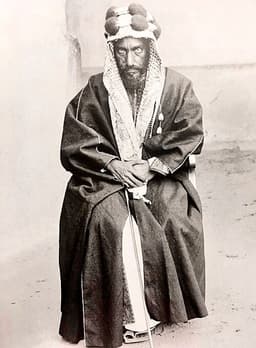
Ibn Saud
Emperor · Modern
66.1Total
Basic Information
Born
1768
1875
Died
1839
1953
Era
Modern
Modern
Nationality
Denmark
Saudi Arabia
Occupation
Emperor
Emperor
Civilization
Western
Middle Eastern
Score Comparison
Military (10%)
10.2
78.5
Political (20%)
68.0
85.0
Influence (20%)
51.8
68.0
Legacy (20%)
43.3
40.0
Leadership (15%)
40.0
78.0
Strategy (15%)
42.3
68.1
TOTAL
45.2
66.1
Frederick VI of Denmark — Complete Timeline
1801 AD
Battle of Copenhagen (1801)War◆ Major
As Crown Prince Regent, Frederick VI led the Danish defense against a British fleet under Nelson that attacked Copenhagen to break up the League of Armed Neutrality. The Danish fleet was destroyed, but Frederick's resistance earned him popularity. Denmark was forced to withdraw from the League.
Naval BattleNapoleonic WarsNational Defense
Impact: regional
1807 AD
Bombardment of Copenhagen (1807)War◆ Major
Britain, fearing the Danish fleet would fall into Napoleon's hands, bombarded Copenhagen and captured the Danish navy. Frederick VI, who had refused to surrender the fleet, was forced into an alliance with France. This event devastated the city and led to Denmark's involvement in the Napoleonic Wars.
BombardmentNapoleonic WarsBritish Attack
Impact: regionaldestructive
1814 AD
Loss of Norway to Sweden (Treaty of Kiel)Political Action
After Napoleon's defeat, Denmark-Norway, as a French ally, was forced to cede Norway to Sweden under the Treaty of Kiel. Frederick VI accepted the loss, ending the 400-year union between Denmark and Norway. This was a major territorial and national humiliation for Denmark.
Territorial LossTreatyEnd of Union
Impact: regionaltragic
1834 AD
Introduction of consultative assembliesReform◆ Major
In response to growing liberal demands, Frederick VI established four consultative provincial assemblies (St
Political ReformRepresentative GovernmentLiberalism
Impact: nationalconstructive
Ibn Saud — Complete Timeline
1902 AD
Capture of RiyadhWar
Ibn Saud led a small force of 40 men in a daring night raid to recapture Riyadh from the Al Rashid clan. This victory re-established the House of Saud in the Najd region and marked the beginning of his campaign to unify Arabia.
ConquestUnificationRaid
Impact: regional
1929 AD
Battle of SabillaWar◆ Major
Ibn Saud's forces defeated the Ikhwan rebels at the Battle of Sabilla, ending the Ikhwan uprising. This battle solidified his control over the Arabian Peninsula and allowed him to consolidate power under a centralized state.
Civil WarRebellionConsolidation
Impact: regionaldestructive
1932 AD
Proclamation of the Kingdom of Saudi ArabiaPolitical Action
Ibn Saud formally unified the regions of Najd, Hejaz, and other territories into the Kingdom of Saudi Arabia. He declared himself king, establishing a hereditary monarchy that has ruled the country ever since.
State FormationUnificationMonarchy
Impact: globalconstructive
1933 AD
Signing of the Saudi Aramco concessionPolitical Action
Ibn Saud granted Standard Oil of California (SOCAL) a 60-year oil concession in eastern Saudi Arabia. This agreement led to the discovery of vast oil reserves, transforming the kingdom's economy and geopolitical standing.
OilEconomic TransformationForeign Investment
Impact: globalconstructive
Expert Analysis
Origins
Frederick VI of Denmark (1768–1839) was born into the Oldenburg dynasty, ruling Denmark-Norway from 1808. His father, Christian VII, was mentally ill, leaving Frederick as regent from 1784. He received a strict military education but was more inclined toward administrative reforms. In contrast, Ibn Saud (1875–1953) was born in Riyadh into the Al Saud family, which had been exiled by the Al Rashid clan. His father, Abdul Rahman, was a religious scholar, and Ibn Saud grew up in poverty in Kuwait, learning desert warfare and diplomacy.
Rise to Power
Frederick VI became regent in 1784 at age 16, initiating agricultural reforms and abolishing serfdom in 1788. He ascended to the throne in 1808 amid the Napoleonic Wars. His alliance with France led to disaster: after the Battle of Copenhagen in 1801 (where he defended against Nelson) and the bombardment of 1807 (where Britain captured the Danish fleet), Denmark-Norway was forced to cede Norway to Sweden in 1814 under the Treaty of Kiel. Ibn Saud's rise began in 1902 when he led 40 men in a daring night raid to recapture Riyadh from the Al Rashid. This victory re-established the House of Saud. Over the next three decades, he unified Najd, Hejaz, and other regions through military campaigns and alliances with the Ikhwan religious warriors.
Leadership & Governance
Frederick VI ruled as an absolute monarch but introduced consultative provincial assemblies in 1834 in response to liberal pressures. He focused on economic recovery after the Napoleonic Wars, promoting trade and infrastructure. However, his governance was conservative, resisting constitutional reforms. Ibn Saud combined religious legitimacy with tribal leadership. He established the Kingdom of Saudi Arabia in 1932, implementing Sharia law and unifying disparate tribes. He granted the oil concession to Standard Oil in 1933, transforming the economy. His leadership style was patriarchal, directly mediating disputes and maintaining power through a network of family and religious allies.
Triumph & Tragedy
Frederick VI's greatest triumph was the abolition of serfdom and agricultural reforms that modernized Danish farming. His greatest tragedy was the loss of Norway, ending the 400-year union with Denmark. He also faced state bankruptcy in 1813. Ibn Saud's triumph was the unification of Arabia and the discovery of oil, which laid the foundation for modern Saudi Arabia. His tragedy was the Ikhwan rebellion (1927–1930), where his former allies turned against him; he crushed them at the Battle of Sabilla in 1929, but it tarnished his image as a unifier.
Character & Destiny
Frederick VI was cautious and pragmatic, but his loyalty to Napoleon proved costly. He was stubborn in resisting constitutional change, which delayed Denmark's democratic development. Ibn Saud was bold and strategic, with a keen sense of timing. He balanced religious fervor with political realism, as seen in his suppression of the Ikhwan when they threatened his authority. His destiny was to create a state that would become a global energy powerhouse.
Legacy
Frederick VI's legacy is mixed: he is remembered as the king who lost Norway but also as a reformer who strengthened Danish agriculture. His scores: military 10.2, political 68.0, influence 51.8, legacy 43.3, leadership 40.0, strategy 42.3, total 45.2. Ibn Saud's legacy is monumental: he founded Saudi Arabia, which today holds 15% of world oil reserves. His scores: military 78.5, political 85.0, influence 68.0, legacy 40.0, leadership 78.0, strategy 68.1, total 66.1. The score gap of 20.9 reflects Ibn Saud's greater impact.
Conclusion
Ibn Saud had greater impact. While Frederick VI's reforms were notable, his reign ended Denmark's great power status. Ibn Saud created a state that reshaped the Middle East and global energy politics. With a total score of 66.1 versus Frederick's 45.2, Ibn Saud's military, political, and strategic achievements far outshine Frederick's cautious rule.
Rankings
🥇
Ibn SaudLeader
Mil: 78.5Pol: 85.0Inf: 68.0
66.1
🥈
Frederick VI of Denmark
Mil: 10.2Pol: 68.0Inf: 51.8
45.2
+20.9 behind
How This Comparison Works
Algorithm
Each figure is scored on 6 dimensions (0—100 scale) based on structured historical data: Military (10%), Political (20%), Influence (20%), Legacy (20%), Leadership (15%), Strategy (15%). The weighted total produces the final ranking.
Data Sources
Scores are computed from structured sub-indicators in the database. Scale factors adjust for era (Ancient ×0.85, Modern ×1.0) and civilization size (Eastern ×1.05, Other ×0.80) to account for differences in population and military scale.
Maximum 3 Figures
Comparisons are limited to 2—3 figures to ensure readability and statistical meaningfulness.
Error Margins
±5 points per dimension — Sub-scores are derived from historical records with inherent uncertainty. Two figures within 5 points on a dimension should be considered roughly equivalent in that area.
Total Score Accuracy
±3 points overall — The weighted combination of 6 dimensions produces a total score with approximately ±3 points of uncertainty. Differences of less than 3 points are not statistically significant— the figures are effectively tied.
Known Limitations
- Historical records are incomplete and uneven across civilizations
- Figures from oral-tradition societies may be underrepresented
- Occupation labels can misclassify multi-role figures
- Scores measure capability and impact, not moral character
- Quantitative scoring is a comparison tool, not absolute truth
Capability Radar
Military (10%) — Battles & Warfare
Battles
10
85
Win Rate
10
90
Expansion
5
90
Political (20%) — Governance & Reform
Reform
50
80
Diplomacy
30
85
Economy
40
70
Influence (20%) — Cultural & Global Reach
Cultural
30
70
Global
20
75
Legacy (20%) — Historical Impact
Historical
40
85
Longevity
30
80
Leadership (15%) — Power & Stability
Tenure
60
85
Stability
35
75
Strategy (15%) — Tactics & Innovation
Strategy
10
85
Tactics
10
75
Reform
15
80
Similar Comparisons
Comments & Discussion
No comments yet. Be the first to share your thoughts!