Loading...
This comparison has not been analyzed yet.
One-time AI generation (~1 minute). Scores and timeline are already available below.
Frederick William of Brunswick vs Josip Jelacic
Josip Jelacic leads by 11.4 pts · 2 figures compared
…
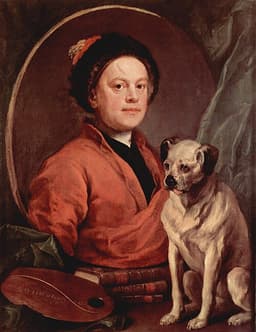
Frederick William of Brunswick
General · Modern
44.3Total

Josip Jelacic
General · Modern
55.7Total
Basic Information
Born
1771
1801
Died
1815
1859
Era
Modern
Modern
Nationality
Brunswick
Croatia
Occupation
General
General
Civilization
Western
Western
Score Comparison
Military (10%)
25.0
55.0
Political (20%)
30.8
68.0
Influence (20%)
55.7
56.4
Legacy (20%)
46.7
46.7
Leadership (15%)
36.9
65.0
Strategy (15%)
60.0
45.0
TOTAL
44.3
55.7
Frederick William of Brunswick — Complete Timeline
1809 AD
Raised the Black BrunswickersWar◆ Major
Frederick William raised a volunteer corps known as the Black Brunswickers, named for their black uniforms. This force fought against Napoleon's occupation of Germany, conducting guerrilla-style operations and later serving in the British army.
Napoleonic WarsVolunteer CorpsResistance
Impact: regionalconstructive
1813 AD
Regained control of BrunswickWar◆ Major
After Napoleon's defeat at Leipzig, Frederick William returned to Brunswick and reclaimed his duchy, which had been annexed to the Kingdom of Westphalia. He re-established the Duchy of Brunswick under his rule.
Napoleonic WarsRestorationDuchy
Impact: regionalconstructive
1815 AD
Killed at the Battle of Quatre BrasWar◆ Major
Frederick William was killed while leading his troops at the Battle of Quatre Bras, a preliminary engagement before Waterloo. His death made him a symbol of German resistance against Napoleon, and his corps continued to fight.
Napoleonic WarsBattleDeath
Impact: regionaltragic
Josip Jelacic — Complete Timeline
1848 AD
Battle of SchwechatWar◆ Major
Jelačić led Croatian forces in support of the Austrian Empire against Hungarian revolutionary forces at Schwechat near Vienna. The battle resulted in a Habsburg victory, helping to suppress the Hungarian Revolution and maintain the integrity of the empire.
Hungarian RevolutionHabsburg LoyaltyMilitary Campaign
Impact: regional
Abolition of Serfdom in CroatiaReform◆ Major
As Ban of Croatia, Josip Jela
Social ReformPeasant Emancipation1848 Revolutions
Impact: regionalprogressive
Appointment as Ban of CroatiaPolitical Action◆ Major
Jelačić was appointed Ban of Croatia by the Habsburg Emperor Ferdinand I, becoming the highest political and military authority in Croatia. This appointment occurred during the revolutionary year of 1848, positioning him as a key figure in Croatian and imperial politics.
AppointmentCroatian LeadershipHabsburg Monarchy
Impact: regional
This comparison has not been analyzed yet.
One-time AI generation (~1 minute). Scores and timeline are already available below.
Rankings
🥇
Josip JelacicLeader
Mil: 55.0Pol: 68.0Inf: 56.4
55.7
🥈
Frederick William of Brunswick
Mil: 25.0Pol: 30.8Inf: 55.7
44.3
+11.4 behind
How This Comparison Works
Algorithm
Each figure is scored on 6 dimensions (0—100 scale) based on structured historical data: Military (10%), Political (20%), Influence (20%), Legacy (20%), Leadership (15%), Strategy (15%). The weighted total produces the final ranking.
Data Sources
Scores are computed from structured sub-indicators in the database. Scale factors adjust for era (Ancient ×0.85, Modern ×1.0) and civilization size (Eastern ×1.05, Other ×0.80) to account for differences in population and military scale.
Maximum 3 Figures
Comparisons are limited to 2—3 figures to ensure readability and statistical meaningfulness.
Error Margins
±5 points per dimension — Sub-scores are derived from historical records with inherent uncertainty. Two figures within 5 points on a dimension should be considered roughly equivalent in that area.
Total Score Accuracy
±3 points overall — The weighted combination of 6 dimensions produces a total score with approximately ±3 points of uncertainty. Differences of less than 3 points are not statistically significant— the figures are effectively tied.
Known Limitations
- Historical records are incomplete and uneven across civilizations
- Figures from oral-tradition societies may be underrepresented
- Occupation labels can misclassify multi-role figures
- Scores measure capability and impact, not moral character
- Quantitative scoring is a comparison tool, not absolute truth
Capability Radar
Military (10%) — Battles & Warfare
Battles
45
35
Win Rate
40
40
Expansion
20
20
Political (20%) — Governance & Reform
Reform
10
55
Diplomacy
25
40
Economy
10
30
Influence (20%) — Cultural & Global Reach
Cultural
35
40
Global
20
30
Legacy (20%) — Historical Impact
Historical
40
45
Longevity
30
35
Leadership (15%) — Power & Stability
Tenure
15
45
Stability
15
35
Strategy (15%) — Tactics & Innovation
Strategy
45
35
Tactics
50
30
Reform
30
25
Similar Comparisons
Comments & Discussion
No comments yet. Be the first to share your thoughts!