Loading...
Fukushima Masanori vs Juan Carlos Ongania
Fukushima Masanori leads by 13.5 pts · 2 figures compared
…
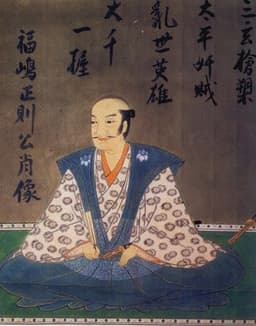
Fukushima Masanori
General · Modern
57.4Total

Juan Carlos Ongania
General · Modern
43.9Total
Basic Information
Born
1561
1914
Died
1624
1995
Era
Modern
Modern
Nationality
Japan
Argentina
Occupation
General
General
Civilization
Eastern
Western
Score Comparison
Military (10%)
60.0
22.6
Political (20%)
68.0
39.4
Influence (20%)
53.3
49.4
Legacy (20%)
45.0
38.3
Leadership (15%)
71.0
64.5
Strategy (15%)
60.0
41.0
TOTAL
57.4
43.9
Fukushima Masanori — Complete Timeline
1590 AD
Siege of OdawaraWar◆ Major
Fukushima Masanori participated in Toyotomi Hideyoshi's siege of Odawara Castle against the Hojo clan. The siege ended with Hojo surrender, consolidating Hideyoshi's control over Japan.
OdawaraSiegeHideyoshi
Impact: national
1600 AD
Battle of SekigaharaWar
Fukushima Masanori commanded a division on the Eastern Army side under Tokugawa Ieyasu at Sekigahara. His forces played a key role in the victory, leading to his appointment as daimyo of Hiroshima Domain.
SekigaharaBattleTokugawa
Impact: nationalconstructive
1619 AD
Loss of Hiroshima DomainPolitical Action◆ Major
Fukushima Masanori was stripped of his Hiroshima Domain by the Tokugawa shogunate for alleged misrule and unauthorized castle repairs. He was exiled to a smaller domain, ending his political influence.
ExileTokugawaDomain Loss
Impact: nationaltragic
Juan Carlos Ongania — Complete Timeline
1966 AD
Led the 1966 Argentine coup d'étatPolitical Action◆ Major
General Juan Carlos Ongan
Military CoupDictatorshipArgentine Revolution
Impact: nationaldestructive
1967 AD
Implemented economic stabilization planOther◆ Major
Onganía's government implemented an economic stabilization plan under Minister Adalbert Krieger Vasena. The plan included a 40% devaluation of the peso, wage freezes, and price controls, which temporarily reduced inflation but increased unemployment and social unrest.
Economic PolicyStabilizationSocial Unrest
Impact: nationaldestructive
1969 AD
Suppressed the 1969 Cordobazo uprisingOther◆ Major
Onganía's regime violently suppressed the Cordobazo, a major popular uprising in Córdoba led by students and workers protesting economic policies and police brutality. The military response resulted in dozens of deaths and hundreds of arrests, marking a turning point against the dictatorship.
RepressionCordobazoSocial Protest
Impact: nationaldestructive
1970 AD
Ousted by military juntaPolitical Action◆ Major
Onganía was removed from power by the military junta of the Argentine Revolution, led by General Alejandro Lanusse. The junta replaced him with General Roberto Marcelo Levingston, citing Onganía's failure to resolve political and economic crises.
Military CoupPower TransitionDictatorship
Impact: nationaldestructive
Expert Analysis
Origins
Fukushima Masanori was born in 1561 in Owari Province, Japan, into a samurai family serving the Oda clan. His father, Fukushima Masanobu, died when Masanori was young, and he was adopted by Toyotomi Hideyoshi, who recognized his martial potential. Masanori rose as a loyal retainer of Hideyoshi, participating in key campaigns such as the Siege of Odawara in 1590 against the Hojo clan, which consolidated Hideyoshi's rule. His early life was steeped in the chaotic Sengoku period, where military prowess determined status.
Juan Carlos Ongania was born on March 17, 1914, in Marcos Paz, Buenos Aires Province, Argentina, into a middle-class family. He entered the Argentine Army, graduating from the National Military College in 1934. Ongania's formative years were shaped by the Peronist era; he served as a military attaché in the United States and later as commander of the cavalry school. He became a key figure in the 1955 coup that ousted Juan Perón, which set the stage for his later rise.
Rise to Power
Fukushima Masanori's rise came through his service under Toyotomi Hideyoshi. He distinguished himself at the Battle of Shizugatake in 1583, where his bravery earned him the nickname "Masanori of the Seven Spears." After Hideyoshi's death in 1598, Masanori sided with Tokugawa Ieyasu against Ishida Mitsunari. At the Battle of Sekigahara in 1600, he commanded a division of 6,000 men on the Eastern Army side, playing a key role in the victory. For his loyalty, Tokugawa Ieyasu granted him the lucrative Hiroshima Domain (500,000 koku).
Juan Carlos Ongania rose through the Argentine military hierarchy. In 1966, as Commander-in-Chief of the Army, he led a coup that overthrew President Arturo Umberto Illia, citing corruption and inefficiency. Ongania established the "Argentine Revolution" dictatorship, abolishing the legislature and political parties. He assumed the title of President and implemented authoritarian rule, aiming to restructure Argentina's economy and society.
Leadership & Governance
Fukushima Masanori governed Hiroshima Domain with a focus on military readiness and maintaining order. He oversaw castle repairs and infrastructure, but his governance was criticized for being too lenient on his subordinates. In 1619, the Tokugawa shogunate stripped him of his domain for unauthorized castle repairs and alleged misrule, exiling him to Kawanakajima. His leadership scored 71.0, reflecting his effective command but weak political acumen.
Juan Carlos Ongania governed Argentina with a heavy hand, suppressing dissent and centralizing power. His economic stabilization plan under Minister Adalbert Krieger Vasena included a 40% devaluation of the peso, wage freezes, and reduced tariffs, which initially curbed inflation but hurt workers. He banned political parties and enforced censorship. Ongania's leadership score of 64.5 indicates competent but autocratic rule. His governance led to the Cordobazo uprising in 1969, which he violently suppressed, but this unrest contributed to his ouster in 1970.
Triumph & Tragedy
Fukushima Masanori's greatest triumph was his role at Sekigahara, where his timely assault helped secure Tokugawa victory. He was rewarded with the large Hiroshima Domain, making him a major daimyo. However, his tragedy was losing it all in 1619: the shogunate confiscated his domain due to alleged misrule and unauthorized castle repairs. He died in 1624 in exile, relatively forgotten. His military score of 60.0 and political score of 68.0 reflect his battlefield success but political vulnerability.
Juan Carlos Ongania's triumph was consolidating power and implementing reforms that stabilized the economy temporarily. However, his tragedy was the Cordobazo in 1969, a massive protest that exposed the regime's brutality and led to his removal in 1970. His military score is low at 22.6, reflecting his lack of combat experience, but his political score of 39.4 shows limited success in governance. His legacy is tainted by human rights abuses.
Character & Destiny
Fukushima Masanori was known for his fierce loyalty and courage, but also for his lack of political finesse. He trusted Tokugawa Ieyasu's favor, but failed to navigate the shogunate's strict rules, leading to his downfall. His character shaped his fate: a capable general undone by political naivety. Historians view him as a loyal retainer who overstepped his bounds.
Juan Carlos Ongania was authoritarian and inflexible, believing in military order over democratic processes. His decision to suppress dissent violently backfired, causing widespread unrest. His character—rigid and intolerant of opposition—led to his downfall. Historical assessments criticize his regime's repression and economic policies that favored elites.
Legacy
Fukushima Masanori's legacy is minor: he is remembered as a capable general of the Sekigahara era, but his domain loss tarnished his name. His influence score of 53.3 reflects his limited long-term impact. He is a footnote in Japanese history, overshadowed by Tokugawa Ieyasu.
Juan Carlos Ongania's legacy is more significant but negative. His dictatorship set a precedent for military rule in Argentina, and his economic policies influenced later neoliberal reforms. However, his suppression of dissent and the Cordobazo are remembered as symbols of authoritarianism. His legacy score of 38.3 and influence score of 49.4 indicate a moderate but largely negative impact.
Conclusion
Fukushima Masanori had a higher total score (57.4 vs 43.9) due to his military achievements and political role. While Ongania's impact on Argentina was broader, Masanori's actions at Sekigahara helped shape Japan's unification. In terms of historical significance, Masanori's contributions to a pivotal event outweigh Ongania's repressive regime. Therefore, Fukushima Masanori had greater impact, though both are relatively minor figures in their nations' histories.
Rankings
🥇
Fukushima MasanoriLeader
Mil: 60.0Pol: 68.0Inf: 53.3
57.4
🥈
Juan Carlos Ongania
Mil: 22.6Pol: 39.4Inf: 49.4
43.9
+13.5 behind
How This Comparison Works
Algorithm
Each figure is scored on 6 dimensions (0—100 scale) based on structured historical data: Military (10%), Political (20%), Influence (20%), Legacy (20%), Leadership (15%), Strategy (15%). The weighted total produces the final ranking.
Data Sources
Scores are computed from structured sub-indicators in the database. Scale factors adjust for era (Ancient ×0.85, Modern ×1.0) and civilization size (Eastern ×1.05, Other ×0.80) to account for differences in population and military scale.
Maximum 3 Figures
Comparisons are limited to 2—3 figures to ensure readability and statistical meaningfulness.
Error Margins
±5 points per dimension — Sub-scores are derived from historical records with inherent uncertainty. Two figures within 5 points on a dimension should be considered roughly equivalent in that area.
Total Score Accuracy
±3 points overall — The weighted combination of 6 dimensions produces a total score with approximately ±3 points of uncertainty. Differences of less than 3 points are not statistically significant— the figures are effectively tied.
Known Limitations
- Historical records are incomplete and uneven across civilizations
- Figures from oral-tradition societies may be underrepresented
- Occupation labels can misclassify multi-role figures
- Scores measure capability and impact, not moral character
- Quantitative scoring is a comparison tool, not absolute truth
Capability Radar
Military (10%) — Battles & Warfare
Battles
55
10
Win Rate
60
10
Expansion
45
5
Political (20%) — Governance & Reform
Reform
30
30
Diplomacy
50
25
Economy
40
20
Influence (20%) — Cultural & Global Reach
Cultural
30
15
Global
20
10
Legacy (20%) — Historical Impact
Historical
35
20
Longevity
25
10
Leadership (15%) — Power & Stability
Tenure
45
55
Stability
45
15
Strategy (15%) — Tactics & Innovation
Strategy
55
15
Tactics
50
15
Reform
30
20
Similar Comparisons
Comments & Discussion
No comments yet. Be the first to share your thoughts!