Loading...
Fulgencio Batista vs Sakakibara Yasumasa
Sakakibara Yasumasa leads by 4.7 pts · 2 figures compared
…

Fulgencio Batista
General · Modern
54.4Total
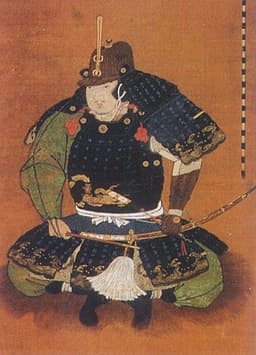
Sakakibara Yasumasa
General · Modern
59.1Total
Basic Information
Born
1901
1548
Died
1973
1606
Era
Modern
Modern
Nationality
Cuba
Japan
Occupation
General
General
Civilization
Western
Eastern
Score Comparison
Military (10%)
50.0
70.0
Political (20%)
68.0
68.0
Influence (20%)
53.3
56.4
Legacy (20%)
44.2
48.3
Leadership (15%)
71.0
70.0
Strategy (15%)
41.7
52.5
TOTAL
54.4
59.1
Fulgencio Batista — Complete Timeline
1933 AD
Sergeant's Revolt (1933)Political Action
Fulgencio Batista, then an army sergeant, led a revolt of non-commissioned officers that overthrew the provisional government of Carlos Manuel de C
CoupMilitaryPower
Impact: national
1940 AD
First Presidency (1940-1944)Political Action◆ Major
Batista was elected President of Cuba in 1940 under a new constitution. His first term was marked by social reforms, economic growth, and close ties with the United States. He left office in 1944 after his chosen successor lost the election.
PresidencyReformConstitution
Impact: nationalconstructive
1952 AD
Coup d'État (1952)Political Action
Batista seized power in a military coup, canceling the 1952 elections in which he was trailing. He established a dictatorship, suspending the constitution, banning political parties, and cracking down on dissent. This action set the stage for the Cuban Revolution.
CoupDictatorshipRevolution
Impact: nationaldestructive
Second Presidency (1952-1959)Political Action◆ Major
Batista's second presidency was a repressive dictatorship marked by corruption, economic inequality, and brutal suppression of opposition. His regime faced growing resistance, culminating in the Cuban Revolution led by Fidel Castro. Batista fled Cuba on January 1, 1959.
DictatorshipRepressionRevolution
Impact: nationaldestructive
Sakakibara Yasumasa — Complete Timeline
1570 AD
Battle of AnegawaWar
Sakakibara Yasumasa fought under Tokugawa Ieyasu at the Battle of Anegawa. He led a unit and contributed to the allied victory against the Azai and Asakura forces.
Sengoku PeriodBattleTokugawa
Impact: regionalconstructive
1584 AD
Battle of Komaki and NagakuteWar◆ Major
Sakakibara Yasumasa fought at the Battle of Komaki and Nagakute against Toyotomi Hideyoshi's forces. He commanded a unit and engaged in skirmishes, demonstrating his loyalty to Tokugawa Ieyasu.
Sengoku PeriodBattleKomaki
Impact: regional
1590 AD
Siege of OdawaraWar
Sakakibara Yasumasa participated in the Siege of Odawara under Toyotomi Hideyoshi. He commanded a contingent of Tokugawa forces during the siege, which ended with the surrender of the Hojo clan.
Sengoku PeriodSiegeOdawara
Impact: regional
1600 AD
Battle of SekigaharaWar
Sakakibara Yasumasa fought for Tokugawa Ieyasu at Sekigahara. He led his forces against the Western Army, contributing to the decisive victory that established Tokugawa rule.
Sengoku PeriodBattleSekigahara
Impact: nationalconstructive
Expert Analysis
Origins
Fulgencio Batista was born in 1901 in Banes, Cuba, to a poor rural family. He had limited formal education and worked various jobs before enlisting in the army in 1921. His humble beginnings shaped his later populist rhetoric. Sakakibara Yasumasa was born in 1548 in Mikawa Province (now Aichi Prefecture), Japan, into a samurai family serving the Matsudaira (later Tokugawa) clan. He received rigorous military training and served as a page to Tokugawa Ieyasu from a young age, establishing early loyalty.
Rise to Power
Batista rose through the ranks as a stenographer and sergeant. In 1933, he led the Sergeant's Revolt, overthrowing the provisional government and becoming the de facto leader of Cuba as army chief. He later won the presidency in 1940. Sakakibara rose by proving his martial prowess in battles like Anegawa (1570) and Komaki-Nagakute (1584). His loyalty and skill earned him a place among Tokugawa Ieyasu's Four Heavenly Kings, a key advisor and general. He fought at Sekigahara (1600) as a senior commander, solidifying his status.
Leadership & Governance
Batista's first term (1940-1944) saw social reforms and economic growth, but his second term (1952-1959) was a repressive dictatorship marked by corruption, inequality, and suppression. He scored 71.0 in leadership but 41.7 in strategy, reflecting his governance failures. Sakakibara governed his fief as a daimyo with a focus on military discipline and loyalty. His leadership score of 70.0 and strategy of 52.5 show a more balanced approach, though his role was more military than administrative.
Triumph & Tragedy
Batista's triumph was his 1940 election and early reforms; his tragedy was the brutal crackdown that fueled Castro's revolution. His military score of 50.0 reflects his reliance on force, but his political score of 68.0 shows early populist success. Sakakibara's triumph was his key role at Sekigahara, helping secure Tokugawa supremacy; his tragedy is limited historical recognition outside Japan. His military score of 70.0 reflects his battlefield competence, but his influence score of 56.4 shows localized impact.
Character & Destiny
Batista was ambitious and pragmatic, but his greed and repression led to his downfall. He fled Cuba in 1959 as Castro triumphed. Sakakibara was loyal and disciplined, traits that made him a trusted retainer. He died in 1606, having served Ieyasu until the end. Their characters—one power-hungry, the other dutiful—shaped their fates.
Legacy
Batista is remembered negatively as a corrupt dictator, his legacy scoring 44.2. His rule indirectly led to Castro's communist regime. Sakakibara is honored in Japan as a loyal general, but his legacy is regional, scoring 48.3. Neither left a global footprint.
Conclusion
Sakakibara Yasumasa had a higher total score (59.1 vs 54.4) and greater military impact, but Batista's political influence was wider. However, Batista's legacy is tainted by failure, while Sakakibara's loyalty is admired. Thus, Sakakibara emerges as the more effective figure within his context.
Rankings
🥇
Sakakibara YasumasaLeader
Mil: 70.0Pol: 68.0Inf: 56.4
59.1
🥈
Fulgencio Batista
Mil: 50.0Pol: 68.0Inf: 53.3
54.4
+4.7 behind
How This Comparison Works
Algorithm
Each figure is scored on 6 dimensions (0—100 scale) based on structured historical data: Military (10%), Political (20%), Influence (20%), Legacy (20%), Leadership (15%), Strategy (15%). The weighted total produces the final ranking.
Data Sources
Scores are computed from structured sub-indicators in the database. Scale factors adjust for era (Ancient ×0.85, Modern ×1.0) and civilization size (Eastern ×1.05, Other ×0.80) to account for differences in population and military scale.
Maximum 3 Figures
Comparisons are limited to 2—3 figures to ensure readability and statistical meaningfulness.
Error Margins
±5 points per dimension — Sub-scores are derived from historical records with inherent uncertainty. Two figures within 5 points on a dimension should be considered roughly equivalent in that area.
Total Score Accuracy
±3 points overall — The weighted combination of 6 dimensions produces a total score with approximately ±3 points of uncertainty. Differences of less than 3 points are not statistically significant— the figures are effectively tied.
Known Limitations
- Historical records are incomplete and uneven across civilizations
- Figures from oral-tradition societies may be underrepresented
- Occupation labels can misclassify multi-role figures
- Scores measure capability and impact, not moral character
- Quantitative scoring is a comparison tool, not absolute truth
Capability Radar
Military (10%) — Battles & Warfare
Battles
15
55
Win Rate
20
60
Expansion
10
50
Political (20%) — Governance & Reform
Reform
40
45
Diplomacy
45
55
Economy
50
50
Influence (20%) — Cultural & Global Reach
Cultural
20
40
Global
30
30
Legacy (20%) — Historical Impact
Historical
40
50
Longevity
25
40
Leadership (15%) — Power & Stability
Tenure
60
60
Stability
30
55
Strategy (15%) — Tactics & Innovation
Strategy
20
55
Tactics
25
60
Reform
30
40
Similar Comparisons
Comments & Discussion
No comments yet. Be the first to share your thoughts!