Loading...
Pelantaro vs Sakakibara Yasumasa
Sakakibara Yasumasa leads by 15.2 pts · 2 figures compared
…

Pelantaro
General · Modern
43.9Total
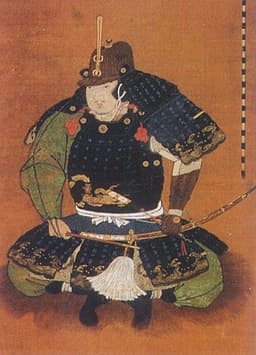
Sakakibara Yasumasa
General · Modern
59.1Total
Basic Information
Born
1560
1548
Died
1620
1606
Era
Modern
Modern
Nationality
Mapuche
Japan
Occupation
General
General
Civilization
Other
Eastern
Score Comparison
Military (10%)
40.0
70.0
Political (20%)
27.9
68.0
Influence (20%)
56.4
56.4
Legacy (20%)
45.0
48.3
Leadership (15%)
40.4
70.0
Strategy (15%)
43.3
52.5
TOTAL
43.9
59.1
Pelantaro — Complete Timeline
1598 AD
Killed Spanish Governor Martín García Óñez de LoyolaWar
Pelantaro led a Mapuche ambush at the Battle of Curalaba, killing Spanish governor Mart
Arauco WarBattleUprising
Impact: regional
1599 AD
Led the Destruction of Seven Spanish CitiesWar◆ Major
Following the Battle of Curalaba, Pelantaro coordinated Mapuche forces to attack and destroy seven Spanish-founded cities, including Santa Cruz de O
Arauco WarCampaignDestruction
Impact: regionaldestructive
Sakakibara Yasumasa — Complete Timeline
1570 AD
Battle of AnegawaWar
Sakakibara Yasumasa fought under Tokugawa Ieyasu at the Battle of Anegawa. He led a unit and contributed to the allied victory against the Azai and Asakura forces.
Sengoku PeriodBattleTokugawa
Impact: regionalconstructive
1584 AD
Battle of Komaki and NagakuteWar◆ Major
Sakakibara Yasumasa fought at the Battle of Komaki and Nagakute against Toyotomi Hideyoshi's forces. He commanded a unit and engaged in skirmishes, demonstrating his loyalty to Tokugawa Ieyasu.
Sengoku PeriodBattleKomaki
Impact: regional
1590 AD
Siege of OdawaraWar
Sakakibara Yasumasa participated in the Siege of Odawara under Toyotomi Hideyoshi. He commanded a contingent of Tokugawa forces during the siege, which ended with the surrender of the Hojo clan.
Sengoku PeriodSiegeOdawara
Impact: regional
1600 AD
Battle of SekigaharaWar
Sakakibara Yasumasa fought for Tokugawa Ieyasu at Sekigahara. He led his forces against the Western Army, contributing to the decisive victory that established Tokugawa rule.
Sengoku PeriodBattleSekigahara
Impact: nationalconstructive
Expert Analysis
Origins
Pelantaro was a Mapuche toqui (war leader) born around 1540 in the Araucanía region of what is now Chile. The Mapuche people had a strong warrior tradition, resisting Inca expansion and later Spanish colonization. Little is known of his early life, but he rose through the ranks due to his skill in guerrilla warfare. Sakakibara Yasumasa was born in 1548 in Mikawa Province (modern Aichi Prefecture), Japan, into a samurai family serving the Matsudaira clan (later Tokugawa). He was a childhood companion of Tokugawa Ieyasu, which shaped his lifelong loyalty. Both emerged from societies where warfare was central, but Pelantaro's was a decentralized tribal confederation, while Sakakibara operated within a feudal hierarchy.
Rise to Power
Pelantaro's rise came through the Battle of Curalaba in 1598, where he led an ambush that killed Spanish Governor Martín García Óñez de Loyola and nearly all his men. This victory sparked a general Mapuche uprising, and Pelantaro coordinated the destruction of seven Spanish-founded cities, including Santa Cruz de Oñez and Valdivia. His power was based on military success and consensus among Mapuche leaders. Sakakibara Yasumasa rose as a trusted general under Tokugawa Ieyasu. He fought at the Battle of Anegawa (1570) against the Azai and Asakura clans, then at Komaki and Nagakute (1584) against Toyotomi Hideyoshi. His key turning point was the Battle of Sekigahara (1600), where he led Tokugawa forces to victory, helping to establish the Tokugawa shogunate. Sakakibara scored 70.0 in military and 68.0 in political, while Pelantaro scored 40.0 and 27.9, reflecting Sakakibara's more structured rise.
Leadership & Governance
Pelantaro's leadership was based on persuasion and consensus among Mapuche chiefs. He had no formal state apparatus; his governance relied on temporary alliances. After the Destruction of Seven Cities, he participated in the Treaty of Quillín (1641), which recognized Mapuche independence south of the Bio-Bío River, a rare concession from the Spanish. However, his leadership was limited to wartime. Sakakibara Yasumasa, as a daimyo of Takasaki Domain, governed his fief with the administrative systems of the Tokugawa shogunate. He implemented tax collection and local justice, scoring 68.0 in political leadership. His governance was part of a stable, centralized regime, contrasting with Pelantaro's ad hoc authority.
Triumph & Tragedy
Pelantaro's greatest triumph was the Battle of Curalaba and the subsequent Destruction of Seven Cities, which reversed Spanish expansion for decades. His tragedy was that despite military success, the Mapuche could not expel the Spanish entirely. The Treaty of Quillín was a compromise, and after his death, Spanish pressure resumed. Sakakibara's triumph was his role in Sekigahara, which cemented Tokugawa rule. He was enfeoffed with Takasaki Domain (50,000 koku). His tragedy was that he never achieved the highest ranks like some of the other Four Heavenly Kings; his legacy is overshadowed by Ii Naomasa and Honda Tadakatsu. Sakakibara scored 70.0 in military and 52.5 in strategy, while Pelantaro scored 43.3 in strategy, highlighting Sakakibara's tactical superiority.
Character & Destiny
Pelantaro was pragmatic and adaptable, using guerrilla tactics effectively. His destiny was tied to Mapuche resistance; he could not overcome the Spanish technological and demographic advantages. Sakakibara was known for loyalty and steady competence, earning Ieyasu's trust. His destiny was to be a reliable supporter in a successful regime. Historical assessments note Sakakibara's discipline, while Pelantaro is remembered for his audacity. Both were shaped by their environments: Pelantaro by a society under existential threat, Sakakibara by a consolidating feudal order.
Legacy
Pelantaro's legacy is as a symbol of Mapuche resistance. The destruction of the seven cities delayed Spanish colonization and established a frontier that lasted over 200 years. However, his impact on global history is limited. Sakakibara Yasumasa's legacy is as one of the Tokugawa Four Heavenly Kings, a model of samurai loyalty. His contributions to the Tokugawa shogunate helped establish 250 years of peace. Sakakibara scores 48.3 in legacy versus Pelantaro's 45.0, a narrow margin reflecting their local significance.
Conclusion
Sakakibara Yasumasa had greater impact due to his role in founding a stable regime that shaped Japan for centuries. His overall score of 59.1 compared to Pelantaro's 43.9 reflects higher military, political, and leadership scores. While Pelantaro's resistance was heroic, it did not fundamentally alter the trajectory of Spanish colonization in the Americas. Sakakibara's contributions to the Tokugawa shogunate had lasting institutional effects. Therefore, Sakakibara Yasumasa is the more significant historical figure.
Rankings
🥇
Sakakibara YasumasaLeader
Mil: 70.0Pol: 68.0Inf: 56.4
59.1
🥈
Pelantaro
Mil: 40.0Pol: 27.9Inf: 56.4
43.9
+15.2 behind
How This Comparison Works
Algorithm
Each figure is scored on 6 dimensions (0—100 scale) based on structured historical data: Military (10%), Political (20%), Influence (20%), Legacy (20%), Leadership (15%), Strategy (15%). The weighted total produces the final ranking.
Data Sources
Scores are computed from structured sub-indicators in the database. Scale factors adjust for era (Ancient ×0.85, Modern ×1.0) and civilization size (Eastern ×1.05, Other ×0.80) to account for differences in population and military scale.
Maximum 3 Figures
Comparisons are limited to 2—3 figures to ensure readability and statistical meaningfulness.
Error Margins
±5 points per dimension — Sub-scores are derived from historical records with inherent uncertainty. Two figures within 5 points on a dimension should be considered roughly equivalent in that area.
Total Score Accuracy
±3 points overall — The weighted combination of 6 dimensions produces a total score with approximately ±3 points of uncertainty. Differences of less than 3 points are not statistically significant— the figures are effectively tied.
Known Limitations
- Historical records are incomplete and uneven across civilizations
- Figures from oral-tradition societies may be underrepresented
- Occupation labels can misclassify multi-role figures
- Scores measure capability and impact, not moral character
- Quantitative scoring is a comparison tool, not absolute truth
Capability Radar
Military (10%) — Battles & Warfare
Battles
35
55
Win Rate
40
60
Expansion
25
50
Political (20%) — Governance & Reform
Reform
10
45
Diplomacy
15
55
Economy
10
50
Influence (20%) — Cultural & Global Reach
Cultural
30
40
Global
20
30
Legacy (20%) — Historical Impact
Historical
35
50
Longevity
25
40
Leadership (15%) — Power & Stability
Tenure
20
60
Stability
15
55
Strategy (15%) — Tactics & Innovation
Strategy
40
55
Tactics
45
60
Reform
20
40
Similar Comparisons
Comments & Discussion
No comments yet. Be the first to share your thoughts!