Loading...
Fukangan vs Sakakibara Yasumasa
Sakakibara Yasumasa leads by 4.0 pts · 2 figures compared
…

Fukangan
General · Modern
55.1Total
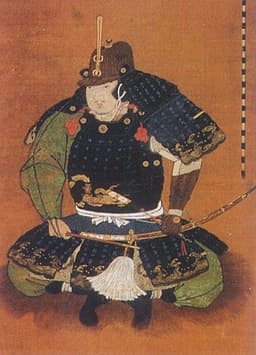
Sakakibara Yasumasa
General · Modern
59.1Total
Basic Information
Born
1753
1548
Died
1796
1606
Era
Modern
Modern
Nationality
China
Japan
Occupation
General
General
Civilization
Eastern
Eastern
Score Comparison
Military (10%)
63.3
70.0
Political (20%)
48.0
68.0
Influence (20%)
54.1
56.4
Legacy (20%)
46.7
48.3
Leadership (15%)
74.0
70.0
Strategy (15%)
52.5
52.5
TOTAL
55.1
59.1
Fukangan — Complete Timeline
1792 AD
Command of the Nepalese CampaignWar◆ Major
Fukangan led a Qing army into Nepal to repel a Gurkha invasion of Tibet. The campaign successfully drove the Gurkhas back and forced them to accept Qing suzerainty, securing the Tibetan border.
Military CampaignNepalTibet
Impact: regional
Siege of NuwakotWar
Fukangan's forces besieged and captured the Gurkha fortress at Nuwakot, a key strategic position in Nepal. The victory opened the way to the Nepalese capital and forced the Gurkhas to negotiate.
SiegeNepalGurkha
Impact: regional
Treaty of BetrawatiPolitical Action◆ Major
Fukangan negotiated the Treaty of Betrawati with the Gurkha kingdom, ending the war. The treaty established Nepal as a tributary state of the Qing Empire and required the Gurkhas to pay tribute every five years.
TreatyNepalQing Tribute
Impact: regionalconstructive
Sakakibara Yasumasa — Complete Timeline
1570 AD
Battle of AnegawaWar
Sakakibara Yasumasa fought under Tokugawa Ieyasu at the Battle of Anegawa. He led a unit and contributed to the allied victory against the Azai and Asakura forces.
Sengoku PeriodBattleTokugawa
Impact: regionalconstructive
1584 AD
Battle of Komaki and NagakuteWar◆ Major
Sakakibara Yasumasa fought at the Battle of Komaki and Nagakute against Toyotomi Hideyoshi's forces. He commanded a unit and engaged in skirmishes, demonstrating his loyalty to Tokugawa Ieyasu.
Sengoku PeriodBattleKomaki
Impact: regional
1590 AD
Siege of OdawaraWar
Sakakibara Yasumasa participated in the Siege of Odawara under Toyotomi Hideyoshi. He commanded a contingent of Tokugawa forces during the siege, which ended with the surrender of the Hojo clan.
Sengoku PeriodSiegeOdawara
Impact: regional
1600 AD
Battle of SekigaharaWar
Sakakibara Yasumasa fought for Tokugawa Ieyasu at Sekigahara. He led his forces against the Western Army, contributing to the decisive victory that established Tokugawa rule.
Sengoku PeriodBattleSekigahara
Impact: nationalconstructive
Expert Analysis
Origins
Fukangan (born 1766) was a Qing imperial prince, the son of the Qianlong Emperor. He received a traditional military education and was appointed to high military posts early in life. His background was one of privilege and direct connection to the imperial court, which facilitated his rapid rise.
Sakakibara Yasumasa (born 1548) was born into a samurai family in Mikawa Province. He served Tokugawa Ieyasu from a young age, participating in many of Ieyasu's early campaigns. His rise was based on merit and loyalty, not birthright.
Rise to Power
Fukangan's rise was swift due to his imperial lineage. By 1791, he was appointed commander of the Qing forces in Tibet, tasked with repelling the Gurkha invasion. His key turning point was the successful conclusion of the Nepalese Campaign in 1792, which established him as a capable military leader.
Sakakibara Yasumasa rose through the ranks of the Tokugawa clan. His participation in the Battle of Anegawa (1570) and the Battle of Komaki and Nagakute (1584) demonstrated his loyalty and skill. His decisive moment came at the Battle of Sekigahara in 1600, where he fought for Tokugawa Ieyasu, contributing to the victory that established the Tokugawa shogunate.
Leadership & Governance
Fukangan's leadership style was authoritarian, typical of Qing imperial commanders. He enforced discipline and used overwhelming force to achieve objectives. In the Nepalese Campaign, he coordinated a multi-ethnic army of Manchu, Han, and Mongol troops. He also engaged in diplomacy, negotiating the Treaty of Betrawati, which made Nepal a tributary state. His political score of 48.0 reflects limited governance experience beyond military campaigns.
Sakakibara Yasumasa was known for his pragmatic leadership. He was one of Tokugawa's Four Heavenly Kings, a group of trusted generals. His approach combined military prowess with administrative duties after the establishment of the shogunate. He governed the Kōfu Domain and implemented policies that stabilized the region. His political score of 68.0 indicates greater involvement in governance.
Triumph & Tragedy
Fukangan's greatest success was the Nepalese Campaign (1791-1792), where he scored a military score of 63.3. He drove the Gurkhas out of Tibet and secured a tributary relationship. However, his failure was the limited long-term impact of this victory; Nepal's tributary status was short-lived, and the campaign did not lead to lasting Qing influence in the region. His legacy score of 46.7 reflects this.
Sakakibara Yasumasa's greatest triumph was his role in the Battle of Sekigahara, which cemented Tokugawa rule. His military score of 70.0 reflects consistent performance. His tragedy was that he died in 1606, before fully enjoying the rewards of the Tokugawa peace. His legacy score of 48.3 is modest, as he is less known than other Tokugawa generals.
Character & Destiny
Fukangan was confident and decisive, traits that served him well in the Nepalese Campaign. However, his imperial status may have limited his political acumen; he was not a reformer. His character shaped his destiny: he achieved military success but failed to build lasting institutions.
Sakakibara Yasumasa was loyal and reliable, which earned him Tokugawa's trust. He was not a flamboyant figure but a steady commander. His character led to a stable career, but he lacked the strategic brilliance of others like Honda Tadakatsu. His total score of 59.1 reflects balanced but not exceptional abilities.
Legacy
Fukangan's legacy is tied to the Qing dynasty's expansion into Tibet. The Treaty of Betrawati set a precedent for Qing-Nepal relations, but the impact was limited. He is remembered in Chinese history as a capable general, but his influence score of 54.1 is moderate.
Sakakibara Yasumasa's legacy is as one of Tokugawa's Four Heavenly Kings, a symbol of loyal service. He helped establish the Tokugawa shogunate, which lasted over 250 years. His influence score of 56.4 is slightly higher than Fukangan's, reflecting his contribution to a stable regime.
Conclusion
Sakakibara Yasumasa had a greater impact than Fukangan. With a total score of 59.1 compared to Fukangan's 55.1, Sakakibara's contributions to the Tokugawa shogunate's founding and governance had longer-lasting effects. Fukangan's achievements, while impressive in the short term, did not create enduring change. Sakakibara's role in a major historical transformation outweighs Fukangan's single campaign.
Rankings
🥇
Sakakibara YasumasaLeader
Mil: 70.0Pol: 68.0Inf: 56.4
59.1
🥈
Fukangan
Mil: 63.3Pol: 48.0Inf: 54.1
55.1
+4.0 behind
How This Comparison Works
Algorithm
Each figure is scored on 6 dimensions (0—100 scale) based on structured historical data: Military (10%), Political (20%), Influence (20%), Legacy (20%), Leadership (15%), Strategy (15%). The weighted total produces the final ranking.
Data Sources
Scores are computed from structured sub-indicators in the database. Scale factors adjust for era (Ancient ×0.85, Modern ×1.0) and civilization size (Eastern ×1.05, Other ×0.80) to account for differences in population and military scale.
Maximum 3 Figures
Comparisons are limited to 2—3 figures to ensure readability and statistical meaningfulness.
Error Margins
±5 points per dimension — Sub-scores are derived from historical records with inherent uncertainty. Two figures within 5 points on a dimension should be considered roughly equivalent in that area.
Total Score Accuracy
±3 points overall — The weighted combination of 6 dimensions produces a total score with approximately ±3 points of uncertainty. Differences of less than 3 points are not statistically significant— the figures are effectively tied.
Known Limitations
- Historical records are incomplete and uneven across civilizations
- Figures from oral-tradition societies may be underrepresented
- Occupation labels can misclassify multi-role figures
- Scores measure capability and impact, not moral character
- Quantitative scoring is a comparison tool, not absolute truth
Capability Radar
Military (10%) — Battles & Warfare
Battles
65
55
Win Rate
70
60
Expansion
55
50
Political (20%) — Governance & Reform
Reform
20
45
Diplomacy
55
55
Economy
30
50
Influence (20%) — Cultural & Global Reach
Cultural
30
40
Global
25
30
Legacy (20%) — Historical Impact
Historical
40
50
Longevity
30
40
Leadership (15%) — Power & Stability
Tenure
50
60
Stability
40
55
Strategy (15%) — Tactics & Innovation
Strategy
65
55
Tactics
60
60
Reform
30
40
Similar Comparisons
Comments & Discussion
No comments yet. Be the first to share your thoughts!