Loading...
Fulk of Jerusalem vs Ibrahim Lodi
Fulk of Jerusalem leads by 10.1 pts · 2 figures compared
…
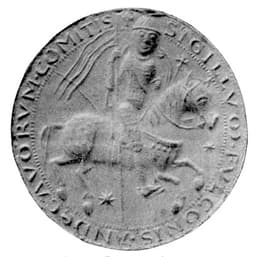
Fulk of Jerusalem
Emperor · Medieval
50.7Total
Ibrahim Lodi
Emperor · Medieval
40.6Total
Basic Information
Born
1092
1480
Died
1143
1526
Era
Medieval
Medieval
Nationality
Jerusalem
India
Occupation
Emperor
Emperor
Civilization
Western
Indian
Score Comparison
Military (10%)
40.0
50.0
Political (20%)
48.0
29.3
Influence (20%)
51.8
47.1
Legacy (20%)
43.3
36.7
Leadership (15%)
65.0
48.4
Strategy (15%)
60.0
30.3
TOTAL
50.7
40.6
Fulk of Jerusalem — Complete Timeline
1109 AD
Became Count of AnjouPolitical Action◆ Major
Fulk inherited the County of Anjou from his father Fulk IV. He became a powerful French noble, known for his military skill and political maneuvering.
InheritanceAnjou
Impact: regional
1129 AD
Married Melisende of JerusalemPolitical Action◆ Major
Fulk married Melisende, daughter of King Baldwin II of Jerusalem. The marriage made him heir to the Kingdom of Jerusalem and strengthened ties between the Crusader states and Europe.
MarriageCrusader States
Impact: globalconstructive
1131 AD
Crowned King of JerusalemPolitical Action◆ Major
Fulk was crowned King of Jerusalem alongside his wife Melisende. He became the ruler of the Crusader kingdom, facing threats from Muslim states to the north and east.
CoronationCrusader States
Impact: globalconstructive
1137 AD
Defended the Kingdom of JerusalemWar◆ Major
Fulk led campaigns against the Muslim ruler Zengi of Mosul. He successfully defended the kingdom's borders, but failed to capture key cities like Damascus.
DefenseCrusader States
Impact: regionalconstructive
1143 AD
Died in a hunting accidentOther◆ Major
Fulk died after falling from his horse during a hunting trip near Acre. His death left the kingdom in the hands of his wife Melisende and their son Baldwin III.
DeathAccident
Impact: regionaltragic
Ibrahim Lodi — Complete Timeline
1520 AD
Alienation of the Afghan NobilityPolitical Action◆ Major
Ibrahim Lodi alienated the Afghan nobles by replacing them with low-born officials and treating them harshly. This led to widespread disaffection and rebellions, including the defection of Daulat Khan Lodi to Babur. It fatally weakened his rule.
NobilityPolitical MistakeRebellion
Impact: nationaldestructive
1524 AD
Suppression of the Rebellion of Rana SangaWar
Ibrahim Lodi led a campaign against the Rajput ruler Rana Sanga of Mewar, who had invaded Lodi territory. He forced Sanga to retreat but failed to decisively defeat him. This conflict diverted resources from the growing Mughal threat.
Rajput WarMewarMilitary Campaign
Impact: regional
1526 AD
Battle of PanipatWar
Ibrahim Lodi's army was defeated by Babur's Mughal forces at the First Battle of Panipat. Babur used gunpowder weapons and cavalry tactics to overwhelm the larger Lodi army. Ibrahim Lodi was killed in battle, ending the Lodi dynasty.
BattleMughal ConquestEnd of Dynasty
Impact: globaltragic
Expert Analysis
Origins
Fulk of Jerusalem was born in 1089 as the son of Fulk IV, Count of Anjou. He inherited the County of Anjou in 1109, becoming a powerful French noble. His early life was marked by conflicts with neighboring lords and participation in the crusading movement. In contrast, Ibrahim Lodi was born in the late 15th century as the son of Sikandar Lodi, the second ruler of the Lodi dynasty. He ascended the throne in 1517, inheriting a sultanate that controlled much of northern India. While Fulk was shaped by the feudal politics of France and the Crusades, Ibrahim was raised in the court of Delhi, surrounded by Afghan nobles and the complexities of Indian warfare.
Rise to Power
Fulk's rise to prominence came through his marriage to Melisende, daughter of King Baldwin II of Jerusalem, in 1129. This marriage made him heir to the kingdom, and he was crowned king in 1131. He consolidated power by suppressing rebellions among the nobility and strengthening the kingdom's defenses. Ibrahim Lodi became sultan in 1517 after his father's death. However, his rise was marred by immediate challenges: he faced rebellions from his brothers and alienated the Afghan nobility by promoting low-born officials. Unlike Fulk, who secured his position through strategic marriage and military campaigns, Ibrahim's rule was plagued by internal dissent from the start.
Leadership & Governance
Fulk governed as a capable administrator and military leader. He focused on fortifying the Crusader states and led campaigns against Zengi, the Muslim ruler of Mosul. His leadership style was pragmatic; he delegated authority to his wife Melisende and their son Baldwin III, ensuring continuity. Ibrahim Lodi, in contrast, governed autocratically and alienated his nobles. He replaced experienced Afghan commanders with loyalists, leading to a breakdown of trust. His military strategy was outdated; at the Battle of Panipat in 1526, he relied on traditional elephant charges while Babur used gunpowder weapons and flanking tactics. Fulk scored 65.0 in leadership and 60.0 in strategy, while Ibrahim scored 48.4 and 30.3 respectively.
Triumph & Tragedy
Fulk's greatest success was defending the Kingdom of Jerusalem against Zengi's forces, securing its borders for a time. However, his failure to capture Damascus in 1139 left the kingdom vulnerable. He also faced a rebellion from his wife Melisende, who challenged his authority. His tragic death in 1143 from a hunting accident destabilized the kingdom. Ibrahim's only notable triumph was repelling an invasion by Rana Sanga of Mewar in 1519, forcing the Rajput ruler to retreat. His tragedy was the Battle of Panipat, where his army of 30,000 was defeated by Babur's 12,000 troops. Ibrahim died on the battlefield, ending the Lodi dynasty. Fulk's military score of 40.0 reflects his defensive successes, while Ibrahim's 50.0 is inflated by his numerical superiority, not tactical acumen.
Character & Destiny
Fulk was known for his energy and piety, but also for his ambition and temper. His marriage to Melisende was initially strained due to his attempts to exclude her from power. His character shaped his fate: his military focus preserved the kingdom but his domestic conflicts weakened it. Ibrahim was arrogant and suspicious, refusing to share power with nobles. His inability to compromise led to widespread desertions before Panipat. Historians note that Ibrahim's character directly caused his downfall, as he ignored advice and alienated allies. Fulk's total score of 50.7 reflects a balanced but unremarkable reign, while Ibrahim's 40.6 highlights his political and strategic failures.
Legacy
Fulk's legacy is mixed. He strengthened the Kingdom of Jerusalem temporarily but failed to secure long-term stability. His descendants continued the Crusader states until 1291. He is remembered as a capable but not exceptional Crusader king. Ibrahim Lodi's legacy is largely negative; he is seen as the incompetent ruler who lost the Delhi Sultanate to the Mughals. His defeat at Panipat marked the beginning of Mughal rule in India. While Fulk's actions had limited impact beyond the Crusades, Ibrahim's defeat changed Indian history. However, Fulk's overall influence score of 51.8 versus Ibrahim's 47.1 suggests a slightly greater lasting impact.
Conclusion
Fulk of Jerusalem had a greater overall impact than Ibrahim Lodi. While both ruled for short periods and faced internal strife, Fulk's defensive campaigns preserved the Crusader states for another generation, whereas Ibrahim's incompetence led to the swift collapse of his dynasty. Fulk's higher scores in leadership (65.0 vs 48.4), strategy (60.0 vs 30.3), and political acumen (48.0 vs 29.3) demonstrate his superiority as a ruler. Ibrahim's failure at Panipat was catastrophic, but his reign was too brief and ineffective to match Fulk's contributions. Therefore, Fulk of Jerusalem emerges as the more significant historical figure.
Rankings
🥇
Fulk of JerusalemLeader
Mil: 40.0Pol: 48.0Inf: 51.8
50.7
🥈
Ibrahim Lodi
Mil: 50.0Pol: 29.3Inf: 47.1
40.6
+10.1 behind
How This Comparison Works
Algorithm
Each figure is scored on 6 dimensions (0—100 scale) based on structured historical data: Military (10%), Political (20%), Influence (20%), Legacy (20%), Leadership (15%), Strategy (15%). The weighted total produces the final ranking.
Data Sources
Scores are computed from structured sub-indicators in the database. Scale factors adjust for era (Ancient ×0.85, Modern ×1.0) and civilization size (Eastern ×1.05, Other ×0.80) to account for differences in population and military scale.
Maximum 3 Figures
Comparisons are limited to 2—3 figures to ensure readability and statistical meaningfulness.
Error Margins
±5 points per dimension — Sub-scores are derived from historical records with inherent uncertainty. Two figures within 5 points on a dimension should be considered roughly equivalent in that area.
Total Score Accuracy
±3 points overall — The weighted combination of 6 dimensions produces a total score with approximately ±3 points of uncertainty. Differences of less than 3 points are not statistically significant— the figures are effectively tied.
Known Limitations
- Historical records are incomplete and uneven across civilizations
- Figures from oral-tradition societies may be underrepresented
- Occupation labels can misclassify multi-role figures
- Scores measure capability and impact, not moral character
- Quantitative scoring is a comparison tool, not absolute truth
Capability Radar
Military (10%) — Battles & Warfare
Battles
45
20
Win Rate
50
10
Expansion
40
15
Political (20%) — Governance & Reform
Reform
35
15
Diplomacy
60
10
Economy
40
15
Influence (20%) — Cultural & Global Reach
Cultural
30
10
Global
20
10
Legacy (20%) — Historical Impact
Historical
35
20
Longevity
25
10
Leadership (15%) — Power & Stability
Tenure
55
30
Stability
45
10
Strategy (15%) — Tactics & Innovation
Strategy
45
15
Tactics
40
15
Reform
30
10
Similar Comparisons
Comments & Discussion
No comments yet. Be the first to share your thoughts!