Loading...
Gadarat vs Julius Caesar
Julius Caesar leads by 44.6 pts · 2 figures compared
…
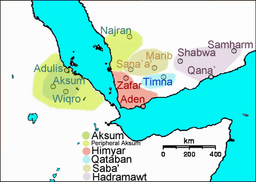
Gadarat
Emperor · Ancient
38.2Total

Julius Caesar
General · Ancient
82.8Total
Basic Information
Born
200
-100
Died
230
-44
Era
Ancient
Ancient
Nationality
Aksum
Roman Republic
Occupation
Emperor
General
Civilization
Other
Western
Score Comparison
Military (10%)
50.0
88.0
Political (20%)
27.9
78.0
Influence (20%)
44.8
85.0
Legacy (20%)
35.8
82.0
Leadership (15%)
34.6
80.0
Strategy (15%)
36.8
85.0
TOTAL
38.2
82.8
Gadarat — Complete Timeline
200 AD
First Aksumite InscriptionsCultural◆ Major
Gadarat commissioned the earliest known inscriptions in the Ge'ez script, marking the beginning of recorded history in the Kingdom of Aksum. These inscriptions, found at sites like Adulis, document his reign and the early state's expansion.
Aksumite KingdomInscriptionsEarly History
Impact: regionalconstructive
Julius Caesar — Complete Timeline
58 BC
Gallic WarsWar◆ Major
Caesar, as proconsul of Gaul, launched a series of campaigns that conquered all of Gaul (modern France, Belgium, and parts of Switzerland). He fought numerous battles, including against the Helvetii, the Belgae, and the Gallic chieftain Vercingetorix. The wars brought immense wealth and a loyal army to Caesar.
Gallic WarsConquestRoman Expansion
Impact: regional
49 BC
Crossing the RubiconPolitical Action◆ Major
Caesar led Legio XIII across the Rubicon River into Italy, defying the Roman Senate's order to disband his army. This act triggered a civil war against Pompey and the Optimates, ultimately leading to Caesar's dictatorship and the end of the Roman Republic.
Roman Civil WarEnd of RepublicPower Struggle
Impact: global
48 BC
Battle of PharsalusWar◆ Major
Caesar's outnumbered army defeated the larger forces of Pompey the Great at Pharsalus in Greece. Caesar's tactical use of a reserve line to counter Pompey's cavalry charge proved decisive. Pompey fled to Egypt, where he was assassinated, leaving Caesar as the undisputed master of the Roman world.
Roman Civil WarBattleDecisive Victory
Impact: regional
44 BC
Appointment as Dictator for LifePolitical Action◆ Major
The Roman Senate appointed Caesar dictator perpetuo (dictator for life), granting him unprecedented personal power. This move concentrated military, legislative, and judicial authority in one person, effectively ending the Roman Republic's traditional system of checks and balances and alarming many senators.
DictatorshipEnd of RepublicPower Consolidation
Impact: regionaldestructive
Assassination on the Ides of MarchPolitical Action◆ Major
A group of Roman senators, led by Marcus Junius Brutus and Gaius Cassius Longinus, stabbed Caesar to death at a meeting of the Senate in the Theatre of Pompey. The assassination was intended to restore the Republic, but instead triggered another civil war that led to the rise of the Roman Empire.
AssassinationRoman PoliticsEnd of Republic
Impact: globaldestructive
Expert Analysis
gadarat-vs-julius-caesar
# The Conqueror and the Carver: Two Paths to Immortality
On a spring morning in 44 BCE, Julius Caesar fell beneath twenty-three dagger blows in the Senate chamber of Rome, his blood pooling on the marble floor where Pompey’s statue once stood. Half a world away and two centuries later, King Gadarat of Aksum ordered his scribes to chisel the first royal inscriptions into stone, carving his name into the horn of Africa. One man died in a conspiracy of senators; the other launched a written tradition that would outlast empires. Both sought to shape history—but their tools, their worlds, and their fates could not have been more different.
Origins
Caesar was born into the chaos of the late Roman Republic, a world of civil wars, senatorial feuds, and expanding frontiers. His family, the Julii, claimed descent from the goddess Venus, but they were neither wealthy nor dominant. From childhood, Caesar breathed the air of ambition: his uncle Marius had been a populist general, his aunt Julia married Marius himself. The young patrician learned early that in Rome, glory and survival were won through military command, political alliances, and ruthless calculation.
Gadarat emerged from a different crucible. The Kingdom of Aksum, located in the highlands of modern Ethiopia and Eritrea, was a rising power at the crossroads of Africa, Arabia, and the Indian Ocean. Unlike Rome, Aksum had no written histories before Gadarat. Its people spoke Ge’ez, a Semitic language, but recorded their deeds through oral tradition and imported South Arabian script. Gadarat’s origins remain shadowy—no Plutarch chronicled his birth, no Cicero recorded his speeches. He was a king in a land where kingship itself was still being defined.
Rise to Power
Caesar’s ascent was a masterclass in political theater. He borrowed fortunes to fund games and festivals, winning the love of the Roman mob. He forged the First Triumvirate with Pompey and Crassus, a backroom deal that gave him command of Gaul. Then came the conquests: eight years of brutal campaigning that subdued hundreds of tribes, crossed the Rhine, and landed in Britain. By 49 BCE, Caesar controlled an army loyal to him alone, not to the Republic. When the Senate ordered him to disband, he chose war. Crossing the Rubicon River—“the die is cast”—he marched on Rome and became master of the state.
Gadarat’s path lacked such drama. He inherited a throne, not seized it. Aksum was already a trading kingdom, exporting ivory, frankincense, and slaves to Rome and India. But Gadarat understood that power needed permanence. In 200 CE, he commissioned the first royal inscriptions in Ge’ez, carved in South Arabian script on stone stelae. These texts, found in the ancient capital of Yeha, proclaimed his titles and his deeds. They were not propaganda for the masses—few could read them—but declarations to the gods and to history. With this single act, Gadarat transformed Aksum from a nameless kingdom into a civilization with a voice.
Leadership & Governance
Caesar governed as a revolutionary reformer. As dictator, he overhauled the calendar, extended citizenship to provincials, launched public works, and centralized tax collection. His military genius was unmatched: at Alesia, he built double siege lines to trap Vercingetorix’s army and a Gallic relief force simultaneously. Yet his political wisdom faltered. He pardoned his enemies, including Brutus and Cassius, believing generosity would win loyalty. It did not. He accepted a lifetime dictatorship and divine honors, eroding the republican traditions that had restrained autocrats for centuries.
Gadarat ruled in a different key. Aksumite kingship was sacred and absolute, but its power came from trade, not conquest. Gadarat’s inscriptions mention no great battles, no subjugated provinces. Instead, they record his building projects, his offerings to the gods, and his role as a mediator between heaven and earth. He was a consolidator, not a conqueror. The scanty evidence suggests he expanded Aksum’s influence into South Arabia, but his strategy was commercial, not military. Where Caesar demanded submission, Gadarat sought partnership.
Triumph & Tragedy
Caesar’s greatest triumph was Gaul—a conquest that brought Rome vast wealth, a new province, and a general too powerful to control. His most devastating failure was his own survival. By rejecting the traditional limits of republican office, he made himself a target. The Ides of March was not a tragedy of fate but of miscalculation: Caesar believed his clemency would disarm his enemies. Instead, it emboldened them. His last words, according to tradition, were to Brutus: “You too, my child?”
Gadarat’s triumph was quieter but more enduring. By inscribing his name in stone, he gave Aksum a historical identity. His tragedy is that we know so little of him. The inscriptions survive, but they are fragmentary—a few lines in a script now dead. No historian recorded his death, no poet sang his deeds. He vanished into the very silence he tried to break.
Character & Destiny
Caesar was restless, brilliant, and reckless. He gambled on his own luck—sleeping with enemy wives, crossing rivers, pardoning assassins. His personality drove him to dominate, but also to ignore the limits of power. “I have lived long enough,” he once said, “both in years and in accomplishments.” Yet he died at fifty-five, still hungry for more.
Gadarat was a builder, not a gambler. His character mirrored his civilization: patient, adaptive, and oriented toward permanence. He did not seek to conquer the world; he sought to record his place in it. His destiny was to be a beginning, not an end—the first king to leave a mark, the founder of a tradition that would culminate in the great stelae of Aksum and the later glory of the Solomonic dynasty.
Legacy
Caesar’s legacy is the Roman Empire itself. His adopted heir Octavian became Augustus, the first emperor. His name became a title: Kaiser, Tsar. His writings—the *Commentaries on the Gallic War*—are still read in classrooms. He is the archetype of the dictator, the conqueror, the man who changed the world by force of will.
Gadarat’s legacy is more subtle but no less real. His inscriptions inaugurated a written tradition that would produce the Ge’ez Bible, the Kebra Nagast, and the unique Christian civilization of Ethiopia. He is remembered not as a conqueror but as a founder—the king who gave his people a voice. Today, the stelae of Aksum stand as UNESCO World Heritage sites, silent witnesses to a kingdom that outlasted Rome itself.
Conclusion
Caesar and Gadarat never met, never knew of each other’s existence. One ruled the Mediterranean, the other a highland kingdom. One died by the sword, the other faded into the dust of time. Yet both faced the same question: How does a ruler make his mark on eternity? Caesar answered with conquest, reform, and assassination. Gadarat answered with stone, script, and patience. In the end, Caesar’s blood washed away, but his name became a title. Gadarat’s name remains obscure, but the script he carved still speaks. Perhaps the true measure of greatness is not how loudly one shouts, but how long the echo lasts.
Rankings
🥇
Julius CaesarLeader
Mil: 88.0Pol: 78.0Inf: 85.0
82.8
🥈
Gadarat
Mil: 50.0Pol: 27.9Inf: 44.8
38.2
+44.6 behind
How This Comparison Works
Algorithm
Each figure is scored on 6 dimensions (0—100 scale) based on structured historical data: Military (10%), Political (20%), Influence (20%), Legacy (20%), Leadership (15%), Strategy (15%). The weighted total produces the final ranking.
Data Sources
Scores are computed from structured sub-indicators in the database. Scale factors adjust for era (Ancient ×0.85, Modern ×1.0) and civilization size (Eastern ×1.05, Other ×0.80) to account for differences in population and military scale.
Maximum 3 Figures
Comparisons are limited to 2—3 figures to ensure readability and statistical meaningfulness.
Error Margins
±5 points per dimension — Sub-scores are derived from historical records with inherent uncertainty. Two figures within 5 points on a dimension should be considered roughly equivalent in that area.
Total Score Accuracy
±3 points overall — The weighted combination of 6 dimensions produces a total score with approximately ±3 points of uncertainty. Differences of less than 3 points are not statistically significant— the figures are effectively tied.
Known Limitations
- Historical records are incomplete and uneven across civilizations
- Figures from oral-tradition societies may be underrepresented
- Occupation labels can misclassify multi-role figures
- Scores measure capability and impact, not moral character
- Quantitative scoring is a comparison tool, not absolute truth
Capability Radar
Military (10%) — Battles & Warfare
Battles
10
95
Win Rate
10
92
Expansion
15
97
Political (20%) — Governance & Reform
Reform
15
90
Diplomacy
15
85
Economy
15
82
Influence (20%) — Cultural & Global Reach
Cultural
15
88
Global
10
94
Legacy (20%) — Historical Impact
Historical
20
95
Longevity
15
96
Leadership (15%) — Power & Stability
Tenure
20
75
Stability
20
60
Strategy (15%) — Tactics & Innovation
Strategy
10
94
Tactics
10
96
Reform
10
88
Similar Comparisons
Comments & Discussion
GADARAT'S GHOST6/17/2026
Gadarat didn't just defeat his enemies—he created a cultural revolution by carving Ge'ez into stone. Caesar's writings were ephemeral papyrus; Aksum's inscriptions survive droughts, wars, and centuries. The king's "Monumentum Adulitanum" proves his conquests stretched across the Red Sea. Caesar fell to twenty-three stab wounds; Gadarat's stone legacy still stands. Who truly achieved immortality? The Roman's blood washed away; the Aksumite's name endures in bedrock.
非洲石匠6/17/2026
拿恺撒跟加达拉特比?完全是降维打击。恺撒写《高卢战记》是给罗马贵族看的,加达拉特刻碑文是要让上帝记住他的名字。最狠的是这家伙把全部战功刻在新征服的边境上,让俘虏天天看着自己的耻辱柱子。什么叫文化霸权?这就是。你罗马人有莎草纸卷,我有花岗岩法典。谁活得更久?自己看吧。