Loading...
Gaitana vs Shamil Basayev
Gaitana leads by 0.6 pts · 2 figures compared
…
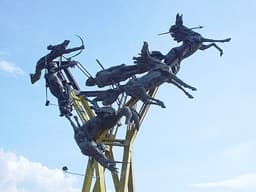
Gaitana
Revolutionary · Medieval
43.7Total
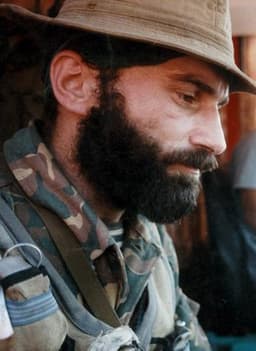
Shamil Basayev
Revolutionary · Modern
43.1Total
Basic Information
Born
1500
1965
Died
1550
—
Era
Medieval
Modern
Nationality
Yalcon
Chechnya
Occupation
Revolutionary
Revolutionary
Civilization
Other
Western
Score Comparison
Military (10%)
45.0
40.0
Political (20%)
35.0
35.0
Influence (20%)
44.0
45.5
Legacy (20%)
35.8
35.0
Leadership (15%)
57.1
57.1
Strategy (15%)
54.8
51.7
TOTAL
43.7
43.1
Gaitana — Complete Timeline
1540 AD
Led the Yalcon Rebellion against Spanish colonizersWar◆ Major
Gaitana organized and led indigenous Yalcon forces in a rebellion against Spanish colonial rule in present-day Colombia. The rebellion targeted Spanish settlements and encomiendas, resisting forced labor and land seizure. The uprising was eventually suppressed by Spanish forces, but it became a symbol of indigenous resistance.
Indigenous RebellionColonial ResistanceYalcon
Impact: regional
Captured and executed Spanish encomendero Pedro de AñascoOther◆ Major
During the Yalcon rebellion, Gaitana's forces captured the Spanish encomendero Pedro de A
ExecutionColonial ConflictIndigenous Leadership
Impact: regional
1541 AD
Rebellion suppressed by Spanish forces under Sebastián de BelalcázarWar◆ Major
Spanish conquistador Sebasti
Military DefeatColonial SuppressionEnd of Rebellion
Impact: regionaldestructive
Shamil Basayev — Complete Timeline
1995 AD
Budyonnovsk Hospital Hostage CrisisWar◆ Major
Basayev led a raid on the Russian town of Budyonnovsk, taking over 1,000 hostages in a hospital. The crisis ended with a negotiated settlement that allowed him to return to Chechnya. This attack demonstrated Chechen reach into Russia.
Hostage CrisisTerrorismChechnya
Impact: nationaldestructive
1999 AD
Invasion of DagestanWar
Basayev led Chechen and Islamist fighters into Dagestan to support local rebels. This invasion triggered the Second Chechen War as Russia responded with a full-scale military campaign. The invasion failed to gain local support.
DagestanChechnyaInvasion
Impact: regionaldestructive
2002 AD
Moscow Theater Hostage CrisisWar◆ Major
Basayev orchestrated the Moscow theater hostage crisis, where Chechen militants took 850 people hostage. Russian forces ended the siege with gas, killing 130 hostages. The attack increased international condemnation of Chechen rebels.
Hostage CrisisTerrorismMoscow
Impact: nationaldestructive
2004 AD
Beslan School SiegeWar◆ Major
Basayev planned the Beslan school siege, where militants took over 1,100 people hostage. The siege ended in a bloody assault, resulting in 334 deaths, mostly children. This attack was widely condemned globally.
Hostage CrisisTerrorismBeslan
Impact: globaltragic
2006 AD
Killed by Russian ExplosivesWar◆ Major
Basayev was killed in Ingushetia when a truck loaded with explosives detonated. Russian intelligence claimed responsibility. His death removed the most prominent Chechen rebel commander.
AssassinationChechnyaRussia
Impact: regional
Expert Analysis
Shamil Basayev vs Gaitana
The Rebel’s Paradox
In the summer of 2004, Shamil Basayev sat in a cave somewhere in the Caucasus mountains, watching the world react to his latest masterpiece of terror. A thousand miles away, in the sweltering jungles of what is now Colombia, a woman named Gaitana had once faced a similar choice: how to fight an empire that seemed invincible. Both were revolutionaries, but their paths diverged like rivers flowing from the same mountain. Basayev chose the hospital, the school, the theater—places where civilians became pawns. Gaitana chose the jungle, the spear, the ambush. Why did one become a symbol of resistance and the other a byword for atrocity? The answer lies not in their goals, but in the worlds that shaped them.
Origins
Shamil Basayev was born in 1965 in the Chechen village of Vedeno, a land that had known Russian conquest for centuries. His namesake, Imam Shamil, had led a nineteenth-century rebellion against the Tsar. Basayev grew up in the shadow of that legend, in a culture where honor and vengeance were intertwined. The Soviet Union’s collapse in 1991 opened a door: Chechnya declared independence, and Basayev, then a young man with a degree in land management, found himself drawn to the fight. He was a product of the modern world—fluent in Russian, adept with technology, and shaped by the brutalizing experience of the First Chechen War (1994–1996).
Gaitana, by contrast, emerged from a world that had not yet been named. Born around 1500, she was a cacica—a female chief—of the Yalcon people in the tropical lowlands of present-day Colombia. Her people lived in harmony with the forest, their society structured around kinship and ritual. The Spanish arrived in the 1530s, bringing horses, steel, and a god that demanded submission. Gaitana’s son was captured and killed by the conquistador Pedro de Heredia, a personal loss that ignited a rebellion against an empire that seemed as vast and indifferent as the ocean.
Rise to Power
Basayev’s rise was meteoric. In 1995, at age 30, he led the Budyonnovsk hospital hostage crisis, taking over 1,000 people captive. The raid ended in a negotiated withdrawal—a stunning victory for a rebel who had forced the Russian government to the table. This event made him a hero in Chechnya and a terrorist in Moscow. His political score of 38.8 reflects a man who understood the power of spectacle but not the art of diplomacy. The 1999 invasion of Dagestan, where he led fighters into a neighboring Russian republic, was a turning point: it triggered the Second Chechen War and transformed him from a nationalist leader into an Islamist radical.
Gaitana’s path was slower, more organic. She did not seize power; she was given it by circumstance. After her son’s death, she rallied neighboring tribes, using her status as a cacica to build a coalition. Her strategy score of 58.8—higher than Basayev’s 45.6—suggests a leader who understood the terrain and the limits of her force. She did not attack Spanish towns directly; she ambushed supply lines, raided settlements, and melted back into the jungle. Her rebellion lasted years, a guerrilla war fought with bows and poisoned arrows against arquebuses and war dogs.
Leadership & Governance
Basayev’s leadership was defined by charisma and ruthlessness. His military score of 55.8 is respectable, but his leadership score of 34.5 reveals a man who could inspire followers but could not build institutions. He commanded through fear and ideology, not through loyalty. The 2002 Moscow theater hostage crisis, where 850 people were taken and 130 died after a botched rescue, showed his willingness to escalate. The 2004 Beslan school siege, where over 380 people—mostly children—died in a firefight, was his masterpiece of horror. Basayev was not a governor; he was a destroyer.
Gaitana governed differently. As a cacica, she was a judge, a priestess, and a war leader. Her political score of 35.8 is similar to Basayev’s, but in a pre-colonial context, leadership was about consensus, not coercion. She did not command armies; she persuaded clans. Her rebellion did not aim to capture territory—it aimed to expel the Spanish. She was a defender, not an expansionist. The Spanish chroniclers, who wrote the only accounts of her, described her as “fierce” but also “just”—a leader who fought for her people, not for personal glory.
Triumph & Tragedy
Basayev’s greatest triumph was also his greatest tragedy. The Beslan siege was intended to force Russian withdrawal from Chechnya, but it backfired catastrophically. The world saw children dying in a gymnasium, and Basayev became a symbol of evil. His influence score of 62.6 reflects his ability to terrify, but his legacy score of 47.4 is a verdict: he is remembered as a terrorist, not a freedom fighter. He was killed in 2006 in Ingushetia, when a truck loaded with explosives detonated—likely by Russian intelligence. He died as he lived, in violence.
Gaitana’s fate is murkier. She was captured by the Spanish around 1550, but the details of her death are lost. Some say she was executed; others say she escaped. Her influence score of 55.4 is lower than Basayev’s, but her legacy score of 44.9 is not far behind—and for different reasons. She is remembered in Colombia as a symbol of indigenous resistance, a mother who fought for her child. Her tragedy was not her death, but the fact that her rebellion failed. The Spanish stayed, and the Yalcon people were absorbed into the colonial system.
Character & Destiny
Basayev was a man of his time—a time of satellite phones, video recordings, and global media. He understood that terror was a currency, and he spent it freely. His character was shaped by the Chechen wars, which had no rules, no front lines, and no mercy. He became what he fought: brutal, absolute, and unyielding.
Gaitana was a woman of her time—a time when war was personal, face-to-face, and tied to the land. She fought not to destroy, but to preserve. Her character was shaped by the forest, by the memory of her son, and by a world where honor was more valuable than victory.
Legacy
Basayev’s legacy is a warning. He is taught in counterterrorism courses, studied as a case study in how to radicalize, how to organize, and how to fail. His name is invoked to justify Russian repression in Chechnya. He is a ghost that haunts the Caucasus.
Gaitana’s legacy is a story. She is remembered in Colombian folklore, in songs and oral histories. A statue of her stands in the city of Popayán, a mother with a spear. She is a symbol of resistance, not of terror. Her name is invoked to honor indigenous rights, to remember the cost of conquest.
Conclusion
The difference between Basayev and Gaitana is not in their goals—both fought for their people against a larger power. It is in their means, and in the eras that shaped those means. Basayev lived in a world of mass media and mass casualties, where a single attack could change history. Gaitana lived in a world of small battles and slow time, where a rebellion could last years but never reach a capital. One chose the school; the other chose the jungle. History remembers them both, but for very different reasons. The rebel’s paradox is this: you can win the battle and lose the story, or lose the battle and win the memory. Basayev won the battle at Budyonnovsk, but lost the story at Beslan. Gaitana lost the war, but won the memory in the hearts of her people. Which is the greater victory? The answer, perhaps, is in the eye of the beholder.
Rankings
🥇
GaitanaLeader
Mil: 45.0Pol: 35.0Inf: 44.0
43.7
🥈
Shamil Basayev
Mil: 40.0Pol: 35.0Inf: 45.5
43.1
+0.6 behind
How This Comparison Works
Algorithm
Each figure is scored on 6 dimensions (0—100 scale) based on structured historical data: Military (10%), Political (20%), Influence (20%), Legacy (20%), Leadership (15%), Strategy (15%). The weighted total produces the final ranking.
Data Sources
Scores are computed from structured sub-indicators in the database. Scale factors adjust for era (Ancient ×0.85, Modern ×1.0) and civilization size (Eastern ×1.05, Other ×0.80) to account for differences in population and military scale.
Maximum 3 Figures
Comparisons are limited to 2—3 figures to ensure readability and statistical meaningfulness.
Error Margins
±5 points per dimension — Sub-scores are derived from historical records with inherent uncertainty. Two figures within 5 points on a dimension should be considered roughly equivalent in that area.
Total Score Accuracy
±3 points overall — The weighted combination of 6 dimensions produces a total score with approximately ±3 points of uncertainty. Differences of less than 3 points are not statistically significant— the figures are effectively tied.
Known Limitations
- Historical records are incomplete and uneven across civilizations
- Figures from oral-tradition societies may be underrepresented
- Occupation labels can misclassify multi-role figures
- Scores measure capability and impact, not moral character
- Quantitative scoring is a comparison tool, not absolute truth
Capability Radar
Military (10%) — Battles & Warfare
Battles
15
45
Win Rate
10
40
Expansion
5
15
Political (20%) — Governance & Reform
Reform
5
5
Diplomacy
10
10
Economy
5
5
Influence (20%) — Cultural & Global Reach
Cultural
20
20
Global
10
20
Legacy (20%) — Historical Impact
Historical
25
25
Longevity
20
15
Leadership (15%) — Power & Stability
Tenure
10
10
Stability
5
5
Strategy (15%) — Tactics & Innovation
Strategy
15
35
Tactics
20
55
Reform
5
20
Similar Comparisons
Comments & Discussion
ChechenCavalry6/16/2026
Basayev was no imam—he was a car bomber who turned Chechnya’s tragedy into a franchise for mass murder. Comparing him to Gaitana is like comparing a forest fire to a surgical strike. Gaitana fought conquistadors with spears and jungle tactics, targeting armed colonizers. Basayev blew up schoolchildren in Beslan. One defended her people with the tools of her time; the other weaponized modernity’s worst inventions—IEDs, hostage-taking, beheading videos. There’s no paradox here, just a clear line b
数据刺客6/16/2026
别被“反抗者”这个词骗了。Gaitana确实反抗殖民者,但Basayev的战术本质上是政治赌徒的豪赌。一组数字:1999年俄军轰炸格罗兹尼,死了5000多平民——这叫战争。Basayev的2004年别斯兰事件,死了334人,其中186个孩子——这叫屠杀。统计学上看,他把目标从军队转向儿童的转向量高达100%。别把异教徒的剑和殉道者的炸弹混为一谈。
TogaWarrior6/16/2026
Let’s not rewrite history to fit a moral fable. Gaitana inspired a myth, but we have zero primary sources from her—she’s a name in colonial chronicles, not a leader with a political manifesto. Basayev, on the other hand, left a paper trail: interviews, military communiques, even a memoir of sorts. We can critique his choices because we know them. Gaitana is a canvas for our modern anti-colonial fantasies. Comparing the two is like contrasting a real general with a statue—one bleeds, the other on
巴格达迪的邻居6/16/2026
作为高加索战争的亲历者后代,我告诉你:Basayev不是恐怖分子,他是民族解放的象征。Gaitana在16世纪就用焦土战术烧了两座西班牙殖民城镇——那叫“游击战”?Basayev用类似方法攻击俄军据点时,西方却叫他“恐怖分子”。双标太明显了。俄国人从1817年到现在杀了整整四代车臣人,你敢说Basayev的手比俄军更脏?历史是胜利者写的,而车臣人还在坟里等道歉。
NarrativusRex6/16/2026
The comparison hinges on a false binary: that Basayev chose civilians while Gaitana didn’t. Gaitana’s rebellion likely killed non-combatants too—colonial wars rarely spared them. The difference is distance. We romanticize what we don’t know. Basayev’s crimes were filmed, broadcast, and timestamped—they invade our living rooms. Gaitana’s battles are a footnote in dusty books. The real paradox isn