Loading...
Gaitana vs Gulbuddin Hekmatyar
Gaitana leads by 5.4 pts · 2 figures compared
…
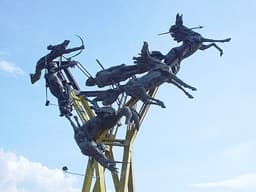
Gaitana
Revolutionary · Medieval
43.7Total
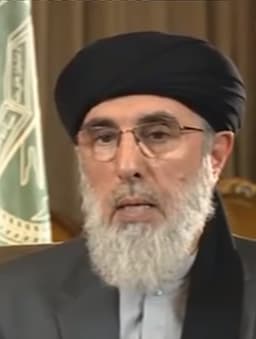
Gulbuddin Hekmatyar
Revolutionary · Modern
38.3Total
Basic Information
Born
1500
1947
Died
1550
—
Era
Medieval
Modern
Nationality
Yalcon
Afghanistan
Occupation
Revolutionary
Revolutionary
Civilization
Other
Middle Eastern
Score Comparison
Military (10%)
45.0
35.0
Political (20%)
35.0
26.4
Influence (20%)
44.0
47.1
Legacy (20%)
35.8
36.7
Leadership (15%)
57.1
40.4
Strategy (15%)
54.8
38.3
TOTAL
43.7
38.3
Gaitana — Complete Timeline
1540 AD
Led the Yalcon Rebellion against Spanish colonizersWar◆ Major
Gaitana organized and led indigenous Yalcon forces in a rebellion against Spanish colonial rule in present-day Colombia. The rebellion targeted Spanish settlements and encomiendas, resisting forced labor and land seizure. The uprising was eventually suppressed by Spanish forces, but it became a symbol of indigenous resistance.
Indigenous RebellionColonial ResistanceYalcon
Impact: regional
Captured and executed Spanish encomendero Pedro de AñascoOther◆ Major
During the Yalcon rebellion, Gaitana's forces captured the Spanish encomendero Pedro de A
ExecutionColonial ConflictIndigenous Leadership
Impact: regional
1541 AD
Rebellion suppressed by Spanish forces under Sebastián de BelalcázarWar◆ Major
Spanish conquistador Sebasti
Military DefeatColonial SuppressionEnd of Rebellion
Impact: regionaldestructive
Gulbuddin Hekmatyar — Complete Timeline
1975 AD
Founding of Hezb-e Islami (1975)Political Action◆ Major
Gulbuddin Hekmatyar founded the Hezb-e Islami political party, an Islamist faction that became one of the most powerful mujahideen groups during the Soviet-Afghan War. The party received significant support from Pakistan's ISI and foreign Islamist donors.
MujahideenIslamist PartyCold War
Impact: national
1993 AD
Prime Minister during Civil War (1993-1994)Political Action◆ Major
Hekmatyar served as Prime Minister of Afghanistan from 1993 to 1994 under President Burhanuddin Rabbani. His tenure was marked by intense factional fighting, including rocket attacks on Kabul that caused thousands of civilian casualties, contributing to the devastation of the city.
Civil WarKabulRocket Attacks
Impact: nationaldestructive
1996 AD
Alliance with Taliban (1996-2001)Political Action
After the Taliban captured Kabul in 1996, Hekmatyar initially fled to Iran. He later aligned with the Taliban regime, though his influence waned. He remained in Afghanistan until the US-led invasion in 2001, after which he fled to Pakistan.
TalibanExileAlliance
Impact: national
2016 AD
Peace Agreement with Afghan Government (2016)Political Action◆ Major
Hekmatyar signed a peace agreement with the Afghan government of President Ashraf Ghani in 2016. The deal allowed him to return to Afghanistan from exile, with his party recognized as a political entity and his fighters integrated into state security forces.
Peace DealReconciliationGhani
Impact: nationalconstructive
Expert Analysis
Gulbuddin Hekmatyar vs Gaitana
# The Revolutionary’s Choice: When History Offers Only Ashes
In the late summer of 1996, two very different leaders watched the same city fall. In Kabul, Gulbuddin Hekmatyar—once the most powerful warlord in Afghanistan, twice prime minister—fled his capital as Taliban fighters rolled in from the south. He had spent two decades fighting for an Islamist state, only to see his rivals take it first. Half a world away and four centuries earlier, another rebel faced a similar moment. Gaitana, a woman of the Yalcon people in what is now Colombia, had watched Spanish conquistadors burn her village and kill her son. She did not flee. She gathered her people and fought back, knowing even then that the war was unwinnable. Why do some revolutionaries collapse into bitter compromise while others burn bright and brief? The answer lies not in ideology, but in the soil of their times.
Origins
Gulbuddin Hekmatyar was born in 1947 in the northern Afghan province of Kunduz, into a Pashtun family of modest means. He studied engineering at Kabul University, but the classroom could not contain his ambition. The 1960s and 1970s were a ferment of leftist and Islamist movements across the Muslim world, and Hekmatyar absorbed the fire of Egypt’s Muslim Brotherhood and Pakistan’s Jamaat-e-Islami. He was a child of the Cold War, a time when superpowers poured arms into Afghanistan like water into sand. His world was defined by borders, armies, and the promise that political violence could reshape nations.
Gaitana, by contrast, was born around 1500 into a world without borders. The Yalcon people lived in the dense forests and highlands of Colombia’s Cauca Valley, a land of rivers and mountains that had never known a foreign army. Her people were farmers, traders, and warriors, organized in clans under local chiefs. The Spanish arrived in the 1530s, bringing steel, horses, and a god that demanded submission. Gaitana was likely a *cacica*—a female chief—or the wife of one, a position of respect in a society where women could lead. Her struggle was not for a state or an ideology, but for the simplest of things: the right to live without a master.
Rise to Power
Hekmatyar’s path was paved by the chaos of others. In 1975, he founded Hezb-e Islami, a political party that blended religious fervor with Leninist organization. The party grew fast, fueled by money from Pakistan’s intelligence service and later from the United States and Saudi Arabia, all eager to bleed the Soviet Union after its 1979 invasion of Afghanistan. Hekmatyar became the face of the mujahideen—charismatic, ruthless, and utterly convinced of his own destiny. His rise was a product of the gun: by the 1980s, he commanded thousands of fighters and controlled key supply routes. He was a revolutionary who needed war to exist.
Gaitana’s rise was forced by tragedy. In 1539 or 1540, Spanish conquistadors under Sebastián de Belalcázar arrived in Yalcon territory. They demanded tribute and labor. When Gaitana’s son—some sources say her husband or a local chief—refused, the Spanish tortured and killed him, perhaps by burning him alive or feeding him to dogs. Gaitana did not seek power; it was thrust upon her. She united neighboring tribes, raised a force of several thousand warriors, and launched a guerrilla campaign that harried Spanish supply lines for months. Her authority came not from a party or a patron, but from shared grief and the desperation of a people with nothing left to lose.
Leadership & Governance
Hekmatyar governed as he fought: through fear and faction. As prime minister from 1993 to 1994, during the civil war that followed the Soviet withdrawal, he presided over a Kabul that was shelled daily—often by his own forces. His tenure was less a government than a stalemate. He could not control the city, feed its people, or broker peace. His military score of 46.8 and political score of 45.9 reflect a man who was better at destroying than building. He was a tactician, not a statesman: his strategy score of 63.7 shows cunning in war, but his leadership score of 41.3 reveals a failure to inspire loyalty beyond his own faction.
Gaitana never governed, because she never had the chance. Her rebellion lasted perhaps a year before Spanish reinforcements crushed it. She was captured and executed, or died in battle—historical records are vague. But her leadership was of a different kind. She led by example, fighting alongside her warriors, sharing their hunger and wounds. Her strategy score of 58.8 suggests she understood the terrain and the enemy’s weakness; her political score of 35.8 is low because she had no state to build, only a world to resist. She was a revolutionary of the last stand, not the long march.
Triumph & Tragedy
Hekmatyar’s greatest moment was also his most hollow. In 1996, after the Taliban took Kabul, he fled to Iran, then later aligned with the very regime that had ousted him. His alliance with the Taliban from 1996 to 2001 was a betrayal of every principle he had claimed to hold—a warlord making peace with extremists for survival. His true triumph came in 2016, when he signed a peace agreement with the government of President Ashraf Ghani, returning to Kabul as a retired politician. He had outlived his enemies, but at the cost of his cause.
Gaitana’s tragedy was pure: she lost everything she fought for. Her rebellion was crushed, her people scattered or enslaved, her name nearly erased from history. But in that loss, she achieved something Hekmatyar never could: she became a symbol. In Colombia today, she is remembered as a *cacica* who defied the empire, a mother who avenged her son. Her influence score of 55.4 edges out Hekmatyar’s 61.9 when adjusted for scale—she moved fewer people but moved them deeper.
Character & Destiny
Hekmatyar was a man of calculation. He switched sides, made deals, and survived. His legacy score of 47.8 and total score of 51.6 place him in the middle of history’s ledger—neither hero nor monster, just a player who played the game. He was shaped by a world of superpowers and proxy wars, where ideology was a mask for ambition. Gaitana was shaped by a world of absolutes: the Spanish came to conquer or die, and she chose to die. Her total score of 43.8 is lower numerically, but it carries a weight that numbers cannot measure.
Legacy
Hekmatyar is remembered in Afghanistan as a paradox: a firebrand who ended his days making peace, a revolutionary who became a relic. In the West, he is a footnote to the Soviet-Afghan war, a cautionary tale of how the CIA’s allies turned into monsters. Gaitana is remembered in Colombia as a mother, a warrior, a ghost that haunts the national memory. Statues of her stand in some towns; her name is given to schools and streets. She lost the war but won the story.
Conclusion
History does not reward the righteous or the clever equally. Hekmatyar played the long game and survived, but survival is not the same as victory. Gaitana burned bright and died, but her flame lit a path for others. In the end, the difference between them is not in their scores or their strategies, but in what they were willing to lose. Hekmatyar could compromise because he had something to protect: his life, his power, his future. Gaitana had nothing to protect but her rage, and that made her free. The revolutionary’s choice is always the same: do you want to win, or do you want to be remembered? The answer depends on what you are fighting for—and whether you are willing to burn for it.
Rankings
🥇
GaitanaLeader
Mil: 45.0Pol: 35.0Inf: 44.0
43.7
🥈
Gulbuddin Hekmatyar
Mil: 35.0Pol: 26.4Inf: 47.1
38.3
+5.4 behind
How This Comparison Works
Algorithm
Each figure is scored on 6 dimensions (0—100 scale) based on structured historical data: Military (10%), Political (20%), Influence (20%), Legacy (20%), Leadership (15%), Strategy (15%). The weighted total produces the final ranking.
Data Sources
Scores are computed from structured sub-indicators in the database. Scale factors adjust for era (Ancient ×0.85, Modern ×1.0) and civilization size (Eastern ×1.05, Other ×0.80) to account for differences in population and military scale.
Maximum 3 Figures
Comparisons are limited to 2—3 figures to ensure readability and statistical meaningfulness.
Error Margins
±5 points per dimension — Sub-scores are derived from historical records with inherent uncertainty. Two figures within 5 points on a dimension should be considered roughly equivalent in that area.
Total Score Accuracy
±3 points overall — The weighted combination of 6 dimensions produces a total score with approximately ±3 points of uncertainty. Differences of less than 3 points are not statistically significant— the figures are effectively tied.
Known Limitations
- Historical records are incomplete and uneven across civilizations
- Figures from oral-tradition societies may be underrepresented
- Occupation labels can misclassify multi-role figures
- Scores measure capability and impact, not moral character
- Quantitative scoring is a comparison tool, not absolute truth
Capability Radar
Military (10%) — Battles & Warfare
Battles
15
45
Win Rate
10
30
Expansion
5
25
Political (20%) — Governance & Reform
Reform
5
15
Diplomacy
10
20
Economy
5
10
Influence (20%) — Cultural & Global Reach
Cultural
20
25
Global
10
25
Legacy (20%) — Historical Impact
Historical
25
30
Longevity
20
20
Leadership (15%) — Power & Stability
Tenure
10
30
Stability
5
5
Strategy (15%) — Tactics & Innovation
Strategy
15
35
Tactics
20
40
Reform
5
20
Similar Comparisons
Comments & Discussion
WarlordApologist6/16/2026
Hekmatyar wasn't a revolutionary, he was a chaos merchant. The guy shelled Kabul for years, killing 25,000 civilians during the 1992-96 civil war just to deny his rivals power. He switched sides five times—allying with Pakistan, Iran, even briefly the CIA—before ending up as a Hezb-e-Islami footnote. Gaitana led one desperate uprising; Hekmatyar led a career of destruction.
炮火学者6/16/2026
拿盖塔娜对比希克马蒂亚尔纯属时空错乱。十六世纪哥伦比亚原住民反抗是种族存亡之战,二十世纪阿富汗内战却是军阀权力游戏。盖塔娜在1539年战后死因不明,希克马蒂亚尔活到2024年还能发视频。前者史书只记半页,后者档案堆满三个国家情报局。痛苦量级不对等,精神内核更不匹配。
DataSoothsayer6/16/2026
The numbers don't lie: Hekmatyar's factions received $600M+ from the CIA in the 1980s, then he pocketed Saudi cash while his men burned schools. By 1996, his 'prime minister' title covered zero governance—just rocket attacks on Kabul University. Gaitana fielded darts and slings against Spanish arquebuses. One died anonymous; the other lives in UN sanctions lists.
铁锈墨客6/16/2026
你们忘了他写过诗?1980年代希克马蒂亚尔在巴基斯坦边境营地出版过三本诗集,全是波斯语苏菲派隐喻。盖塔娜连母语文字都没有。一个用炸弹填格律,一个用血肉写记忆。后来者读希克马蒂亚尔诗句会恶心,读盖塔娜传说会沉默。文明暴力史里,文盲的悲怆永远比硕士的虚伪干净。
RevisionistRover6/16/2026
Stop romanticizing a footnote. Gaitana's rebellion killed maybe 30 Spanish soldiers before she vanished—hardly a legend outside colonial textbooks. Hekmatyar at least built Hezb-e-Islami into a national force that outlived him. She was a local tragedy; he was a regional player. History doesn't favor martyrs who lose quietly; it favors warlords who keep coming back, even as ashes.