Loading...
Gaitana vs Pushpa Kamal Dahal
Pushpa Kamal Dahal leads by 6.3 pts · 2 figures compared
…
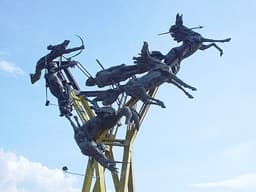
Gaitana
Revolutionary · Medieval
43.7Total
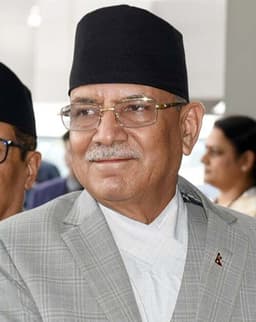
Pushpa Kamal Dahal
Revolutionary · Modern
50.0Total
Basic Information
Born
1500
1954
Died
1550
—
Era
Medieval
Modern
Nationality
Yalcon
Nepal
Occupation
Revolutionary
Revolutionary
Civilization
Other
Indian
Score Comparison
Military (10%)
45.0
35.0
Political (20%)
35.0
54.7
Influence (20%)
44.0
51.0
Legacy (20%)
35.8
40.8
Leadership (15%)
57.1
62.0
Strategy (15%)
54.8
60.0
TOTAL
43.7
50.0
Gaitana — Complete Timeline
1540 AD
Led the Yalcon Rebellion against Spanish colonizersWar◆ Major
Gaitana organized and led indigenous Yalcon forces in a rebellion against Spanish colonial rule in present-day Colombia. The rebellion targeted Spanish settlements and encomiendas, resisting forced labor and land seizure. The uprising was eventually suppressed by Spanish forces, but it became a symbol of indigenous resistance.
Indigenous RebellionColonial ResistanceYalcon
Impact: regional
Captured and executed Spanish encomendero Pedro de AñascoOther◆ Major
During the Yalcon rebellion, Gaitana's forces captured the Spanish encomendero Pedro de A
ExecutionColonial ConflictIndigenous Leadership
Impact: regional
1541 AD
Rebellion suppressed by Spanish forces under Sebastián de BelalcázarWar◆ Major
Spanish conquistador Sebasti
Military DefeatColonial SuppressionEnd of Rebellion
Impact: regionaldestructive
Pushpa Kamal Dahal — Complete Timeline
1996 AD
Launch of People's WarWar
Prachanda, as leader of the Communist Party of Nepal (Maoist), initiated a armed insurgency against the Nepalese state. The People's War began with attacks on police posts and government offices, escalating into a decade-long civil war.
InsurgencyCivil WarMaoist
Impact: nationaldestructive
2006 AD
Signing of Comprehensive Peace AccordPolitical Action◆ Major
Prachanda signed the Comprehensive Peace Accord with Prime Minister Girija Prasad Koirala, ending the civil war. The agreement committed the Maoists to lay down arms and join mainstream politics in exchange for integration into state institutions.
Peace TreatyCivil WarNepal
Impact: nationalconstructive
2008 AD
Election as Prime MinisterPolitical Action◆ Major
Following the Maoist victory in the Constituent Assembly elections, Prachanda became the first prime minister of the Federal Democratic Republic of Nepal. His tenure focused on integrating former Maoist combatants into the national army.
ElectionGovernmentRepublic
Impact: national
2009 AD
Resignation as Prime MinisterPolitical Action
Prachanda resigned as prime minister after a dispute with President Ram Baran Yadav over the dismissal of the army chief. The crisis highlighted tensions between the Maoists and the established political order.
ResignationPoliticsCrisis
Impact: national
Expert Analysis
Pushpa Kamal Dahal vs Gaitana
# The Revolutionary's Path: Prachanda and Gaitana
The mountain air of Nepal carries a different weight than the humid forests of Colombia, yet in both places, revolution once burned with equal intensity. Pushpa Kamal Dahal—known to the world as Prachanda, "the fierce one"—stands in the modern era as a man who traded a guerrilla's rifle for a prime minister's chair. Gaitana, the indigenous leader of the Yalcon people, fought with no such ambition; her war was one of grief and fury, waged against Spanish steel with wooden spears. One died in power, the other in obscurity. What separates them is not merely time, but the very nature of what revolution means.
Origins
Prachanda was born in 1954 in the hills of Kaski, Nepal, into a world of feudal poverty and simmering political discontent. The son of a small farmer, he grew up under the shadow of the Shah monarchy, where caste hierarchies and landlessness defined life. The 1960s and 70s saw Nepal's kings consolidate power, but they also saw the rise of Maoist ideology, carried by students and intellectuals. Prachanda was drawn to this flame. He studied agriculture but found his calling in politics, joining the Communist Party and rising through its underground networks. His era was one of global decolonization and Cold War proxy battles—a time when revolution could be studied in books and planned in secret meetings.
Gaitana, born around 1500, knew no books. She was a cacica, a female leader of the Yalcon people in the lands that would become Colombia. Her world was pre-Columbian—a tapestry of chiefdoms, gold, and gods. The Spanish arrived in the 1530s, led by Sebastián de Belalcázar, bringing horses, guns, and a terrifying new order. Gaitana's son was captured and burned alive by the conquistadors. The sources, sparse as they are, say she watched him die. That moment transformed her from a local leader into a rebel. Her era offered no negotiated peace, no political party—only resistance or submission.
Rise to Power
Prachanda's ascent was deliberate, ideological, and organizational. In 1994, he became the general secretary of the Communist Party of Nepal (Maoist), and in 1996, he launched the "People's War"—a decade-long insurgency that began with attacks on remote police posts and grew into a national crisis. His path was not one of spontaneous uprising but of calculated escalation. He built a parallel state, collected taxes, and trained thousands of fighters. His turning point came not on a battlefield but at a negotiating table: in 2006, he signed the Comprehensive Peace Accord with Prime Minister Girija Prasad Koirala, ending the civil war. The agreement was a masterstroke—Prachanda had forced the monarchy and the political establishment to recognize him as an equal.
Gaitana's rise was immediate and visceral. After her son's murder, she rallied the Yalcon and neighboring tribes, forming a coalition that ambushed Spanish patrols and besieged the town of La Plata. Her authority came not from party structure but from personal tragedy and the desperation of her people. She was a war chief, not a politician. The Spanish chroniclers, writing in awe and fear, noted that she led from the front, her voice carrying across the jungle. Her turning point was the moment she chose to fight rather than flee—a choice made not out of strategy but out of love and rage.
Leadership & Governance
Prachanda's leadership was bifurcated. As a guerrilla commander, he was ruthless, demanding absolute loyalty and purging rivals. His military score of 25.6 reflects the limitations of his armed struggle—the Maoists never won a decisive conventional victory, but they made the country ungovernable. His political score of 61.5 tells a different story: he understood that war was a means to a political end. As prime minister in 2008, he led a coalition government, abolished the monarchy, and attempted to reshape Nepal's constitution. Yet he was also prone to impulsive decisions—his resignation in 2009 after a dispute with the president over the army chief's dismissal revealed a leader who could win a revolution but struggled to manage a state.
Gaitana's leadership was simpler and more desperate. She had no political score to calculate—her world was one of total war. Her military score of 29.8 suggests she was not a great general in the European sense, but she was a symbol of resistance. She led by example, sharing the hardships of her warriors. There was no governance, only survival. Her strategy score of 58.8 indicates she understood terrain and ambush, using the jungle as her ally. But against the Spanish—with their horses, armor, and diseases—she was fighting an unwinnable war.
Triumph & Tragedy
Prachanda's greatest moment came in 2008, when he was elected prime minister after the Maoists won the Constituent Assembly elections. He stood in Kathmandu, a former outlaw now the head of state. His tragedy followed swiftly: the failure to consolidate power, the fracturing of his party, and the return to political instability. He would serve as prime minister three times, but each term was shorter and more fragile than the last. The revolutionary had become a politician, and the politician was losing his magic.
Gaitana's triumph was the rebellion itself—the fact that she united tribes, defied an empire, and forced the Spanish to pay a price for their conquest. Her tragedy was the inevitable outcome: she was eventually defeated, captured, and likely executed. The exact date of her death around 1550 is unknown, and no statue marks her grave. She left no memoirs, no political party. Her victory was not in winning but in refusing to surrender.
Character & Destiny
Prachanda's character was shaped by ideology and ambition. He was a man who could quote Mao and Machiavelli in the same breath, who saw himself as a historical actor. His destiny was to be a transitional figure—the man who ended the monarchy but could not build a stable republic. His legacy score of 54.7 reflects this ambiguity: he is revered by some as a liberator, reviled by others as a warlord.
Gaitana's character was forged by loss. She was not an ideologue but a mother. Her destiny was to be a footnote in colonial records, a name mentioned in passing by Spanish priests. Yet her influence score of 55.4 suggests something deeper: she became a symbol for later generations, a figure of indigenous resistance against colonial violence. Her tragedy is that she is remembered more as a myth than as a woman.
Legacy
Prachanda lives on in Nepal's political DNA. The Maoist party he built remains a force, though fractured. His decision to join mainstream politics set a precedent for other revolutionary movements. He is a cautionary tale about the limits of armed struggle and the compromises of power.
Gaitana lives on in the memory of Colombia's indigenous peoples. Her name is invoked in protests against land dispossession and cultural erasure. She is a reminder that resistance can take many forms—not all of them successful, but all of them meaningful.
Conclusion
Two revolutionaries, separated by four centuries and an ocean. Prachanda fought a war he could win, then struggled with the peace he negotiated. Gaitana fought a war she could not win, but found a kind of immortality in the struggle itself. Their stories ask a question that haunts every revolutionary: is it better to compromise and survive, or resist and be destroyed? The answer, perhaps, depends on what you believe revolution is for—power, or principle.
Rankings
🥇
Pushpa Kamal DahalLeader
Mil: 35.0Pol: 54.7Inf: 51.0
50.0
🥈
Gaitana
Mil: 45.0Pol: 35.0Inf: 44.0
43.7
+6.3 behind
How This Comparison Works
Algorithm
Each figure is scored on 6 dimensions (0—100 scale) based on structured historical data: Military (10%), Political (20%), Influence (20%), Legacy (20%), Leadership (15%), Strategy (15%). The weighted total produces the final ranking.
Data Sources
Scores are computed from structured sub-indicators in the database. Scale factors adjust for era (Ancient ×0.85, Modern ×1.0) and civilization size (Eastern ×1.05, Other ×0.80) to account for differences in population and military scale.
Maximum 3 Figures
Comparisons are limited to 2—3 figures to ensure readability and statistical meaningfulness.
Error Margins
±5 points per dimension — Sub-scores are derived from historical records with inherent uncertainty. Two figures within 5 points on a dimension should be considered roughly equivalent in that area.
Total Score Accuracy
±3 points overall — The weighted combination of 6 dimensions produces a total score with approximately ±3 points of uncertainty. Differences of less than 3 points are not statistically significant— the figures are effectively tied.
Known Limitations
- Historical records are incomplete and uneven across civilizations
- Figures from oral-tradition societies may be underrepresented
- Occupation labels can misclassify multi-role figures
- Scores measure capability and impact, not moral character
- Quantitative scoring is a comparison tool, not absolute truth
Capability Radar
Military (10%) — Battles & Warfare
Battles
15
35
Win Rate
10
40
Expansion
5
25
Political (20%) — Governance & Reform
Reform
5
40
Diplomacy
10
50
Economy
5
35
Influence (20%) — Cultural & Global Reach
Cultural
20
40
Global
10
35
Legacy (20%) — Historical Impact
Historical
25
45
Longevity
20
30
Leadership (15%) — Power & Stability
Tenure
10
55
Stability
5
30
Strategy (15%) — Tactics & Innovation
Strategy
15
50
Tactics
20
45
Reform
5
30
Similar Comparisons
Comments & Discussion
RevolutionaryRealist6/16/2026
Prachanda's trajectory from rural poverty to prime minister shows how ideology bends to political pragmatism. Gaitana's resistance was purer—she had no state to gain, no coalition to form. Her wooden spears against Spanish armor tell you everything about the cost of principle. Prachanda's "fierce one" nickname softens with every cabinet meeting.
丛林之怒6/16/2026
比较两位英雄就像比较暴雨和火山喷发。普拉昌达活到了坐上总理宝座的一天,而盖塔纳死在了战场上。这不是命运的较量,而是革命的定义差异:一个是马克思主义课本的演绎,一个是殖民暴力中的本能反抗。
DataSkeptic_Nepal6/16/2026
The summary romanticizes both figures but ignores key metrics. Prachanda led a conflict that killed over 13,000 Nepalis. Gaitana's rebellion, while heroic, was a local skirmish in a vast conquest. If we're serious about comparison, we need body counts, territorial control, and lasting institutional change—not just "the mountain air carries different weight."
殖民伤痕研究者6/16/2026
盖塔纳的悲剧在于她的抗争几乎被历史抹去。西班牙编年史只留下几行记载,而普拉昌达却有自己的维基百科页面。这不仅是时间的差异,更是文字书写权力的不平等。一位被遗忘的土著女领袖,一位被记住的现代政治家,这才是真正的比较。
ClassicsScholar_Colombia6/16/2026
Gaitana's story echoes Dido's fury in Virgil's Aeneid—a leader grieving and burning for vengeance after Spanish betrayal. Both were female rulers who challenged patriarchal empires with what little they had. Prachanda, by contrast, fits the Marxist archetype: the intellectual who mobilizes class consciousness. Different traditions, different scripts, same human desire for justice.