Loading...
Gaius Julius Verus Maximinus vs Zhang He
Zhang He leads by 1.2 pts · 2 figures compared
…

Gaius Julius Verus Maximinus
General · Ancient
48.2Total
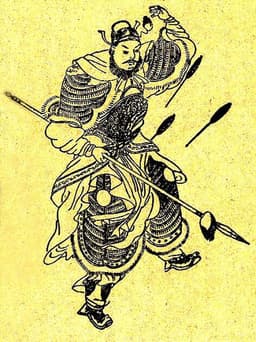
Zhang He
General · Ancient
49.4Total
Basic Information
Born
173
167
Died
238
231
Era
Ancient
Ancient
Nationality
Roman Empire
China
Occupation
General
General
Civilization
Western
Eastern
Score Comparison
Military (10%)
65.0
67.3
Political (20%)
35.0
27.9
Influence (20%)
44.8
50.2
Legacy (20%)
39.2
45.8
Leadership (15%)
68.0
57.6
Strategy (15%)
52.5
58.0
TOTAL
48.2
49.4
Gaius Julius Verus Maximinus — Complete Timeline
235 AD
Campaigns on the Rhine and Danube FrontiersWar◆ Major
Maximinus Thrax led successful campaigns against Germanic tribes along the Rhine and Danube. He defeated the Alemanni and the Sarmatians, earning the title Germanicus Maximus and securing the frontiers, though at great cost to the treasury.
Germanic WarsFrontier DefenseMilitary Campaign
Impact: regional
Proclamation as Emperor by the Pannonian LegionsPolitical Action◆ Major
After the assassination of Emperor Severus Alexander, the Pannonian legions proclaimed their commander, Maximinus Thrax, as emperor. His accession marked the first time a man of non-senatorial, barbarian background became Roman emperor.
Imperial AccessionMilitary EmperorCrisis of the Third Century
Impact: global
238 AD
Siege of AquileiaWar◆ Major
During the Year of the Six Emperors, Maximinus marched on Italy to suppress a senatorial rebellion. He besieged the city of Aquileia, but the prolonged siege drained his army's morale and supplies, leading to his downfall.
Year of the Six EmperorsCivil WarSiege
Impact: regional
Assassination by His Own TroopsPolitical Action◆ Major
Disillusioned by the failed siege of Aquileia and Maximinus's harsh discipline, soldiers of the Legio II Parthica assassinated him in his tent. His son Maximus was also killed, ending his three-year reign and plunging the empire into further chaos.
AssassinationMilitary RevoltCrisis of the Third Century
Impact: globaltragic
Zhang He — Complete Timeline
200 AD
Battle of GuanduWar◆ Major
Zhang He served under Yuan Shao at Guandu. After Yuan Shao's defeat, he defected to Cao Cao, bringing valuable intelligence.
Three KingdomsBattleDefection
Impact: national
211 AD
Campaign against Ma ChaoWar◆ Major
Zhang He fought in the campaign against Ma Chao in the northwest. He helped secure Wei control over the region.
Three KingdomsCampaignMa Chao
Impact: regionalconstructive
228 AD
Battle of JietingWar
Zhang He led the Wei army against Shu at Jieting. He defeated Ma Su's forces, forcing Zhuge Liang's First Northern Campaign to retreat.
Three KingdomsBattleMa Su
Impact: nationalconstructive
231 AD
Battle of MumenWar◆ Major
Zhang He pursued Zhuge Liang's retreating army at Mumen. He was ambushed by Shu crossbowmen and killed, a major loss for Wei.
Three KingdomsDeathAmbush
Impact: nationaltragic
Expert Analysis
Origins
Gaius Julius Verus Maximinus, known as Maximinus Thrax, was born around 173 AD in Thrace (modern-day Bulgaria) to a Gothic father and an Alanic mother. Of humble and likely non-Roman origin, he grew up as a shepherd before joining the Roman army. His immense size and strength propelled his career. Zhang He was born in 167 AD in Hejian (modern Hebei, China) during the late Eastern Han dynasty. He served as a minor officer under Han Fu, then Yuan Shao, before joining Cao Cao. Unlike Maximinus, Zhang He came from a literate bureaucratic background, though details of his early life are scarce.
Rise to Power
Maximinus rose through the ranks under Emperor Septimius Severus and later Alexander Severus. His big break came in 235 AD when the Pannonian legions, dissatisfied with Severus Alexander's peace policies, proclaimed Maximinus emperor after Alexander's assassination. He was the first Roman emperor never to set foot in Rome. Zhang He's rise began at the Battle of Guandu (200 AD), where he served under Yuan Shao. After Yuan Shao's defeat, he defected to Cao Cao, who valued his strategic insight. Zhang He's pivotal moment came at the Battle of Jieting (228 AD), where he defeated Ma Su, forcing Zhuge Liang to retreat. This victory cemented his reputation as a top Wei general.
Leadership & Governance
Maximinus ruled with an iron fist, focusing on military campaigns against Germanic tribes along the Rhine and Danube. He doubled military pay, funded by confiscating senatorial estates, which alienated the aristocracy. He never visited Rome, ruling from the frontiers. Zhang He served under Cao Cao, Cao Pi, and Cao Rui, always as a loyal general. He was known for his discipline and adherence to strategy, often cautioning against reckless pursuits. His leadership scored 57.6, compared to Maximinus's 68.0, reflecting Maximinus's more direct command style. Maximinus's political score of 35.0 was low, as he lacked diplomatic finesse, while Zhang He's 27.9 was even lower due to his role as a subordinate.
Triumph & Tragedy
Maximinus's triumphs were his campaigns against the Alemanni (235 AD) and Sarmatians (236-238 AD), for which he earned the title 'Germanicus Maximus'. His tragedy was the Siege of Aquileia (238 AD), where his army became bogged down, leading to his assassination by his own troops. Zhang He's triumph was the Battle of Jieting, a decisive victory that thwarted Zhuge Liang's northern campaign. His tragedy occurred at the Battle of Mumen (231 AD), where he pursued Zhuge Liang's retreating forces into an ambush and was killed by crossbowmen. Both died at the hands of their own or enemy forces, but Zhang He's death was a strategic loss for Wei.
Character & Destiny
Maximinus was a ruthless, physically imposing leader who relied on fear and rewards. His lack of political acumen and refusal to engage with the Senate led to widespread rebellion. His character scored 44.8 in influence, reflecting his short reign. Zhang He was cautious and methodical, but his final pursuit showed a lapse in judgment. His influence score of 50.2 indicates a more lasting impact through his military contributions. Maximinus's destiny was sealed by his inflexibility, while Zhang He's fate was a result of overconfidence in a single moment.
Legacy
Maximinus's legacy is as a symbol of military usurpation and the Crisis of the Third Century. His reign destabilized the Roman Empire, leading to the Year of the Six Emperors. He scored 39.2 in legacy. Zhang He's legacy is more positive; he is remembered as a capable general in the Three Kingdoms period, with a legacy score of 45.8. His tactics are studied in Chinese military history, and he appears in the historical novel 'Romance of the Three Kingdoms'.
Conclusion
Zhang He had a greater overall impact, with a total score of 49.4 versus Maximinus's 48.2. His military successes (67.3 to 65.0) and strategic acumen (58.0 to 52.5) contributed to the stability of the Wei state, whereas Maximinus's reign accelerated Rome's decline. Zhang He's legacy endures in Chinese culture, while Maximinus is a cautionary tale. Despite the narrow margin, Zhang He's contributions to a stable dynasty outweigh Maximinus's brief, disruptive rule.
Rankings
🥇
Zhang HeLeader
Mil: 67.3Pol: 27.9Inf: 50.2
49.4
🥈
Gaius Julius Verus Maximinus
Mil: 65.0Pol: 35.0Inf: 44.8
48.2
+1.2 behind
How This Comparison Works
Algorithm
Each figure is scored on 6 dimensions (0—100 scale) based on structured historical data: Military (10%), Political (20%), Influence (20%), Legacy (20%), Leadership (15%), Strategy (15%). The weighted total produces the final ranking.
Data Sources
Scores are computed from structured sub-indicators in the database. Scale factors adjust for era (Ancient ×0.85, Modern ×1.0) and civilization size (Eastern ×1.05, Other ×0.80) to account for differences in population and military scale.
Maximum 3 Figures
Comparisons are limited to 2—3 figures to ensure readability and statistical meaningfulness.
Error Margins
±5 points per dimension — Sub-scores are derived from historical records with inherent uncertainty. Two figures within 5 points on a dimension should be considered roughly equivalent in that area.
Total Score Accuracy
±3 points overall — The weighted combination of 6 dimensions produces a total score with approximately ±3 points of uncertainty. Differences of less than 3 points are not statistically significant— the figures are effectively tied.
Known Limitations
- Historical records are incomplete and uneven across civilizations
- Figures from oral-tradition societies may be underrepresented
- Occupation labels can misclassify multi-role figures
- Scores measure capability and impact, not moral character
- Quantitative scoring is a comparison tool, not absolute truth
Capability Radar
Military (10%) — Battles & Warfare
Battles
55
65
Win Rate
60
60
Expansion
40
40
Political (20%) — Governance & Reform
Reform
15
20
Diplomacy
10
40
Economy
10
30
Influence (20%) — Cultural & Global Reach
Cultural
15
30
Global
10
20
Legacy (20%) — Historical Impact
Historical
25
45
Longevity
20
40
Leadership (15%) — Power & Stability
Tenure
20
55
Stability
5
45
Strategy (15%) — Tactics & Innovation
Strategy
45
65
Tactics
50
70
Reform
30
30
Similar Comparisons
Comments & Discussion
No comments yet. Be the first to share your thoughts!