Loading...
Wen Yang vs Zhang He
Zhang He leads by 8.0 pts · 2 figures compared
…
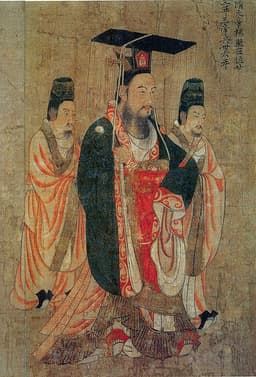
Wen Yang
General · Ancient
41.4Total
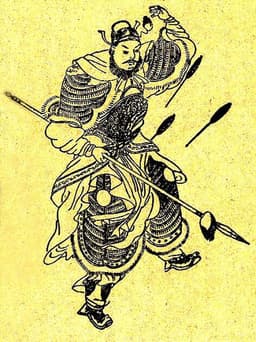
Zhang He
General · Ancient
49.4Total
Basic Information
Born
238
167
Died
291
231
Era
Ancient
Ancient
Nationality
China
China
Occupation
General
General
Civilization
Eastern
Eastern
Score Comparison
Military (10%)
40.0
67.3
Political (20%)
39.4
27.9
Influence (20%)
44.8
50.2
Legacy (20%)
35.8
45.8
Leadership (15%)
35.4
57.6
Strategy (15%)
60.0
58.0
TOTAL
41.4
49.4
Wen Yang — Complete Timeline
255 AD
Single-Handed Charge at Sima Shi's CampWar◆ Major
During the rebellion of Guanqiu Jian and Wen Qin, Wen Yang, then a young officer, charged alone into Sima Shi's camp, causing chaos and nearly capturing the Wei commander. The feat demonstrated his personal bravery but did not change the battle's outcome.
BattlePersonal ValorThree Kingdoms
Impact: regional
265 AD
Defected to Jin DynastyPolitical Action
After the fall of Wei, Wen Yang surrendered to the Jin dynasty and was given a military post. He later served under Emperor Wu of Jin.
DefectionJin DynastyPolitical Transition
Impact: national
291 AD
Executed by Sima LiangPolitical Action◆ Major
During the War of the Eight Princes, Wen Yang was executed by Sima Liang, who feared his military prowess. His death removed a capable general from the Jin court.
ExecutionWar of the Eight PrincesJin Dynasty
Impact: nationaltragic
Zhang He — Complete Timeline
200 AD
Battle of GuanduWar◆ Major
Zhang He served under Yuan Shao at Guandu. After Yuan Shao's defeat, he defected to Cao Cao, bringing valuable intelligence.
Three KingdomsBattleDefection
Impact: national
211 AD
Campaign against Ma ChaoWar◆ Major
Zhang He fought in the campaign against Ma Chao in the northwest. He helped secure Wei control over the region.
Three KingdomsCampaignMa Chao
Impact: regionalconstructive
228 AD
Battle of JietingWar
Zhang He led the Wei army against Shu at Jieting. He defeated Ma Su's forces, forcing Zhuge Liang's First Northern Campaign to retreat.
Three KingdomsBattleMa Su
Impact: nationalconstructive
231 AD
Battle of MumenWar◆ Major
Zhang He pursued Zhuge Liang's retreating army at Mumen. He was ambushed by Shu crossbowmen and killed, a major loss for Wei.
Three KingdomsDeathAmbush
Impact: nationaltragic
Expert Analysis
Origins
Wen Yang (born 238 AD) was the son of Wen Qin, a general under Cao Wei. Growing up in a military household during the late Three Kingdoms period, he was trained in martial arts from a young age. His family was based in the Wei commandery of Qiao (present-day Bozhou, Anhui). Wen Yang had little formal education but excelled in physical combat and horsemanship.
Zhang He (born 167 AD) hailed from a modest background in Hejian (present-day Hebei). He began his career as a minor officer under the Han dynasty, later serving the warlords Han Fu and Yuan Shao. Unlike Wen Yang, Zhang He was well-read in military classics and gained experience in large-scale warfare during the chaotic end of the Han dynasty.
Rise to Power
Wen Yang rose to prominence in 255 AD when his father Wen Qin and General Guanqiu Jian rebelled against the powerful regent Sima Shi. At age 17, Wen Yang led a daring night raid with only a few horsemen, charging into Sima Shi's camp and causing panic. The attack nearly succeeded in capturing Sima Shi, who was suffering from an eye ailment. Although the rebellion ultimately failed, Wen Yang's reputation as a fearless warrior spread.
Zhang He's rise was more gradual. He served Yuan Shao at the Battle of Guandu (200 AD), where he advised against dividing forces—advice that was ignored. After Yuan Shao's defeat, Zhang He defected to Cao Cao, who valued his strategic insight. He quickly became one of Cao Cao's top generals, participating in campaigns against Yuan Tan, Ma Chao, and Zhang Lu. By the time of Cao Pi's reign, Zhang He was a key commander in Wei's northwest defense.
Leadership & Governance
Wen Yang's leadership style was based on personal valor. He led from the front, inspiring his troops through his own fearlessness. However, he lacked administrative skills and political acumen. After defecting to the Jin dynasty, he was given a military post but never held significant civil authority. His leadership score is 35.4, reflecting his limitations in managing large armies or governance.
Zhang He was a disciplined and methodical leader. He emphasized logistics, troop formations, and terrain analysis. At the Battle of Jieting (228 AD), he correctly identified Ma Su's tactical error of deploying on a hill without water sources, leading to a decisive Wei victory. Zhang He's leadership score of 57.6 indicates his ability to command effectively in complex campaigns. He also mentored younger officers, contributing to Wei's military institutional strength.
Triumph & Tragedy
Wen Yang's greatest triumph was his single-handed charge at Sima Shi's camp, a feat that became legendary. However, his greatest failure was the collapse of the rebellion he fought for. After defecting to Jin, he was executed in 291 AD by Sima Liang during the War of the Eight Princes, who saw him as a threat. This premature death prevented him from achieving lasting influence.
Zhang He's triumphs include the victory at Jieting, which thwarted Zhuge Liang's first northern expedition, and his role in securing Wei's western borders. His tragedy came at the Battle of Mumen (231 AD), where he pursued Zhuge Liang's retreating army against advice and was killed in an ambush by crossbowmen. This loss was a significant blow to Wei, as he was one of their most experienced generals.
Character & Destiny
Wen Yang was impulsive and courageous, traits that made him a fearsome warrior but also led to his downfall. His willingness to take extreme risks brought him fame but also made him unpredictable to allies and enemies alike. Historical records describe him as "fierce but reckless." His character was ill-suited for the political intrigue of the Jin court, leading to his execution.
Zhang He was cautious and strategic, often prioritizing the safety of his troops over personal glory. He was known for his humility and respect for his soldiers. However, his caution could become a liability, as when he reluctantly pursued Zhuge Liang at Mumen. His death came from a rare lapse in judgment, driven by pressure to achieve results.
Legacy
Wen Yang's legacy is that of a folk hero, celebrated in Chinese opera and literature for his bravery. His military score is 40.0, reflecting limited strategic impact. He is remembered more for his individual exploits than for any lasting contribution to military doctrine or state-building.
Zhang He's legacy is more substantial. His military score of 67.3 places him among the better generals of the Three Kingdoms. He is credited with developing effective defensive strategies against Shu Han and training a generation of Wei officers. His defeat at Jieting is studied as an example of tactical foresight. Zhang He's influence on military history is recognized in classical texts like the "Records of the Three Kingdoms."
Conclusion
While Wen Yang's story is dramatic, Zhang He's impact on the course of history is clearly greater. Zhang He's military score of 67.3 versus Wen Yang's 40.0, leadership score of 57.6 versus 35.4, and total score of 49.4 versus 41.4 all indicate his superior effectiveness. Zhang He helped shape the outcome of the Three Kingdoms period by defending Wei against Zhuge Liang's campaigns, while Wen Yang's actions, though memorable, had little strategic consequence. Therefore, Zhang He is the more significant figure in terms of historical impact.
Rankings
🥇
Zhang HeLeader
Mil: 67.3Pol: 27.9Inf: 50.2
49.4
🥈
Wen Yang
Mil: 40.0Pol: 39.4Inf: 44.8
41.4
+8.0 behind
How This Comparison Works
Algorithm
Each figure is scored on 6 dimensions (0—100 scale) based on structured historical data: Military (10%), Political (20%), Influence (20%), Legacy (20%), Leadership (15%), Strategy (15%). The weighted total produces the final ranking.
Data Sources
Scores are computed from structured sub-indicators in the database. Scale factors adjust for era (Ancient ×0.85, Modern ×1.0) and civilization size (Eastern ×1.05, Other ×0.80) to account for differences in population and military scale.
Maximum 3 Figures
Comparisons are limited to 2—3 figures to ensure readability and statistical meaningfulness.
Error Margins
±5 points per dimension — Sub-scores are derived from historical records with inherent uncertainty. Two figures within 5 points on a dimension should be considered roughly equivalent in that area.
Total Score Accuracy
±3 points overall — The weighted combination of 6 dimensions produces a total score with approximately ±3 points of uncertainty. Differences of less than 3 points are not statistically significant— the figures are effectively tied.
Known Limitations
- Historical records are incomplete and uneven across civilizations
- Figures from oral-tradition societies may be underrepresented
- Occupation labels can misclassify multi-role figures
- Scores measure capability and impact, not moral character
- Quantitative scoring is a comparison tool, not absolute truth
Capability Radar
Military (10%) — Battles & Warfare
Battles
15
65
Win Rate
20
60
Expansion
0
40
Political (20%) — Governance & Reform
Reform
0
20
Diplomacy
0
40
Economy
0
30
Influence (20%) — Cultural & Global Reach
Cultural
10
30
Global
5
20
Legacy (20%) — Historical Impact
Historical
15
45
Longevity
10
40
Leadership (15%) — Power & Stability
Tenure
5
55
Stability
0
45
Strategy (15%) — Tactics & Innovation
Strategy
10
65
Tactics
25
70
Reform
0
30
Similar Comparisons
Comments & Discussion
No comments yet. Be the first to share your thoughts!