Loading...
This comparison has not been analyzed yet.
One-time AI generation (~1 minute). Scores and timeline are already available below.
Geoffrey Palmer vs Petro Poroshenko
Geoffrey Palmer leads by 1.6 pts · 2 figures compared
…
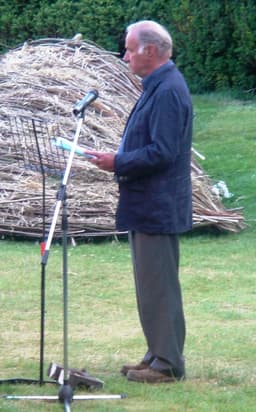
Geoffrey Palmer
Politician · Modern
47.8Total

Petro Poroshenko
Politician · Modern
46.2Total
Basic Information
Born
1942
1965
Died
—
—
Era
Modern
Modern
Nationality
New Zealand
Ukraine
Occupation
Politician
Politician
Civilization
Western
Western
Score Comparison
Military (10%)
50.0
36.6
Political (20%)
55.0
45.0
Influence (20%)
49.4
54.1
Legacy (20%)
41.7
43.3
Leadership (15%)
48.8
40.0
Strategy (15%)
44.2
54.3
TOTAL
47.8
46.2
Geoffrey Palmer — Complete Timeline
1989 AD
Appointed Prime Minister of New ZealandPolitical Action◆ Major
Geoffrey Palmer succeeded David Lange as Prime Minister of New Zealand on 8 August 1989. He took office during a period of economic reform under Rogernomics and internal Labour Party tensions.
New ZealandLabour PartySuccession
Impact: national
1990 AD
Passed the Bill of Rights Act 1990Reform◆ Major
As Prime Minister and a constitutional scholar, Palmer oversaw the passage of the New Zealand Bill of Rights Act 1990. This legislation affirmed fundamental rights and freedoms, though it was not entrenched as supreme law.
New ZealandHuman RightsLegislation
Impact: nationalconstructive
Lost the 1990 general electionPolitical Action◆ Major
Palmer led Labour into the 1990 general election against Jim Bolger's National Party. Labour suffered a heavy defeat, winning only 29 seats to National's 67, ending Palmer's tenure as Prime Minister after 16 months.
New ZealandElectionDefeat
Impact: nationaldestructive
2005 AD
Served as President of the Law CommissionPolitical Action
After leaving politics, Palmer served as President of the New Zealand Law Commission from 2005 to 2010. He continued to influence legal reform and constitutional issues, including advocating for a written constitution.
New ZealandLaw ReformConstitution
Impact: nationalconstructive
Petro Poroshenko — Complete Timeline
2014 AD
War in Donbas and Minsk AgreementsWar◆ Major
Poroshenko led Ukraine during the war in Donbas against Russian-backed separatists. He signed the Minsk I and Minsk II ceasefire agreements, which ultimately failed to stop the conflict.
DonbasMinsk AgreementsCeasefire
Impact: regionaltragic
Elected President of UkrainePolitical Action◆ Major
Poroshenko won the Ukrainian presidential election in the first round with 54% of the vote, following the Euromaidan revolution and the ousting of Viktor Yanukovych. He took office in June 2014.
ElectionEuromaidanPresident
Impact: nationalconstructive
Signed EU-Ukraine Association AgreementPolitical Action◆ Major
Poroshenko signed the EU-Ukraine Association Agreement, which Yanukovych had rejected, deepening Ukraine's political and economic ties with the European Union.
EUAssociation AgreementIntegration
Impact: globalconstructive
2019 AD
Lost Re-election to Volodymyr ZelenskyyPolitical Action◆ Major
Poroshenko lost the 2019 Ukrainian presidential election in a landslide to Volodymyr Zelenskyy, receiving only 24% of the vote in the runoff. He conceded defeat.
ElectionDefeatTransition
Impact: national
2021 AD
Indicted for TreasonPolitical Action◆ Major
Poroshenko was indicted on charges of high treason and supporting terrorism, related to his alleged involvement in coal trade with separatists. He denied the charges, calling them politically motivated.
TreasonIndictmentPolitical Controversy
Impact: nationaldestructive
This comparison has not been analyzed yet.
One-time AI generation (~1 minute). Scores and timeline are already available below.
Rankings
🥇
Geoffrey PalmerLeader
Mil: 50.0Pol: 55.0Inf: 49.4
47.8
🥈
Petro Poroshenko
Mil: 36.6Pol: 45.0Inf: 54.1
46.2
+1.6 behind
How This Comparison Works
Algorithm
Each figure is scored on 6 dimensions (0—100 scale) based on structured historical data: Military (10%), Political (20%), Influence (20%), Legacy (20%), Leadership (15%), Strategy (15%). The weighted total produces the final ranking.
Data Sources
Scores are computed from structured sub-indicators in the database. Scale factors adjust for era (Ancient ×0.85, Modern ×1.0) and civilization size (Eastern ×1.05, Other ×0.80) to account for differences in population and military scale.
Maximum 3 Figures
Comparisons are limited to 2—3 figures to ensure readability and statistical meaningfulness.
Error Margins
±5 points per dimension — Sub-scores are derived from historical records with inherent uncertainty. Two figures within 5 points on a dimension should be considered roughly equivalent in that area.
Total Score Accuracy
±3 points overall — The weighted combination of 6 dimensions produces a total score with approximately ±3 points of uncertainty. Differences of less than 3 points are not statistically significant— the figures are effectively tied.
Known Limitations
- Historical records are incomplete and uneven across civilizations
- Figures from oral-tradition societies may be underrepresented
- Occupation labels can misclassify multi-role figures
- Scores measure capability and impact, not moral character
- Quantitative scoring is a comparison tool, not absolute truth
Capability Radar
Military (10%) — Battles & Warfare
Battles
27
5
Win Rate
29
5
Expansion
36
5
Political (20%) — Governance & Reform
Reform
65
60
Diplomacy
55
65
Economy
50
55
Influence (20%) — Cultural & Global Reach
Cultural
20
30
Global
15
35
Legacy (20%) — Historical Impact
Historical
30
40
Longevity
20
20
Leadership (15%) — Power & Stability
Tenure
30
55
Stability
55
40
Strategy (15%) — Tactics & Innovation
Strategy
40
10
Tactics
41
5
Reform
47
30
Similar Comparisons
Comments & Discussion
No comments yet. Be the first to share your thoughts!