Loading...
George IV of the United Kingdom vs Jean-Jacques Dessalines
Jean-Jacques Dessalines leads by 30.5 pts · 2 figures compared
…
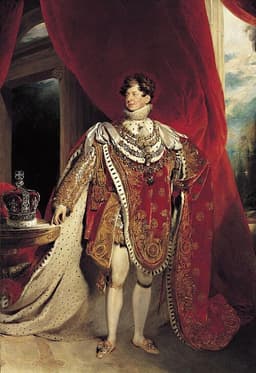
George IV of the United Kingdom
Emperor · Modern
41.1Total
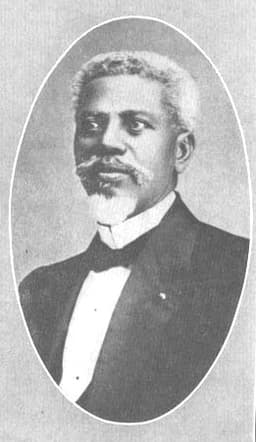
Jean-Jacques Dessalines
Emperor · Modern
71.6Total
Basic Information
Born
1762
1758
Died
1830
1806
Era
Modern
Modern
Nationality
United Kingdom
Haiti
Occupation
Emperor
Emperor
Civilization
Western
Western
Score Comparison
Military (10%)
27.7
78.0
Political (20%)
27.9
68.0
Influence (20%)
50.2
82.0
Legacy (20%)
37.5
72.0
Leadership (15%)
41.5
55.3
Strategy (15%)
60.0
68.1
TOTAL
41.1
71.6
George IV of the United Kingdom — Complete Timeline
1788 AD
Regency Crisis of 1788Political Action◆ Major
When George III became temporarily insane, the Prince of Wales (future George IV) sought to become regent. The crisis ended when the king recovered, but it established a precedent for parliamentary control over regency.
RegencyCrisisSuccession
Impact: national
1811 AD
Appointed Prince RegentPolitical Action◆ Major
Following George III's final mental collapse, the Prince of Wales was formally appointed Prince Regent under the Regency Act 1811. He exercised royal powers for nine years while his father lived in seclusion.
RegencyGovernmentSuccession
Impact: national
Regency Era Patronage of the ArtsCultural◆ Major
As Prince Regent, George IV commissioned John Nash to design Regent Street, Regent's Park, and the Royal Pavilion in Brighton. His patronage defined the architectural and cultural style of the Regency period.
ArchitecturePatronageRegency
Impact: nationalconstructive
1820 AD
Accession as King George IVPolitical Action◆ Major
Upon George III's death, the Prince Regent became King George IV. His accession was marred by his attempt to divorce Queen Caroline, leading to a public scandal and the Pains and Penalties Bill of 1820.
AccessionScandalDivorce
Impact: national
1821 AD
State Visit to IrelandPolitical Action
George IV became the first British monarch to visit Ireland since the Acts of Union. The visit aimed to promote loyalty but was overshadowed by the ongoing Catholic Emancipation debate.
VisitIrelandUnion
Impact: national
1829 AD
Catholic Emancipation OppositionPolitical Action◆ Major
George IV reluctantly signed the Roman Catholic Relief Act 1829, granting Catholic Emancipation. He had opposed the measure but yielded to Prime Minister Wellington's threat of resignation.
Catholic EmancipationLegislationReligion
Impact: national
Jean-Jacques Dessalines — Complete Timeline
1803 AD
Battle of VertièresWar
Dessalines led Haitian forces to a decisive victory over the French army at Verti
BattleIndependenceFrench Defeat
Impact: globalconstructive
1804 AD
Haitian Independence DeclarationPolitical Action
Dessalines declared Haiti's independence, renaming the country from Saint-Domingue. He issued the Haitian Declaration of Independence, establishing the first black republic and the second independent nation in the Americas.
IndependenceRepublicAbolition
Impact: globalprogressive
Coronation as Emperor Jacques IPolitical Action◆ Major
Dessalines crowned himself Emperor Jacques I of Haiti, establishing an authoritarian regime. He centralized power, imposed forced labor to rebuild the economy, and executed former white colonists.
CoronationAuthoritarianismEmpire
Impact: nationaldestructive
1806 AD
Assassination of DessalinesPolitical Action◆ Major
Dessalines was ambushed and killed by rebels at Pont-Rouge near Port-au-Prince. His authoritarian rule and economic policies had alienated elites, leading to his overthrow and Haiti's division into two states.
AssassinationRebellionPolitical Division
Impact: nationaltragic
Expert Analysis
Origins
George IV of the United Kingdom was born on August 12, 1762, the eldest son of King George III and Queen Charlotte. He was educated privately and indulged from an early age, developing a taste for luxury and extravagance. His father's strictness and moral rectitude created a strained relationship, leading George to embrace a lifestyle of excess. He secretly married Maria Fitzherbert, a Catholic, in 1785, a union invalid under the Royal Marriages Act.
Jean-Jacques Dessalines was born around 1758 in West Africa, enslaved and brought to the French colony of Saint-Domingue (later Haiti). He worked as a field hand and later as a coachman. He rose through the ranks of the Haitian Revolution, initially serving under Toussaint Louverture. He was known for his physical strength and fierce determination. Unlike George, his early life was defined by brutality and oppression.
Rise to Power
George IV's rise was tied to the Regency Crisis of 1788, when his father's mental illness prompted a political struggle over regency powers. He became Prince Regent in 1811 under the Regency Act, effectively ruling for nine years before becoming king in 1820. His reign as regent marked the peak of his influence, though his popularity was low due to his extravagant lifestyle and marital scandals.
Dessalines rose through military prowess. He fought alongside Toussaint Louverture against French, Spanish, and British forces. After Toussaint's capture in 1802, Dessalines took command. His decisive victory at the Battle of Vertières on November 18, 1803, forced the French to evacuate. He declared Haiti's independence on January 1, 1804, becoming its first ruler. He crowned himself Emperor Jacques I later that year.
Leadership & Governance
George IV's leadership was largely ceremonial; real power rested with his ministers. He opposed Catholic Emancipation but reluctantly signed the Roman Catholic Relief Act 1829. His patronage of the arts defined the Regency style, commissioning John Nash to design Regent Street, Regent's Park, and the Royal Pavilion. His governance scored 27.9 politically and 41.5 in leadership, reflecting his limited direct influence.
Dessalines established an authoritarian regime. He centralized power, imposed forced labor to rebuild the economy, and executed thousands of white French colonists. His 1805 constitution declared all Haitians as blacks, regardless of skin color, and banned whites from owning land. His leadership score of 55.3 and political score of 68.0 show his direct control, but his harsh methods alienated elites, leading to his assassination.
Triumph & Tragedy
George IV's triumphs include his role as a cultural patron, shaping London's architecture and collecting art. His coronation was a lavish spectacle, but his greatest tragedy was his failed marriage to Caroline of Brunswick; he attempted to divorce her in a public trial that damaged his reputation. His legacy score of 37.5 reflects limited enduring political impact.
Dessalines's triumph was achieving Haitian independence, a monumental feat against French forces. He abolished slavery and created the first independent black republic. His tragedy was his brutal rule and economic policies that led to his assassination on October 17, 1806, by his own officers. His military score of 78.0 and influence of 82.0 underscore his revolutionary impact, but his legacy score of 72.0 is tempered by his authoritarianism.
Character & Destiny
George IV was known for his charm, wit, and extravagance. He was a patron of the arts but also a spendthrift, accumulating massive debts. His character was shaped by indulgence and a desire for pleasure, which alienated his family and subjects. His strategic score of 60.0 suggests some cunning, but his overall total of 41.1 reflects a ruler whose personal flaws undermined his reign.
Dessalines was ruthless, determined, and pragmatic. His strategic score of 68.1 and military score of 78.0 show his effectiveness. He was a product of slavery and revolution, hardened by violence. His character drove him to secure independence at any cost, but his vindictiveness and paranoia led to his downfall. Historians assess him as a founding father whose methods were brutal but necessary for liberation.
Legacy
George IV's legacy is primarily aesthetic: the Regency architecture of London, the Royal Pavilion, and the expansion of the Royal Collection. He also influenced fashion and social life. However, his political legacy is minimal; he had little impact on governance. His total score of 41.1 reflects this limited enduring significance.
Dessalines's legacy is profound: he founded Haiti, the first independent black republic, and permanently ended slavery in the country. He inspired anti-colonial movements worldwide. However, his authoritarian model and economic policies contributed to Haiti's later instability. His total score of 71.6 is nearly double George's, reflecting his transformative impact.
Conclusion
Jean-Jacques Dessalines had a far greater impact than George IV. Dessalines's military and political achievements—leading the only successful slave revolt in history and founding a nation—outweigh George's cultural patronage. While George's scores (41.1 total) show a minor historical figure, Dessalines's 71.6 reflects a world-historical leader. The 30.5-point gap underscores that Dessalines's actions reshaped global history, whereas George's influence was largely decorative.
Rankings
🥇
Jean-Jacques DessalinesLeader
Mil: 78.0Pol: 68.0Inf: 82.0
71.6
🥈
George IV of the United Kingdom
Mil: 27.7Pol: 27.9Inf: 50.2
41.1
+30.5 behind
How This Comparison Works
Algorithm
Each figure is scored on 6 dimensions (0—100 scale) based on structured historical data: Military (10%), Political (20%), Influence (20%), Legacy (20%), Leadership (15%), Strategy (15%). The weighted total produces the final ranking.
Data Sources
Scores are computed from structured sub-indicators in the database. Scale factors adjust for era (Ancient ×0.85, Modern ×1.0) and civilization size (Eastern ×1.05, Other ×0.80) to account for differences in population and military scale.
Maximum 3 Figures
Comparisons are limited to 2—3 figures to ensure readability and statistical meaningfulness.
Error Margins
±5 points per dimension — Sub-scores are derived from historical records with inherent uncertainty. Two figures within 5 points on a dimension should be considered roughly equivalent in that area.
Total Score Accuracy
±3 points overall — The weighted combination of 6 dimensions produces a total score with approximately ±3 points of uncertainty. Differences of less than 3 points are not statistically significant— the figures are effectively tied.
Known Limitations
- Historical records are incomplete and uneven across civilizations
- Figures from oral-tradition societies may be underrepresented
- Occupation labels can misclassify multi-role figures
- Scores measure capability and impact, not moral character
- Quantitative scoring is a comparison tool, not absolute truth
Capability Radar
Military (10%) — Battles & Warfare
Battles
35
85
Win Rate
38
90
Expansion
41
70
Political (20%) — Governance & Reform
Reform
5
60
Diplomacy
15
40
Economy
10
35
Influence (20%) — Cultural & Global Reach
Cultural
30
70
Global
10
70
Legacy (20%) — Historical Impact
Historical
20
85
Longevity
15
75
Leadership (15%) — Power & Stability
Tenure
10
30
Stability
20
20
Strategy (15%) — Tactics & Innovation
Strategy
43
85
Tactics
50
80
Reform
49
75
Similar Comparisons
Comments & Discussion
No comments yet. Be the first to share your thoughts!