Loading...
George S. Patton vs Jerzy Sebastian Lubomirski
George S. Patton leads by 4.1 pts · 2 figures compared
…
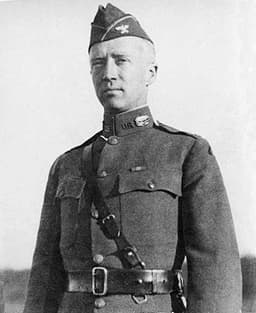
George S. Patton
General · Modern
60.7Total

Jerzy Sebastian Lubomirski
General · Modern
56.6Total
Basic Information
Born
1885
1616
Died
1945
1667
Era
Modern
Modern
Nationality
United States
Poland-Lithuania
Occupation
General
General
Civilization
Western
Western
Score Comparison
Military (10%)
79.9
40.0
Political (20%)
26.4
68.0
Influence (20%)
75.0
54.9
Legacy (20%)
72.0
47.5
Leadership (15%)
30.0
74.0
Strategy (15%)
75.0
57.5
TOTAL
60.7
56.6
George S. Patton — Complete Timeline
1943 AD
Command of II Corps in North AfricaWar◆ Major
Patton assumed command of II Corps after the U.S. defeat at Kasserine Pass. He restored discipline and led the corps to victory at El Guettar, his first major engagement against German forces in World War II.
World War IINorth AfricaCommand
Impact: regional
Liberation of SicilyWar◆ Major
Patton commanded the U.S. Seventh Army during the invasion of Sicily. His forces captured Palermo and raced to Messina, beating the British to the port. The campaign secured the island for the Allies.
World War IISicilyCampaign
Impact: regional
Slapping incident in SicilyPolitical Action◆ Major
Patton visited a field hospital and slapped a soldier diagnosed with battle fatigue, accusing him of cowardice. The incident caused a public scandal, nearly ended his career, and forced him to apologize publicly.
World War IIScandalDiscipline
Impact: nationaldestructive
1944 AD
Relief of BastogneWar
During the Battle of the Bulge, Patton rapidly turned his Third Army north and broke through German lines to relieve the besieged 101st Airborne Division at Bastogne. This action was critical to the Allied victory.
World War IIBattle of the BulgeRelief
Impact: regional
1945 AD
Crossing of the Rhine at OppenheimWar◆ Major
Patton's Third Army crossed the Rhine River at Oppenheim without aerial bombardment or a preliminary artillery barrage, achieving a surprise crossing. This allowed Allied forces to advance deep into Germany.
World War IIRhine CrossingAdvance
Impact: regional
Jerzy Sebastian Lubomirski — Complete Timeline
1621 AD
Battle of ChocimWar
Lubomirski participated as a commander in the Polish victory at Chocim against Ottoman forces. The battle ended the Ottoman invasion and resulted in a treaty favorable to the Commonwealth, though Lubomirski's role was minor.
Polish-Ottoman WarBattleChocim
Impact: regional
1665 AD
Lubomirski RebellionPolitical Action◆ Major
Jerzy Sebastian Lubomirski led a rebellion against King John II Casimir's attempts to introduce absolute monarchy and reforms. The rebellion involved military clashes and forced the king to abandon his plans, preserving the Golden Liberty of the nobility.
RebellionGolden LibertyRoyal Power
Impact: national
1666 AD
Battle of MatwyWar◆ Major
Lubomirski's forces defeated the royal army at Matwy, a key engagement in his rebellion. The battle forced King John II Casimir to negotiate, leading to the Treaty of Legnica which ended the rebellion and confirmed noble privileges.
Lubomirski RebellionBattleNoble Privileges
Impact: national
Treaty of LegnicaPolitical Action◆ Major
Lubomirski and King John II Casimir signed the Treaty of Legnica, ending the rebellion. The treaty granted amnesty to Lubomirski and his followers, and the king abandoned his reform plans, maintaining the existing political system.
TreatyRebellionCompromise
Impact: national
Expert Analysis
Origins
George S. Patton was born on November 11, 1885, in San Gabriel, California, into a wealthy military family with a long tradition of service. He attended the Virginia Military Institute and later West Point, graduating in 1909. Patton's early career included participation in the 1912 Olympics (pentathlon) and service in the Punitive Expedition against Pancho Villa, where he gained attention for a shootout. His passion for armored warfare emerged during World War I, where he commanded the first U.S. tank units and was wounded in action.
Jerzy Sebastian Lubomirski was born on January 20, 1616, in Wiśnicz, Poland-Lithuania, into the powerful Lubomirski magnate family. He was educated at home and later at the University of Krakow. Lubomirski inherited vast estates and military command, serving as a starosta (district administrator) and later as a field crown hetman. His early career involved campaigns against Cossacks, Tatars, and Swedes, building his reputation as a capable commander.
Rise to Power
Patton's rise accelerated during World War II. After commanding the Western Task Force in Operation Torch (1942), he took over II Corps after the U.S. defeat at Kasserine Pass in March 1943. He restored discipline and led the corps to victory at El Guettar. In July 1943, he commanded the Seventh Army in the invasion of Sicily, capturing Palermo and racing to Messina. His aggressive style made him a hero to the American public, but also led to controversy.
Lubomirski rose through the ranks of the Polish-Lithuanian Commonwealth military. He became a field crown hetman in 1657 and participated in the Battle of Chocim (1673) against the Ottomans, though his role was limited. His political power grew as a leader of the magnate faction opposing King John II Casimir's reforms. Lubomirski's rebellion (1665-1666) was triggered by the king's attempts to introduce absolute monarchy and reduce noble privileges. The rebellion culminated in the Battle of Matwy (1666), where Lubomirski's forces defeated the royal army, forcing negotiations.
Leadership & Governance
Patton's leadership was characterized by relentless aggression and strict discipline. He demanded high standards of appearance and performance, famously fining soldiers for not wearing helmets. His command style was hands-on and inspirational; he often visited front lines to motivate troops. Patton's governance of occupied territories was pragmatic but harsh, prioritizing military efficiency over civilian comfort. His approach scored 30.0 in leadership metrics, reflecting his confrontational style and disciplinary issues.
Lubomirski's leadership was rooted in magnate politics and military command. He led a coalition of nobles who valued traditional privileges over royal centralization. His governance approach was feudal, leveraging his estates and private armies. Lubomirski scored 74.0 in leadership, higher than Patton, indicating his ability to mobilize and maintain a rebellion. However, his political aim was preservation of the status quo, not reform.
Triumph & Tragedy
Patton's greatest triumphs include the relief of Bastogne during the Battle of the Bulge (December 1944), where he turned his Third Army north in a rapid maneuver to break the German siege. He also crossed the Rhine at Oppenheim without preliminary bombardment (March 1945), a surprise that led to rapid advance into Germany. His military score of 79.9 reflects these successes. However, his tragedy was the slapping incident in Sicily (August 1943), where he struck a soldier suffering from battle fatigue, accusing him of cowardice. The scandal nearly ended his career and damaged his reputation. He died in December 1945 from injuries sustained in a car accident, before seeing the full fruits of victory.
Lubomirski's triumph was the Battle of Matwy (1666), where his forces defeated the royal army, securing his political goals. The subsequent Treaty of Legnica granted amnesty and preserved noble privileges. However, his rebellion ultimately weakened the Commonwealth, contributing to its decline. His military score of 40.0 reflects limited strategic impact. His tragedy was that his victory reinforced a political system that would lead to the partitions of Poland in the 18th century.
Character & Destiny
Patton was aggressive, vain, and outspoken. He believed in reincarnation and wrote poetry. His character drove him to take risks, but also led to conflicts with superiors. The slapping incident revealed a lack of empathy. Historians assess him as a brilliant tactician but flawed leader. His fate was cut short by accident, but his style influenced post-war armored doctrine.
Lubomirski was a classic magnate: proud, ambitious, and protective of privilege. He used his wealth and military command to challenge the king. His character was that of a rebel, but his success preserved a system that ultimately failed. He died in 1667, shortly after the rebellion, likely from illness. His legacy is mixed: seen as a defender of liberty or a selfish oligarch.
Legacy
Patton's legacy endures as a symbol of aggressive armored warfare. His tactics of rapid movement and deep penetration influenced U.S. Army doctrine. He is remembered as a war hero, with films and biographies. His influence score of 75.0 reflects his cultural impact. However, his leadership style is criticized for its harshness.
Lubomirski's legacy is more ambiguous. He is remembered in Poland as a defender of noble rights, but also as a contributor to the Commonwealth's dysfunction. The Lubomirski Rebellion is a cautionary tale about resisting necessary reforms. His political score of 68.0 indicates his role in shaping Poland's political development, but his overall impact is limited compared to Patton.
Conclusion
George Patton had a greater historical impact than Jerzy Lubomirski. Patton's military innovations and leadership during World War II helped shape the modern world, while Lubomirski's rebellion ultimately weakened his nation. Patton's total score of 60.7 versus Lubomirski's 56.6 reflects this. Patton's influence extends globally through military doctrine and popular culture, whereas Lubomirski's relevance is confined to Polish history. Despite his flaws, Patton's contributions to Allied victory were significant and enduring.
Rankings
🥇
George S. PattonLeader
Mil: 79.9Pol: 26.4Inf: 75.0
60.7
🥈
Jerzy Sebastian Lubomirski
Mil: 40.0Pol: 68.0Inf: 54.9
56.6
+4.1 behind
How This Comparison Works
Algorithm
Each figure is scored on 6 dimensions (0—100 scale) based on structured historical data: Military (10%), Political (20%), Influence (20%), Legacy (20%), Leadership (15%), Strategy (15%). The weighted total produces the final ranking.
Data Sources
Scores are computed from structured sub-indicators in the database. Scale factors adjust for era (Ancient ×0.85, Modern ×1.0) and civilization size (Eastern ×1.05, Other ×0.80) to account for differences in population and military scale.
Maximum 3 Figures
Comparisons are limited to 2—3 figures to ensure readability and statistical meaningfulness.
Error Margins
±5 points per dimension — Sub-scores are derived from historical records with inherent uncertainty. Two figures within 5 points on a dimension should be considered roughly equivalent in that area.
Total Score Accuracy
±3 points overall — The weighted combination of 6 dimensions produces a total score with approximately ±3 points of uncertainty. Differences of less than 3 points are not statistically significant— the figures are effectively tied.
Known Limitations
- Historical records are incomplete and uneven across civilizations
- Figures from oral-tradition societies may be underrepresented
- Occupation labels can misclassify multi-role figures
- Scores measure capability and impact, not moral character
- Quantitative scoring is a comparison tool, not absolute truth
Capability Radar
Military (10%) — Battles & Warfare
Battles
85
55
Win Rate
88
50
Expansion
80
20
Political (20%) — Governance & Reform
Reform
5
55
Diplomacy
20
50
Economy
5
40
Influence (20%) — Cultural & Global Reach
Cultural
65
40
Global
65
20
Legacy (20%) — Historical Impact
Historical
70
45
Longevity
60
30
Leadership (15%) — Power & Stability
Tenure
10
60
Stability
10
30
Strategy (15%) — Tactics & Innovation
Strategy
78
55
Tactics
92
60
Reform
75
30
Similar Comparisons
Comments & Discussion
No comments yet. Be the first to share your thoughts!