Loading...
George S. Patton vs Xue Yue
George S. Patton leads by 5.0 pts · 2 figures compared
…
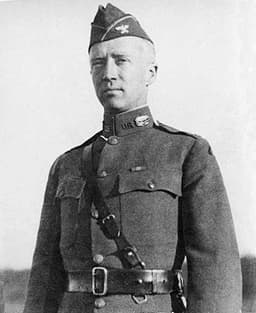
George S. Patton
General · Modern
60.7Total

Xue Yue
General · Modern
55.7Total
Basic Information
Born
1885
1896
Died
1945
1998
Era
Modern
Modern
Nationality
United States
China
Occupation
General
General
Civilization
Western
Eastern
Score Comparison
Military (10%)
79.9
70.0
Political (20%)
26.4
37.9
Influence (20%)
75.0
58.0
Legacy (20%)
72.0
50.0
Leadership (15%)
30.0
68.0
Strategy (15%)
75.0
58.0
TOTAL
60.7
55.7
George S. Patton — Complete Timeline
1943 AD
Command of II Corps in North AfricaWar◆ Major
Patton assumed command of II Corps after the U.S. defeat at Kasserine Pass. He restored discipline and led the corps to victory at El Guettar, his first major engagement against German forces in World War II.
World War IINorth AfricaCommand
Impact: regional
Liberation of SicilyWar◆ Major
Patton commanded the U.S. Seventh Army during the invasion of Sicily. His forces captured Palermo and raced to Messina, beating the British to the port. The campaign secured the island for the Allies.
World War IISicilyCampaign
Impact: regional
Slapping incident in SicilyPolitical Action◆ Major
Patton visited a field hospital and slapped a soldier diagnosed with battle fatigue, accusing him of cowardice. The incident caused a public scandal, nearly ended his career, and forced him to apologize publicly.
World War IIScandalDiscipline
Impact: nationaldestructive
1944 AD
Relief of BastogneWar
During the Battle of the Bulge, Patton rapidly turned his Third Army north and broke through German lines to relieve the besieged 101st Airborne Division at Bastogne. This action was critical to the Allied victory.
World War IIBattle of the BulgeRelief
Impact: regional
1945 AD
Crossing of the Rhine at OppenheimWar◆ Major
Patton's Third Army crossed the Rhine River at Oppenheim without aerial bombardment or a preliminary artillery barrage, achieving a surprise crossing. This allowed Allied forces to advance deep into Germany.
World War IIRhine CrossingAdvance
Impact: regional
Xue Yue — Complete Timeline
1939 AD
Commanded the Battle of Changsha (1939)War◆ Major
Xue Yue commanded Chinese forces in the First Battle of Changsha, successfully defending the city against a Japanese offensive. The victory boosted Chinese morale and marked the first major Japanese defeat in the war.
Second Sino-Japanese WarVictory
Impact: regionalconstructive
Commander of the 9th War ZonePolitical Action◆ Major
Xue Yue was appointed commander of the 9th War Zone, responsible for defending Hunan and Jiangxi provinces. He held this command through multiple battles, becoming one of the most effective Nationalist commanders.
Military CommandWorld War II
Impact: regional
1941 AD
Commanded the Battle of Changsha (1941)War◆ Major
Xue Yue led Chinese forces to victory in the Third Battle of Changsha, repelling a Japanese offensive. The battle resulted in heavy Japanese casualties and was one of the largest Chinese victories of the war.
Second Sino-Japanese WarVictory
Impact: regionalconstructive
1944 AD
Defeated at the Battle of Changsha (1944)War◆ Major
Xue Yue's forces were defeated in the Fourth Battle of Changsha during Operation Ichigo. Japanese forces captured the city, and Xue Yue's command was criticized for its failure to hold the strategic position.
Second Sino-Japanese WarDefeat
Impact: regionaltragic
Expert Analysis
Origins
George Smith Patton was born on November 11, 1885, in San Gabriel, California, into a wealthy military family with a long tradition of service. He attended the Virginia Military Institute and later the United States Military Academy at West Point, graduating in 1909. Patton's early career included participation in the 1912 Stockholm Olympics (modern pentathlon) and service in the 1916 Pancho Villa Expedition. His formative experiences were shaped by a deep belief in reincarnation and a relentless drive for personal valor.
Xue Yue was born on December 27, 1896, in Guangdong, China, into a poor farming family. He entered the Yunnan Military Academy in 1914 and later joined the Kuomintang (KMT) under Sun Yat-sen. Xue rose through the ranks during the Northern Expedition (1926-1928) and the Chinese Civil War against the Communists. His early career was marked by loyalty to Chiang Kai-shek and a reputation for tactical competence in defensive operations.
Rise to Power
Patton's rise accelerated during World War I, where he served as a tank commander in the new U.S. Tank Corps, earning a Distinguished Service Cross. Between wars, he became a leading advocate for armored warfare, writing articles and training troops. In World War II, he commanded the Western Task Force during Operation Torch (1942) in North Africa. After the U.S. defeat at Kasserine Pass, Patton assumed command of II Corps in March 1943, restoring discipline and leading a victory at El Guettar. His success in the Sicily campaign (Operation Husky, July-August 1943) cemented his reputation as an aggressive commander, though the slapping incident in August 1943 nearly ended his career.
Xue Yue rose to prominence during the Second Sino-Japanese War. After commanding the 9th War Zone from 1939, he orchestrated the defense of Changsha. The First Battle of Changsha (September-October 1939) saw Xue's forces repel a Japanese offensive, boosting Chinese morale. His victory in the Third Battle of Changsha (December 1941-January 1942) further solidified his reputation, inflicting heavy casualties on the Japanese (estimated 30,000-40,000 losses). Xue became known as the "Tiger of Changsha" and was one of the few KMT generals to consistently defeat Japanese offensives.
Leadership & Governance
Patton's leadership style was aggressive, front-line, and personal. He believed in leading from the front, often visiting combat zones to motivate troops. His Third Army advanced rapidly across France after the Normandy breakout in August 1944, covering 600 miles in 30 days. Patton emphasized speed, shock action, and relentless pursuit. He scored 75.0 in strategy and 79.9 in military, but his political score was low (26.4) due to the slapping incident and his outspoken nature. His governance of occupied territories was strict, with orders to treat enemy forces harshly.
Xue Yue was a methodical defensive strategist. He employed a tactic known as "hooking" (or "encircling"), drawing Japanese forces deep into Chinese territory and then counterattacking from the flanks. At Changsha, he used the Xiang River and surrounding terrain to channel Japanese troops into kill zones. Xue's leadership score of 68.0 reflects his ability to maintain unit cohesion under pressure. He governed the 9th War Zone with a focus on civilian cooperation and supply logistics, but his political maneuvering within the KMT was limited, scoring 37.9 in political influence.
Triumph & Tragedy
Patton's greatest triumph was the Relief of Bastogne during the Battle of the Bulge (December 1944). He turned his Third Army north in a rapid winter march, covering 150 miles in 48 hours, and broke through German lines to relieve the 101st Airborne Division. His crossing of the Rhine at Oppenheim (March 1945) was a strategic coup, achieving a surprise crossing without artillery preparation. However, his greatest failure was the slapping incident in Sicily (August 1943), where he struck a soldier suffering from battle fatigue. The scandal nearly cost him his command and tarnished his reputation. He also failed politically, with his outspoken criticism of Allied strategies alienating superiors.
Xue Yue's greatest triumph was the Third Battle of Changsha (December 1941-January 1942), where his forces inflicted a decisive defeat on the Japanese 11th Army. Chinese sources claim Japanese casualties of over 30,000, while Japanese records admit about 6,000. The victory boosted Chinese morale and demonstrated the effectiveness of Chinese defensive tactics. His tragedy came in the Fourth Battle of Changsha (May-June 1944) during Japan's Operation Ichigo. Xue's forces were outflanked and overwhelmed, and Changsha fell. Xue was blamed for the defeat, and his influence waned. He scored 70.0 in military, but his inability to adapt to the Japanese offensive in 1944 exposed limitations in his strategic flexibility.
Character & Destiny
Patton was charismatic, aggressive, and prone to outbursts. He believed in personal courage and often took unnecessary risks. His character drove his success in rapid offensives but also led to his downfall in the slapping incident. Historians note that Patton's destiny was shaped by his inability to temper his ego; he died in a car accident in December 1945, just months after the war. His legacy score of 72.0 reflects his iconic status, but his political ineptitude limited his post-war influence.
Xue Yue was disciplined, loyal, and methodical. He followed orders from Chiang Kai-shek without question and avoided political intrigue. His character made him a reliable defensive commander but limited his ability to launch strategic offensives. After the KMT's retreat to Taiwan in 1949, Xue held minor advisory roles but never regained prominence. He died in 1998 at age 101. His legacy score of 50.0 reflects his relative obscurity outside China, despite his battlefield successes.
Legacy
Patton's legacy is immense in Western military history. His emphasis on armored warfare and rapid maneuver influenced U.S. Army doctrine for decades. The Third Army's record of rapid advances became a model for combined arms operations. Patton scored 72.0 in legacy, and his name remains synonymous with aggressive leadership. However, his impact on political or strategic levels was limited; he left no lasting institutional reforms.
Xue Yue's legacy is more localized. In China, he is remembered as a national hero for his victories at Changsha, which delayed Japanese advances and protected the wartime capital of Chongqing. His defensive tactics are studied in Chinese military academies. However, his defeat in 1944 and his association with the losing KMT side in the Chinese Civil War diminished his broader impact. His influence score of 58.0 reflects his significance in Chinese history but limited global recognition.
Conclusion
Patton had greater overall impact than Xue Yue, as measured by his total score of 60.7 to Xue's 55.7. Patton's military score (79.9) significantly exceeded Xue's (70.0), and his legacy (72.0 vs. 50.0) is more enduring globally. While Xue's defensive victories were critical to China's war effort, Patton's offensive campaigns directly contributed to the collapse of Nazi Germany in Europe. Patton's influence on modern armored warfare and his iconic status in popular culture give him a broader and more lasting legacy. Xue Yue was a competent commander in a specific theater, but Patton's strategic impact on World War II was greater.
Rankings
🥇
George S. PattonLeader
Mil: 79.9Pol: 26.4Inf: 75.0
60.7
🥈
Xue Yue
Mil: 70.0Pol: 37.9Inf: 58.0
55.7
+5.0 behind
How This Comparison Works
Algorithm
Each figure is scored on 6 dimensions (0—100 scale) based on structured historical data: Military (10%), Political (20%), Influence (20%), Legacy (20%), Leadership (15%), Strategy (15%). The weighted total produces the final ranking.
Data Sources
Scores are computed from structured sub-indicators in the database. Scale factors adjust for era (Ancient ×0.85, Modern ×1.0) and civilization size (Eastern ×1.05, Other ×0.80) to account for differences in population and military scale.
Maximum 3 Figures
Comparisons are limited to 2—3 figures to ensure readability and statistical meaningfulness.
Error Margins
±5 points per dimension — Sub-scores are derived from historical records with inherent uncertainty. Two figures within 5 points on a dimension should be considered roughly equivalent in that area.
Total Score Accuracy
±3 points overall — The weighted combination of 6 dimensions produces a total score with approximately ±3 points of uncertainty. Differences of less than 3 points are not statistically significant— the figures are effectively tied.
Known Limitations
- Historical records are incomplete and uneven across civilizations
- Figures from oral-tradition societies may be underrepresented
- Occupation labels can misclassify multi-role figures
- Scores measure capability and impact, not moral character
- Quantitative scoring is a comparison tool, not absolute truth
Capability Radar
Military (10%) — Battles & Warfare
Battles
85
75
Win Rate
88
70
Expansion
80
30
Political (20%) — Governance & Reform
Reform
5
20
Diplomacy
20
30
Economy
5
20
Influence (20%) — Cultural & Global Reach
Cultural
65
30
Global
65
30
Legacy (20%) — Historical Impact
Historical
70
55
Longevity
60
30
Leadership (15%) — Power & Stability
Tenure
10
50
Stability
10
25
Strategy (15%) — Tactics & Innovation
Strategy
78
75
Tactics
92
80
Reform
75
40
Similar Comparisons
Comments & Discussion
No comments yet. Be the first to share your thoughts!