Loading...
George VI vs Haakon VII of Norway
Haakon VII of Norway leads by 0.1 pts · 2 figures compared
…

George VI
Emperor · Modern
56.3Total
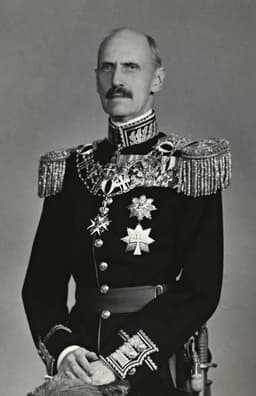
Haakon VII of Norway
Emperor · Modern
56.4Total
Basic Information
Born
1895
1872
Died
1952
1957
Era
Modern
Modern
Nationality
United Kingdom
Norway
Occupation
Emperor
Emperor
Civilization
Western
Western
Score Comparison
Military (10%)
10.0
17.8
Political (20%)
72.0
70.0
Influence (20%)
56.7
58.3
Legacy (20%)
54.0
52.0
Leadership (15%)
72.0
72.0
Strategy (15%)
60.0
57.5
TOTAL
56.3
56.4
George VI — Complete Timeline
1936 AD
Accession to the ThronePolitical Action
George VI became king on December 11, 1936, following the abdication of his brother Edward VIII. He was crowned on May 12, 1937. His reign began under the shadow of constitutional crisis and the looming threat of war in Europe.
CoronationMonarchySuccession
Impact: national
1939 AD
King's Speech BroadcastCultural◆ Major
George VI delivered a radio broadcast to the British Empire on September 3, 1939, announcing the declaration of war against Germany. His speech, delivered despite a stammer, became a symbol of national resolve and unity during World War II.
World War IIBroadcastNational Unity
Impact: global
1940 AD
Remained in London During BlitzPolitical Action◆ Major
George VI and Queen Elizabeth refused to leave London or send their children to safety during the Blitz. They remained at Buckingham Palace, which was bombed on September 13, 1940. Their decision to stay boosted public morale and symbolized shared sacrifice.
World War IIBlitzRoyal Family
Impact: nationalconstructive
1944 AD
Visited Battlefronts in EuropeWar
George VI visited Allied troops in Normandy, France, on June 16, 1944, just ten days after D-Day. He also toured other battlefronts in North Africa and Italy during the war, becoming the first British monarch to visit active combat zones since George II.
World War IIRoyal VisitMilitary
Impact: regionalconstructive
1947 AD
End of British Raj in IndiaPolitical Action◆ Major
George VI relinquished the title of Emperor of India on June 22, 1948, following Indian independence on August 15, 1947. This marked the formal end of British imperial rule in India and the transformation of the monarchy's role in the Commonwealth.
DecolonizationIndiaCommonwealth
Impact: global
Haakon VII of Norway — Complete Timeline
1905 AD
Election as King of NorwayPolitical Action
Following the dissolution of the union with Sweden, the Norwegian parliament elected Prince Carl of Denmark as King Haakon VII. He accepted the throne after a referendum confirmed the monarchy. This established the modern, independent Kingdom of Norway with a constitutional monarch.
NorwayIndependenceMonarchyReferendum
Impact: nationalconstructive
1940 AD
Refusal to appoint Quisling as Prime MinisterPolitical Action
After the German invasion of Norway, Nazi Germany demanded that Haakon VII appoint Vidkun Quisling as prime minister. Haakon VII refused, stating he would abdicate rather than accept a government led by Quisling. This act of defiance made him a symbol of Norwegian resistance.
NorwayWorld War IIResistanceQuisling
Impact: nationalconstructive
Leadership of the Norwegian government-in-exilePolitical Action◆ Major
Haakon VII fled Norway after the German invasion and established a government-in-exile in London. He became a central figure in the Allied war effort, broadcasting radio messages to occupied Norway and maintaining the legitimacy of the Norwegian state throughout World War II.
NorwayWorld War IIExileGovernment
Impact: globalconstructive
1945 AD
Return to Norway after World War IIPolitical Action◆ Major
Haakon VII returned to Norway on June 7, 1945, exactly five years after he had fled. His return was a moment of national celebration and unity. He was greeted by massive crowds, symbolizing the restoration of Norwegian sovereignty and the end of the Nazi occupation.
NorwayWorld War IILiberationMonarchy
Impact: nationalconstructive
Expert Analysis
Origins
George VI was born Albert Frederick Arthur George on December 14, 1895, the second son of King George V and Queen Mary. He was educated at naval colleges and served in the Royal Navy during World War I. His early life was overshadowed by his elder brother Edward, the heir apparent. Haakon VII was born Prince Carl of Denmark on August 3, 1872, the second son of Crown Prince Frederick of Denmark. He was trained as a naval officer and married Princess Maud of Wales, daughter of King Edward VII. In 1905, when Norway became independent from Sweden, he was elected king and took the name Haakon VII.
Rise to Power
George VI never expected to be king. His father, George V, died in January 1936, and Edward VIII succeeded. But Edward's desire to marry Wallis Simpson led to a constitutional crisis, and he abdicated on December 11, 1936. George ascended the throne reluctantly, crowned on May 12, 1937. Haakon VII's rise was democratic: the Norwegian parliament voted to offer him the throne after a referendum showed 79% support for monarchy. He accepted on condition of a popular vote, which confirmed the decision. He arrived in Norway on November 25, 1905, as a constitutional monarch.
Leadership & Governance
George VI was a constitutional monarch who worked closely with Prime Ministers, notably Winston Churchill during WWII. He supported the war effort through morale-boosting visits and broadcasts. His political score of 72.0 reflects his role as a symbol of unity. Haakon VII also adhered to constitutional norms but took a bold stand in 1940 when he refused to appoint Vidkun Quisling as prime minister, stating he would rather abdicate. This act defiantly upheld democratic principles and earned him a political score of 70.0. Both kings led by example, but Haakon's direct defiance of Nazi demands was more dramatic.
Triumph & Tragedy
George VI's greatest triumph was his leadership during WWII, remaining in London during the Blitz and visiting battlefronts. His legacy score of 54.0 is tempered by the loss of the British Raj in India in 1947, ending the title Emperor of India. Haakon VII's triumph was his role as a symbol of Norwegian resistance; his refusal to capitulate and his leadership of the government-in-exile in London rallied his people. His return on June 7, 1945, was a national celebration. A tragedy was the loss of his son, Crown Prince Olav's wife, but personally, he suffered the exile and separation from his country. Both kings faced the tragedy of war, but Haakon's exile was more personal.
Character & Destiny
George VI was shy and struggled with a stammer, which he overcame with speech therapy. His sense of duty drove him to accept the throne despite his reluctance. His military score of 10.0 is low because his role was symbolic, not strategic. Haakon VII was also reserved but resolute. His naval background gave him a military score of 17.8. Both were determined to serve their countries. George's character led him to be a steadfast figure, while Haakon's refusal to bow to Nazi demands defined his destiny as a resistance icon.
Legacy
George VI is remembered as the king who led Britain through WWII, with his family remaining in London. The modern monarchy's image was shaped by his example. However, his reign saw the decline of the British Empire. Haakon VII is revered as the "People's King" who symbolized Norwegian independence. His legacy is enshrined in the Norwegian constitution and his statue in Oslo. In terms of influence, Haakon scores 58.3 vs George's 56.7, reflecting his enduring impact on Norwegian identity.
Conclusion
While both kings were effective constitutional monarchs during WWII, Haakon VII had a slightly greater impact due to his decisive role in preserving Norwegian democracy and his symbolic leadership of the resistance. His total score of 56.4 edges out George VI's 56.3. Haakon's refusal to appoint Quisling was a pivotal moment that defined Norway's war legacy, whereas George's role, though important, was more that of a supportive figure. Therefore, Haakon VII emerges as the more influential monarch in terms of direct political and symbolic action.
Rankings
🥇
Haakon VII of NorwayLeader
Mil: 17.8Pol: 70.0Inf: 58.3
56.4
🥈
George VI
Mil: 10.0Pol: 72.0Inf: 56.7
56.3
+0.1 behind
How This Comparison Works
Algorithm
Each figure is scored on 6 dimensions (0—100 scale) based on structured historical data: Military (10%), Political (20%), Influence (20%), Legacy (20%), Leadership (15%), Strategy (15%). The weighted total produces the final ranking.
Data Sources
Scores are computed from structured sub-indicators in the database. Scale factors adjust for era (Ancient ×0.85, Modern ×1.0) and civilization size (Eastern ×1.05, Other ×0.80) to account for differences in population and military scale.
Maximum 3 Figures
Comparisons are limited to 2—3 figures to ensure readability and statistical meaningfulness.
Error Margins
±5 points per dimension — Sub-scores are derived from historical records with inherent uncertainty. Two figures within 5 points on a dimension should be considered roughly equivalent in that area.
Total Score Accuracy
±3 points overall — The weighted combination of 6 dimensions produces a total score with approximately ±3 points of uncertainty. Differences of less than 3 points are not statistically significant— the figures are effectively tied.
Known Limitations
- Historical records are incomplete and uneven across civilizations
- Figures from oral-tradition societies may be underrepresented
- Occupation labels can misclassify multi-role figures
- Scores measure capability and impact, not moral character
- Quantitative scoring is a comparison tool, not absolute truth
Capability Radar
Military (10%) — Battles & Warfare
Battles
38
38
Win Rate
38
39
Expansion
44
40
Political (20%) — Governance & Reform
Reform
55
65
Diplomacy
70
75
Economy
50
60
Influence (20%) — Cultural & Global Reach
Cultural
55
65
Global
60
55
Legacy (20%) — Historical Impact
Historical
65
70
Longevity
50
60
Leadership (15%) — Power & Stability
Tenure
60
70
Stability
65
80
Strategy (15%) — Tactics & Innovation
Strategy
44
45
Tactics
51
51
Reform
49
49
Similar Comparisons
Comments & Discussion
No comments yet. Be the first to share your thoughts!