Loading...
Germanicus vs Marcus Claudius Marcellus
Marcus Claudius Marcellus leads by 3.2 pts · 2 figures compared
…

Germanicus
General · Ancient
52.6Total
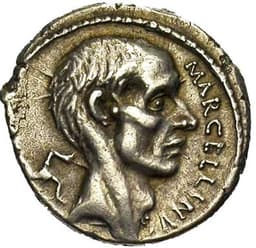
Marcus Claudius Marcellus
General · Ancient
55.8Total
Basic Information
Born
-15
-268
Died
19
-208
Era
Ancient
Ancient
Nationality
Roman Empire
Roman Republic
Occupation
General
General
Civilization
Western
Western
Score Comparison
Military (10%)
76.0
72.0
Political (20%)
29.3
32.2
Influence (20%)
58.3
60.0
Legacy (20%)
52.0
50.0
Leadership (15%)
46.3
64.5
Strategy (15%)
61.3
66.3
TOTAL
52.6
55.8
Germanicus — Complete Timeline
14 AD
Germanic Campaigns (14-16 AD)War◆ Major
Germanicus led Roman legions into Germania to avenge the Teutoburg Forest disaster. He defeated Arminius at the Battle of the Weser River and recovered two of the three lost legionary eagles, though he failed to permanently subdue the region.
Germanic WarsArminiusLegionary EaglesTeutoburg
Impact: regional
Suppression of the Rhine MutinyPolitical Action
After Augustus's death, legions on the Rhine mutinied over pay and conditions. Germanicus quelled the revolt by addressing grievances and executing ringleaders, restoring discipline.
MutinyMilitary DisciplineRhine Legions
Impact: regional
19 AD
Recall to Rome and DeathPolitical Action◆ Major
Emperor Tiberius recalled Germanicus from the East amid tensions with the governor of Syria, Gnaeus Piso. Germanicus died suddenly in Antioch under suspicious circumstances, leading to rumors of poisoning and a public trial of Piso.
TiberiusPisoDeathTrial
Impact: nationaltragic
Marcus Claudius Marcellus — Complete Timeline
222 BC
First Consulship and Campaign in Cisalpine GaulWar◆ Major
Marcellus was elected consul for the first time and campaigned in Cisalpine Gaul against the Insubres. He killed the Gallic chieftain Viridomarus in single combat, winning the spolia opima, a rare honor awarded for killing an enemy leader in battle.
Roman RepublicGallic WarsSpolia Opima
Impact: regional
216 BC
Defended Nola Against HannibalWar◆ Major
After the disaster at Cannae, Marcellus defended the city of Nola against Hannibal's forces. He successfully repelled the Carthaginian attack, earning a reputation as one of the few Roman commanders able to stand up to Hannibal in the field.
Second Punic WarHannibalNola
Impact: regional
212 BC
Captured SyracuseWar◆ Major
Marcellus captured the Greek city of Syracuse after a two-year siege. The city had allied with Carthage, and its fall was a major blow to Hannibal's strategy. During the sack, the mathematician Archimedes was killed by a Roman soldier, despite Marcellus's orders to spare him.
Second Punic WarSyracuseArchimedes
Impact: regionaldestructive
208 BC
Killed in Ambush at VenusiaWar◆ Major
While reconnoitering near Venusia, Marcellus and his colleague were ambushed by a Carthaginian force under Hannibal. Marcellus was killed in the skirmish, and his death was a significant loss for Rome. Hannibal reportedly gave him a proper burial.
Second Punic WarHannibalDeath
Impact: regionaltragic
Expert Analysis
Origins
Germanicus Julius Caesar was born in 15 BC into the Julio-Claudian dynasty. His father was Nero Claudius Drusus, a successful general, and his mother was Antonia Minor, daughter of Mark Antony. He was adopted by his uncle Tiberius in 9 AD, making him a potential heir. His early education emphasized military and oratory skills.
Marcus Claudius Marcellus, born around 268 BC, came from a prominent plebeian family. He served in the First Punic War and later as curule aedile. His military career began in earnest during the Gallic wars, where he demonstrated personal bravery and tactical acumen.
Rise to Power
Germanicus rose quickly through the cursus honorum, serving as quaestor in 7 AD, consul in 12 AD, and commander in Gaul and Germania. His popularity soared after his Germanic campaigns (14-16 AD), where he led eight legions across the Rhine. He recovered two of the three lost eagles from the Teutoburg disaster, boosting morale and his own reputation.
Marcellus was elected consul in 222 BC for the first time. His defining moment came when he killed the Gallic chieftain Viridomarus in single combat, earning the spolia opima, a rare honor. He was elected consul five times total, reflecting his military successes and political standing.
Leadership & Governance
Germanicus was known for his accessibility and empathy. During the Rhine mutiny of 14 AD, he addressed soldiers' grievances directly, even threatening suicide to regain control. He enacted reforms to improve legionary discipline and conditions. Politically, he was less adept, often clashing with Tiberius’s appointees like Gnaeus Piso.
Marcellus was a pragmatic, aggressive commander. At Nola (215 BC), he used surprise attacks and fortified positions to repel Hannibal. He besieged Syracuse for two years, employing combined land and naval tactics. Politically, he was a traditionalist, opposing populist reforms but maintaining strong senatorial support.
Triumph & Tragedy
Germanicus's greatest triumph was the recovery of the Teutoburg eagles and his victory over Arminius at the Weser River (16 AD). His tragedy was his recall and mysterious death in Antioch (19 AD), possibly poisoned by Piso on Tiberius's orders. His death sparked public outrage and allegations of foul play.
Marcellus's triumphs include capturing Syracuse (212 BC) and saving Nola. His tragedy was his death in an ambush at Venusia (208 BC), when he and his colleague were caught off guard by Hannibal. His body was returned to Hannibal, who gave it a proper funeral.
Character & Destiny
Germanicus was charismatic, ambitious, and beloved by the people. His openness made him a threat to Tiberius, who saw him as a rival. His death, whether natural or murder, cemented his status as a martyr. He scored 46.3 in Leadership and 61.3 in Strategy, reflecting his military competence but political naivety.
Marcellus was bold, stubborn, and tactically flexible. His willingness to engage Hannibal at Nola earned him the title "Sword of Rome." However, his recklessness in reconnaissance led to his ambush. He scored 64.5 in Leadership and 66.3 in Strategy, higher than Germanicus in both.
Legacy
Germanicus's legacy is tied to his son Caligula and his brother Claudius, both emperors. His popularity was immortalized in Tacitus's Annals and in Roman memory as the ideal prince. His military achievements were overshadowed by his political downfall.
Marcellus's legacy is more direct: he was the first Roman to defeat Hannibal in a pitched battle (Nola) and captured Syracuse, a key strategic victory. His death was a blow to Roman morale, but his tactics influenced later commanders. He scored 52.0 in Legacy vs Germanicus's 52.0, tied.
Conclusion
While Germanicus had greater political influence and popular appeal, Marcellus had a more substantial military impact. Marcellus's score of 55.8 total edges Germanicus's 52.6, and his leadership (64.5 vs 46.3) and strategy (66.3 vs 61.3) scores are higher. Marcellus faced a more formidable enemy in Hannibal and achieved decisive victories at Nola and Syracuse. Germanicus's campaigns were important but inconclusive, and his political failure limits his overall impact. Therefore, Marcus Claudius Marcellus had a greater impact on Roman history.
Rankings
🥇
Marcus Claudius MarcellusLeader
Mil: 72.0Pol: 32.2Inf: 60.0
55.8
🥈
Germanicus
Mil: 76.0Pol: 29.3Inf: 58.3
52.6
+3.2 behind
How This Comparison Works
Algorithm
Each figure is scored on 6 dimensions (0—100 scale) based on structured historical data: Military (10%), Political (20%), Influence (20%), Legacy (20%), Leadership (15%), Strategy (15%). The weighted total produces the final ranking.
Data Sources
Scores are computed from structured sub-indicators in the database. Scale factors adjust for era (Ancient ×0.85, Modern ×1.0) and civilization size (Eastern ×1.05, Other ×0.80) to account for differences in population and military scale.
Maximum 3 Figures
Comparisons are limited to 2—3 figures to ensure readability and statistical meaningfulness.
Error Margins
±5 points per dimension — Sub-scores are derived from historical records with inherent uncertainty. Two figures within 5 points on a dimension should be considered roughly equivalent in that area.
Total Score Accuracy
±3 points overall — The weighted combination of 6 dimensions produces a total score with approximately ±3 points of uncertainty. Differences of less than 3 points are not statistically significant— the figures are effectively tied.
Known Limitations
- Historical records are incomplete and uneven across civilizations
- Figures from oral-tradition societies may be underrepresented
- Occupation labels can misclassify multi-role figures
- Scores measure capability and impact, not moral character
- Quantitative scoring is a comparison tool, not absolute truth
Capability Radar
Military (10%) — Battles & Warfare
Battles
65
75
Win Rate
70
70
Expansion
55
65
Political (20%) — Governance & Reform
Reform
15
30
Diplomacy
50
55
Economy
20
40
Influence (20%) — Cultural & Global Reach
Cultural
60
55
Global
50
45
Legacy (20%) — Historical Impact
Historical
65
65
Longevity
55
50
Leadership (15%) — Power & Stability
Tenure
20
60
Stability
25
50
Strategy (15%) — Tactics & Innovation
Strategy
70
75
Tactics
75
80
Reform
30
30
Similar Comparisons
Comments & Discussion
No comments yet. Be the first to share your thoughts!