Loading...
This comparison has not been analyzed yet.
One-time AI generation (~1 minute). Scores and timeline are already available below.
Marcus Claudius Marcellus vs Zhu Ran
Marcus Claudius Marcellus leads by 11.7 pts · 2 figures compared
…
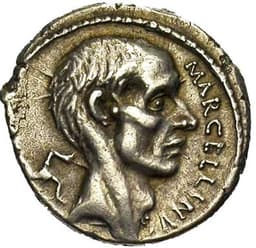
Marcus Claudius Marcellus
General · Ancient
55.8Total
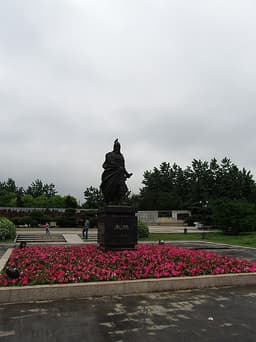
Zhu Ran
General · Ancient
44.1Total
Basic Information
Born
-268
182
Died
-208
249
Era
Ancient
Ancient
Nationality
Roman Republic
China
Occupation
General
General
Civilization
Western
Eastern
Score Comparison
Military (10%)
72.0
52.5
Political (20%)
32.2
35.0
Influence (20%)
60.0
47.1
Legacy (20%)
50.0
39.2
Leadership (15%)
64.5
40.4
Strategy (15%)
66.3
60.0
TOTAL
55.8
44.1
Marcus Claudius Marcellus — Complete Timeline
222 BC
First Consulship and Campaign in Cisalpine GaulWar◆ Major
Marcellus was elected consul for the first time and campaigned in Cisalpine Gaul against the Insubres. He killed the Gallic chieftain Viridomarus in single combat, winning the spolia opima, a rare honor awarded for killing an enemy leader in battle.
Roman RepublicGallic WarsSpolia Opima
Impact: regional
216 BC
Defended Nola Against HannibalWar◆ Major
After the disaster at Cannae, Marcellus defended the city of Nola against Hannibal's forces. He successfully repelled the Carthaginian attack, earning a reputation as one of the few Roman commanders able to stand up to Hannibal in the field.
Second Punic WarHannibalNola
Impact: regional
212 BC
Captured SyracuseWar◆ Major
Marcellus captured the Greek city of Syracuse after a two-year siege. The city had allied with Carthage, and its fall was a major blow to Hannibal's strategy. During the sack, the mathematician Archimedes was killed by a Roman soldier, despite Marcellus's orders to spare him.
Second Punic WarSyracuseArchimedes
Impact: regionaldestructive
208 BC
Killed in Ambush at VenusiaWar◆ Major
While reconnoitering near Venusia, Marcellus and his colleague were ambushed by a Carthaginian force under Hannibal. Marcellus was killed in the skirmish, and his death was a significant loss for Rome. Hannibal reportedly gave him a proper burial.
Second Punic WarHannibalDeath
Impact: regionaltragic
Zhu Ran — Complete Timeline
190 AD
Childhood Friendship with Sun QuanOther
Zhu Ran grew up alongside Sun Quan as a childhood friend. This close relationship led to Sun Quan entrusting him with important military commands and positions of authority throughout his career.
FriendshipSun QuanTrust
Impact: regionalconstructive
200 AD
Service under Sun QuanWar◆ Major
Zhu Ran served Sun Quan as a general, participating in campaigns against Cao Cao and Liu Bei. He was known for his strategic acumen and was given command of key defensive positions.
ServiceSun QuanStrategy
Impact: regionalconstructive
223 AD
Defense of JianglingWar◆ Major
Zhu Ran led the successful defense of Jiangling against a Wei siege. He held the city for months despite being outnumbered, using clever tactics to repel attacks until reinforcements arrived.
DefenseJianglingSiege
Impact: regionalconstructive
249 AD
Death of Zhu RanOther
Zhu Ran died of natural causes after a long and distinguished career. Sun Quan mourned his death deeply, honoring his childhood friend and loyal general with posthumous titles.
DeathLoyaltyFriendship
Impact: regional
This comparison has not been analyzed yet.
One-time AI generation (~1 minute). Scores and timeline are already available below.
Rankings
🥇
Marcus Claudius MarcellusLeader
Mil: 72.0Pol: 32.2Inf: 60.0
55.8
🥈
Zhu Ran
Mil: 52.5Pol: 35.0Inf: 47.1
44.1
+11.7 behind
How This Comparison Works
Algorithm
Each figure is scored on 6 dimensions (0—100 scale) based on structured historical data: Military (10%), Political (20%), Influence (20%), Legacy (20%), Leadership (15%), Strategy (15%). The weighted total produces the final ranking.
Data Sources
Scores are computed from structured sub-indicators in the database. Scale factors adjust for era (Ancient ×0.85, Modern ×1.0) and civilization size (Eastern ×1.05, Other ×0.80) to account for differences in population and military scale.
Maximum 3 Figures
Comparisons are limited to 2—3 figures to ensure readability and statistical meaningfulness.
Error Margins
±5 points per dimension — Sub-scores are derived from historical records with inherent uncertainty. Two figures within 5 points on a dimension should be considered roughly equivalent in that area.
Total Score Accuracy
±3 points overall — The weighted combination of 6 dimensions produces a total score with approximately ±3 points of uncertainty. Differences of less than 3 points are not statistically significant— the figures are effectively tied.
Known Limitations
- Historical records are incomplete and uneven across civilizations
- Figures from oral-tradition societies may be underrepresented
- Occupation labels can misclassify multi-role figures
- Scores measure capability and impact, not moral character
- Quantitative scoring is a comparison tool, not absolute truth
Capability Radar
Military (10%) — Battles & Warfare
Battles
75
45
Win Rate
70
40
Expansion
65
30
Political (20%) — Governance & Reform
Reform
30
10
Diplomacy
55
30
Economy
40
20
Influence (20%) — Cultural & Global Reach
Cultural
55
20
Global
45
10
Legacy (20%) — Historical Impact
Historical
65
25
Longevity
50
20
Leadership (15%) — Power & Stability
Tenure
60
40
Stability
50
35
Strategy (15%) — Tactics & Innovation
Strategy
75
45
Tactics
80
50
Reform
30
10
Similar Comparisons
Comments & Discussion
No comments yet. Be the first to share your thoughts!