Loading...
Ghiyath al-Din Tughluq vs Le Loi
Le Loi leads by 8.5 pts · 2 figures compared
…
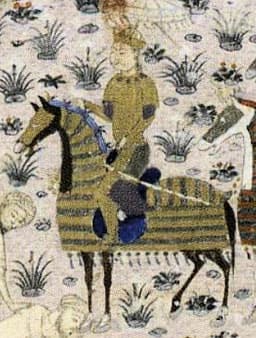
Ghiyath al-Din Tughluq
Emperor · Medieval
59.7Total
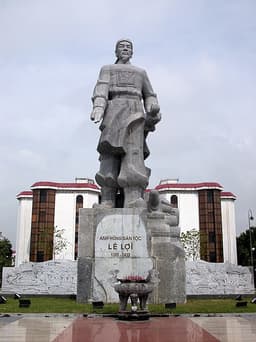
Le Loi
Emperor · Medieval
68.2Total
Basic Information
Born
1300
1385
Died
1325
1433
Era
Medieval
Medieval
Nationality
India
Vietnam
Occupation
Emperor
Emperor
Civilization
Indian
Eastern
Score Comparison
Military (10%)
61.7
74.7
Political (20%)
68.0
60.0
Influence (20%)
56.4
68.0
Legacy (20%)
48.3
68.0
Leadership (15%)
74.0
72.0
Strategy (15%)
60.7
69.1
TOTAL
59.7
68.2
Ghiyath al-Din Tughluq — Complete Timeline
1320 AD
Founding of the Tughluq DynastyPolitical Action
Ghiyath al-Din Tughluq, then governor of Dipalpur, led a revolt against the Khilji sultan Khusrau Khan. He defeated Khusrau Khan at the Battle of Saraswati and captured Delhi, proclaiming himself sultan. This established the Tughluq dynasty.
Dynasty FoundingRevoltDelhi Sultanate
Impact: nationalconstructive
1321 AD
Construction of Tughlaqabad FortCultural
Ghiyath al-Din Tughluq founded the city of Tughlaqabad near Delhi and built a massive fort there. The fort was designed to be impregnable, with thick walls and a strategic location. It served as his capital and a symbol of his power.
Fort BuildingUrban PlanningArchitecture
constructive
1323 AD
Conquest of WarangalWar◆ Major
Ghiyath al-Din Tughluq led a campaign against the Kakatiya kingdom of Warangal. He defeated the Kakatiya ruler Prataparudra II and annexed the region to the Delhi Sultanate. This extended Tughluq control into the Deccan.
Deccan CampaignKakatiya WarTerritorial Expansion
Impact: regionaldestructive
1325 AD
Death in a Pavilion CollapseOther◆ Major
Ghiyath al-Din Tughluq was killed when a wooden pavilion collapsed on him during a victory parade near Tughlaqabad. The structure was reportedly built hastily. His son Muhammad bin Tughluq succeeded him amid suspicions of foul play.
Accidental DeathSuccessionConspiracy
Impact: nationaltragic
Le Loi — Complete Timeline
1418 AD
Lam Son Uprising BeginsWar
Le Loi launched the Lam Son uprising against Ming Chinese occupation of Dai Viet. He gathered a small force in the Lam Son region of Thanh Hoa province, beginning a decade-long guerrilla war.
Ming OccupationVietnamese IndependenceGuerrilla War
Impact: national
1426 AD
Siege of Dong QuanWar◆ Major
Le Loi's forces besieged the Ming-held citadel of Dong Quan (Hanoi). The siege cut off Ming supply lines and forced the Chinese to negotiate, leading to the eventual withdrawal of Ming forces.
SiegeMing OccupationDai Viet
Impact: national
1427 AD
Battle of Chi Lang PassWar◆ Major
Le Loi's forces ambushed and defeated a large Ming relief army at Chi Lang Pass. This decisive victory forced the Ming court to recognize Dai Viet's independence and withdraw its remaining troops.
BattleMing OccupationIndependence
Impact: regional
1428 AD
Founding of the Later Le DynastyPolitical Action
Le Loi ascended the throne as Emperor Le Thai To, founding the Later Le dynasty. He established a new capital at Dong Kinh (Hanoi) and implemented policies to rebuild the war-torn country.
Later Le DynastyVietnamese HistoryReconstruction
Impact: regionalconstructive
Expert Analysis
Origins
Ghiyath al-Din Tughluq (born c. 1320) was of Turkic origin, serving as a governor under the Khilji dynasty in India. His early life is obscure, but he rose through military ranks, becoming governor of Dipalpur in Punjab. Le Loi (born 1385) was a Vietnamese landowner from Thanh Hoa province, part of the Le family. He grew up under Ming occupation, which shaped his nationalist fervor.
Rise to Power
Tughluq's rise began in 1320 when he led a revolt against Sultan Khusrau Khan, defeating him at the Battle of Sara (near Delhi) in September 1320. He then founded the Tughluq dynasty, ascending the throne as Sultan in 1321. Le Loi's rise started in 1418 with the Lam Son uprising, gathering a small force in the mountains of Thanh Hoa. After years of guerrilla warfare, he besieged the Ming citadel of Dong Quan (Hanoi) in 1426-1427, forcing negotiations. At the Battle of Chi Lang Pass (1427), his forces ambushed a Ming relief army, leading to Ming withdrawal and recognition of Dai Viet's independence in 1428. He then founded the Later Le dynasty.
Leadership & Governance
Tughluq was an able administrator, known for constructing Tughlaqabad Fort, a massive fortress near Delhi. He implemented efficient tax collection and maintained law and order. However, his reign was short (1320-1325) and marked by military campaigns. Le Loi, as Emperor Le Thai To (1428-1433), focused on reconstruction: he redistributed land, reformed the bureaucracy, and promoted Confucian education. He established a new capital at Dong Kinh (Hanoi). Le Loi scored 72.0 in leadership compared to Tughluq's 74.0, reflecting Tughluq's firmer control.
Triumph & Tragedy
Tughluq's greatest triumph was founding the Tughluq dynasty and conquering Warangal (1323), annexing the Kakatiya kingdom. His tragedy came in 1325 when a wooden pavilion collapsed during a victory parade, killing him. The incident was possibly an accident or assassination. Le Loi's triumph was expelling the Ming and securing Vietnamese independence—a feat celebrated for centuries. His tragedy lies in his short reign (5 years) and the challenges of rebuilding a war-torn country. He died in 1433, possibly from illness.
Character & Destiny
Tughluq was ambitious and decisive, as seen in his rebellion against the Khiljis. His death in a freak accident suggests a degree of carelessness or hubris. Le Loi was patient and strategic, known for his persistence during the 10-year Lam Son uprising. His character—determined but pragmatic—enabled him to liberate Vietnam. Historical assessments note Tughluq as a capable but short-lived founder, while Le Loi is revered as a national hero.
Legacy
Tughluq's legacy is mixed: his dynasty lasted until 1413, but his son Muhammad bin Tughluq is infamous for failed policies. Tughlaqabad Fort remains a monument. Le Loi's legacy is immense: the Later Le dynasty ruled until 1789, and he is celebrated as a liberator. His military score of 74.7 (vs. Tughluq's 61.7) and influence score of 68.0 (vs. 56.4) reflect his enduring impact. Le Loi's total score of 68.2 surpasses Tughluq's 59.7 by 8.5 points.
Conclusion
Le Loi had greater impact because his victory reshaped Southeast Asian geopolitics, ending Chinese domination and establishing a long-lasting dynasty. Tughluq, while a capable founder, died too early to consolidate his gains. Le Loi's higher scores—military 74.7 vs. 61.7, legacy 68.0 vs. 48.3—support this. His role as a national liberator gives him a broader historical significance.
Rankings
🥇
Le LoiLeader
Mil: 74.7Pol: 60.0Inf: 68.0
68.2
🥈
Ghiyath al-Din Tughluq
Mil: 61.7Pol: 68.0Inf: 56.4
59.7
+8.5 behind
How This Comparison Works
Algorithm
Each figure is scored on 6 dimensions (0—100 scale) based on structured historical data: Military (10%), Political (20%), Influence (20%), Legacy (20%), Leadership (15%), Strategy (15%). The weighted total produces the final ranking.
Data Sources
Scores are computed from structured sub-indicators in the database. Scale factors adjust for era (Ancient ×0.85, Modern ×1.0) and civilization size (Eastern ×1.05, Other ×0.80) to account for differences in population and military scale.
Maximum 3 Figures
Comparisons are limited to 2—3 figures to ensure readability and statistical meaningfulness.
Error Margins
±5 points per dimension — Sub-scores are derived from historical records with inherent uncertainty. Two figures within 5 points on a dimension should be considered roughly equivalent in that area.
Total Score Accuracy
±3 points overall — The weighted combination of 6 dimensions produces a total score with approximately ±3 points of uncertainty. Differences of less than 3 points are not statistically significant— the figures are effectively tied.
Known Limitations
- Historical records are incomplete and uneven across civilizations
- Figures from oral-tradition societies may be underrepresented
- Occupation labels can misclassify multi-role figures
- Scores measure capability and impact, not moral character
- Quantitative scoring is a comparison tool, not absolute truth
Capability Radar
Military (10%) — Battles & Warfare
Battles
65
75
Win Rate
70
80
Expansion
70
65
Political (20%) — Governance & Reform
Reform
55
70
Diplomacy
50
75
Economy
50
65
Influence (20%) — Cultural & Global Reach
Cultural
40
80
Global
30
55
Legacy (20%) — Historical Impact
Historical
50
85
Longevity
40
75
Leadership (15%) — Power & Stability
Tenure
60
60
Stability
45
70
Strategy (15%) — Tactics & Innovation
Strategy
65
82
Tactics
60
78
Reform
55
70
Similar Comparisons
Comments & Discussion
No comments yet. Be the first to share your thoughts!