Loading...
Henry the Fowler vs Le Loi
Le Loi leads by 7.3 pts · 2 figures compared
…
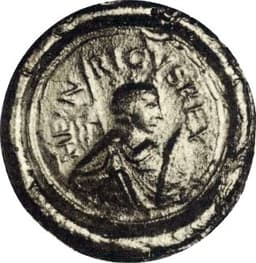
Henry the Fowler
Emperor · Medieval
60.9Total
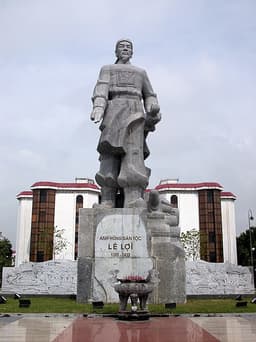
Le Loi
Emperor · Medieval
68.2Total
Basic Information
Born
876
1385
Died
936
1433
Era
Medieval
Medieval
Nationality
East Francia
Vietnam
Occupation
Emperor
Emperor
Civilization
Western
Eastern
Score Comparison
Military (10%)
70.0
74.7
Political (20%)
59.3
60.0
Influence (20%)
55.0
68.0
Legacy (20%)
52.0
68.0
Leadership (15%)
85.0
72.0
Strategy (15%)
55.0
69.1
TOTAL
60.9
68.2
Henry the Fowler — Complete Timeline
919 AD
Election as King of East FranciaPolitical Action
Henry the Fowler was elected King of East Francia by the Saxon and Frankish nobles at Fritzlar on May 6, 919. He was the first Saxon king, marking the transition from Carolingian to Ottonian rule. His election was contested by other dukes but he prevailed.
ElectionAccessionOttonian Dynasty
Impact: regionalconstructive
921 AD
Treaty of Bonn (921)Political Action◆ Major
Henry the Fowler signed the Treaty of Bonn with Charles the Simple of West Francia, recognizing each other's royal titles and establishing peaceful relations. This treaty ended Carolingian claims over East Francia and solidified Henry's legitimacy as an independent king.
TreatyRecognitionDiplomacy
Impact: regionalconstructive
924 AD
Nine-Year Truce with the MagyarsPolitical Action◆ Major
Henry the Fowler negotiated a nine-year truce with the Magyars, agreeing to pay tribute in exchange for a halt to their raids. He used this period to fortify towns, reorganize the army, and train cavalry. This strategic pause was crucial for his later military reforms.
TruceMagyarsMilitary Reform
Impact: regionalconstructive
929 AD
Battle of Lenzen (929)War◆ Major
Henry the Fowler's forces defeated a Slavic army at the Battle of Lenzen, securing the eastern frontier of East Francia. This victory allowed Henry to consolidate control over the Elbe region and establish the March of Brandenburg, a key step in German eastward expansion.
BattleSlavic WarsEastern Expansion
Impact: regionalconstructive
933 AD
Battle of Riade (933)War
After the truce with the Magyars expired, Henry the Fowler led a German army to victory at the Battle of Riade (near Merseburg). The defeat of the Magyar cavalry ended their raids into East Francia for a generation and established Henry's reputation as a defender of Christendom.
BattleMagyarsVictory
Impact: regionalconstructive
936 AD
Death of Henry the FowlerOther◆ Major
Henry the Fowler died on July 2, 936, at Memleben. He was succeeded by his son, Otto I, who would become Holy Roman Emperor. Henry's reign laid the foundations for the Ottonian dynasty and the medieval German kingdom.
DeathSuccessionOttonian
Impact: regional
Le Loi — Complete Timeline
1418 AD
Lam Son Uprising BeginsWar
Le Loi launched the Lam Son uprising against Ming Chinese occupation of Dai Viet. He gathered a small force in the Lam Son region of Thanh Hoa province, beginning a decade-long guerrilla war.
Ming OccupationVietnamese IndependenceGuerrilla War
Impact: national
1426 AD
Siege of Dong QuanWar◆ Major
Le Loi's forces besieged the Ming-held citadel of Dong Quan (Hanoi). The siege cut off Ming supply lines and forced the Chinese to negotiate, leading to the eventual withdrawal of Ming forces.
SiegeMing OccupationDai Viet
Impact: national
1427 AD
Battle of Chi Lang PassWar◆ Major
Le Loi's forces ambushed and defeated a large Ming relief army at Chi Lang Pass. This decisive victory forced the Ming court to recognize Dai Viet's independence and withdraw its remaining troops.
BattleMing OccupationIndependence
Impact: regional
1428 AD
Founding of the Later Le DynastyPolitical Action
Le Loi ascended the throne as Emperor Le Thai To, founding the Later Le dynasty. He established a new capital at Dong Kinh (Hanoi) and implemented policies to rebuild the war-torn country.
Later Le DynastyVietnamese HistoryReconstruction
Impact: regionalconstructive
Expert Analysis
Origins
Henry the Fowler was born around 876 into the Liudolfing dynasty of Saxon nobility. His father, Otto the Illustrious, was Duke of Saxony. Henry inherited the duchy in 912 and expanded his influence through marriage to Matilda of Ringelheim. He was elected King of East Francia in 919, becoming the first Saxon king.
Le Loi was born in 1385 in Lam Son, Thanh Hoa province, to a wealthy landowning family. He was educated in Confucian classics and military strategy. During the Ming occupation of Dai Viet (modern Vietnam) from 1407, he refused to collaborate and began organizing resistance.
Rise to Power
Henry's rise was marked by the election at Fritzlar in 919, where Saxon and Frankish nobles chose him over rivals. He immediately faced rebellions from dukes of Swabia and Bavaria, which he suppressed through diplomacy and force. In 921, he signed the Treaty of Bonn with Charles the Simple of West Francia, securing recognition.
Le Loi launched the Lam Son uprising in 1418 with a small force of 1,000 men. He retreated to the mountains after initial defeats but rebuilt his army. In 1424, he captured Nghe An province, gaining momentum. By 1427, he controlled most of Dai Viet, besieging the Ming-held citadel of Dong Quan (Hanoi). His victory at Chi Lang Pass in 1427 forced the Ming to negotiate.
Leadership & Governance
Henry focused on consolidating East Francia. He built fortified towns (burgwards) and reorganized the army, creating a heavy cavalry force. He negotiated a nine-year truce with the Magyars in 926, paying tribute to buy time. He used this period to strengthen defenses. His governance was pragmatic, relying on alliances with powerful dukes.
Le Loi established the Later Le dynasty after ascending the throne in 1428. He implemented land reforms, redistributing land to peasants, and reduced taxes. He promoted Confucian education and rebuilt the bureaucracy. He maintained a strong military but focused on agriculture and trade to restore war-torn Vietnam. His leadership score is 72.0, compared to Henry's 85.0.
Triumph & Tragedy
Henry's greatest success was the Battle of Riade in 933, where he defeated the Magyars, ending their raids. He also secured the eastern frontier by defeating Slavs at Lenzen in 929. However, his failure to fully unify the German duchies left a fragmented legacy; his son Otto I had to complete the work.
Le Loi's triumph was expelling the Ming Chinese and founding a dynasty that lasted over 350 years. His victory at Chi Lang Pass is a celebrated event. His tragedy was his early death in 1433, just five years after becoming emperor, leaving a young heir and court intrigue. He scored 74.7 in military, higher than Henry's 70.0.
Character & Destiny
Henry was cautious and diplomatic, preferring negotiation over war. His nine-year truce with the Magyars showed patience. He was decisive in battle but often used strategic retreats. His character shaped a stable kingdom, but he lacked the ambition to centralize power fully.
Le Loi was charismatic and resilient, inspiring loyalty among followers. He endured early defeats and maintained morale. His Confucian principles informed his governance. His early death cut short his vision, but his legacy endured.
Legacy
Henry founded the Ottonian dynasty, which led to the Holy Roman Empire. His military reforms influenced German warfare. He is remembered as a unifier of German tribes. His legacy score is 52.0.
Le Loi is a national hero in Vietnam, celebrated for independence. The Later Le dynasty set the standard for Vietnamese governance. His land reforms shaped rural society. His legacy score is 68.0.
Conclusion
Le Loi had a greater impact due to his total score of 68.2 against Henry's 60.9. Le Loi expelled an occupying empire and founded a long-lasting dynasty, while Henry laid foundations but did not achieve full unification. Le Loi's influence on Vietnamese national identity is profound, whereas Henry's role is more transitional. Le Loi's military and political achievements were more decisive.
Rankings
🥇
Le LoiLeader
Mil: 74.7Pol: 60.0Inf: 68.0
68.2
🥈
Henry the Fowler
Mil: 70.0Pol: 59.3Inf: 55.0
60.9
+7.3 behind
How This Comparison Works
Algorithm
Each figure is scored on 6 dimensions (0—100 scale) based on structured historical data: Military (10%), Political (20%), Influence (20%), Legacy (20%), Leadership (15%), Strategy (15%). The weighted total produces the final ranking.
Data Sources
Scores are computed from structured sub-indicators in the database. Scale factors adjust for era (Ancient ×0.85, Modern ×1.0) and civilization size (Eastern ×1.05, Other ×0.80) to account for differences in population and military scale.
Maximum 3 Figures
Comparisons are limited to 2—3 figures to ensure readability and statistical meaningfulness.
Error Margins
±5 points per dimension — Sub-scores are derived from historical records with inherent uncertainty. Two figures within 5 points on a dimension should be considered roughly equivalent in that area.
Total Score Accuracy
±3 points overall — The weighted combination of 6 dimensions produces a total score with approximately ±3 points of uncertainty. Differences of less than 3 points are not statistically significant— the figures are effectively tied.
Known Limitations
- Historical records are incomplete and uneven across civilizations
- Figures from oral-tradition societies may be underrepresented
- Occupation labels can misclassify multi-role figures
- Scores measure capability and impact, not moral character
- Quantitative scoring is a comparison tool, not absolute truth
Capability Radar
Military (10%) — Battles & Warfare
Battles
55
75
Win Rate
60
80
Expansion
60
65
Political (20%) — Governance & Reform
Reform
75
70
Diplomacy
70
75
Economy
65
65
Influence (20%) — Cultural & Global Reach
Cultural
55
80
Global
40
55
Legacy (20%) — Historical Impact
Historical
65
85
Longevity
60
75
Leadership (15%) — Power & Stability
Tenure
70
60
Stability
70
70
Strategy (15%) — Tactics & Innovation
Strategy
65
82
Tactics
50
78
Reform
70
70
Similar Comparisons
Comments & Discussion
No comments yet. Be the first to share your thoughts!