Loading...
Shukri al-Quwatli vs Tancredo Neves
Tancredo Neves leads by 0.2 pts · 2 figures compared
…
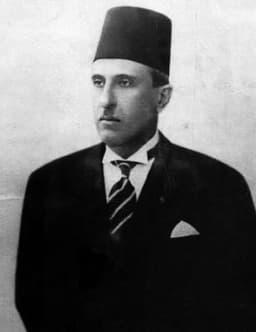
Shukri al-Quwatli
Politician · Modern
52.0Total
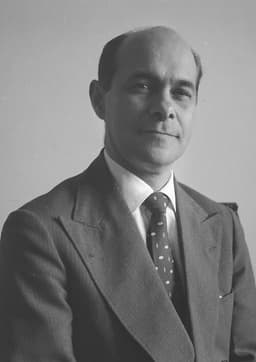
Tancredo Neves
Politician · Modern
52.2Total
Basic Information
Born
1891
1910
Died
1967
1985
Era
Modern
Modern
Nationality
Syria
Brazil
Occupation
Politician
Politician
Civilization
Middle Eastern
Western
Score Comparison
Military (10%)
48.6
49.7
Political (20%)
61.3
68.0
Influence (20%)
51.0
49.4
Legacy (20%)
45.0
42.5
Leadership (15%)
65.0
65.0
Strategy (15%)
42.2
43.5
TOTAL
52.0
52.2
Shukri al-Quwatli — Complete Timeline
1943 AD
Elected first president of independent SyriaPolitical Action
Shukri al-Quwatli was elected as the first president of Syria after the country gained independence from Vichy France. He led the nationalist movement and worked to consolidate Syrian sovereignty, serving from 1943 to 1949.
IndependenceNationalismPresidency
Impact: nationalconstructive
1949 AD
Overthrown in the 1949 Syrian coup d'étatPolitical Action◆ Major
President al-Quwatli was overthrown by a military coup led by Husni al-Zaim on March 30, 1949. The coup was the first in Syria's modern history and ended civilian rule, leading to a period of military interventions in politics.
CoupMilitaryOverthrow
Impact: nationaldestructive
1955 AD
Returned to presidency after Adib Shishakli's fallPolitical Action◆ Major
Al-Quwatli was re-elected as president of Syria in 1955 after the fall of the military regime of Adib Shishakli. He returned to power during a period of political instability and growing influence of the Ba'ath Party.
Return to PowerPresidencyPolitical Instability
Impact: national
1958 AD
Signed the agreement forming the United Arab RepublicPolitical Action◆ Major
President al-Quwatli signed the agreement with Egyptian President Gamal Abdel Nasser to form the United Arab Republic, a union of Syria and Egypt. The union was intended to strengthen Arab unity but lasted only until 1961.
Arab UnityUnionNasser
Impact: regionalconstructive
1961 AD
Resigned after Syrian secession from the UARPolitical Action
After a military coup in Syria ended the United Arab Republic, al-Quwatli resigned from the presidency. He went into exile and died in 1967, having failed to restore his political influence.
ResignationExileUAR Collapse
Impact: nationaltragic
Tancredo Neves — Complete Timeline
1983 AD
Governor of Minas GeraisPolitical Action
Tancredo Neves was elected Governor of Minas Gerais in 1982 and took office in 1983. His administration was noted for its support of democratic reforms and opposition to the military regime.
GovernorshipDemocratic opposition
Impact: regionalconstructive
1985 AD
Elected President of BrazilPolitical Action
Tancredo Neves was elected President of Brazil by the Electoral College on January 15, 1985, defeating the military regime's candidate. His election marked the end of 21 years of military dictatorship and the beginning of Brazil's return to democracy.
DemocratizationEnd of dictatorshipElection
Impact: nationalprogressive
Hospitalization and Death Before InaugurationOther◆ Major
On March 14, 1985, the eve of his inauguration, Tancredo Neves was hospitalized with severe abdominal pain. He underwent multiple surgeries but died on April 21, 1985, without ever taking office. His death caused national mourning and a political crisis.
DeathPolitical crisisNational mourning
Impact: nationaltragic
Expert Analysis
Origins
Shukri al-Quwatli was born in 1891 in Damascus, then part of the Ottoman Empire, into a wealthy landowning family. He studied at the American University of Beirut and later at the University of Paris, where he was exposed to nationalist ideas. His early involvement in anti-Ottoman activities led to imprisonment by the Ottomans. After World War I, he became active in the Arab nationalist movement against French mandate rule.
Tancredo Neves was born in 1910 in São João del-Rei, Minas Gerais, Brazil, into a political family; his father was a local politician. He studied law at the Federal University of Minas Gerais and began his career as a lawyer and teacher. He entered politics early, serving as a city councilor and state deputy, aligned with the Social Democratic Party (PSD).
Rise to Power
Al-Quwatli rose to prominence as a leader of the National Bloc, a coalition pushing for Syrian independence from France. He was arrested multiple times by French authorities. In 1943, he was elected President of Syria, becoming the first head of state after the country's formal independence from Vichy France. His leadership during the final stages of the mandate solidified his position as a nationalist figure.
Neves rose through the ranks of Brazilian politics, serving as a federal deputy, minister of justice, and prime minister under President João Goulart. After the 1964 military coup, he remained in opposition. He was elected governor of Minas Gerais in 1982, a key state, which positioned him as a leader of the democratic opposition. In 1985, he was elected president by the Electoral College, defeating the military's candidate, marking the end of 21 years of military rule.
Leadership & Governance
Al-Quwatli's leadership was characterized by a commitment to Syrian independence and Arab unity. He pursued a neutralist foreign policy, balancing relations between the West and the Soviet bloc. Domestically, he faced challenges from the military and political instability. His governance was marked by a reliance on traditional elites and a lack of deep institutional reforms. He scored 65.0 in leadership, reflecting his ability to navigate the early years of independence, but his political score of 61.3 indicates limited effectiveness in building stable institutions.
Neves, as governor of Minas Gerais, promoted democratic reform and economic development. He was known for his conciliatory style and ability to build alliances across the political spectrum. His leadership was crucial in negotiating the transition from military rule. However, he never assumed the presidency, so his governance record is limited to his state-level and ministerial roles. His political score of 68.0 is higher than al-Quwatli's, reflecting his role in the democratic transition.
Triumph & Tragedy
Al-Quwatli's greatest triumph was leading Syria to independence and becoming its first president. His signature achievement was the formation of the United Arab Republic (UAR) with Egypt in 1958, a union that temporarily realized the dream of Arab unity. However, the UAR collapsed in 1961 due to Syrian resentment of Egyptian dominance. His greatest tragedy was being overthrown in the 1949 coup, the first in Syria's modern history, and his subsequent exile. He returned to power in 1955 only to see his vision of Arab unity fail, and he died in exile in 1967.
Neves's greatest triumph was his election as president in 1985, ending military rule. His tragedy is that he never took office, dying from complications of surgery on the eve of his inauguration. His death plunged Brazil into mourning and created a political crisis, but his legacy as a martyr for democracy endured.
Character & Destiny
Al-Quwatli was a cautious, diplomatic figure, often criticized for indecisiveness. He preferred negotiation over confrontation, which sometimes made him seem weak. His character shaped his destiny: he was a nationalist who sought unity but could not hold the country together, as evidenced by the coup and the UAR's failure. He scored 42.2 in strategy, indicating limited long-term planning.
Neves was known for his pragmatism, humility, and ability to forge consensus. He was a master of political negotiation, which allowed him to lead the transition. His death, however, turned him into a symbol of the struggle for democracy. His strategy score of 43.5 reflects his tactical skill in navigating the transition.
Legacy
Al-Quwatli's legacy is mixed. He is remembered as a founding father of independent Syria but also as a leader whose failures contributed to political instability. The UAR's collapse underscored the challenges of Arab unity. His influence score of 51.0 and legacy score of 45.0 reflect his limited lasting impact; he is not a central figure in Syrian collective memory today.
Neves's legacy is outsized for his brief presidency. He is revered as a hero of Brazil's redemocratization. His death made him a martyr, and his name is invoked in discussions of democracy. His legacy score of 42.5 is lower partly because he never implemented policies, but his symbolic importance remains high.
Conclusion
While both figures died before fully realizing their potential, Tancredo Neves had a greater overall impact on his country's trajectory. His election marked a definitive end to Brazil's military dictatorship, and his death galvanized the democratic transition. Al-Quwatli, despite being Syria's first president, failed to establish stable institutions or a lasting political legacy. Neves's total score of 52.2 slightly edges al-Quwatli's 52.0, but the qualitative difference is larger: Neves's role in Brazil's democratization is a clear, positive turning point, while al-Quwatli's career ended in failure and exile. Thus, Neves is the more consequential leader.
Rankings
🥇
Tancredo NevesLeader
Mil: 49.7Pol: 68.0Inf: 49.4
52.2
🥈
Shukri al-Quwatli
Mil: 48.6Pol: 61.3Inf: 51.0
52.0
+0.2 behind
How This Comparison Works
Algorithm
Each figure is scored on 6 dimensions (0—100 scale) based on structured historical data: Military (10%), Political (20%), Influence (20%), Legacy (20%), Leadership (15%), Strategy (15%). The weighted total produces the final ranking.
Data Sources
Scores are computed from structured sub-indicators in the database. Scale factors adjust for era (Ancient ×0.85, Modern ×1.0) and civilization size (Eastern ×1.05, Other ×0.80) to account for differences in population and military scale.
Maximum 3 Figures
Comparisons are limited to 2—3 figures to ensure readability and statistical meaningfulness.
Error Margins
±5 points per dimension — Sub-scores are derived from historical records with inherent uncertainty. Two figures within 5 points on a dimension should be considered roughly equivalent in that area.
Total Score Accuracy
±3 points overall — The weighted combination of 6 dimensions produces a total score with approximately ±3 points of uncertainty. Differences of less than 3 points are not statistically significant— the figures are effectively tied.
Known Limitations
- Historical records are incomplete and uneven across civilizations
- Figures from oral-tradition societies may be underrepresented
- Occupation labels can misclassify multi-role figures
- Scores measure capability and impact, not moral character
- Quantitative scoring is a comparison tool, not absolute truth
Capability Radar
Military (10%) — Battles & Warfare
Battles
20
29
Win Rate
27
29
Expansion
27
38
Political (20%) — Governance & Reform
Reform
45
50
Diplomacy
55
55
Economy
30
40
Influence (20%) — Cultural & Global Reach
Cultural
25
20
Global
20
15
Legacy (20%) — Historical Impact
Historical
40
35
Longevity
30
20
Leadership (15%) — Power & Stability
Tenure
60
0
Stability
20
30
Strategy (15%) — Tactics & Innovation
Strategy
30
41
Tactics
36
41
Reform
36
44
Similar Comparisons
Comments & Discussion
No comments yet. Be the first to share your thoughts!