Loading...
Girija Prasad Koirala vs Qin Shi Huang
Qin Shi Huang leads by 29.5 pts · 2 figures compared
…

Girija Prasad Koirala
Politician · Modern
55.7Total
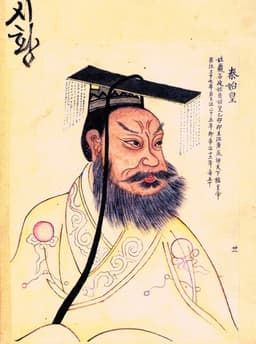
Qin Shi Huang
Emperor · Ancient
85.2Total
Basic Information
Born
1924
-259
Died
—
-210
Era
Modern
Ancient
Nationality
Nepal
China
Occupation
Politician
Emperor
Civilization
Indian
Eastern
Score Comparison
Military (10%)
40.9
80.0
Political (20%)
60.0
90.0
Influence (20%)
56.4
85.0
Legacy (20%)
46.7
90.0
Leadership (15%)
72.0
78.0
Strategy (15%)
60.0
82.0
TOTAL
55.7
85.2
Girija Prasad Koirala — Complete Timeline
1991 AD
Served as Prime Minister Multiple TimesPolitical Action
Girija Prasad Koirala served as prime minister of Nepal four times between 1991 and 2008. His tenures were marked by political instability, coalition governments, and efforts to manage the Maoist insurgency.
GovernmentPoliticsNepal
Impact: national
2006 AD
Brokered End of Nepalese Civil WarPolitical Action
As prime minister, Girija Prasad Koirala negotiated the Comprehensive Peace Accord with Maoist leader Prachanda. This agreement ended the decade-long civil war that had killed over 13,000 people and paved the way for the abolition of the monarchy.
Peace TreatyCivil WarNepal
Impact: nationalconstructive
2007 AD
Interim Constitution of 2007Reform◆ Major
Koirala's government promulgated an interim constitution that stripped the king of all powers and declared Nepal a federal democratic republic. This document established the framework for the Constituent Assembly elections.
ConstitutionRepublicReform
Impact: nationalprogressive
Qin Shi Huang — Complete Timeline
246 BC
Construction of the Mausoleum and Terracotta ArmyOther◆ Major
Qin Shi Huang commissioned a vast mausoleum complex near Xi'an, guarded by thousands of life-sized terracotta soldiers, horses, and chariots. The project employed hundreds of thousands of workers and reflected his obsession with immortality and imperial power.
Impact: global
230 BC
Conquest of the Six Warring StatesWar
From 230 to 221 BCE, Ying Zheng led the Qin state in a series of campaigns that conquered the Han, Zhao, Wei, Chu, Yan, and Qi states. This unified China under a single ruler for the first time, ending the Warring States period.
Impact: global
221 BC
Standardization of Writing, Currency, and MeasurementsReform◆ Major
Qin Shi Huang ordered the standardization of Chinese script, currency, and weights and measures across the unified empire. This facilitated administration, trade, and cultural integration, laying a foundation for future dynasties.
Impact: globalconstructive
Proclamation of the Qin DynastyPolitical Action
After conquering the last independent state, Ying Zheng declared himself Shi Huangdi (First Emperor), founding the Qin Dynasty. He adopted a new title to signify his supreme authority and initiated centralized imperial rule.
Impact: global
214 BC
Initiation of the Great Wall ConstructionOther◆ Major
Qin Shi Huang ordered the connection and extension of existing northern fortifications to create a unified defensive wall against nomadic Xiongnu raids. This project involved massive conscripted labor and became the precursor to the later Great Wall.
Impact: regional
213 BC
Burning of Books and Burying of ScholarsPolitical Action◆ Major
On the advice of Li Si, Qin Shi Huang ordered the burning of historical records and philosophical texts not aligned with Legalist doctrine. He also had 460 Confucian scholars buried alive to suppress dissent and consolidate ideological control.
Impact: nationaldestructive
Expert Analysis
girija-prasad-koirala-vs-qin-shi-huang
# The Emperor and the Peacemaker
In 221 BC, a warlord from the western frontier of China declared himself the First Emperor, uniting a fractured land through blood and iron. Two thousand years later, in 2006, a frail old man in a Kathmandu palace brokered a peace that ended a decade of civil war, dismantling a monarchy that had ruled for centuries. One built walls, the other tore them down. One buried scholars alive, the other gave his enemies a seat at the table. What drives a man to conquer, and what drives a man to reconcile? The stories of Qin Shi Huang and Girija Prasad Koirala offer two radically different answers.
Origins
Ying Zheng was born in 259 BC, the son of a king held hostage in a rival state. His childhood was a crucible of betrayal and ambition. The Warring States period had raged for two centuries, a brutal contest where seven kingdoms devoured each other. Young Zheng learned early that trust was a weakness, and power the only currency that mattered. When he ascended the throne of Qin at age thirteen, his regent Lü Buwei governed with ruthless efficiency, and his mother plotted with a eunuch lover. By the time Zheng seized full control at twenty-two, he had seen enough treachery to harden any soul.
Girija Prasad Koirala, born in 1924, grew up in a very different world—a British India teeming with nationalist fervor. His family was political royalty in Nepal: his elder brother Bishweshwar had founded the country’s first democratic party. Young Koirala spent years in Indian exile, absorbing the Gandhian tactics of nonviolent resistance. Where Qin Shi Huang learned that the world was a battlefield, Koirala learned that politics was a negotiation.
Rise to Power
Qin Shi Huang’s path was one of systematic annihilation. Between 230 and 221 BC, he unleashed his armies in a series of campaigns that historians call the “Conquest of the Six Warring States.” Each kingdom fell in turn: Han by bribery and invasion, Zhao by siege and massacre, Wei by flood, Chu by overwhelming force. The young king commanded from behind, trusting his generals but never forgiving a failure. When his own mother plotted against him, he had her exiled. When Li Si, his chief minister, advised burning books, he agreed. Every obstacle was removed, every opponent crushed.
Koirala’s rise was far messier. He became prime minister for the first time in 1991, but Nepal’s monarchy still held real power. His tenure was a revolving door: elected, dismissed, returned, exiled. He served four times between 1991 and 2008, each term punctuated by political crises, royal coups, and a brutal Maoist insurgency that killed over 13,000 people. Unlike Qin Shi Huang, Koirala could not simply destroy his enemies—he had to outlast them.
Leadership & Governance
Qin Shi Huang governed through standardization and terror. He unified China’s script, currency, and weights and measures—a feat that would endure for millennia. The same axle length for every cart, the same characters for every official document. He ordered the construction of a national road network and linked existing fortifications into what would become the Great Wall. But his methods were draconian: in 213 BC, he ordered the “Burning of Books and Burying of Scholars,” destroying historical records and philosophical texts that challenged Legalist orthodoxy. Hundreds of Confucian scholars were executed. The state was everything; the individual, nothing.
Koirala’s governance was the opposite: consensus-driven, fragile, and human. His greatest achievement came in 2006, when he negotiated the Comprehensive Peace Accord with Maoist leader Prachanda. The agreement ended a civil war that had paralyzed Nepal for a decade. Then, in 2007, Koirala’s government promulgated an interim constitution that stripped King Gyanendra of all powers and declared Nepal a federal republic. Where Qin Shi Huang centralized, Koirala decentralized. Where the First Emperor imposed unity by force, the Nepali prime minister achieved it by compromise.
Triumph & Tragedy
Qin Shi Huang’s triumph was unmatched: he created the template for Chinese imperial rule that would last until 1912. His tragedy was equally profound. Obsessed with immortality, he consumed mercury elixirs prescribed by alchemists, which likely hastened his death in 210 BC at age forty-nine. His empire collapsed within four years of his passing, destroyed by the very ruthlessness that built it. The Terracotta Army—thousands of life-sized soldiers buried to guard his mausoleum—stands as a monument to his grandeur and his isolation.
Koirala’s triumph was the peace itself, a fragile but lasting settlement that ended bloodshed. His tragedy was that he never saw the republic he helped create fully stabilize. He died in 2010, his legacy contested by both Maoists and monarchists, his dream of a stable, democratic Nepal still unrealized.
Character & Destiny
Qin Shi Huang’s personality was forged in paranoia and absolute will. He trusted no one, delegated only under duress, and believed his authority was divine. “I have unified all under Heaven,” he declared, “and there is no corner where my will does not reach.” This conviction drove his greatest achievements and his worst atrocities. He could not imagine a world where his enemies were partners.
Koirala, by contrast, was a pragmatist. He had been exiled, jailed, and sidelined so many times that he understood power’s transience. He once said, “Democracy is not a destination; it is a journey.” That flexibility allowed him to sit across from Maoist commanders and negotiate, not as victor and vanquished, but as equals. Where Qin Shi Huang saw only subjects, Koirala saw citizens.
Legacy
Qin Shi Huang’s legacy is monumental. The Great Wall, though rebuilt over centuries, still bears his imprint. The standardization of Chinese writing made a unified civilization possible. His Terracotta Army draws millions of visitors. Yet he is remembered as a tyrant, a man who burned knowledge and buried dissent. In China’s collective memory, he is both founder and villain—a paradox the nation still grapples with.
Koirala’s legacy is quieter but no less significant. He is the man who ended a war without winning it, who dismantled a monarchy without executing a king. His name appears in history textbooks, but not on monuments. Nepal’s democracy remains imperfect, but it survived. That may be his greatest achievement: not a wall, but a door.
Conclusion
Two men, two millennia apart, each facing the chaos of their age. One chose conquest, the other compromise. One built an empire that crumbled, the other built a peace that endured. Qin Shi Huang’s story warns us that absolute power corrupts absolutely. Koirala’s story suggests that humility and patience can achieve what armies cannot. The First Emperor unified China through iron; the Nepali peacemaker unified his country through ink. Perhaps the true measure of leadership is not how many enemies you destroy, but how many you transform into partners.
Rankings
🥇
Qin Shi HuangLeader
Mil: 80.0Pol: 90.0Inf: 85.0
85.2
🥈
Girija Prasad Koirala
Mil: 40.9Pol: 60.0Inf: 56.4
55.7
+29.5 behind
How This Comparison Works
Algorithm
Each figure is scored on 6 dimensions (0—100 scale) based on structured historical data: Military (10%), Political (20%), Influence (20%), Legacy (20%), Leadership (15%), Strategy (15%). The weighted total produces the final ranking.
Data Sources
Scores are computed from structured sub-indicators in the database. Scale factors adjust for era (Ancient ×0.85, Modern ×1.0) and civilization size (Eastern ×1.05, Other ×0.80) to account for differences in population and military scale.
Maximum 3 Figures
Comparisons are limited to 2—3 figures to ensure readability and statistical meaningfulness.
Error Margins
±5 points per dimension — Sub-scores are derived from historical records with inherent uncertainty. Two figures within 5 points on a dimension should be considered roughly equivalent in that area.
Total Score Accuracy
±3 points overall — The weighted combination of 6 dimensions produces a total score with approximately ±3 points of uncertainty. Differences of less than 3 points are not statistically significant— the figures are effectively tied.
Known Limitations
- Historical records are incomplete and uneven across civilizations
- Figures from oral-tradition societies may be underrepresented
- Occupation labels can misclassify multi-role figures
- Scores measure capability and impact, not moral character
- Quantitative scoring is a comparison tool, not absolute truth
Capability Radar
Military (10%) — Battles & Warfare
Battles
41
85
Win Rate
47
90
Expansion
52
90
Political (20%) — Governance & Reform
Reform
60
95
Diplomacy
70
75
Economy
50
90
Influence (20%) — Cultural & Global Reach
Cultural
30
95
Global
40
85
Legacy (20%) — Historical Impact
Historical
45
95
Longevity
35
95
Leadership (15%) — Power & Stability
Tenure
65
70
Stability
55
65
Strategy (15%) — Tactics & Innovation
Strategy
50
85
Tactics
56
80
Reform
58
95
Similar Comparisons
Comments & Discussion
TerraCottaTakedown6/17/2026
Comparing Koirala to Qin Shi Huang is like comparing a surgeon to a serial killer. One unified China through systematic terror—burning books, burying Confucian scholars alive, forcing 700,000 laborers to build his tomb complex. The other ended Nepal’s Maoist insurgency by actually talking to his enemies. Koirala didn't build a single wall or monument to himself; he dismantled a 240-year-old monarchy and walked away. That’s real leadership, not bronze statue ego trips.
青铜批判家6/17/2026
说秦始皇和柯伊拉腊都是国家统一者,这是历史洁癖!秦皇修长城死百万民工,焚书坑儒消灭六国文化记忆。柯伊拉腊靠和谈结束十年内战,给毛派武装部长席位,这是冰与火的差别。别用"伟大统一者"这种中性词洗白暴君,治国手段比结果重要百倍。
LegacyLens6/17/2026
Here's what the comparison misses: Qin Shi Huang's brutal methods created a template for centralized governance that lasted 2,000 years. Koirala's peace deal? Nepal's had 11 governments in 16 years since. The Terracotta Army still stands; Nepal's constitutional assembly couldn't even agree on a flag. Sometimes the wall-builder's vision outlasts the peacemaker's compromises. History favors effective brutality over noble failure.
权力解剖师6/17/2026
两人根本不在一个能量级。秦始皇13岁登基,39岁灭六国,重新定义了中国文明的底层代码。柯伊拉腊一辈子在印度、监狱、总理椅子上转圈,最后靠妥协让毛派合法化——结果呢?尼泊尔至今是亚洲最穷国之一。别拿地方政治家的和事佬本事碰瓷帝国设计师。统一的方式决定了统一的深度。
PragmatistPeasant6/17/2026
My ancestors farmed under the Qin dynasty's standardized axle widths and script reforms. Sure, the First Emperor was brutal, but he built infrastructure that fed millions. Koirala gave Nepal peace—but also gave Maoists control of rural development funds, which then disappeared. Between a cruel visionary and a kind manager who enables corruption, I'd take the visionary every time. Peasants under Qin at least got roads and irrigation. What did Nepali farmers get? Promises.