Loading...
Giulio Andreotti vs Napoleon Bonaparte
Napoleon Bonaparte leads by 14.4 pts · 2 figures compared
…
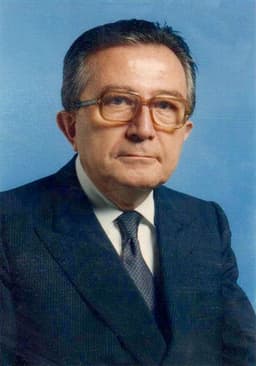
Giulio Andreotti
Politician · Modern
56.5Total

Napoleon Bonaparte
General · Modern
70.9Total
Basic Information
Born
1919
1769
Died
2013
1821
Era
Modern
Modern
Nationality
Italy
France
Occupation
Politician
General
Civilization
Western
Western
Score Comparison
Military (10%)
50.0
94.0
Political (20%)
59.3
72.0
Influence (20%)
58.3
40.0
Legacy (20%)
52.0
80.0
Leadership (15%)
72.0
78.0
Strategy (15%)
42.7
90.0
TOTAL
56.5
70.9
Giulio Andreotti — Complete Timeline
1972 AD
Seven Terms as Prime MinisterPolitical Action◆ Major
Giulio Andreotti served as Prime Minister of Italy seven times between 1972 and 1992, a record in the post-war republic. His long tenure made him a dominant figure in Italian politics, known for his political maneuvering and ability to form coalitions across the fragmented party system.
Political CareerItalyLongevity
Impact: national
1976 AD
Involvement in the Lockheed ScandalPolitical Action
Andreotti was implicated in the Lockheed bribery scandal, which involved payments to Italian politicians to secure aircraft contracts. He was investigated but never convicted, though the scandal contributed to a climate of political corruption that would later lead to the Tangentopoli investigations.
ScandalCorruptionItaly
Impact: nationaldestructive
1980 AD
Support for European IntegrationPolitical Action
Throughout his career, Andreotti was a strong advocate for European integration, supporting Italy's participation in the European Monetary System and the Maastricht Treaty. He served as Foreign Minister and was involved in key EU decisions, helping to shape Italy's role in the European Community.
European UnionForeign PolicyItaly
Impact: regionalconstructive
1995 AD
Trial for Mafia AssociationPolitical Action◆ Major
Andreotti was put on trial in Palermo for alleged association with the Mafia, accused of having ties to Cosa Nostra during his political career. The trial lasted years and resulted in a conviction in 2002, which was later overturned on appeal in 2003 due to statute of limitations. The case deeply tarnished his legacy.
TrialMafiaCorruption
Impact: nationaldestructive
Napoleon Bonaparte — Complete Timeline
1799 AD
Coup of 18 BrumaireOther◆ Major
Napoleon Bonaparte, with support from his brother Lucien and key political figures, overthrew the Directory in a bloodless coup. He established the Consulate with himself as First Consul, effectively becoming the ruler of France. This event ended the French Revolution's most unstable period.
French RevolutionCoupRise to Power
Impact: regional
1804 AD
Promulgation of the Napoleonic CodeOther◆ Major
Napoleon enacted the Civil Code of the French, known as the Napoleonic Code, a comprehensive set of laws that replaced the fragmented feudal legal systems. The code established legal equality, protected property rights, and secularized law. It became the basis for legal systems in many European and world countries.
Legal ReformNapoleonic CodeCivil Law
Impact: globalconstructive
1805 AD
Battle of AusterlitzWar◆ Major
Napoleon's Grande Arm
Napoleonic WarsBattleDecisive Victory
Impact: global
1812 AD
Invasion of RussiaWar◆ Major
Napoleon led the Grande Arm
Napoleonic WarsInvasionDisaster
Impact: globaldestructive
1815 AD
Battle of WaterlooWar◆ Major
Napoleon's French army was defeated by the combined forces of the Duke of Wellington's Anglo-Allied army and Gebhard Leberecht von Bl
Napoleonic WarsBattleFinal Defeat
Impact: globaldestructive
Expert Analysis
giulio-andreotti-vs-napoleon-bonaparte
The Corsican and the Cardinal: Two Faces of Power in Modern Europe
On a spring morning in 1815, Napoleon Bonaparte stood before his Grande Armée, about to embark on the Hundred Days campaign that would end at Waterloo. A continent held its breath. Nearly two centuries later, in a Rome courtroom, Giulio Andreotti—a man who had never commanded an army yet dominated Italian politics for half a century—sat silently as prosecutors accused him of dining with mafia chieftains. One man conquered Europe with cannon and cavalry; the other conquered a republic with committees and compromises. What drove these two figures, both titans of their age, to such radically different fates?
Origins
Napoleon was born in 1769 on Corsica, a Mediterranean island that France had purchased from Genoa just a year earlier. His family were minor nobles, proud but poor. The young Napoleon spoke Italian at home and French with an accent that would mark him forever. He entered military school at nine, a small, intense boy mocked by wealthier classmates. His world was one of ambition forged by resentment—a foreigner in his own country, determined to prove himself.
Giulio Andreotti entered the world in 1919, in Rome, the son of a schoolteacher. He grew up under Mussolini’s fascism, a clever, devout Catholic boy who learned early that survival meant navigating between ideology and reality. He joined the Catholic student movement, not the fascist youth, and by his twenties he was editing a newspaper and writing speeches for the Christian Democracy party. Where Napoleon’s childhood was a forge of fire, Andreotti’s was a school of shadows.
Rise to Power
Napoleon’s ascent was a lightning strike. At twenty-four, he drove the British out of Toulon, and by twenty-six he was commanding the Army of Italy. In 1796, he crossed the Alps and crushed the Austrian forces, a feat that made him a national hero overnight. By 1799, he had staged a coup and installed himself as First Consul. The path was straight, violent, and upward.
Andreotti’s rise was a slow accretion of influence. He entered parliament in 1946, became undersecretary to the prime minister in 1947, and spent the next two decades inside the machinery of power. He was never a revolutionary; he was a man who understood that in post-war Italy, politics was a game of factions, favors, and fragile coalitions. He served as prime minister seven times between 1972 and 1992, a record no one has matched. His power came not from storming fortresses but from knowing everyone’s secrets.
Leadership & Governance
Napoleon governed with the energy of a conquering general. He reorganized France into departments, centralized the bureaucracy, and in 1804 issued the Napoleonic Code—a legal framework that still underpins much of European law. He built roads, founded banks, and reformed education. His military genius was undeniable: he won sixty battles, from Austerlitz in 1805 to Wagram in 1809, and his strategic innovations—like the corps system—changed warfare forever. But he also bled France dry. The Grande Armée lost half a million men in the 1812 Russian campaign alone.
Andreotti governed by indirection. He was called “Il Divo” (the divine) for his ability to survive any crisis. He pushed Italy into the European Economic Community, supported NATO, and modernized the economy. But his style was transactional, not transformational. He made deals with socialists, monarchists, even former fascists. The Lockheed scandal of 1976, in which he was accused of accepting bribes for aircraft purchases, revealed a world where corruption was not an exception but a currency.
Triumph & Tragedy
Napoleon’s greatest moment was Austerlitz in 1805, where he destroyed a combined Russian and Austrian army in a single day, ending the Holy Roman Empire. His worst was Waterloo in 1815, where a combination of British stubbornness, Prussian reinforcements, and his own miscalculations ended his empire. He died in exile on Saint Helena in 1821, at fifty-one.
Andreotti’s triumph was his longevity—he shaped Italian politics longer than any other leader. His tragedy was the trial for mafia association in 1995. The court acquitted him on appeal, but the stain never washed away. He died in 2013, at ninety-four, remembered as both a master statesman and a man who had, at minimum, tolerated the darkest forces in Italian society.
Character & Destiny
Napoleon was a man of will. “Impossible,” he once said, “is a word to be found only in the dictionary of fools.” He believed he could bend reality to his ambition, and for a decade, he did. But his hubris—the invasion of Russia, the refusal to compromise—was his undoing.
Andreotti was a man of prudence. He once remarked, “Power wears out those who do not have it.” He was cynical, patient, and deeply Catholic. He believed that politics was the art of the possible, and he never reached for more than he could hold. His tragedy was that his pragmatism shaded into moral compromise.
Legacy
Napoleon left a Europe reshaped by law, nationalism, and war. His name is synonymous with genius and tyranny. Andreotti left a Italy stable but stagnant, a democracy that survived terrorism and corruption but never quite thrived. He is remembered as a grey eminence, a man of shadows.
Conclusion
Two men, two kinds of power. Napoleon tried to storm heaven and fell to earth. Andreotti stayed on earth so long that heaven forgot him. In the end, both remind us that greatness is not a matter of scale but of cost. Napoleon’s cost was blood; Andreotti’s was silence. History remembers both, but it judges each by what they were willing to sacrifice—and what they were not.
Rankings
🥇
Napoleon BonaparteLeader
Mil: 94.0Pol: 72.0Inf: 40.0
70.9
🥈
Giulio Andreotti
Mil: 50.0Pol: 59.3Inf: 58.3
56.5
+14.4 behind
How This Comparison Works
Algorithm
Each figure is scored on 6 dimensions (0—100 scale) based on structured historical data: Military (10%), Political (20%), Influence (20%), Legacy (20%), Leadership (15%), Strategy (15%). The weighted total produces the final ranking.
Data Sources
Scores are computed from structured sub-indicators in the database. Scale factors adjust for era (Ancient ×0.85, Modern ×1.0) and civilization size (Eastern ×1.05, Other ×0.80) to account for differences in population and military scale.
Maximum 3 Figures
Comparisons are limited to 2—3 figures to ensure readability and statistical meaningfulness.
Error Margins
±5 points per dimension — Sub-scores are derived from historical records with inherent uncertainty. Two figures within 5 points on a dimension should be considered roughly equivalent in that area.
Total Score Accuracy
±3 points overall — The weighted combination of 6 dimensions produces a total score with approximately ±3 points of uncertainty. Differences of less than 3 points are not statistically significant— the figures are effectively tied.
Known Limitations
- Historical records are incomplete and uneven across civilizations
- Figures from oral-tradition societies may be underrepresented
- Occupation labels can misclassify multi-role figures
- Scores measure capability and impact, not moral character
- Quantitative scoring is a comparison tool, not absolute truth
Capability Radar
Military (10%) — Battles & Warfare
Battles
27
95
Win Rate
30
90
Expansion
35
95
Political (20%) — Governance & Reform
Reform
60
95
Diplomacy
80
80
Economy
55
85
Influence (20%) — Cultural & Global Reach
Cultural
50
85
Global
60
90
Legacy (20%) — Historical Impact
Historical
65
95
Longevity
60
90
Leadership (15%) — Power & Stability
Tenure
85
85
Stability
40
70
Strategy (15%) — Tactics & Innovation
Strategy
39
95
Tactics
42
98
Reform
42
92
Similar Comparisons
Comments & Discussion
No comments yet. Be the first to share your thoughts!